
Antique Ottoman Footstool
An antique ottoman footstool brings substantial timber framing and deep upholstery together, offering a grounded seat for a drawing room.
Antique Ottoman Footstool
When you search for an antique ottoman footstool, you encounter low timber frames designed for resting feet or sitting near the fire. Most examples on this page date from the nineteenth century, spanning Victorian and Regency periods.
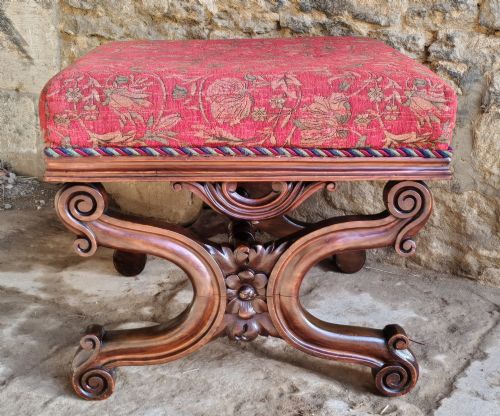
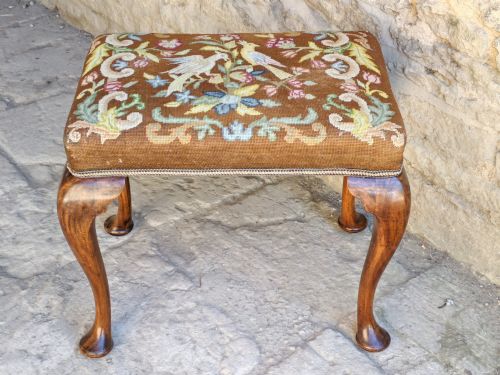
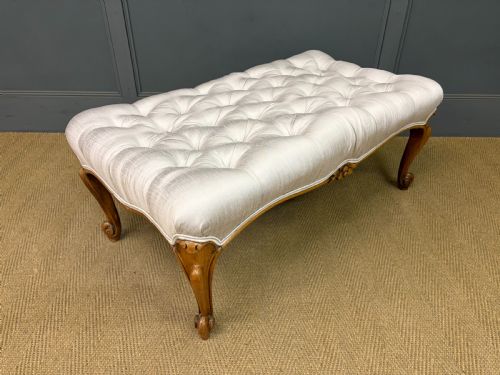
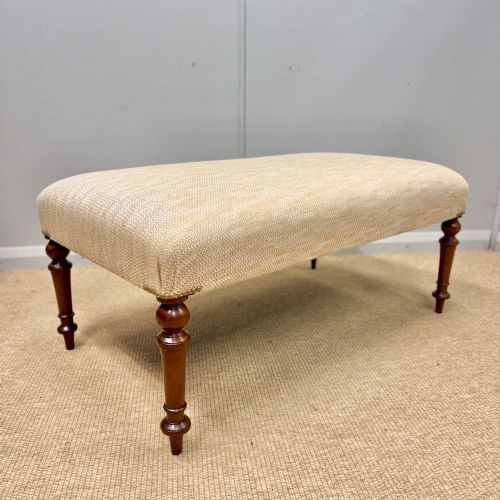
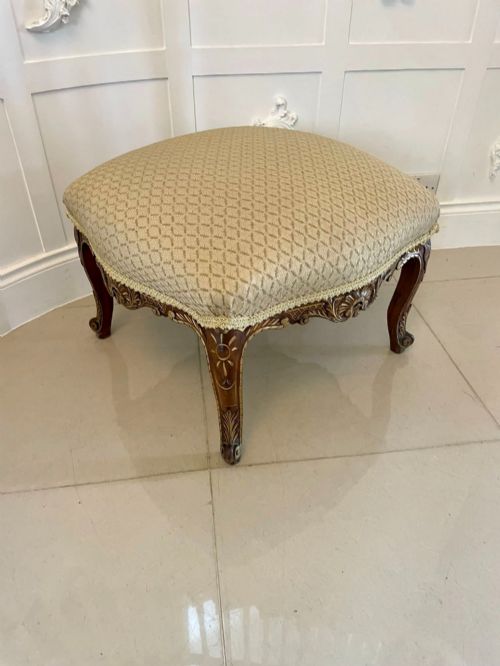
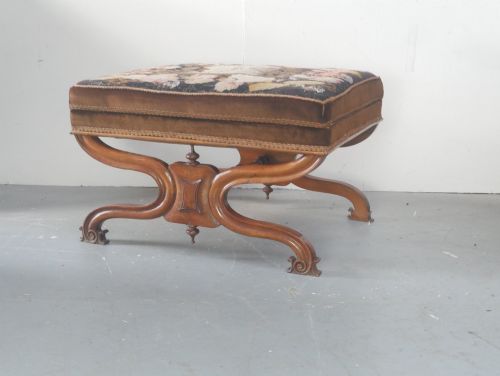
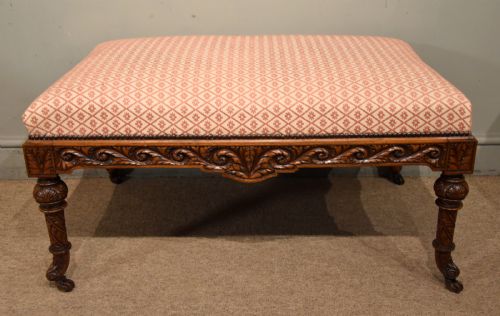
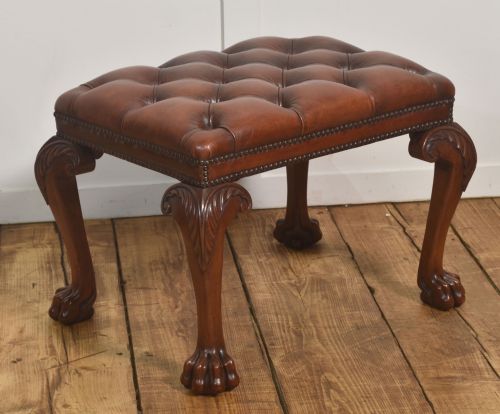
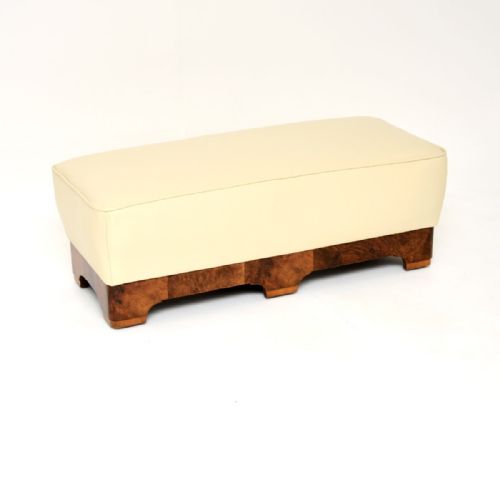
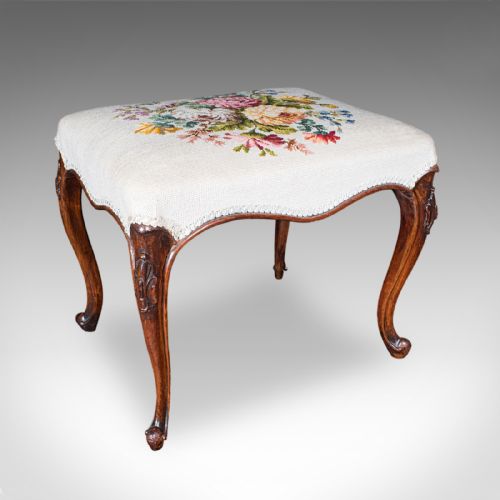
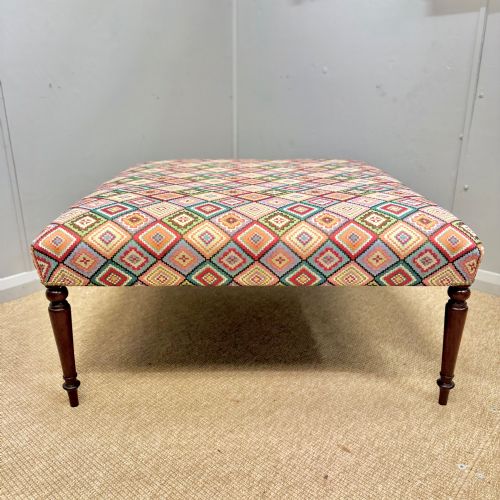
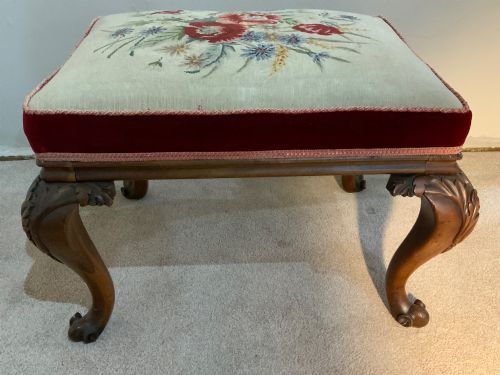
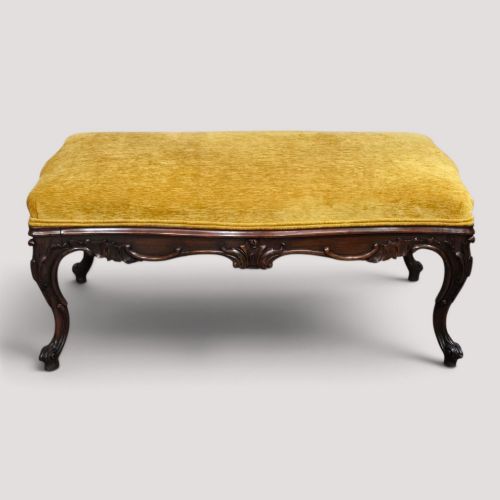
The forms range from long buttoned benches and low dressing stools to box-seated ottomans covered in needlework, tapestry, or leather. Many pieces display revival styles like Queen Anne, Chippendale, and Louis XIV.
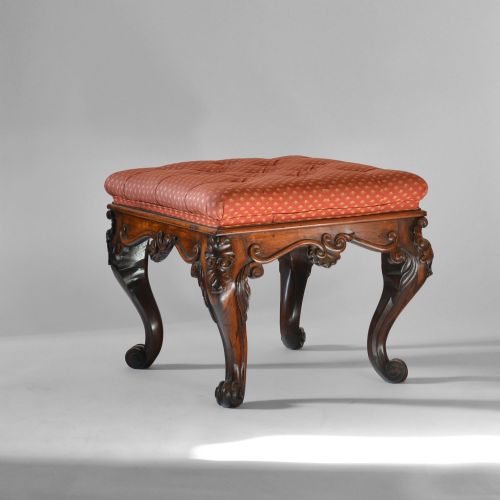
Makers utilised sturdy timbers such as mahogany, walnut, and rosewood for the exposed frames, often incorporating cabriole legs, cross stretchers, or gilt finishes.
Materials and construction
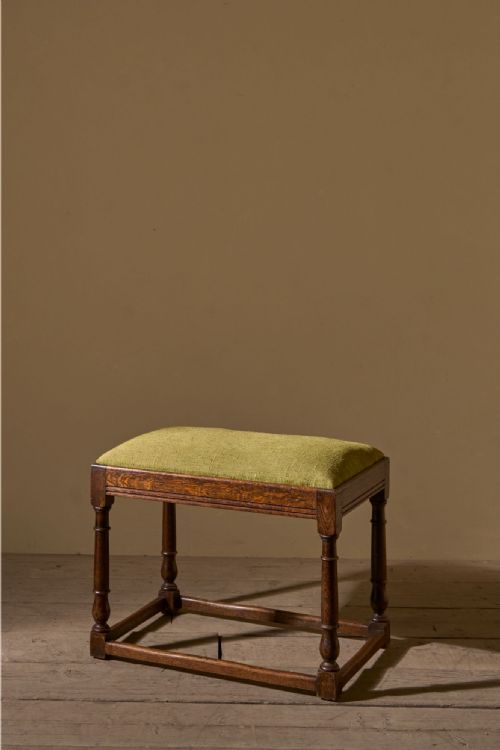
Cabinetmakers built the structural frames using dense hardwoods like mahogany, walnut, rosewood, and oak, often carving cabriole legs, scroll ends, or X-frames directly into the timber. Joints were pegged or dowelled to bear regular weight.
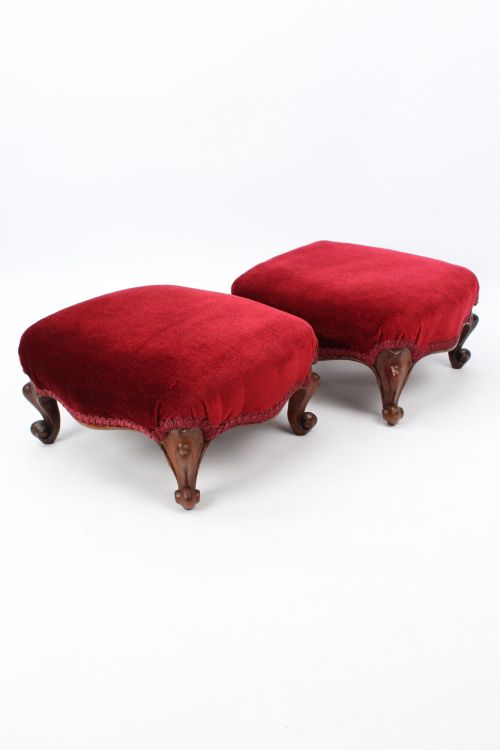
Upholstery formed a central part of the construction, layering horsehair or wool stuffing beneath heavy textiles, needlepoint tapestries, velvet, or buttoned leather secured with brass tacking.
Listings feature nineteen-century Victorian, Regency, and Edwardian periods alongside materials such as mahogany, walnut, rosewood, velvet, and leather.
Standards of craftsmanship
Quality rests in the crispness of the timber carving and the density of the underlying frame timber, where dense walnut or figured rosewood denotes a superior piece. Finer examples show fluid lines in cabriole legs and robust joinery that remains steady under pressure.
The grade of the covering textiles and the depth of the buttoning also separate standard workshop output from exceptional commissions, particularly when original needlepoint or well-preserved leather survives.
Miles & Edwards·Harry and Lou Epstein
The Antique Ottoman Footstool Glossary
- Cabriole leg
- A furniture leg that curves outward at the knee and tapers inward at the ankle, ending in a pad or scroll foot. This shape derives from animal forms and appears frequently on walnut and mahogany stools.
- Needlepoint
- A type of canvas work embroidery using wool or silk yarn to cover a backing mesh. It provides durable, decorative top covers for nineteenth-century fireside seating.
- X-frame
- A structural base formed by intersecting diagonal members creating an X shape when viewed from the side. Also known as a curule stool, this ancient form gained popularity during the Regency period.
- Cross stretcher
- Wooden bars connecting the lower legs of a stool to provide lateral support and stability. They often feature a central finial or turned junction.
- Buttoned
- An upholstery technique where indentations are formed in the padding by pulling twine tightly through to the frame and securing it with buttons. This creates a tufted surface that keeps the interior stuffing evenly distributed.
Antique Ottoman Footstool: Frequently Asked Questions
How do I date an antique footstool?
Dating relies on timber choice, leg style, and construction methods. Earlier nineteenth-century pieces often feature solid mahogany or rosewood with hand-carved details, while later Victorian examples frequently utilise walnut with machine-turned elements.
Upholstery techniques and materials hidden beneath the fabric also offer chronological clues, though many pieces have been recovered over time.
What is the difference between a footstool and an ottoman?
A footstool is typically an open-framed low seat designed primarily for resting feet. An ottoman often incorporates a box seat with a hinged lid for storage.
Both forms share similar upholstery methods and timber frames during the Victorian and Regency periods.
Are these stools sturdy enough for daily use?
Most antique footstools feature solid hardwood frames built with traditional joinery, making them robust for sitting or resting feet. Checking the tightness of the frame joints ensures structural stability.
Modern users often place them in living rooms or studies as functional low seating.
How should I care for needlepoint upholstery?
Needlepoint covers require gentle vacuuming with a low suction attachment through a mesh screen to remove dust without pulling the wool fibres. Avoiding direct sunlight prevents the dyed threads from fading over time.
Professional textile cleaning is recommended for deeper maintenance of antique fabrics.