




Antique Storage Ottoman Stool
An antique storage ottoman stool combines a hidden compartment with seating, offering a practical seat and box in one.
Antique Storage Ottoman Stool
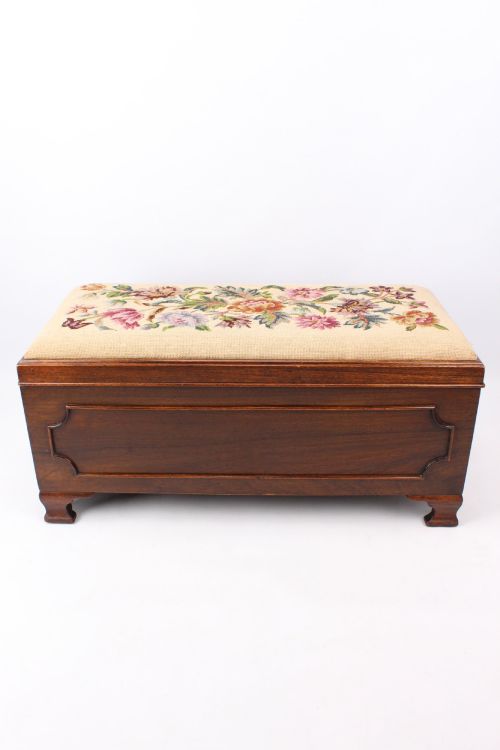
When you search for an antique storage ottoman stool, you encounter a dual-purpose seat that doubles as a box or chest for blankets, sewing gear, or dressing supplies. These pieces span from the Regency era through the Victorian period and into the 1930s Art Deco movement.
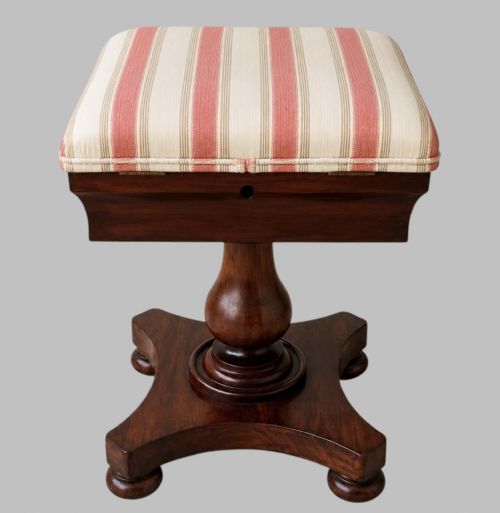
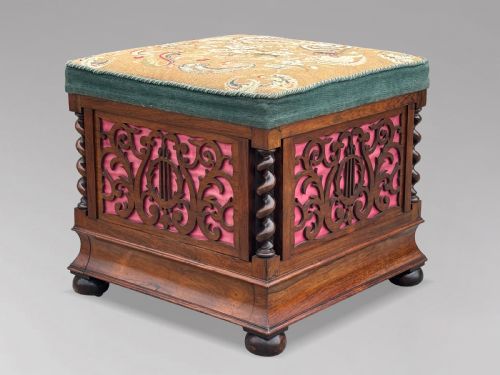
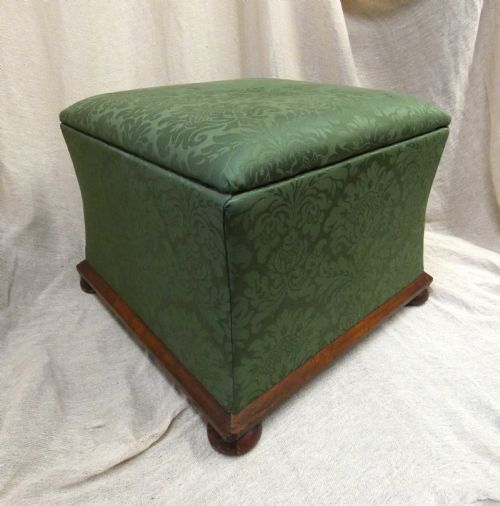
You are most likely to meet mahogany or rosewood frames on this page, often upholstered in needlework, velvet, or tapestry. Forms range from drum-shaped dressing stools to large country house blanket boxes and piano stools with hinged seats.
Materials and construction methods
Cabinetmakers built the structural frames of these pieces using dense hardwoods such as mahogany, walnut, and rosewood, sometimes integrating brass details or carved wooden feet like lion paws. These timbers provided the strength necessary for a combined seat and storage chest.
Upholstery techniques involved hand-stitched needlework, tapestry, gros-point, leather, and fabric secured over padding. Hinged or lift-off lids provided access to the internal compartments used for sewing work, blankets, or personal items.
Object types include piano stools, dressing stools, blanket boxes, and waisted window seats equipped with internal storage compartments.
Distinctions in craftsmanship and materials
The division between standard pieces and the top of the range rests on timber selection, frame rigidity, and the fidelity of the upholstery. Dense timbers like rosewood and finely figured mahogany denote superior workshop output compared to simpler secondary woods.
Detailing on the carved elements, such as lions paw feet or gothic revival mouldings, separates ordinary production from exceptional cabinet work. The preservation of original needlepoint or gros-point upholstery also elevates the standing of an individual piece.
Hallett & Sons
The Antique Storage Ottoman Stool Glossary
- Ottoman
- A padded seat without a back or arms, typically featuring a hinged lid that opens to reveal a storage compartment. These items served diverse functions in bedrooms, dressing rooms, and drawing rooms.
- Gros-point
- A heavy, counted-thread embroidery stitch used on canvas to create durable upholstery for heavy-use furniture seats. It often depicts floral or geometric patterns in rich wool threads.
- Needlework
- General decorative sewing executed on canvas or fabric using a needle and yarn. It frequently covers the top of Victorian and Regency footstools and ottomans.
- Gothic Revival
- An architectural and decorative style drawing on medieval forms, characterised by pointed arches and heavy timber detailing. Pieces from this movement display distinct structural severity.
- Canterbury
- A low wooden stand fitted with partitions to hold music sheets or books, occasionally combined with a stool or storage box. It represents a specific form of Victorian household furnishing.
Antique Storage Ottoman Stool: Frequently Asked Questions
What were antique storage ottoman stools used for?
These pieces functioned as flexible seating while concealing storage space for blankets, needlework, or dressing accessories within the body of the box. They moved between drawing rooms, bedrooms, and music rooms depending on the domestic needs of the household.
In period interiors, a piano stool or work table variant kept sheet music or sewing equipment close at hand while providing a stable seat for the user.
How do I date an antique ottoman stool?
Dating relies on identifying the primary timber, decorative style, and upholstery technique associated with specific design eras in the evidence. Regency and William IV pieces often display rosewood or mahogany with classical details, while Victorian versions introduce walnut and elaborate needlework.
Later examples from the 1920s and 1930s shift toward Art Deco forms, utilising oak or walnut with simplified drum or box silhouettes.
Are these stools suitable for daily use?
Most surviving examples are constructed from solid hardwoods like mahogany and walnut, meaning their frames remain robust for regular seating. The internal storage compartments continue to function as practical spaces for blankets or household items.
Care should be taken with antique upholstery fabrics or delicate needlework tops to preserve the original textiles during everyday sitting.
What is the difference between an ottoman and a footstool?
An ottoman typically incorporates a hollow interior with a hinged or removable lid designed for storage, whereas a standard footstool consists solely of a padded rest raised on legs. Many pieces in the evidence blur this distinction by functioning as both footrests and storage chests.
Descriptions often use the terms interchangeably when the frame includes a concealed box compartment beneath the upholstered seat.