



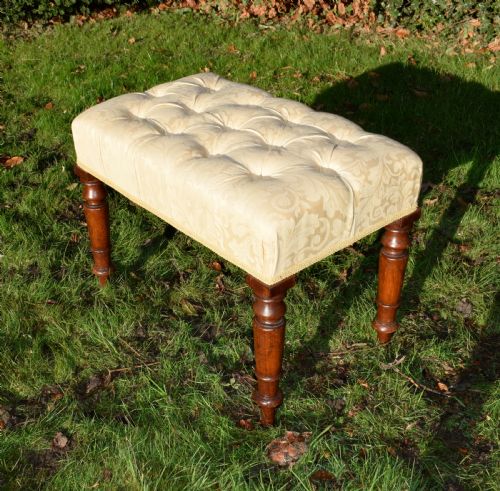


Vintage Padded Pouffe
A vintage padded pouffe provides low, cushioned seating that turns period rooms into places of genuine comfort.
Vintage Padded Pouffe
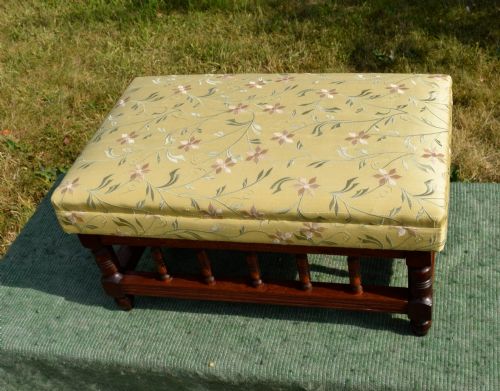
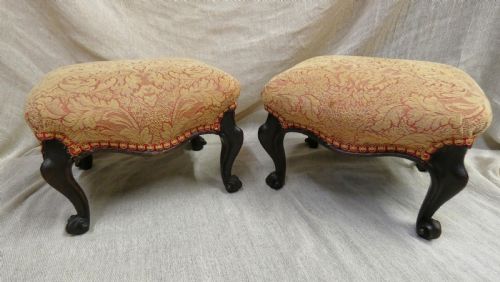
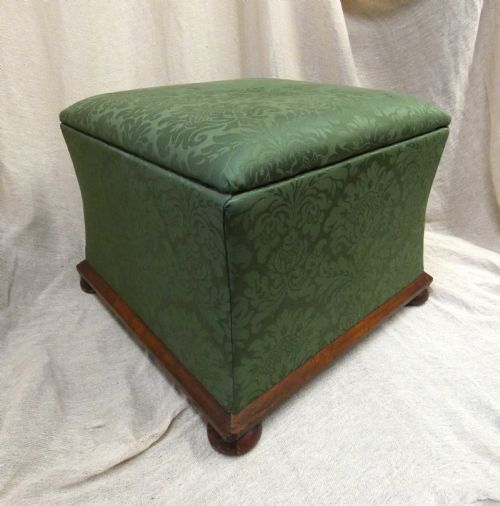
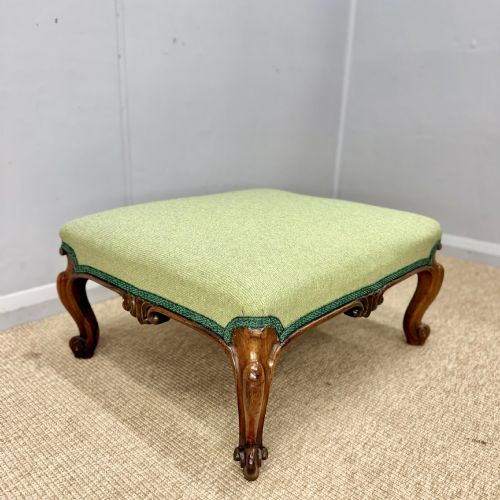
A vintage padded pouffe appears in several forms across this selection, ranging from small footstools and dressing stools to large ottomans and centre stools. These pieces serve as functional low seats or rests, often associated with Victorian and early twentieth-century interiors.
The materials span mahogany, rosewood, oak, and hardwood frames paired with fabric, leather, damask, and needlepoint upholstery. You will encounter buttoned finishes and carved woodwork reflecting styles from Regency and Victorian to Art Deco and Jacobean Revival.
Materials and construction
Makers built the structural frames of these pieces using dense timbers such as mahogany, rosewood, and hardwood, often incorporating detailed carving along the rails and legs. Workshops applied gilded or polished finishes to enhance the exposed wooden elements.
The upper sections combine supportive padding with textile coverings including leather, damask, and needlepoint. Traditional methods secured the cushioning directly to the wooden foundations, frequently utilising buttoning techniques to keep the filling stable.
Listings feature items spanning the nineteenth and early twentieth centuries, constructed from mahogany, rosewood, oak, and hardwood.
Evaluating quality and execution
Quality rests upon the choice of timber and the precision of the frame's joinery, where dense hardwoods and refined carving distinguish finer work from simpler items. The depth of the woodwork and the integrity of the structural joints dictate how well a piece survives decades of use.
The execution of the upholstery and the selection of covering materials further divide the range. Pieces featuring specialised maker marks, complex needlepoint, or premium leather demonstrate a higher grade of workshop production.
Howard and Sons·Whytock and Reid
The Vintage Padded Pouffe Glossary
- Pouffe
- A low, cushioned seat or footstool lacking a back and arms. These items function as movable rests or auxiliary seats in a room.
- Ottoman
- A padded seat or footstool, frequently larger in scale than a standard footstool. Such pieces often serve as centre tables or deep resting surfaces.
- Buttoned
- An upholstery technique where twine pulls the surface fabric deep into the padding at regular intervals. This method secures the internal filling while creating a geometric pattern.
- Needlepoint
- A type of canvas work embroidery used as a decorative textile covering. This stitched fabric often adorns the top of period footstools.
- Cabriole leg
- A furniture leg shaped with a double curve resembling the leg of an animal. This design swells outward at the knee and tapers inward at the foot.
Vintage Padded Pouffe: Frequently Asked Questions
How do I use a pouffe in a room?
These pieces integrate easily into living spaces as flexible seating options or comfortable footrests. Place them near armchairs, beside sofas, or in dressing rooms to add texture and function.
Their compact scale allows them to move around a room as needed while introducing period materials like leather, damask, and carved hardwood.
How can I tell the period of a pouffe?
Dating relies on observing the combination of exposed wood styles, upholstery methods, and framing timbers. Victorian pieces frequently feature rosewood or mahogany with buttoned padding, while later examples reflect Art Deco or early twentieth-century designs.
Examining the construction of the wooden frame and the specific textile choices helps narrow down the decade of production.
Are these pieces suitable for daily use?
These items were built for practical domestic environments using sturdy hardwoods and durable upholstery fabrics. Their solid frames support everyday sitting and resting when placed in a home.
Proper care of the wooden structure and the fabric covering ensures these antique furnishings remain functional components of a modern interior.