



Brown Fabric Footstool
A brown fabric footstool brings warmth and useful low seating to a room, spanning styles from Victorian needlepoint to Arts and Crafts simplicity.
Brown Fabric Footstool
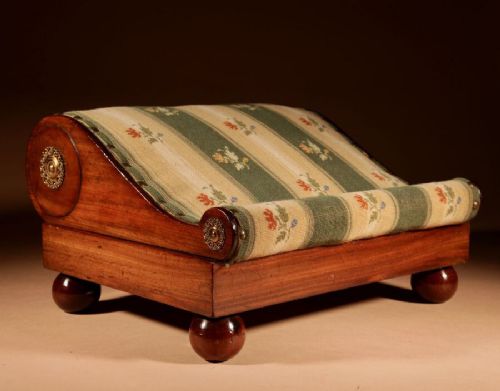
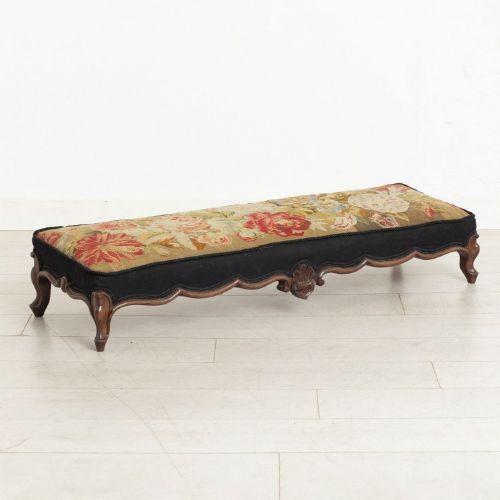
When you search for a brown fabric footstool, you are looking at low resting seats and ottomans upholstered in textiles, tapestry, and needlepoint, often paired with mahogany or walnut frames. These pieces serve practical functions in drawing rooms and dressing areas, offering comfortable support for the feet or additional low seating.
The versions you are most likely to meet on this page date from the nineteenth century and the Edwardian period. They include Victorian low stools with cabriole legs, long upholstered benches, and storage ottomans covered in original or later fabric.
Originating from both British and continental workshops, these items reflect diverse aesthetic movements. Examples range from heavy Victorian styles and Biedermeier forms to the distinctive lines associated with the Arts and Crafts movement and Queen Anne revivals.
How they were made
Makers built the structural frames of these stools using solid hardwoods such as mahogany and walnut, shaping cabriole legs and supports by hand. Joints were typically doweled or tenoned to ensure stability under daily use as foot rests and seats.
Upholstery techniques involved securing textile coverings over padded foundations using metal tacks and decorative braids. Textile choices frequently included heavy woven fabrics, tapestry panels, and detailed needlepoint worked by hand.
Materials recorded across the selection include mahogany, walnut, brass, metal tacks, tapestry, and various textiles.
What varies in quality
The distinction between standard items and superior examples lies in the crispness of the timber carving and the integrity of the frame construction. Finer pieces display carefully turned walnut or mahogany supports with well-proportioned cabriole legs rather than plain, utilitarian bracing.
Quality also shows in the survival and execution of the textile upholstery. Stools retaining their original hand-worked needlepoint or period tapestry panels carry greater interest than those with later, unsympathetic re-coverings.
The Brown Fabric Footstool Glossary
- Cabriole leg
- A furniture leg that curves outward and then tapers inward, resembling the legs of an animal. This form appears frequently on Victorian and Queen Anne style walnut frames.
- Needlepoint
- A type of canvas work embroidery executed with yarn, often seen on nineteenth-century footstool tops. It provides a durable and decorative surface.
- Ottoman
- A low, upholstered seat or bench without a back or arms, sometimes featuring internal storage. These pieces function as both footstools and casual seating.
- Tapestry
- A heavy textile featuring woven designs, utilised historically for durable furniture upholstery. It adds rich texture and pattern to period seating.
Brown Fabric Footstool: Frequently Asked Questions
What is the difference between an ottoman and a footstool?
An ottoman typically offers a larger surface area and occasionally includes internal storage beneath the upholstered top. A footstool is generally smaller in scale, designed specifically to support the feet while seated.
Both forms utilise similar timber frames and textile coverings, making the distinction largely a matter of size and storage capability.
How do I date a Victorian footstool?
Dating relies on examining the timber species, turning styles, and upholstery techniques used in the construction. Walnut and mahogany were prevalent throughout the nineteenth century, with specific leg shapes shifting from heavy turned supports to carved cabriole forms.
Original fabric, metal tacks, and internal stuffing methods also provide reliable indicators of the manufacturing decade.
Are these stools sturdy enough for daily seating?
Period wooden frames built from solid mahogany or walnut are generally robust and suited for regular use. Traditional joinery methods ensure structural stability across generations of domestic life.
It remains sensible to check the rigidity of the frame joints and the condition of the webbing before putting a vintage stool into heavy daily service.
Can I place these pieces in modern interiors?
The neutral tones of brown fabric and dark wood frames allow these stools to blend easily into contemporary schemes. Their compact scale makes them adaptable as casual seating or low resting surfaces in living rooms and bedrooms.
Mixing period forms with modern furniture adds textural contrast and historical character to a room.