


Antique Open Salt Dish
An antique open salt dish brings miniature sculpture and brilliant coloured glass to the dining table.
Antique Open Salt Dish
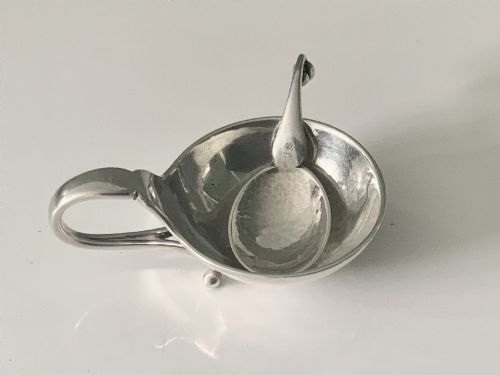
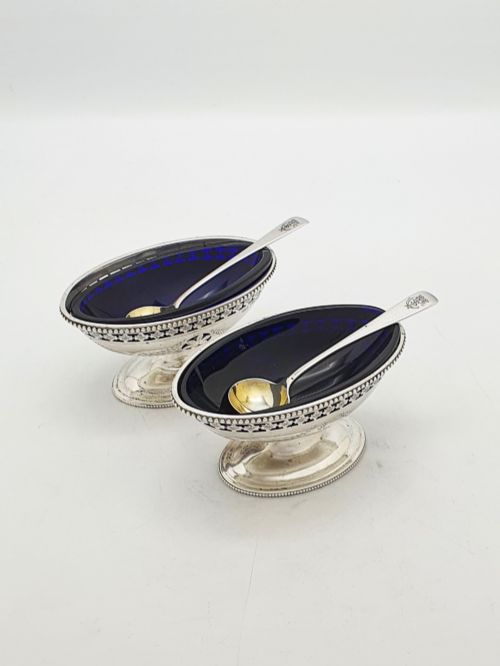
An antique open salt dish is a small vessel designed to hold loose salt on the dining table before the invention of free-flowing table salt. The pieces seen here span the Georgian, Victorian, and Edwardian periods, alongside nineteenth-century continental examples.
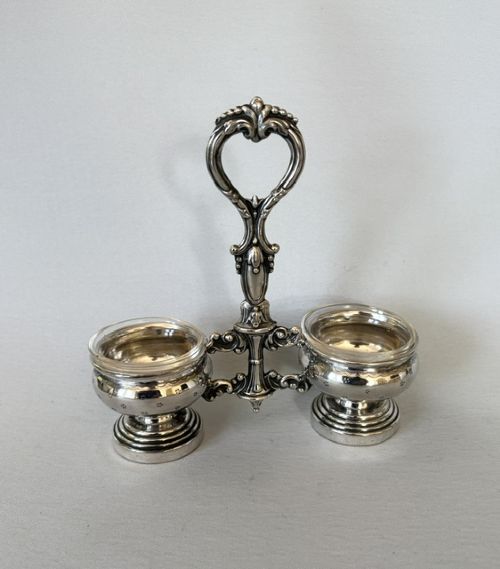
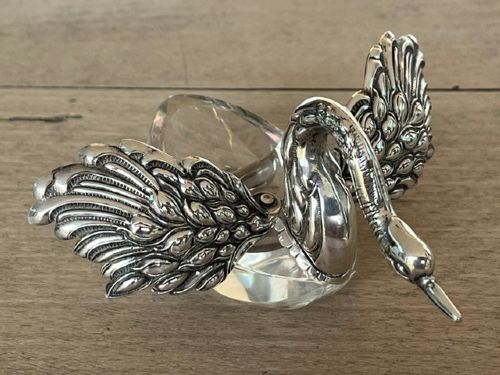
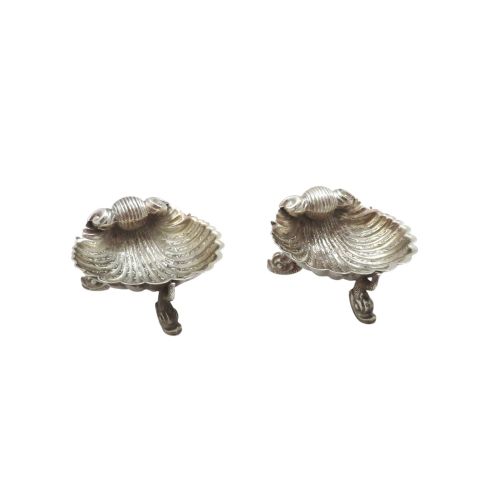
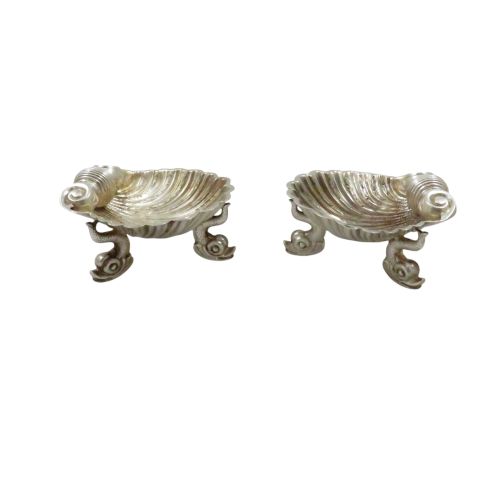
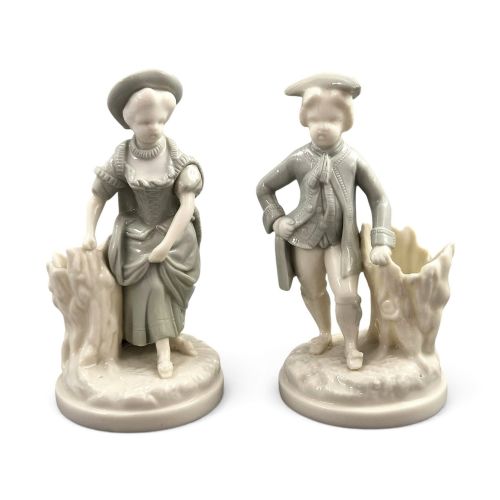
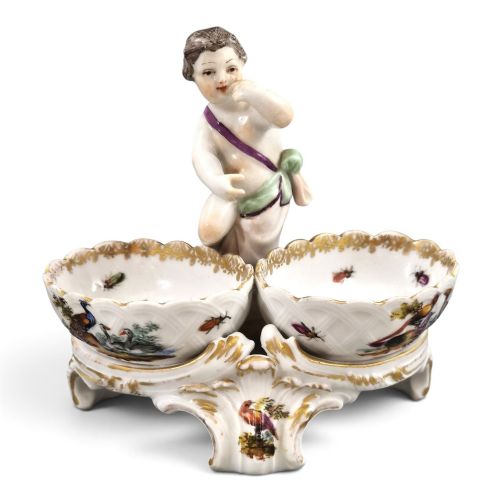
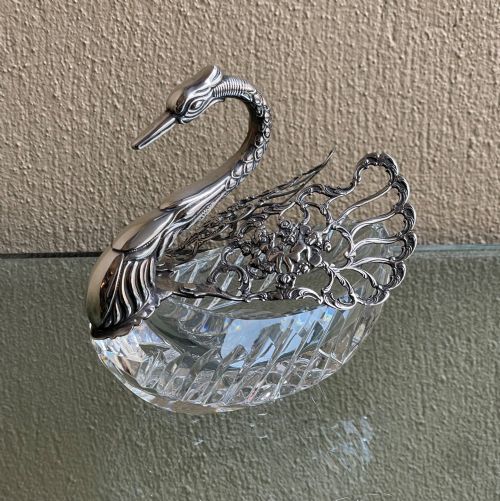
Forms range from simple circular bowls and boat-shaped dishes to figurative creations shaped like shells, swans, and bears. Many rest upon diminutive feet, while others take the form of paired condiment sets.
Materials and construction
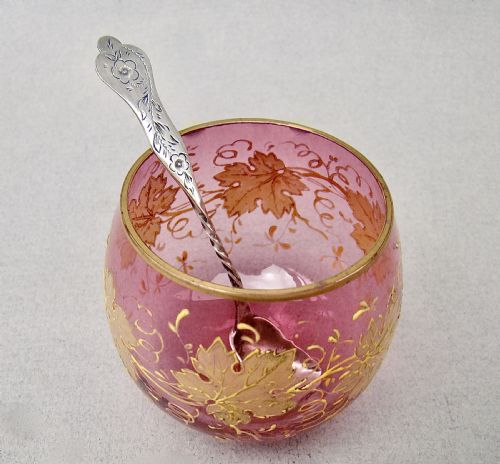
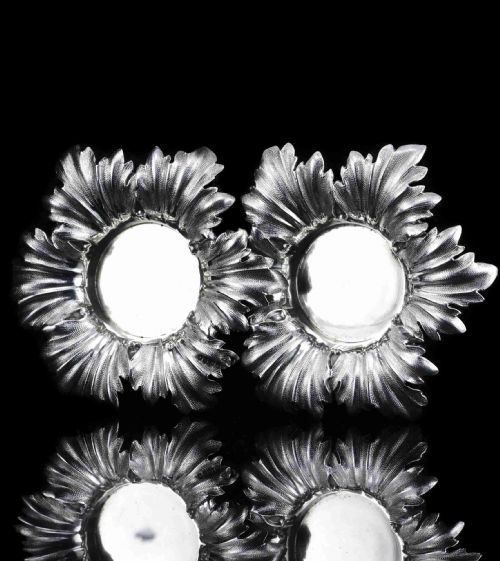
Metals form a large portion of the selection, primarily sterling silver and silver plate shaped through casting, chasing, and repoussé work. Makers paired these precious frames with blown glass liners in deep shades of cobalt blue and cranberry.
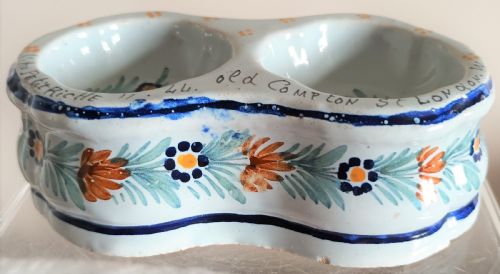
Ceramic examples utilise porcelain, earthenware, and faience, often decorated with hand-painted motifs and enamel colours. Treen and ironstone provide alternative tactile surfaces shaped by woodturning and moulding.
The listings combine sterling silver, silver plate, cobalt glass, porcelain, earthenware, and fruitwood across Georgian and Victorian eras.
Quality and execution
The distinction between ordinary and exceptional pieces lies in the crispness of the chasing and the weight of the metal. Finer silversmith work displays deep, clear hand-chased foliage and distinct maker marks.
In glass and ceramic examples, quality is measured by the clarity of the coloured glass liners and the precision of hand-painted details on porcelain figures.
Georg Jensen·Royal Worcester·KPM Berlin·Moser·Barnards·William Bateman·Paul Storr·Thomas Smily
The Antique Open Salt Dish Glossary
- Salt cellars
- Alternative names for small open vessels used to hold salt at the table.
- Cobalt glass liners
- Deep blue glass inserts placed inside open metal salt frames to protect the silver from corrosion.
- Chasing
- A metalsmithing technique of hammering metal from the front to create raised decorative surface patterns.
- Faience
- Tin-glazed earthenware produced in France and other European regions, often featuring hand-painted designs.
- Treen
- Small handmade wooden items shaped by turning or carving.
Antique Open Salt Dish: Frequently Asked Questions
How were open salt dishes used?
Dinners used these small dishes to hold dry salt, which guests spooned onto the corner of their plates using miniature condiment spoons.
They sat individually at each place setting or were shared between two diners in pairs across the table.
Do these pieces require original glass liners?
Many metal salt dishes relied on fitted glass liners to prevent corrosive salt from pitting the silver or silver plate over time.
Finding pieces that retain their original cobalt or cranberry glass inserts adds significantly to their completeness.
How do I date a Victorian silver salt?
British silver bears hallmarks that include city assay marks, date letters, and monarch duty marks which pinpoint the exact year of production.
Matching these stamps against standard assay office records provides precise chronological placement.
Can I still use these on the dining table?
These small dishes function effectively for serving coarse sea salt or spices during modern dinner parties.
Careful hand washing prevents damage to antique metal surfaces and delicate glass liners.