


Antique Open Salt Dips
Antique open salt dips are small table vessels crafted to hold loose salt before modern shakers took over.
Antique Open Salt Dips
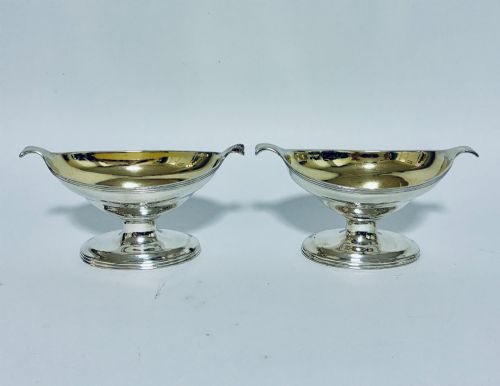
When you search for antique open salt dips, you encounter small table vessels designed to hold loose salt before free-flowing salt became common. These table pieces appear across periods from the eighteenth century through the Edwardian era, taking forms such as cauldron salts, salt boats, trencher salts, and handled dishes.
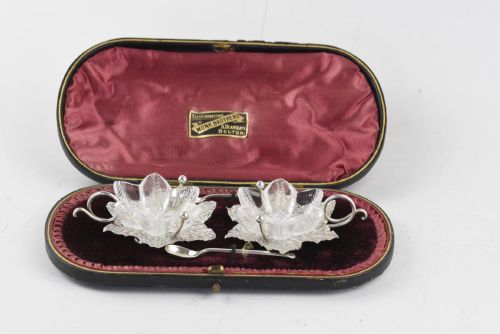
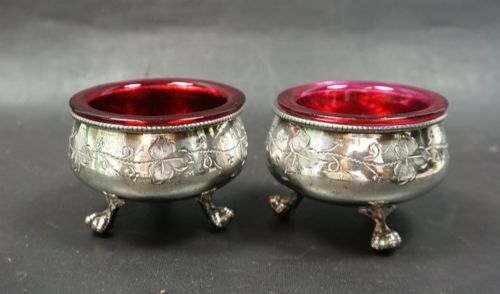
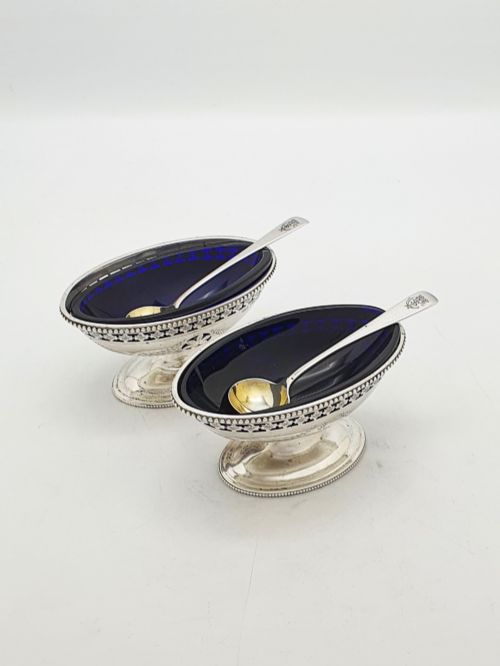
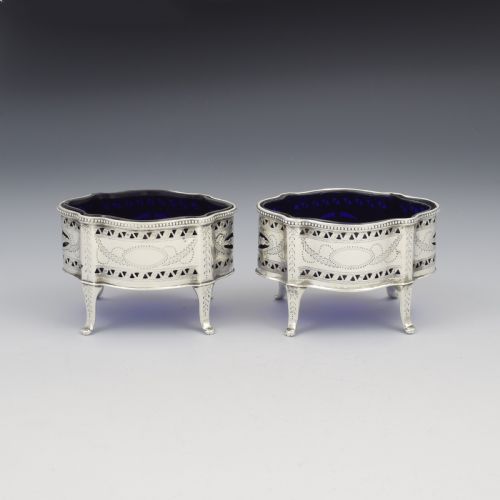
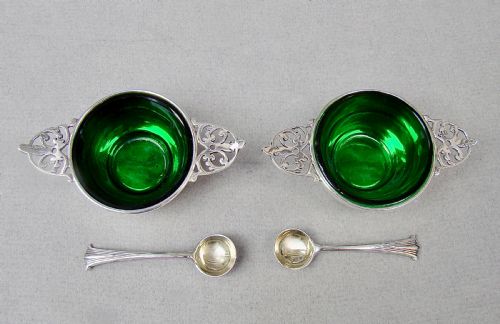
The versions most frequently met on this page span the Georgian and Victorian periods, often rendered in solid sterling silver, silver plate, or glass. Many examples survive as matched pairs or complete sets, frequently accompanied by original glass liners in cobalt or cranberry hues.
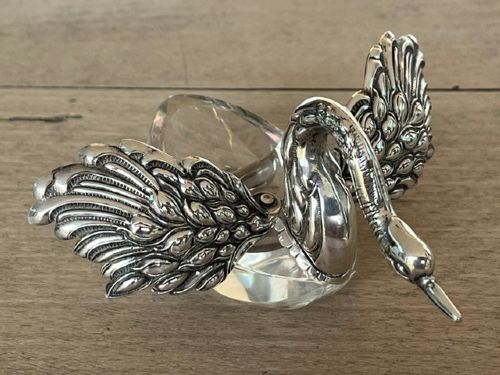
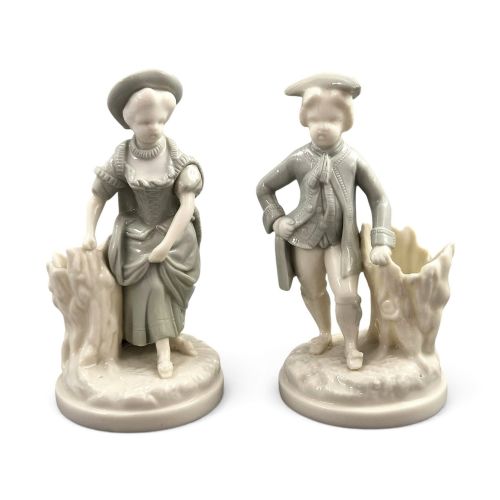
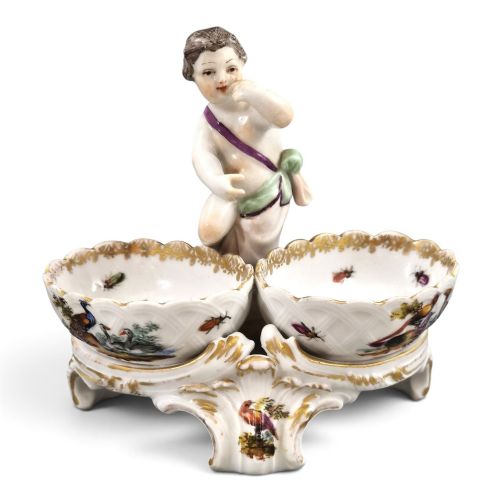
Makers and factories across England, Scotland, Ireland, and continental Europe produced these condiment pieces in styles ranging from Rococo Revival and Regency to Aesthetic Movement and Art Nouveau. Collectors also encounter novelty forms shaped as birds, swans, bears, and figural putti groups.
How they were made
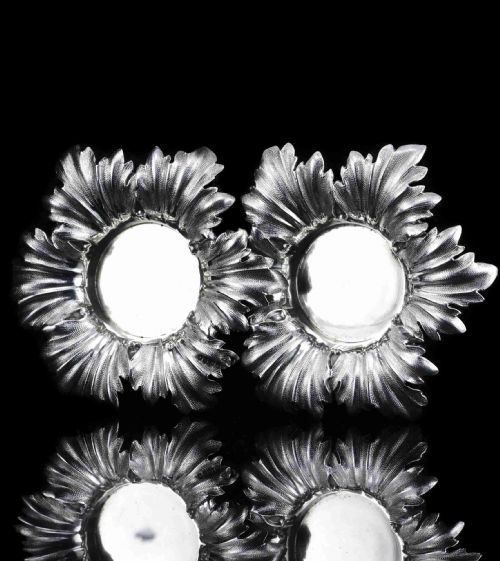
Silversmiths shaped sterling silver and silver plate through casting, hammering, and detailed hand-chasing to create foliate motifs and pierced serpentine rims. Workshops utilised master makers such as Paul Storr, David Hennell, and Barnards for substantial hollowware and intricate domestic silver.
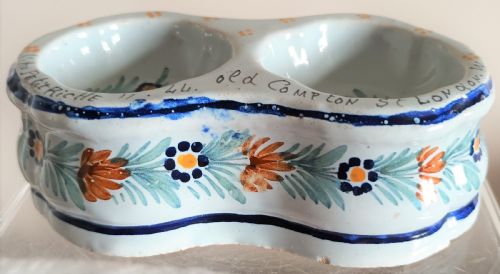
Glassmakers blew and cut crystal, cranberry glass, and cobalt glass to fit inside silver frames, providing removable liners that protected metal surfaces from corrosive salt. Potters shaped and hand-painted ceramics including English Delftware, French faience, and KPM Berlin porcelain.
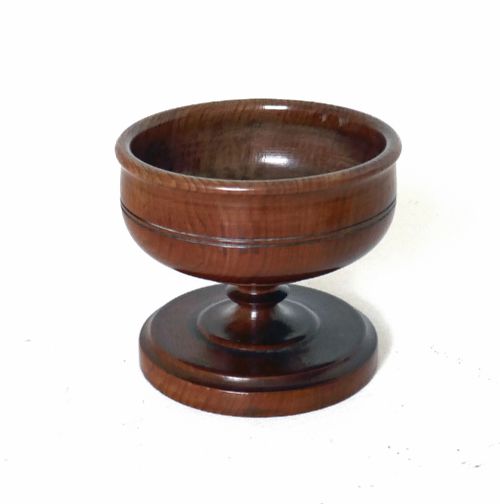
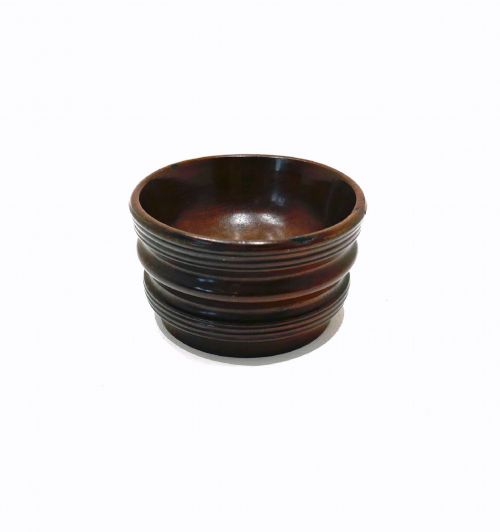
Turners worked with dense hardwoods like yew, laburnum, and treen to fashion early turned salt vessels on raised bases. Craftspeople also combined carved wood, velvet, and fitted leather cases to present matched condiment sets.
Nineteenth-century makers turned out novelty condiment holders shaped as carved Black Forest bears and swimming swans.
What varies in quality
The standard of a piece rests upon the crispness of the hand-chased foliate decoration and the weight of the silver. Substantial gauge metal and fully legible hallmarks from recognised makers elevate an example above standard production work.
Completeness dictates value, particularly the presence of original matching glass liners in cobalt or cranberry glass and accompanying spoons. Matched sets and multi-piece groupings with undamaged fitted cases demonstrate higher original status.
Georg Jensen·Josiah Williams And Co·David Hennell·John Edmonstone·Paul Storr·Thomas Smily·Barnards
The Antique Open Salt Dips Glossary
- Trencher salt
- A small early table salt designed to sit beside a dining trencher, usually dating from the seventeenth or eighteenth century.
- Cauldron salt
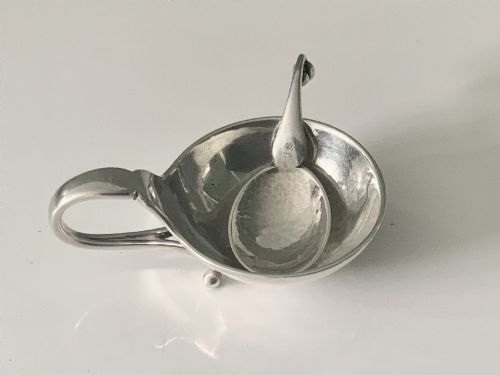
- A small bowl-shaped salt cellar supported on three or four small feet, popular during the Georgian and Victorian periods.
- Salt boat
- A condiment vessel shaped like a miniature gravy boat, often raised on an oval foot or small stand.
- Cobalt glass
- Deep blue glass used extensively for removable liners inside silver salt cellars during the Victorian and Edwardian eras.
- Treen
- Small handmade wooden household objects turned on a lathe from timbers such as yew and laburnum.
Antique Open Salt Dips: Frequently Asked Questions
What are antique open salt dips?
These small open vessels held loose salt on the dining table before table shakers were invented.
Craftspeople shaped them from silver, glass, porcelain, and treen across the Georgian, Victorian, and Edwardian eras.
How were salt dips used at the table?
Dinners used a small spoon or pinched salt directly from the dip to season individual portions.
They stood beside each place setting or served as shared double salts in the centre of the table.
How do I care for silver and glass salts?
Wash glass liners gently in warm soapy water and dry them thoroughly to prevent moisture damage.
Keep silver polished with mild agents and remove salt immediately after use to protect the metal.
How can I tell Georgian salts from Victorian pieces?
Georgian examples often exhibit heavier cast construction, simpler cauldron shapes, and early hallmarks.
Victorian pieces frequently display heavier foliate chasing, pierced galleries, and coloured glass liners.