


Antique Office Seating
Antique office seating brings together nineteenth and early twentieth century engineering and craftsmanship to create durable, characterful workspaces.
Antique Office Seating
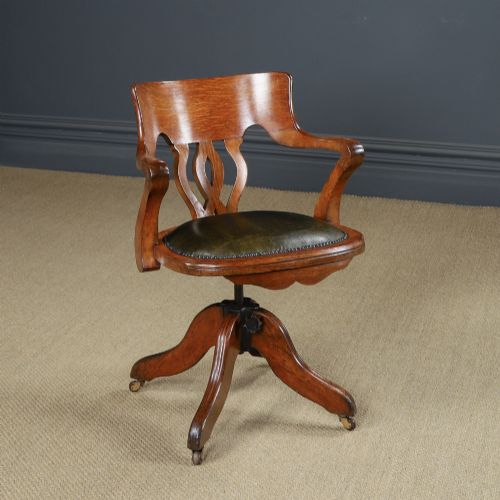
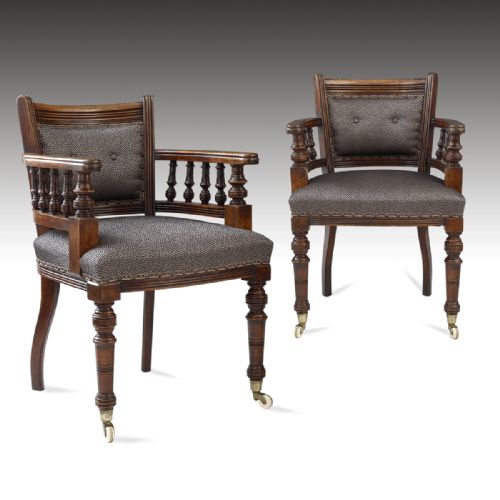
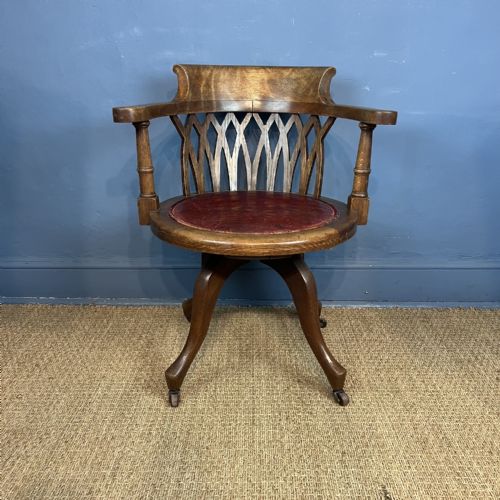
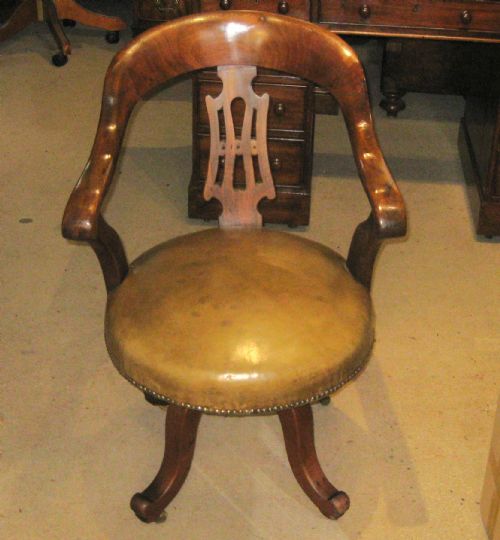
Antique office seating covers a range of functional chairs designed for writing desks, libraries and workplaces from the nineteenth and early twentieth centuries. Buyers searching for antique office seating encounter revolving desk chairs, captains chairs and library armchairs spanning the Victorian, Edwardian and Georgian eras.
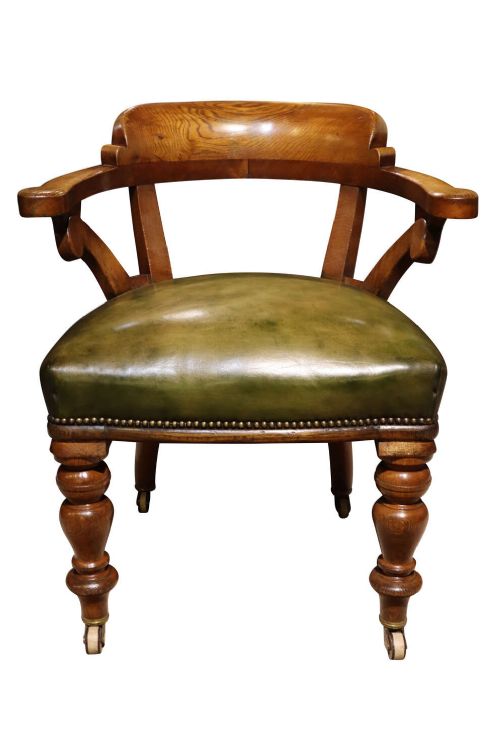
The selections available here lean heavily towards mahogany, oak and walnut desk chairs, often featuring swivelling mechanisms or leather upholstery. These pieces were built for heavy daily service in professional and domestic settings, combining practical adjustments with traditional cabinetmaking.
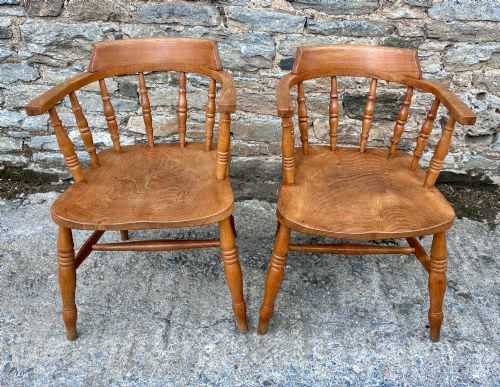
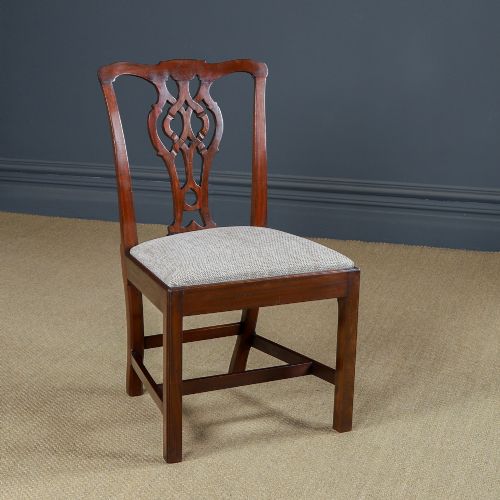
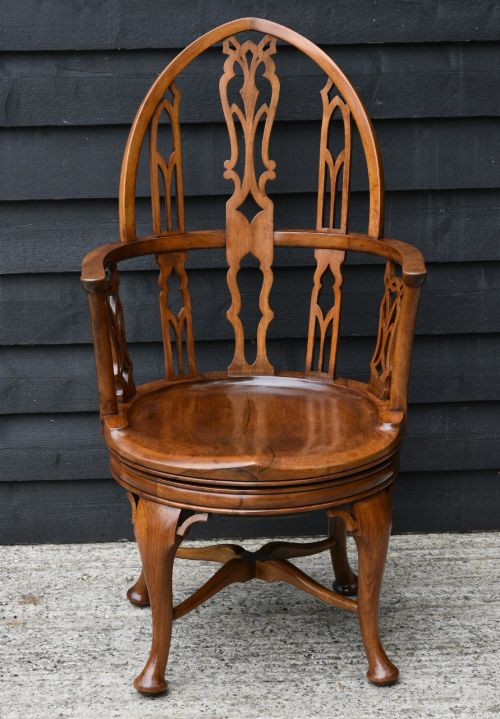
Forms vary from standard swivel chairs in solid oak to elegant mahogany Chippendale style armchairs and utilitarian oak or beech machinist chairs. Each design reflects the working habits and interior fashions of its specific decade.
Materials and construction
Cabinetmakers utilised hardwoods such as mahogany, oak, walnut and elm to build sturdy frames capable of enduring constant movement and weight. Brass components frequently appeared in swivel mechanisms, castors and structural brackets, adding both mechanical reliability and functional contrast to the timber.
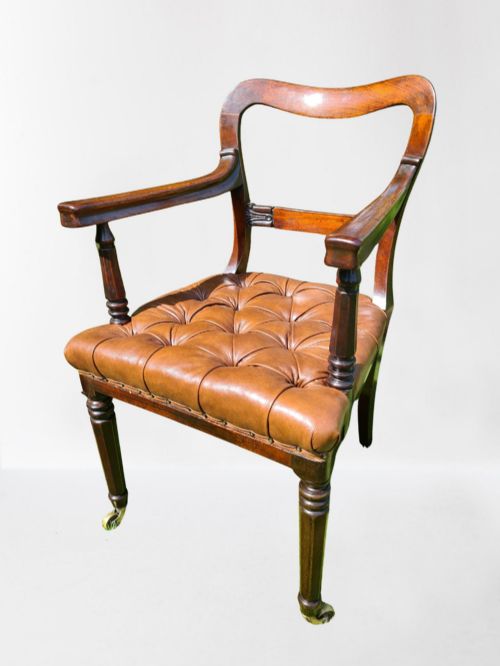
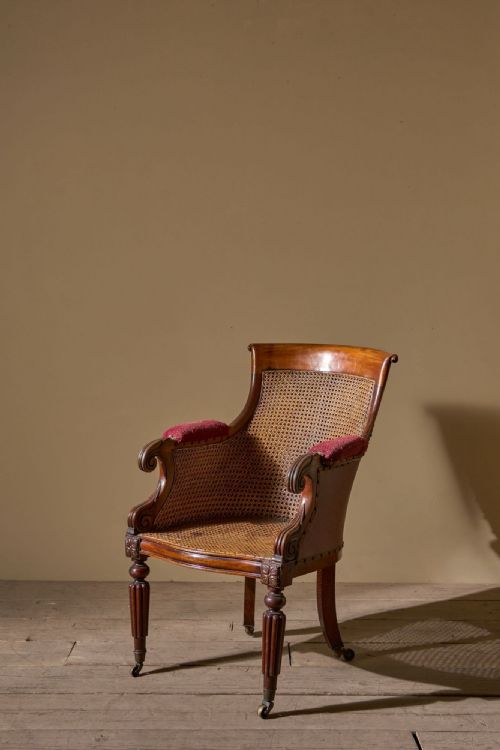
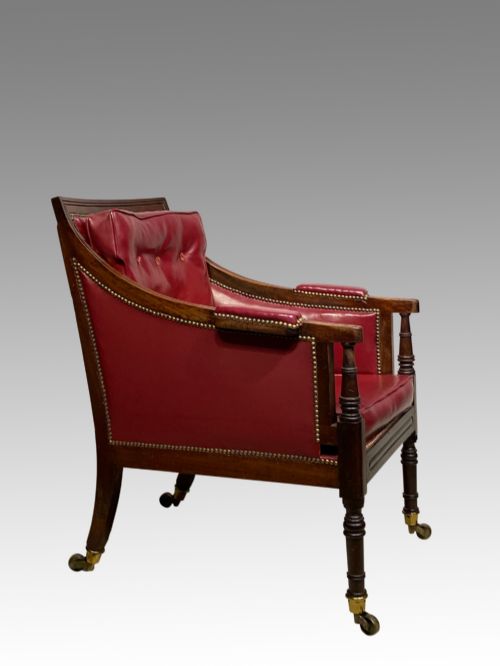
Upholstered elements typically incorporated leather, fabric or cane inserts secured with metal studs or traditional webbing. Timber components were carved, turned or bent into ergonomic shapes designed to support the body during long hours at a desk.
Antique Office Seating Retail Price Guide 2026
Typical asking prices for office seating among the pieces listed under this phrase on Sellingantiques today, from the lower quarter to the upper quarter. They describe what is for sale here now, not the wider market.
Maritime influences appear occasionally through surviving ships chairs designed to keep clerks steady during rough seas.
Distinguishing quality
Quality in these chairs rests upon the selection of timber, the sophistication of the carving and the original integrity of the revolving or tilting mechanism. Superior examples display finely figured mahogany, burr elm or golden oak matched with robust, well-engineered swivel actions that operate smoothly.
Detailing such as hand-tooled leather, subtle inlay and sophisticated joinery separate standard utility seating from high-end pieces commissioned from notable workshops. The presence of original castors, unaltered swivel hardware and branded or attributed craftsmanship elevates the standing of an individual chair.
Gillows·Bruce James Talbert
The Antique Office Seating Glossary
- Captain's Chair
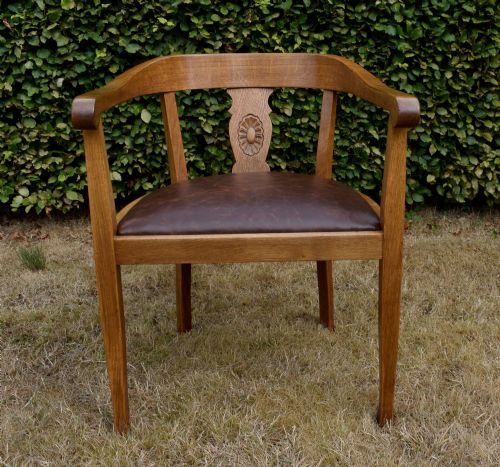
- A sturdy wooden armchair with a rounded back rail supported by vertical spindles, traditionally used in offices and ships.
- Swivel Chair
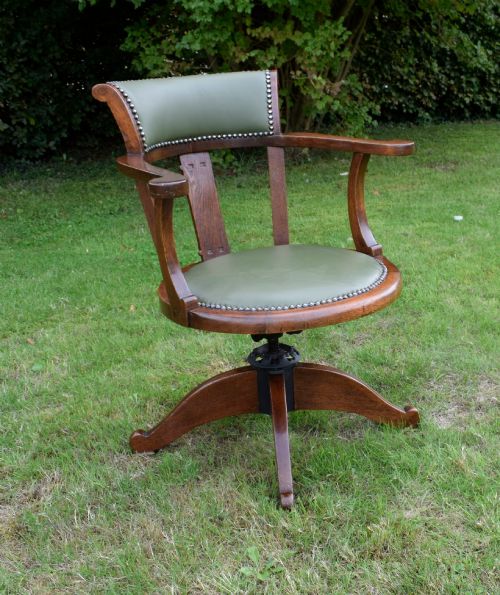
- A seat mounted on a central rotating pivot that allows the user to turn without moving the base.
- Gothic Revival
- A nineteenth century design style incorporating medieval architectural motifs such as pointed arches and heavy tracery.
- Chippendale Style
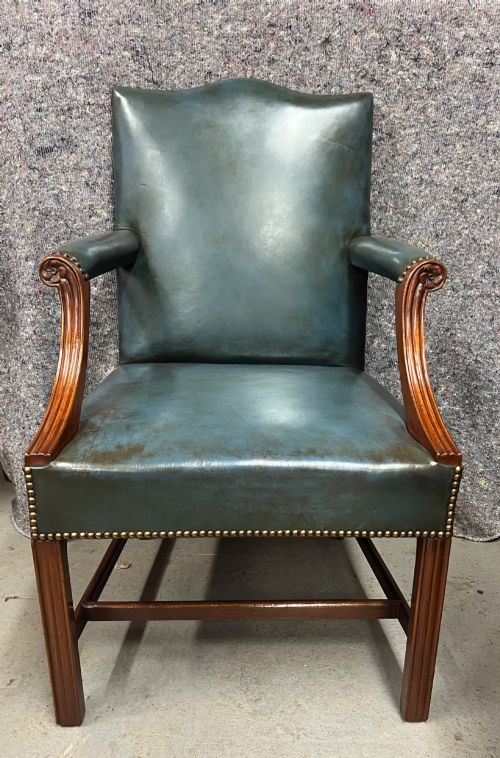
- A classical eighteenth century furniture style defined by carved ribbon backs, cabriole legs and ornate detail.
- Aesthetic Movement
- A late nineteenth century artistic style emphasising visual beauty and simplicity over excessive ornamentation.
Antique Office Seating: Frequently Asked Questions
How do I identify a swivel desk chair?
Look underneath the seat for an iron or brass mechanical spindle and spider base that allows the upper portion to rotate freely.
Many Victorian and Edwardian examples also include a tilt mechanism operated by a central screw or spring tensioner.
Are these chairs comfortable for daily use?
Most antique office seating was built with ergonomic considerations for long hours of administrative work, featuring supportive curved backs and upholstered pads.
Models with adjustable height and tilt functions easily adapt to modern desks and seating requirements.
How do I date an office chair?
Examine the timber species, construction methods, and hardware style, comparing them against documented periods like the Victorian or Edwardian eras.
Turned wooden components and iron swivel mechanisms often point to specific manufacturing decades between eighteen-eighty and nineteen-twenty.
What is the difference between a library chair and a desk chair?
Library chairs often feature broader proportions and enclosed upholstered arms designed for comfortable reading rather than active writing.
Desk chairs generally prioritise mobility, swivelling movement, and compact footprints that fit neatly beneath writing tables.