
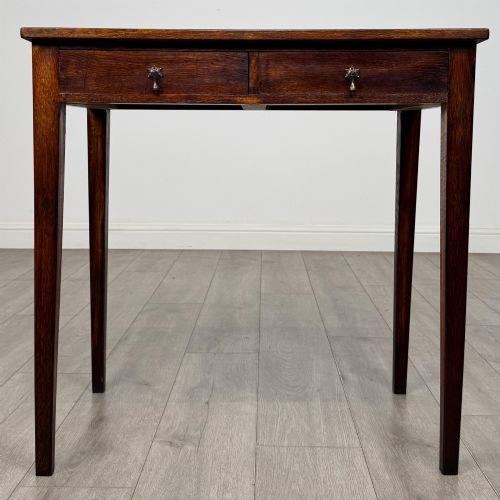
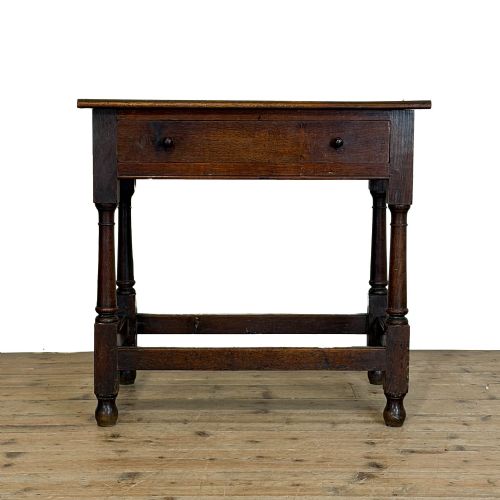
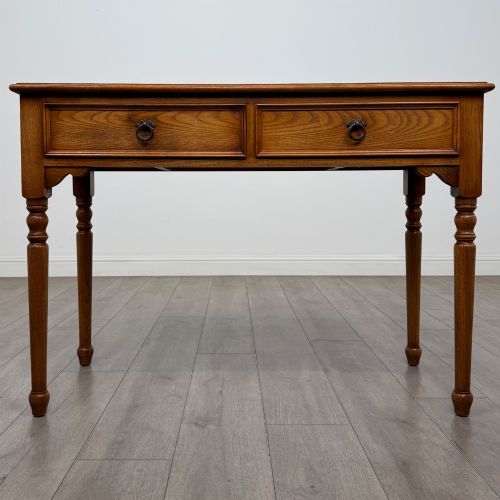
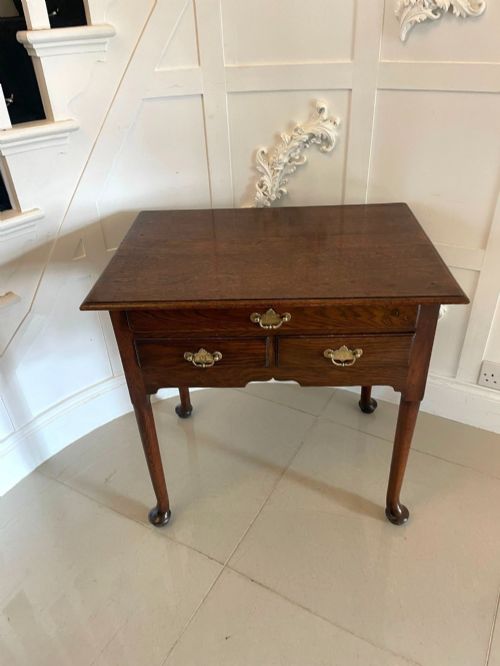

Antique Oak Hall Desk
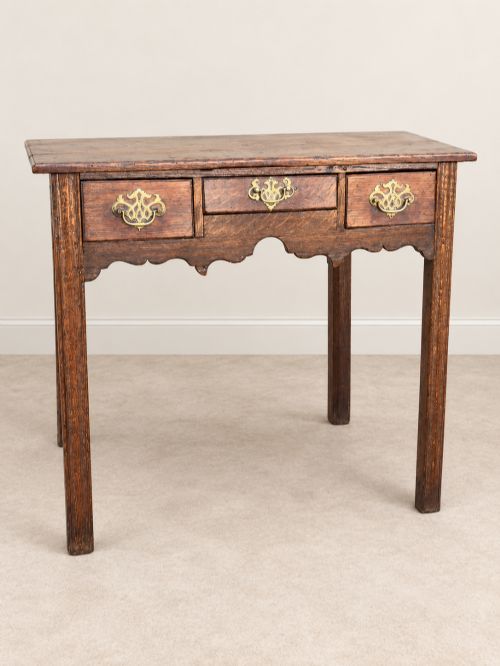
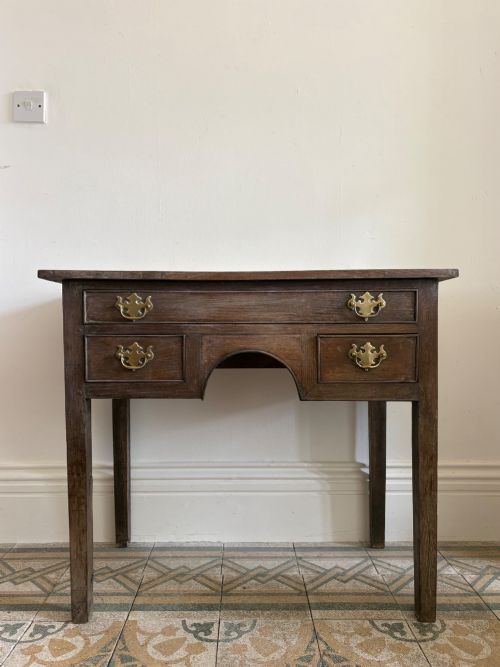
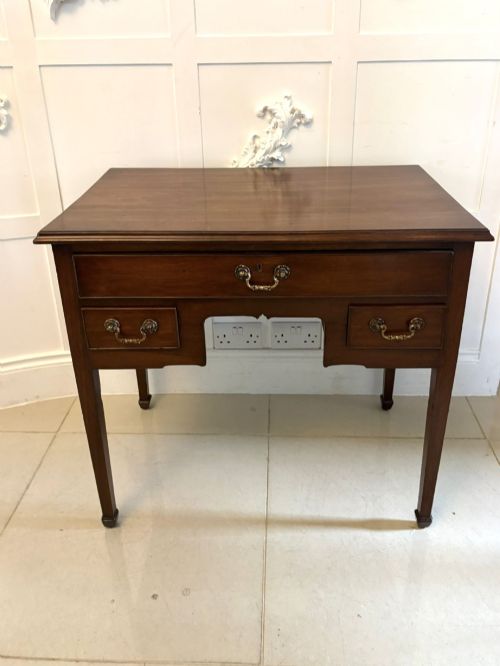
An antique oak hall desk brings sturdy timber and compact writing space right into a hallway.
Antique Oak Hall Desk
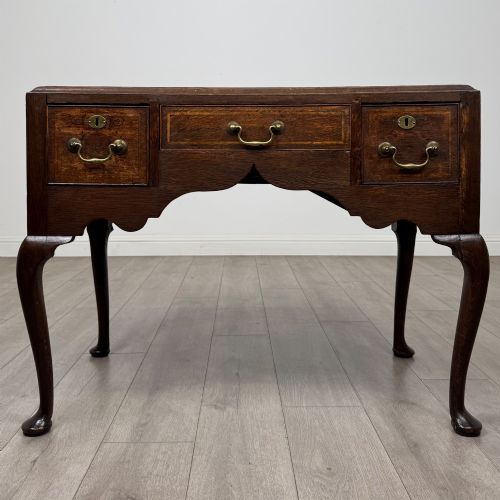
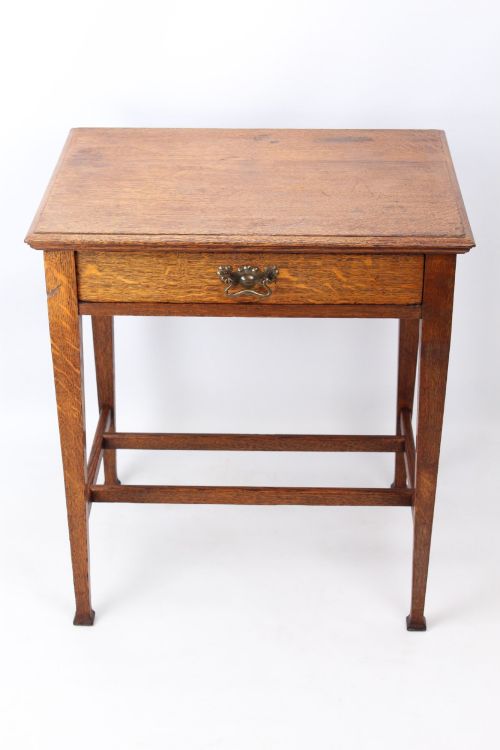
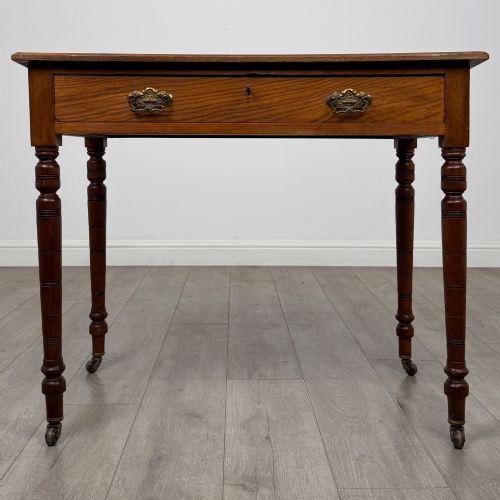
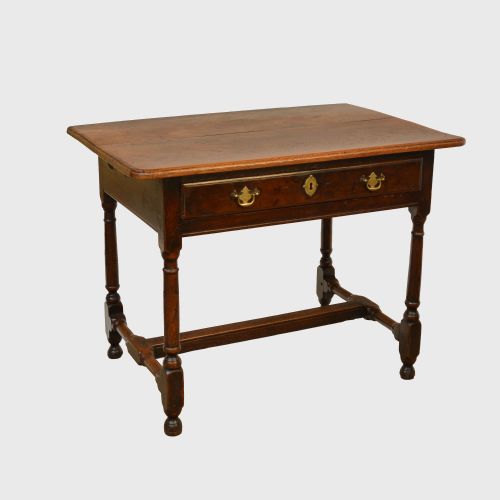
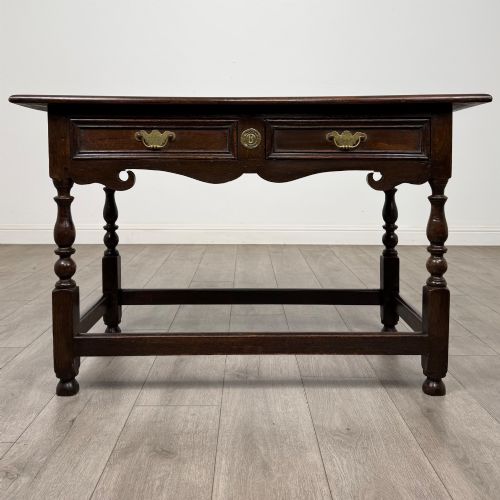
When you search for an antique oak hall desk, you encounter versatile multi-purpose forms spanning side tables, lowboys, and writing desks from the seventeenth century through to the Edwardian era. These pieces served practical domestic tasks in entranceways and reception rooms, often incorporating fitted drawers for correspondence and keys.
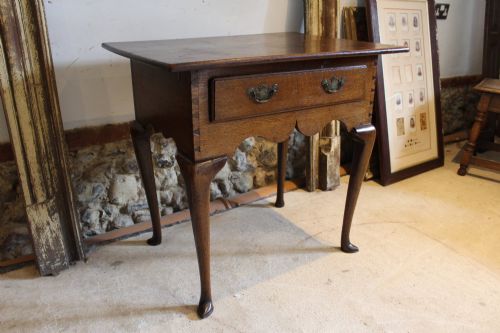
The version most commonly met on this page is the Georgian lowboy or the nineteenth-century writing table, prized for a modest footprint that suits narrow corridors. Makers utilised durable timber to construct compact surfaces that accommodate daily use without dominating a room.
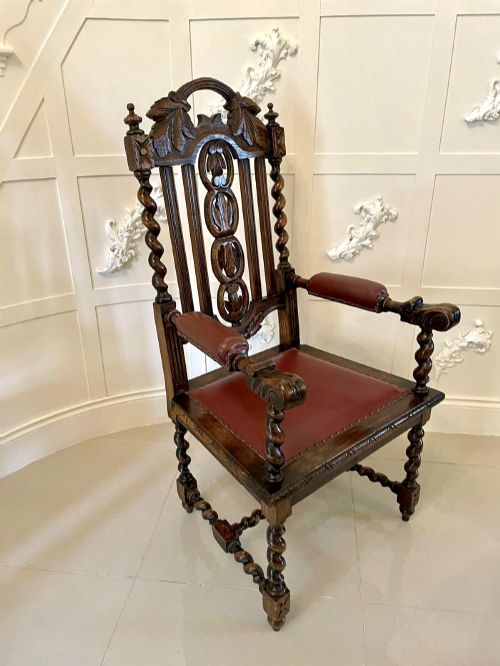
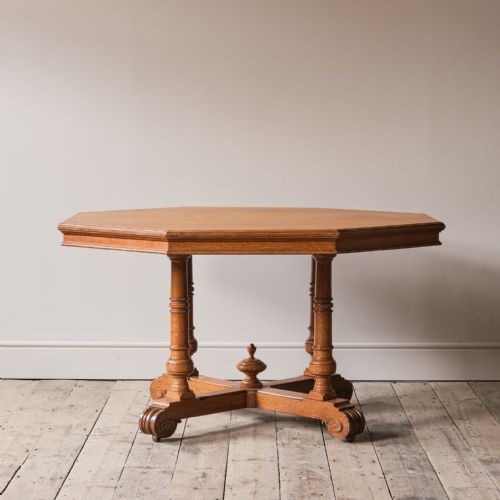
Examples range from restrained seventeenth-century Charles II specimens to carved Victorian Gothic revival pieces and plain twentieth-century console tables. Each variation reflects the prevailing taste of its period while maintaining a utilitarian function.
How they were made
Construction relies heavily on solid oak, frequently supplemented with secondary woods such as elm, pine, and yew in drawer linings and secondary panels. Cabinetmakers joined frames using traditional methods, incorporating brass handles and iron fittings for drawers.
Surfaces often feature inset leather writing panels or plain polished timber tops finished with wax. Carved ornamentation appears on Victorian and Arts and Crafts examples, utilising hand chisels to create geometric or Gothic relief work.
Several Victorian desks include secret compartments designed for stashing love letters away from inquisitive family members.
What varies in quality
Quality rests upon the crispness of the timber's figuring, the integrity of the original joints, and the retention of period brassware. Superior items display careful selection of quarter-sawn oak, which produces distinctive grain patterns known as medullary rays.
The refinement of hand-cut dovetails in the drawers and the depth of carved detail distinguish superior workshop production from simpler country furniture. Proportion and balance also govern worth, with narrower proportions commanding particular attention.
The Antique Oak Hall Desk Glossary
- Lowboy
- A small table with one or more drawers, originating in the late seventeenth century and frequently utilised as a dressing or writing surface. These pieces typically stand on slender cabriole or straight legs.
- Quarter-sawn
- A method of milling timber that cuts at right angles to the growth rings, yielding stable boards with prominent medullary ray figuring. This cut was favoured by quality cabinetmakers for visible surfaces.
- Dovetail
- A joint formed by interlocking wedge-shaped fingers, used primarily in drawer construction to ensure tensile strength. Hand-cut variations indicate earlier or more skilled craftsmanship.
- Console table
- A table designed to be fixed against a wall, sometimes supported by brackets or legs at the front only. In narrow spaces, these tables provide a surface without obstructing passage.
Antique Oak Hall Desk: Frequently Asked Questions
What is a lowboy?
A lowboy is a small wooden table equipped with one or more drawers, standing on legs that place the surface at a convenient height for writing or grooming. Eighteenth-century examples often feature cabriole legs and shaped aprons.
These pieces served various domestic functions in bedchambers and hallways before evolving into dedicated writing surfaces.
How do I date an oak desk?
Dating relies on examining construction techniques, such as hand-cut dovetails, timber preparation marks, and hardware styles. Earlier pieces from the seventeenth and eighteenth centuries show different joinery methods compared to Victorian or Edwardian production.
Stylistic cues like carved Gothic panels or plain Georgian proportions also help assign a piece to its correct period.
Were these desks used in hallways?
Historical domestic layouts required compact surfaces near entrances for depositing keys, gloves, and incoming post. Side tables and lowboys were readily adapted for this purpose by households requiring a landing place in narrow spaces.
Makers built these tables with shallow depths precisely to fit narrow corridors without obstructing movement.
What woods were used besides oak?
While oak forms the primary structure of these pieces, cabinetmakers frequently incorporated secondary timbers for internal components. Elm, pine, and yew appear in drawer frames, bases, and secondary panels.
In some instances, decorative panels or writing surfaces integrate inserts of leather or contrasting native hardwoods.