

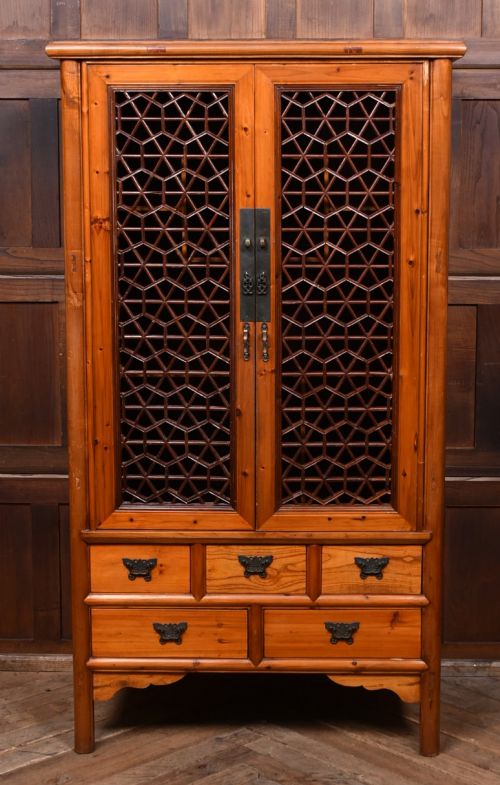
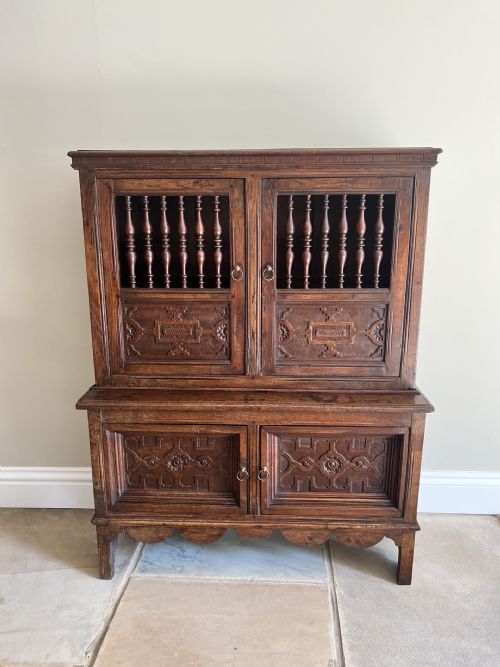


Antique Oak Food Safe
These antique oak food safe pieces are practical domestic storage items offering traditional ventilation and solid timber construction for the modern home.
Antique Oak Food Safe
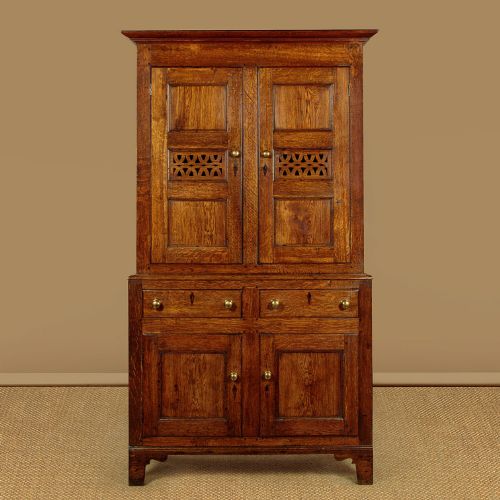
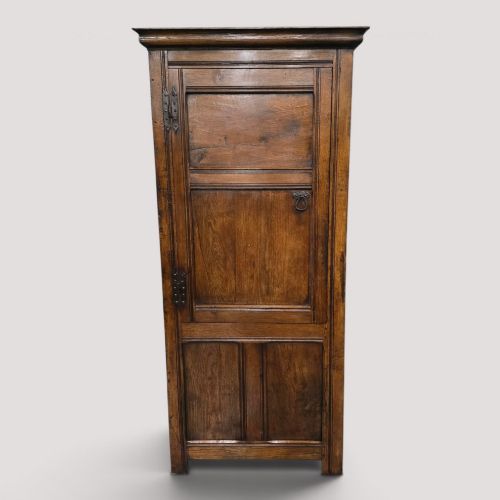
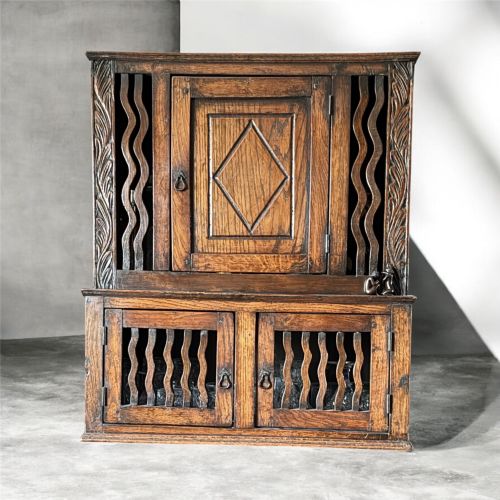
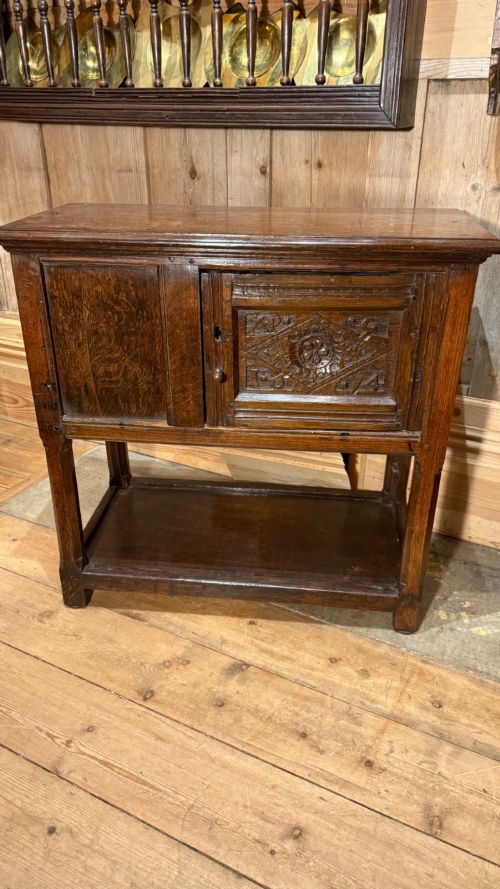
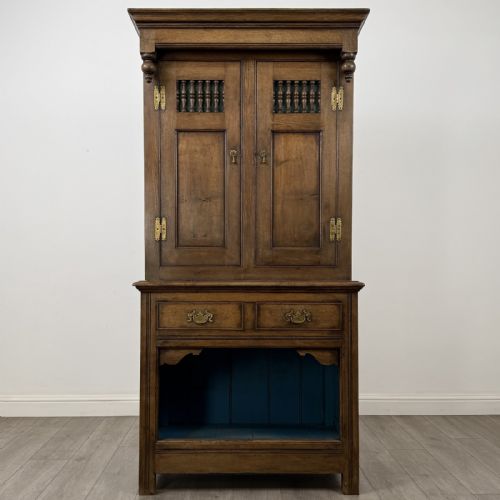
An antique oak food safe provides sturdy timber storage traditionally used to keep provisions secure from pests before modern refrigeration. These pieces appear on this page across several distinct regional styles and centuries.
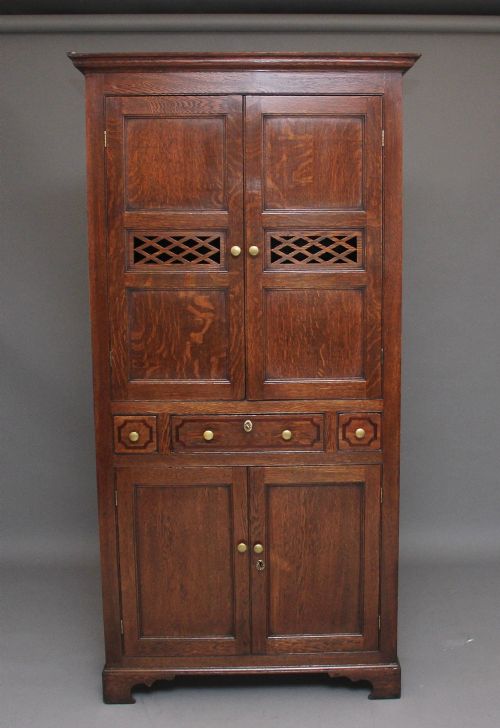
The versions most commonly met here include country cupboards, wall cabinets, and larder cupboards originating from British, French, and Japanese traditions. Each form reflects the domestic storage needs of its period.
Examples span the seventeenth, eighteenth, and nineteenth centuries, taking the form of hanging cupboards, food court cupboards, and bread safes. Oak is the primary timber, often paired with pine, cedar, or chestnut.
How they were made
Construction relies heavily on solid oak timbers, sometimes supplemented with pine, cedar, or chestnut depending on the regional workshop. Joinery methods suit the utilitarian function of domestic food storage.
Iron, wrought iron, and brass provide hardware such as original blacksmith locks and hinges. These functional metal elements secure the doors while adding distinct period character to the timber frames.
Antique Oak Food Safe Retail Price Guide 2026
Typical asking prices for oak food safe among the pieces listed under this phrase on Sellingantiques today, from the lower quarter to the upper quarter. They describe what is for sale here now, not the wider market.
Some French armoire and cupboard pieces still carry the cool, earthy scent of the manoir cellars where they spent centuries storing bread.
What varies in quality
Quality varies according to the integrity of the original timber and the retention of period hardware like blacksmith locks and hinges. Pieces retaining their original surfaces and regional fixings stand apart from heavily altered examples.
The sophistication of the joinery and the distinction of the regional style, whether French provincial, Jacobean, or Georgian country, define the upper tier of these storage cabinets.
The Antique Oak Food Safe Glossary
- Food safe
- A ventilated cabinet designed to store perishable food items securely away from insects and rodents. These pieces rely on pierced panels or mesh for airflow.
- Panetiere
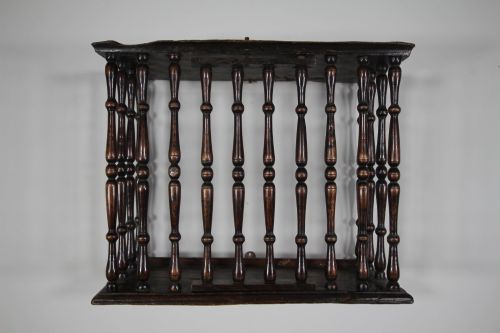
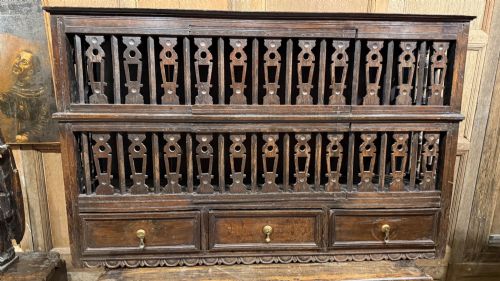
- A traditional French cabinet specifically built for storing bread, often featuring turned spindles or pierced panels. These originated in regions like Normandy.
- Hanging cupboard
- A wall-mounted storage cabinet designed to save floor space in smaller kitchens or larders. They are secured directly to structural walls.
- Jacobean
- A seventeenth-century stylistic period known for dark oak, geometric moulding, and sturdy construction. Pieces from this era display distinct period joinery.
Antique Oak Food Safe: Frequently Asked Questions
What is an antique oak food safe?
An antique oak food safe is a ventilated cabinet used historically to store provisions before the invention of refrigerators. They utilised mesh or pierced panels to keep food cool and secure.
Today, these timber cupboards serve as decorative and functional storage items in kitchens, dining rooms, or hallways.
How were food safes used?
These cabinets were placed in larders, kitchens, or cellars to store bread, cheese, and meats away from household pests. The ventilation allowed air to circulate around perishable goods.
In modern interiors, owners repurpose them to store tableware, linens, or dry goods while displaying period character.
What woods are used in these pieces?
The primary timber across these listings is solid oak, often complemented by secondary woods such as pine, cedar, or chestnut. Cabinet makers selected these durable timbers for everyday domestic use.
Metal components like iron, wrought iron, and brass were utilised for hinges, locks, and ventilation grilles.
How do I date an antique food safe?
Dating relies on examining the construction methods, timber patination, and style markers such as seventeenth-century Jacobean mouldings or French provincial designs. Original blacksmith ironwork also offers clues to the period of origin.
Comparing the form and hardware to documented regional examples helps establish the likely decade of manufacture.