

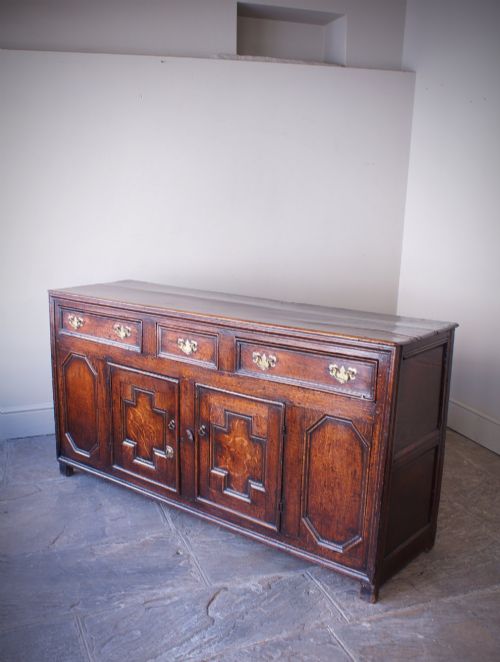
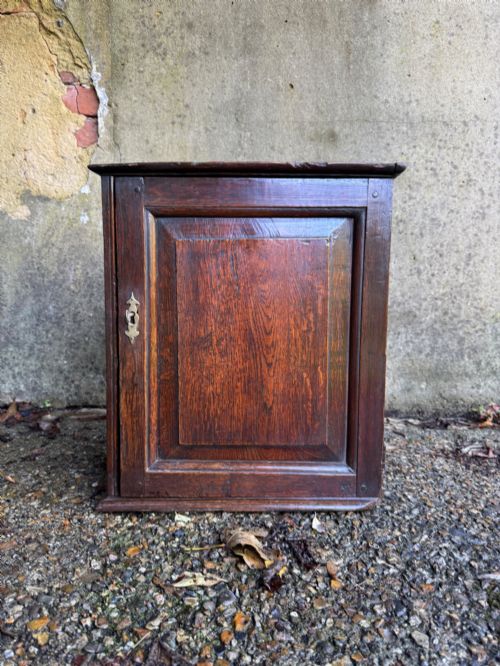
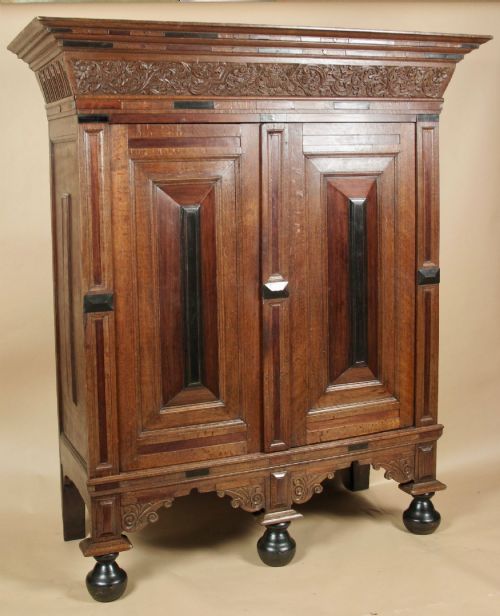
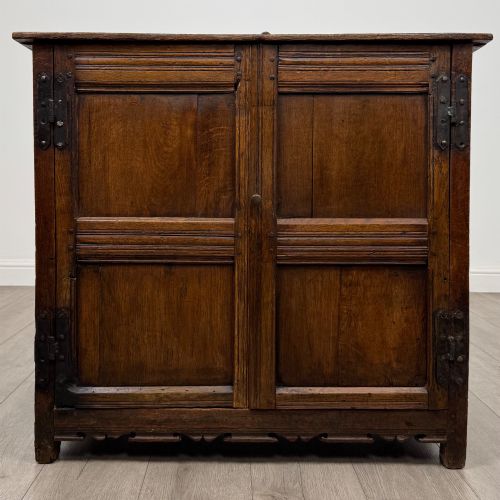
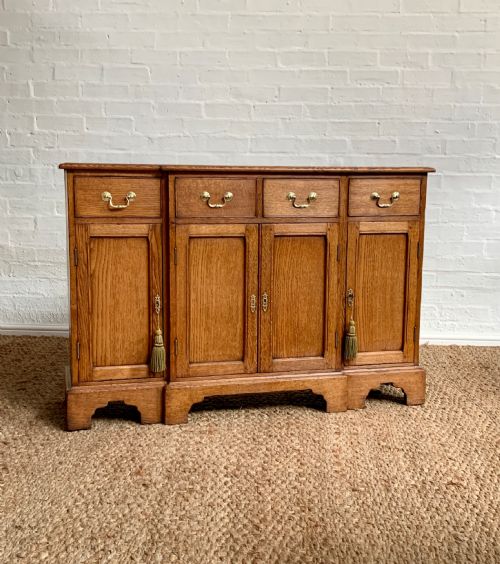
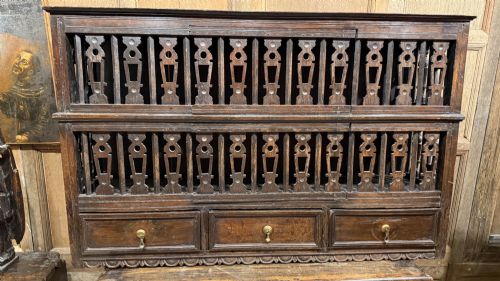
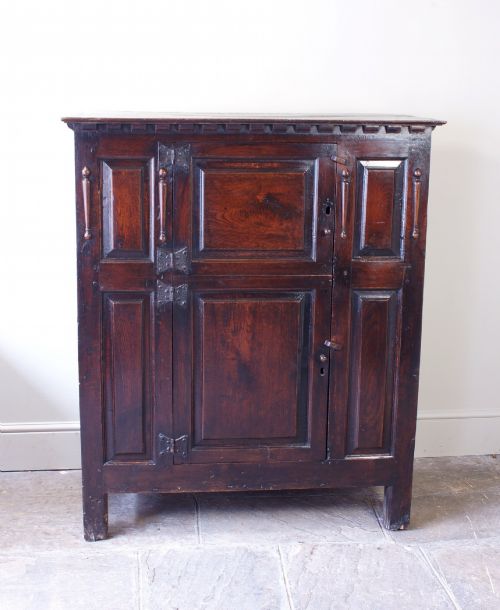


Small 17th Century Cupboard
A small 17th century cupboard delivers tangible history to a room through dense oak, rich walnut and period ironwork.
Small 17th Century Cupboard
When you search for a small 17th century cupboard, you are looking at compact storage pieces originating from the seventeen hundreds and earlier, alongside later revivals from nineteen twenty. The forms vary from hanging wall cabinets and table cabinets to miniature furniture, hutch cupboards, court cupboards, press cupboards, livery cupboards, food cupboards, armoires, and sideboards.
The material palette is predominantly solid oak, frequently paired with walnut, ebony, rosewood, and ebonised wood. Hardware relies on brass and wrought iron hinges, handles, and escutcheons that secure doors and drawers.
Stylistic influences range from strict Jacobean and Dutch Baroque to Italian Baroque, with many pieces built in a direct seventeen century style or under a Jacobean revival banner.
Assessing quality in early small cabinets
Quality rests in the integrity of the original timber and the depth of the carving. Pieces showing period construction methods alongside intact brass and wrought iron hardware command attention.
The distinction between seventeenth century originals and later nineteen twenty revivals alters the character of the timber and the crispness of the carved details.
Small 17th Century Cupboard Retail Price Guide 2026
Typical asking prices for small 17th century cupboard among the pieces listed under this phrase on Sellingantiques today, from the lower quarter to the upper quarter. They describe what is for sale here now, not the wider market.
Listings feature oak, walnut, ebony, and rosewood alongside brass and wrought iron hardware across seventeenth century and nineteen twenty pieces.
The Small 17th Century Cupboard Glossary
- Court cupboard
- An antique enclosed storage piece, often featuring tiered levels or recessed upper sections used for displaying plate and storing provisions.
- Livery cupboard
- A small food or storage cabinet designed for provisions, frequently ventilated through turned spindles or pierced wooden panels.
- Press cupboard
- A heavy timber storage piece featuring enclosed upper and lower compartments designed for linens and garments.
- Gelderse Kussenkast
- A large or architectural Dutch armoire style, translating to cushion cabinet, known for raised boss mouldings.
- Jacobean style
- The heavy, geometric decorative idiom of early seventeenth century English furniture design.
Small 17th Century Cupboard: Frequently Asked Questions
Where were small seventeenth century cupboards placed?
These compact cabinets sat upon tables, hung on walls, or stood independently in domestic rooms to store food, linens, and valuables.
Their modest dimensions allowed them to function across multiple spaces within early homes.
How do I spot a later revival piece?
Revival items, such as those from nineteen twenty, utilise machine working and different timber seasoning compared to seventeen century originals.
Examining the joinery and hardware reveals the true age of the cabinet.
What is the difference between a court and press cupboard?
A court cupboard typically incorporates recessed tiers or display sections, whereas a press cupboard focuses on enclosed double doors for storage.
Both forms appear in small scale variants across seventeenth century examples.
Are all these cupboards made of oak?
While oak is the dominant timber, walnut, ebony, rosewood, and ebonised wood appear frequently across Dutch and Italian Baroque pieces.
Hardwoods were selected for their durability and suitability for carved details.