

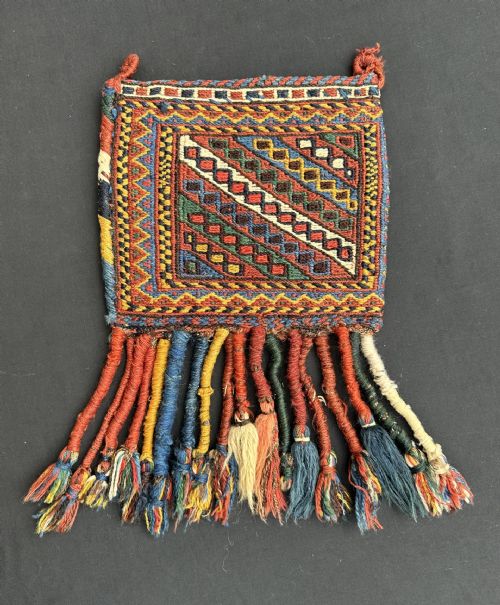


Antique Nomad Bag
An antique nomad bag brings the tactile geometry of tribal migration into modern interiors through utilitarian weaving.
Antique Nomad Bag
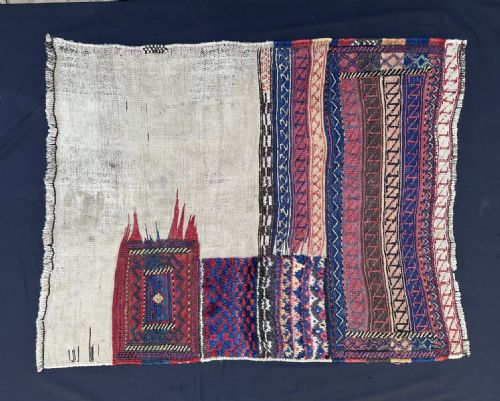
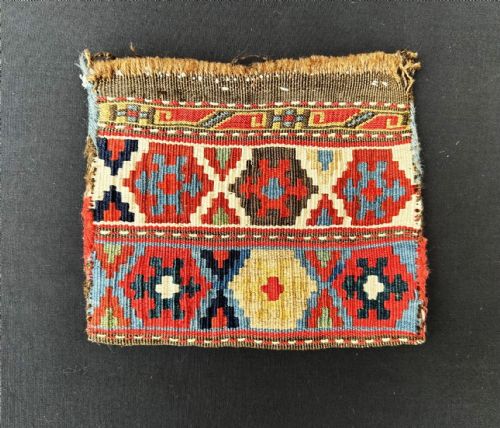
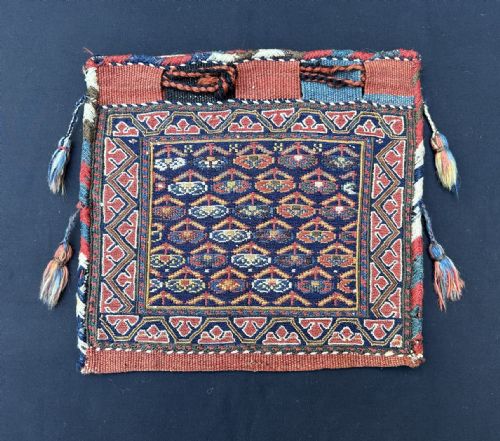
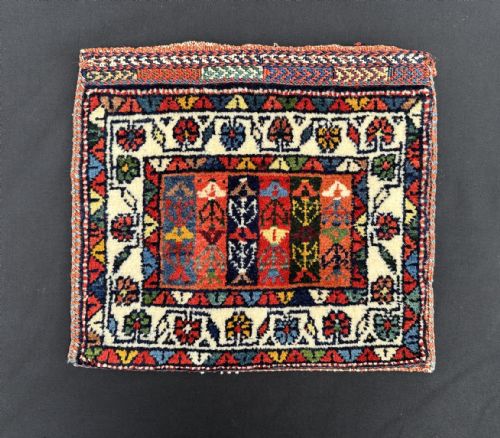
When searching for an antique nomad bag, collectors encounter functional vessels created by tribal groups across Persia, Central Asia, and the Caucasus for daily camp life. These pieces include salt bags, vanity bags, saddlebags, and spindle pouches used by groups such as the Afshar, Shahsevan, Yomut, and Tekke Turkmen.
The format typically survives as a single face separated from its original backing, or as an intact small pouch designed for suspension inside a tent or transport on an animal. The weaving reflects the specific regional iconography and practical storage needs of pastoralists from the nineteenth and early twentieth centuries.
Construction and materials
Weavers constructed these pieces using hand-spun wool and occasional goat hair for structural durability, employing pile knotting or flatweave techniques like soumak work. Natural dyes derived from local plants and minerals provided the foundational palette for complex geometric patterns.
Additional ornamentation occasionally incorporated cowrie shells or supplementary weft-wrapping. The resulting textiles combined dense structural integrity with portable utility suited to a mobile existence.
Salt bags occasionally retain traces of actual nomadic salt tucked into their narrow corners after a century of rest.
Evaluating the pieces
Quality depends upon the precision of the tribal drawing, the saturation and harmony of the natural dye palette, and the fineness of the knotting or weave. Examples that retain their original structural form or complete tribal motifs command greater attention from collectors.
Condition is weighed against the utilitarian nature of the objects, with preference given to textiles that preserve their primary edges, structural integrity, and uncompromised wool pile or flatweave surfaces.
The Antique Nomad Bag Glossary
- Khorjin
- A double-sided saddlebag used for transport on animals. These pieces were often cut apart later for use as separate decorative rugs.
- Torba
- A small storage bag produced by Turkmen tribes. They typically hung inside tents for domestic storage.
- Soumak
- A flatweave technique involving wrapping weft threads over warp threads. This method creates a textured surface resembling embroidery.
- Namakdan
- A narrow-necked salt bag woven by nomadic groups. The distinctive shape prevented salt from spilling during transport.
- Gul
- A medallion motif repeated across Turkmen carpets and bag faces. Each design identifies a specific tribal group or sub-tribe.
Antique Nomad Bag: Frequently Asked Questions
How were nomad bags used?
Nomadic families utilised these small pouches for practical storage within tents or during seasonal migrations. Common containers held salt, tobacco, pipes, spindles, and personal vanity items.
Containers hung from tent poles or wooden frames to keep provisions dry and accessible. Larger double formats draped across pack animals to carry personal belongings.
How do I clean an antique bag?
Surface dust should be removed gently using a soft brush or light suction without a beater bar. Professional textile conservators should handle wet cleaning to prevent dye bleed.
Water exposure can reactivate natural dyes or shrink hand-spun wool structures. Regular rotation and avoidance of direct sunlight preserve the fibres.
How are tribal regions identified?
Attribution relies on specific structural formats, wool quality, and characteristic geometric or medallion motifs. Weaving techniques like soumak work or specific knot counts link pieces to groups such as the Afshar or Shahsevan.
Colour palettes also aid origin identification, as regional dyers utilised local flora and minerals. Comparative study of archive examples establishes the likely tribal workshop.
Can these textiles be displayed on walls?
Mounting is straightforward using conservation-grade Velcro stitching or a custom fabric sleeve along the reverse edge. This weight distribution prevents stress on the historical wool foundation.
Display locations should avoid continuous direct sunlight and high humidity. Proper mounting allows the structural geometry and pile texture to remain visible.