



Antique Moorland Landscape Painting
When you search for an antique moorland landscape painting, you find works that capture open upland terrain using oil and watercolour.
Antique Moorland Landscape Painting
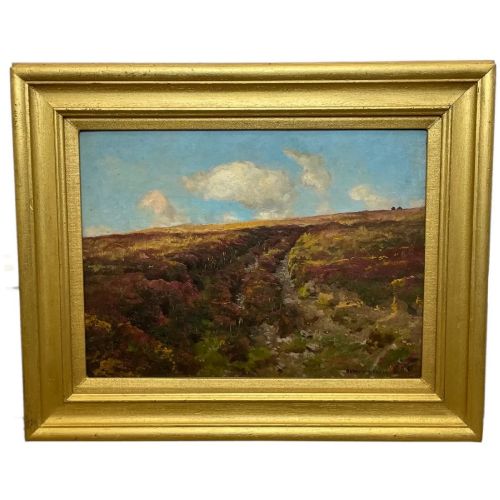
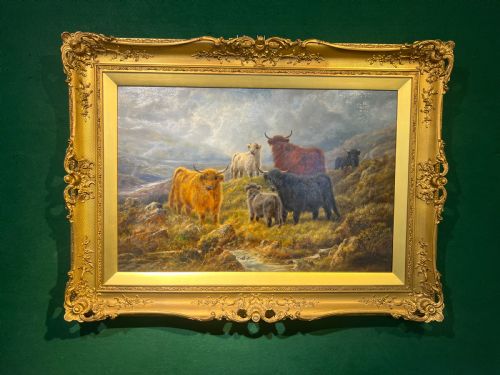
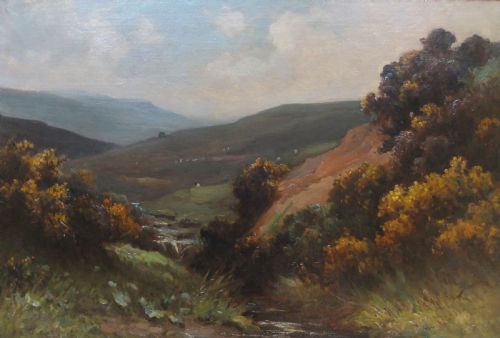
An antique moorland landscape painting depicts open British uplands, often featuring sheep, cattle, deer or horses alongside expansive skies and heather-covered hills. The works span the Victorian era, the Edwardian period and the early decades of the twentieth century, reflecting regional scenes from Scottish highlands to Exmoor, Dartmoor and Yorkshire.
The versions most commonly met on this page include framed watercolours on paper and oil paintings executed on canvas, wood panel or board. These pieces frequently incorporate local wildlife, sporting dogs or drovers navigating the rugged terrain, reflecting the strong rural interests of British art during the nineteenth and early twentieth centuries.
How they were made
Artists painted these scenes using oil on canvas, wood panel or board, alongside delicate watercolours and pastels on paper. These pigments were often protected behind glass and housed within gilt or carved wood frames.
Techniques ranged from fluid watercolour washes capturing atmospheric weather to rich oil impasto building up the texture of heather, turf and hillsides.
Watchful setters and wandering sheep keep a close eye on the weather across these wild hillsides.
What varies in quality
The standard of a moorland landscape rests on the artist's ability to render the specific light, weather and topography of upland terrain rather than relying on formulaic formulas. Stronger examples display confident brushwork and precise draughtsmanship in the depiction of animals, figures and distance.
Materials also influence the piece, with substantial oil paintings on canvas and well-preserved watercolours under glass showing greater longevity and visual depth than weaker decorative works.
Tom Campbell·Arthur Wardle·Joseph Knight·Charles Walter Simpson·Owen Bowen·James Orrock·John A Houston·Florence Hess·Colin Graeme Roe·Joseph Farquharson·John Charles Tunnard·Edmund Morris Wimperis·Arthur H Enock·Frederick Richard Lee·Charles James Adams·Robert Cleminson·Alfred Graham·Albert Kinsley·William H Pigott·Moritz Eduard Lotze·John William Buxton Knight·John Bates Noel·Peter Ghent·Wycliffe Egginton
The Antique Moorland Landscape Painting Glossary
- Watercolour painting
- A work executed with water-soluble pigments on paper, valued for its luminous transparency and delicate handling of light. These pieces are typically displayed behind glass within a protective frame.
- Oil on canvas
- A traditional medium utilising pigments suspended in drying oil applied to a woven fabric support. This technique allows for rich texture, depth of colour and subtle blending.
- Wood panel
- A rigid support base made from timber used by artists for oil paintings before and alongside stretched canvas. Panels offer a stable surface that preserves fine detail.
- Gilt wood
- Timber framing finished with a thin layer of gold leaf or metallic gilt coating. These ornate surrounds enhance the visual impact of the artwork contained within.
Antique Moorland Landscape Painting: Frequently Asked Questions
What subjects appear in these paintings?
These works typically show open upland terrain, hills and valleys, often populated with sheep, cattle, deer, ponies or sporting dogs. Human figures such as drovers, walkers and fishermen also appear.
The scenes frequently reference specific British locations including Scottish highlands, Exmoor, Dartmoor, Yorkshire and Lancashire.
How should I frame and display them?
Watercolours require framing behind glass with appropriate mounts to protect the paper from moisture and direct sunlight. Oil paintings on canvas or panel are generally displayed in their original gilt or wood frames without glass.
Position pieces away from direct heat sources and strong sunlight to preserve the pigments and paper supports.
How can I tell the period of a painting?
Stylistic clues, framing methods and materials help indicate the era, ranging from Victorian works with rich narrative detail to early twentieth-century Scottish and British impressionist approaches.
Signatures, dates inscribed on the reverse and artist biographical records further narrow down the specific decade of creation.
What is the difference between oil and watercolour versions?
Oil paintings use heavy pigments on canvas, board or panel, offering deep textures and robust surfaces. Watercolours use translucent pigments on paper, creating lighter, more atmospheric effects.
Watercolours require protection under glass, whereas oil paintings remain exposed to the room environment.