



English Sporting Art
English sporting art captures horses, hounds, and field pursuits across canvases, prints, and wooden decoys that bring traditional field sports indoors.
English Sporting Art
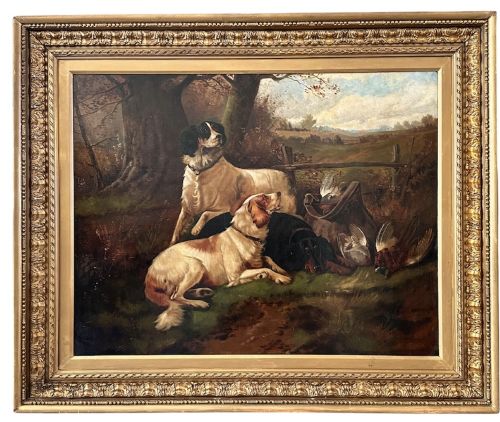
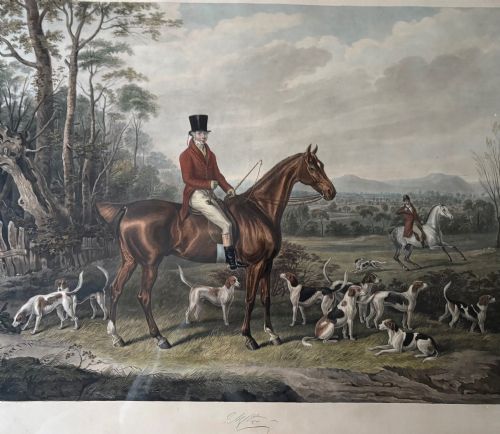
English sporting art centres on oils, watercolours, and engravings depicting horses, gun dogs, hunts, and racehorses. These works span the Georgian, Regency, Victorian, and Edwardian periods, reflecting the heritage of country pursuits.
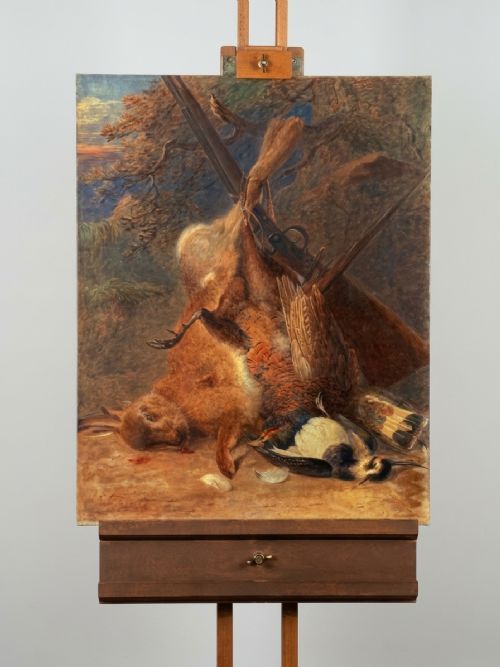
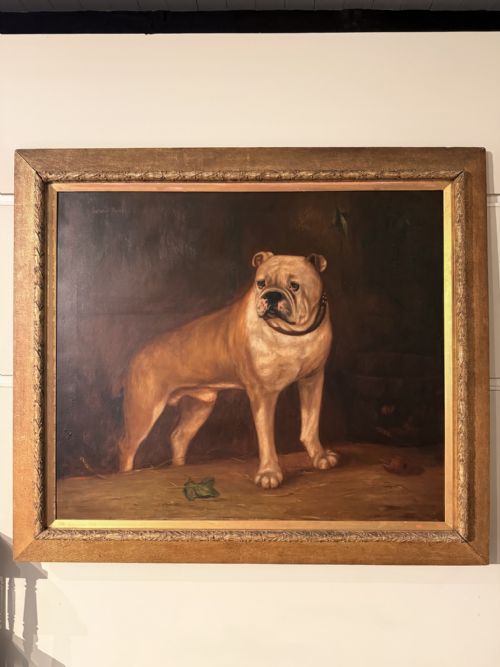
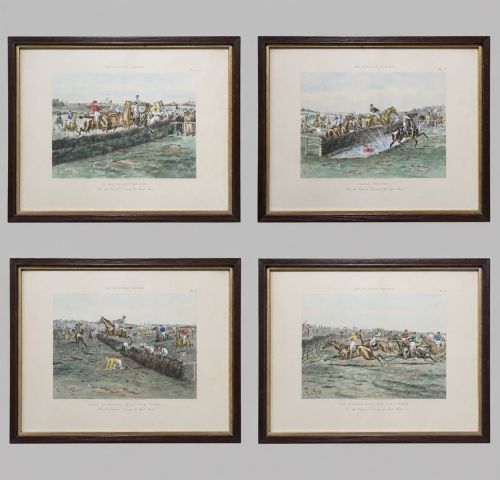
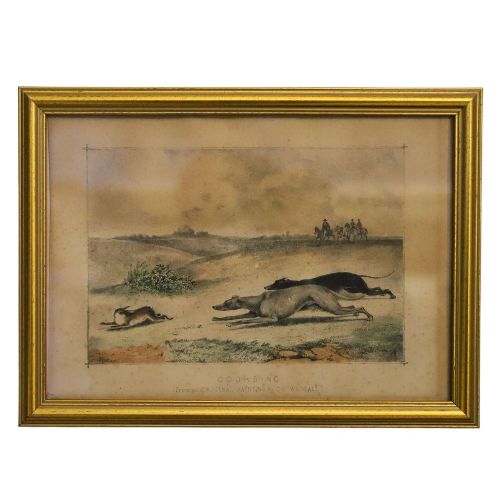
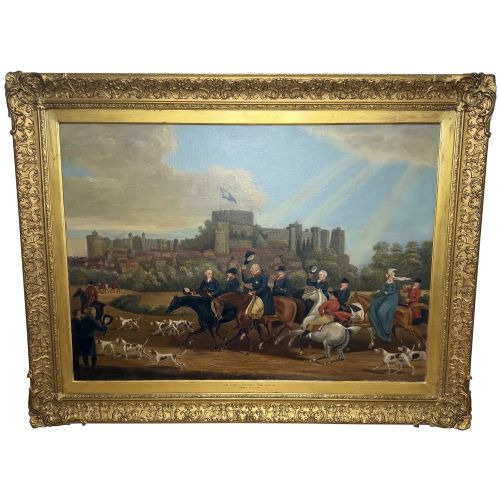
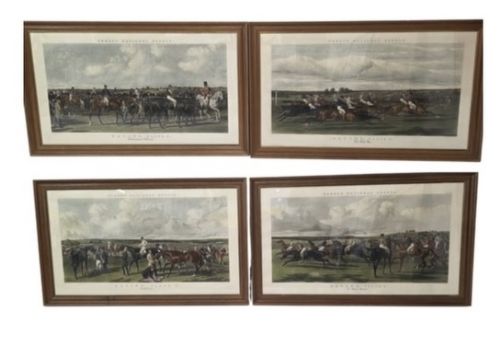
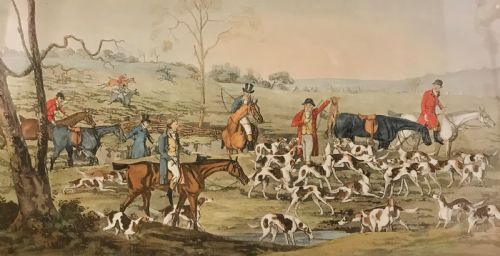
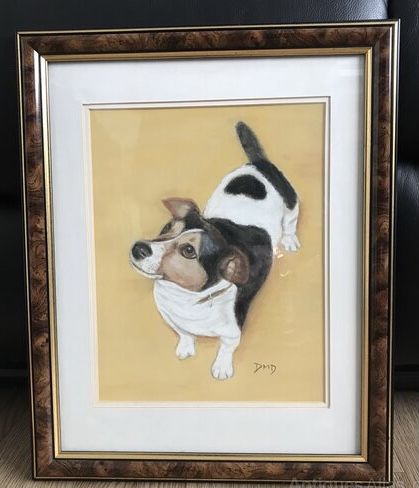
Canvas oil paintings and framed prints dominate the selection, alongside hand-coloured engravings, lithographs, and wooden decoys. Subjects range from individual portraits of prize hounds to sweeping depictions of hunts and coaching scenes.
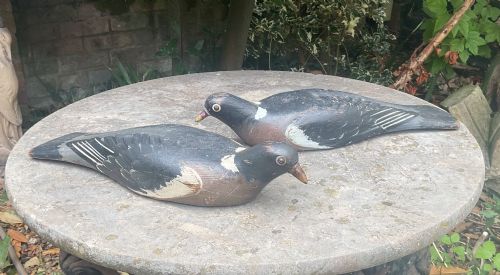
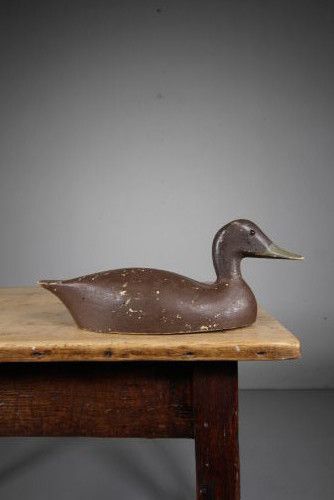
The material record also includes painted wood decoy pigeons and nineteenth-century watercolours of game, showing the diverse ways artists recorded rural life and field sports.
Materials and techniques
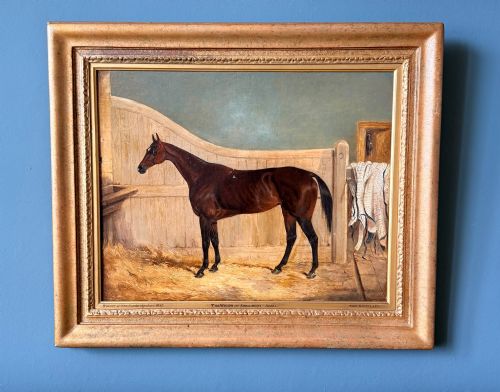
Artists worked primarily in oil paint on canvas or board, capturing the sheen of horse coats and the textures of landscape backgrounds with layered brushwork. Watercolour and bodycolour appear frequently in preparatory studies and detailed works on paper.
Printmakers utilised aquatints, lithographs, and hand-coloured engravings to reproduce popular hunting scenes and racehorse portraits for broader circulation. Wooden decoys were hand-carved and painted to resemble pigeons and ducks for field use.
Painted wooden decoy pigeons stand ready on wooden bases, having retired from the field to keep watch over mantelpieces.
Distinctions in quality
Quality rests on the artist's ability to render animal anatomy accurately, particularly the musculature and posture of horses and hounds in motion. Superior works display a careful balance between the principal subject and the surrounding landscape.
Original oil paintings by known nineteenth-century practitioners command greater attention than mass-produced prints, though condition and the vibrancy of surviving pigments remain vital across all media.
George Sydney Shepherd·George Finch Mason·John Sargent Noble·C. H. Weigall·C R Breytle·Thomas Walker Bretland·John Frederick Herring Senior·Benjamin Blake·John Rattenbury Skeaping·John Arthur Lomax·Arthur Wardle·Gertrude Halsband·John Sanderson Wells·Samuel Raven·Edward Lloyd of Ellesmere·Michael Lyne·Colin Graeme Roe·Samuel Spode·Charles Faulkner·Clifton Tomson·Robert Cleminson·John Frederick Herring Jnr·Samuel Henry Alken
The English Sporting Art Glossary
- Aquatint
- A printmaking technique that produces tonal areas resembling watercolour washes, frequently used in nineteenth-century sporting prints. This method allowed publishers to issue faithful reproductions of popular hunting and racing paintings.
- Bodycolour
- Watercolour mixed with white pigment to produce an opaque finish. Artists utilised this medium to add highlights and dense colour to works on paper.
- Lithograph
- A planographic printing process based on the repulsion of oil and water, commonly employed for nineteenth-century sporting illustrations. Prints produced this way captured fine lines and tonal gradations.
- Sporting art
- Fine and decorative works depicting rural pursuits, horses, hounds, and game. The genre records the history of equestrianism, shooting, and hunting.
English Sporting Art: Frequently Asked Questions
What subjects appear in english sporting art?
These works depict racehorses, hunters, gun dogs, shooting parties, and rural coaching scenes. Artists recorded the prominent animals and landscapes associated with country pursuits.
Subjects also include individual animal portraits, such as specific prize-winning dogs and horses, alongside dynamic action scenes from hunts and horse races.
How do I date an antique painting?
Dating relies on stylistic evidence, clothing in the background figures, and framing materials. Signatures and dates inscribed on the canvas provide direct clues.
Comparative analysis with known works by nineteenth-century artists helps narrow down the decade of production when a date is absent.
Where were these pieces displayed?
Country houses, estate libraries, and sporting lodges traditionally housed these works to celebrate family bloodlines, prize animals, and hunting achievements.
Today, they transition easily into domestic interiors, adding traditional character to studies, hallways, and living rooms.
Are painted wooden decoys considered art?
Carved wooden decoys function as both utilitarian objects for the field and folk art collectibles. Their hand-painted surfaces and sculptural forms reflect period craftsmanship.
Collectors value them for their rustic aesthetic and the authentic wear showing their use in nineteenth and early twentieth-century shooting.