

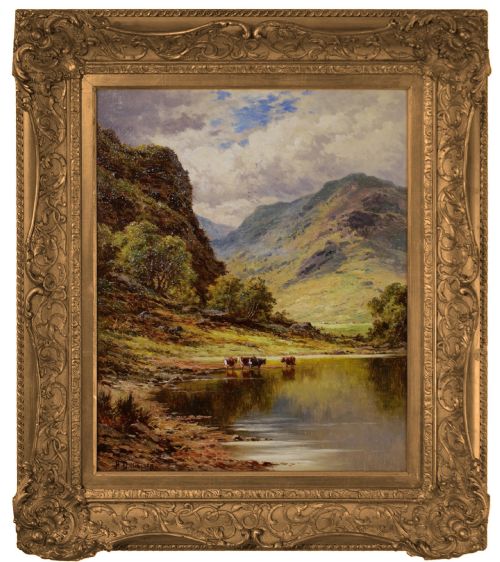
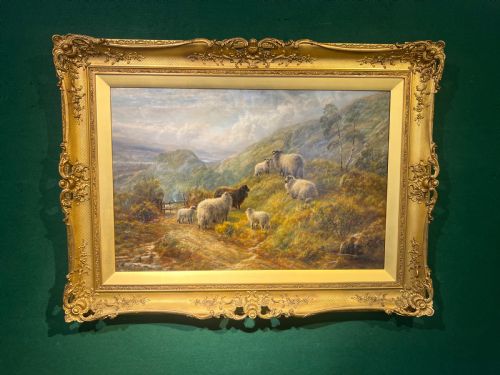
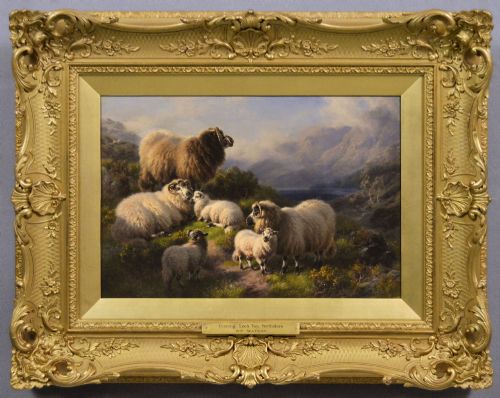
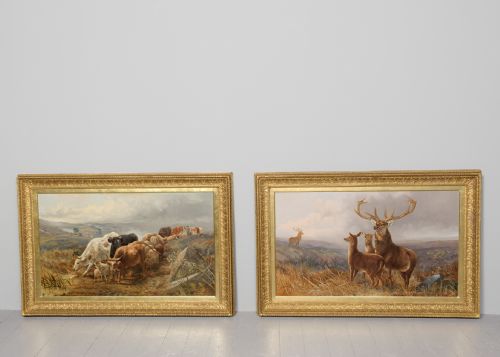


Highland Landscape Wall Art
Highland landscape wall art captures the rugged topography, remote lochs and cattle of northern terrain through nineteenth and early twentieth century oils and watercolours.
Highland Landscape Wall Art
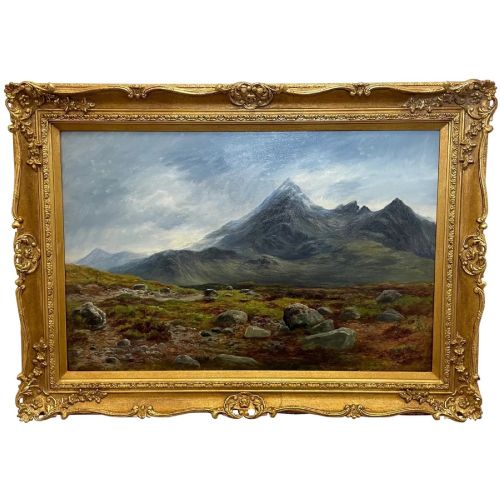
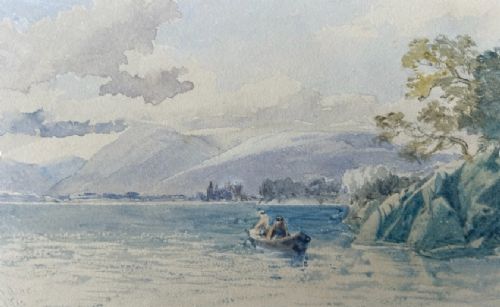
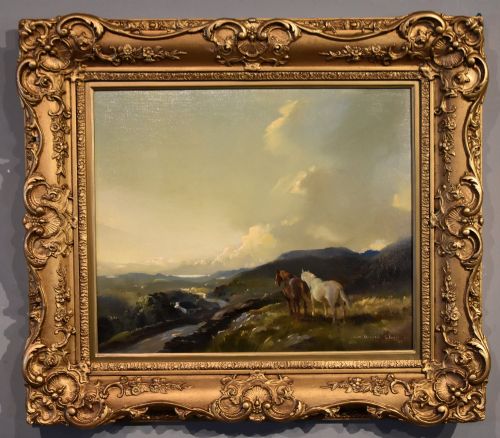
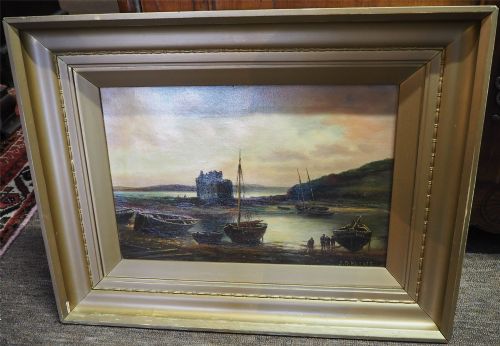
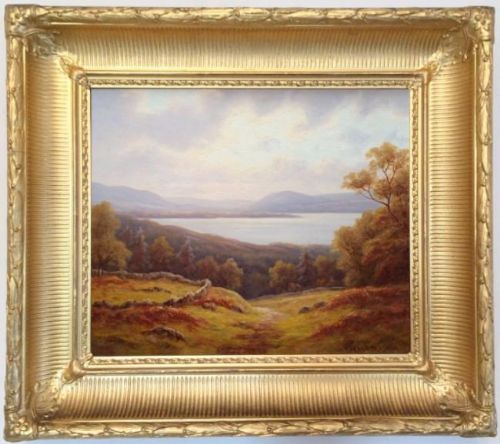
When you search for highland landscape wall art, you are looking at oil paintings, watercolours, and gouache works created during the Victorian, Edwardian, and early twentieth century periods. The most common pieces on this page are oil paintings on canvas or wood panel depicting Scottish scenes like Loch Awe, Loch Lomond, and the Isle of Arran.
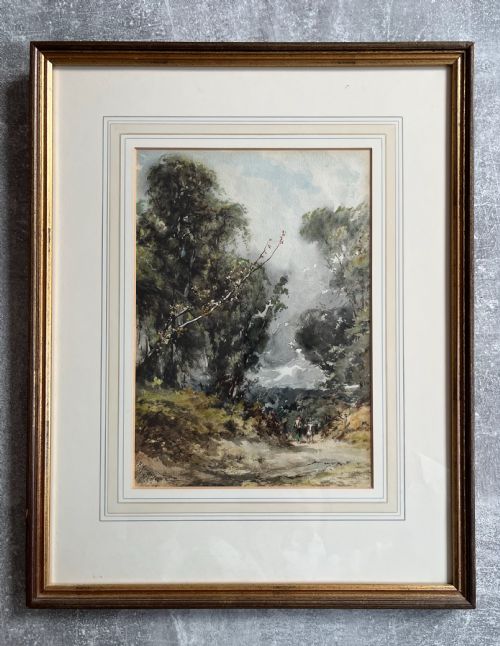
The subjects frequently feature misty mountains, highland cattle, sheep grazing near remote bothies, and dramatic lochs under changing skies. These works stem from the Scottish School and British Realism traditions, capturing both grand vistas and quiet rural corners.
Framed artwork ranges from modest interior studies to huge landscape canvases housed in ornate giltwood and gesso frames. Many carry signatures of recognised regional artists who documented the topography and changing light of the northern terrain.
How they were made
Artists built these compositions using oil paint or watercolour applied to stretched canvas, prepared wood panels, or heavy paper stock. Canvases were typically primed before brushwork was layered to build depth in distant mountains and rich texture in foreground vegetation.
Many works incorporate fine detail through the controlled use of oil medium, allowing for subtle tonal shifts in skies and water. Works on paper often utilise gouache or pastel highlights to catch light on highland cattle and rocky outcrops.
Surviving pieces are almost universally housed in period framing, frequently constructed from wood finished with moulded gesso and gilt leaf. These surrounds protect the edges of the canvas and provide the heavy visual weight typical of nineteenth century display.
Sheep and highland cattle appear in such vast numbers across these canvases that they out-graze the actual Scottish highlands.
What varies in quality
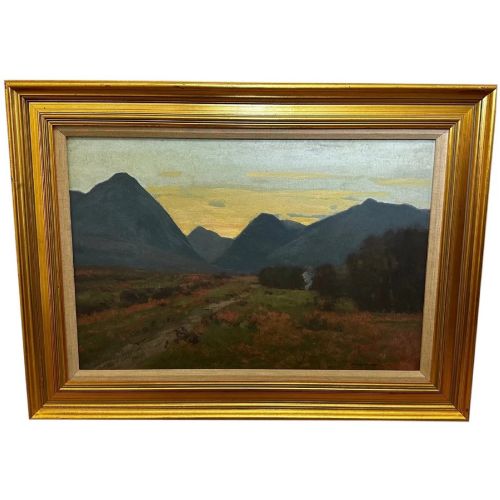
Quality rests primarily on the handling of light and atmosphere, distinguishing routine topographical records from masterful atmospheric works. Superior pieces capture the transient qualities of Highland weather, such as mist lifting off water or the amber glow of sunset over a loch.
Brushwork density and control also set pieces apart, with finer works showing confident, varied application in both the rugged textures of the terrain and the soft rendering of distant skies. Weaker examples rely on formulaic repetition without genuine observation.
The execution of focal elements like highland cattle, figures, or working ponies dictates the overall success of the composition. Stronger paintings integrate these elements naturally into the broader landscape rather than treating them as isolated additions.
William Beattie-Brown·Thomas Miles Richardson Jnr·Tom Campbell·George Houston·Henry H. Parker·Robert Watson·William Watson Jnr·Robert Cleminson·Vernon DeBeauvoir Ward·Everett Watson Mellor·Joseph Knight·William George Tennick·Archibald Kay·William Henry Mander·Alfred de Breanski·Benjamin Williams Leader
The Highland Landscape Wall Art Glossary
- Giltwood
- Wood carved and covered with a thin layer of gold leaf. It forms the reflective surface of period frames.
- Gesso
- A plaster-like mixture applied to wood frames before gilding. It is carved or moulded to create decorative relief patterns.
- Scottish Impressionism
- A painting style focusing on light and spontaneous brushwork. It emerged in Scotland around the turn of the twentieth century.
- Oil on Canvas
- Pigment mixed with drying oil applied to a woven fabric support. This combination offers rich colour depth and durability.
- Gouache
- An opaque watercolour paint containing added white pigment. It produces solid matte areas of colour in works on paper.
Highland Landscape Wall Art: Frequently Asked Questions
What subjects appear in these works?
The compositions typically portray mountainous terrain, expansive lochs, and remote glens across Scotland and northern England. Cattle, sheep, and local figures engaged in rural tasks frequently populate the foregrounds.
Artists also recorded specific named locations such as Loch Lomond, Loch Etive, and the Isle of Arran. These scenes reflect a nineteenth century romantic fascination with wild and untamed British geography.
How do I care for these paintings?
Keep the artworks away from direct sunlight and sources of intense heat to protect the oil paint and canvas from drying out. Maintaining a stable room temperature prevents the wood panels and stretchers from warping.
Dust the frames gently with a dry, soft brush and avoid using liquid cleaners on the canvas surface. Professional conservation is recommended if the paint layer shows signs of cracking or accumulated grime.
Are these paintings original?
The listings comprise original hand-painted works created directly by artists rather than modern reproductions or prints. Many pieces feature artist signatures, monograms, or period inscriptions on the canvas or reverse.
Stylistic markers, materials such as traditional gesso frames, and canvas types help establish their nineteenth or early twentieth century origins. Documentation or signatures further support individual attributions.
How do I identify the period?
Victorian and Edwardian works often display distinct framing styles, heavier gesso mouldings, and specific canvas stamps from period art suppliers. The clothing of any figures depicted and the painting techniques also offer clear chronological clues.
Nineteenth-century pieces generally favour tighter academic realism or romanticism, while early twentieth-century examples lean towards broader Scottish Impressionism and looser brushwork.