

Traditional Equestrian Sporting Painting
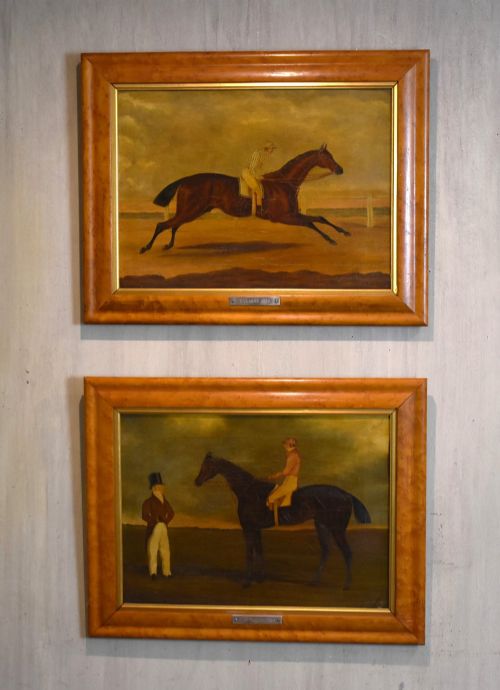
Traditional equestrian sporting painting captures the power of the horse and the thrill of the hunt through oil on canvas from the nineteenth and twentieth centuries.
Traditional Equestrian Sporting Painting
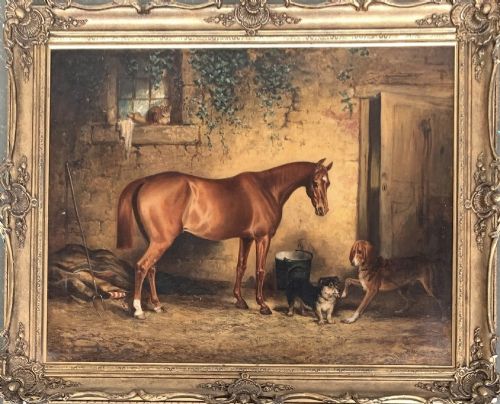
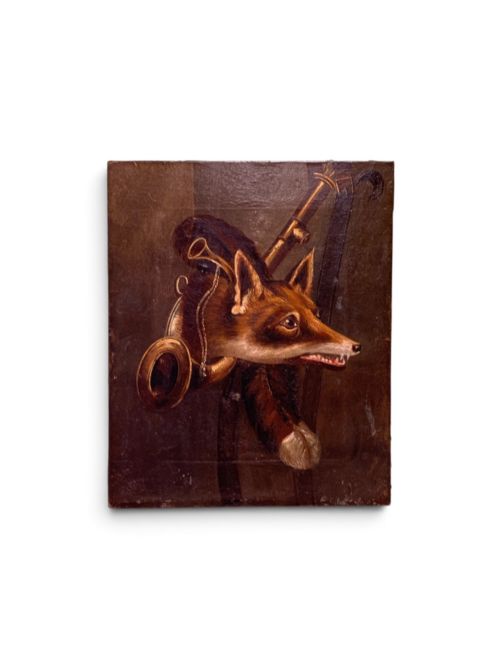
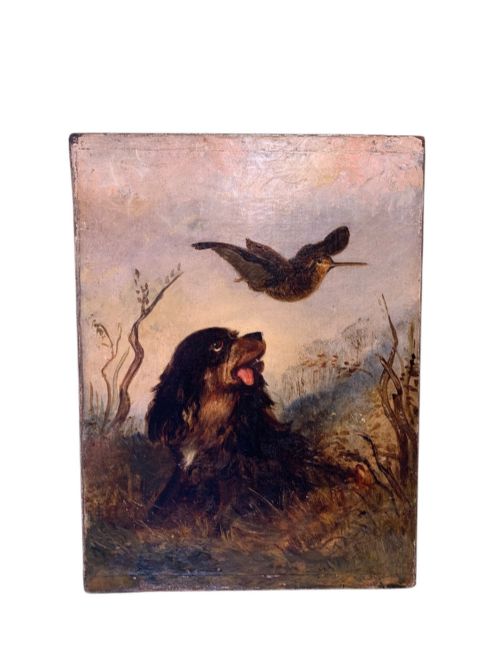
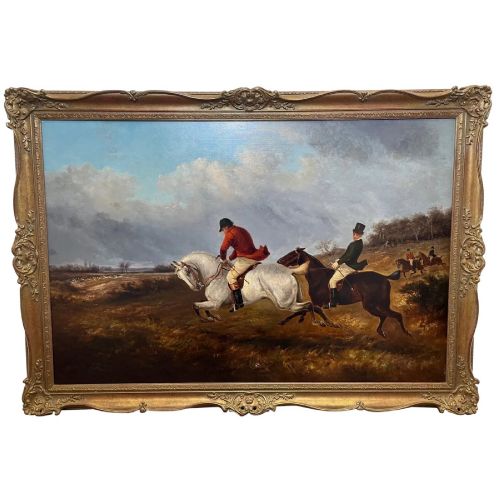
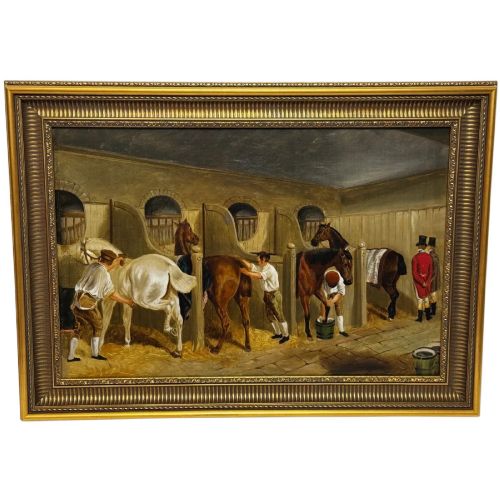
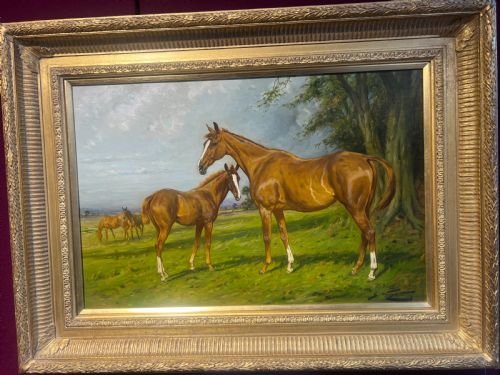
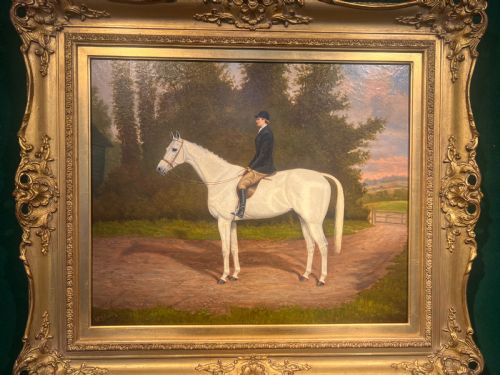
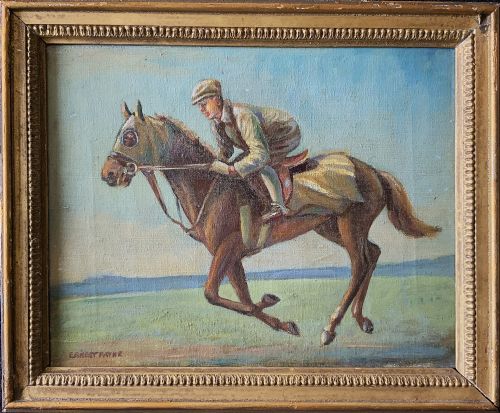
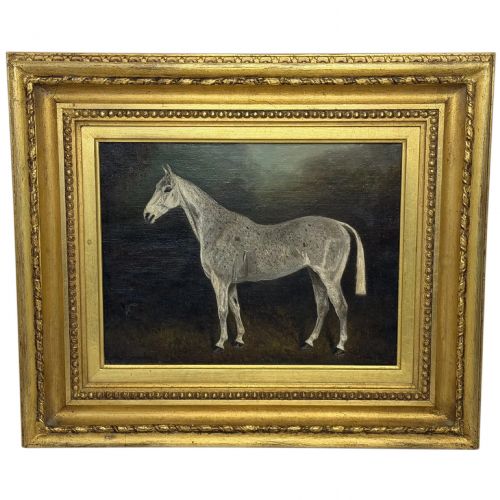
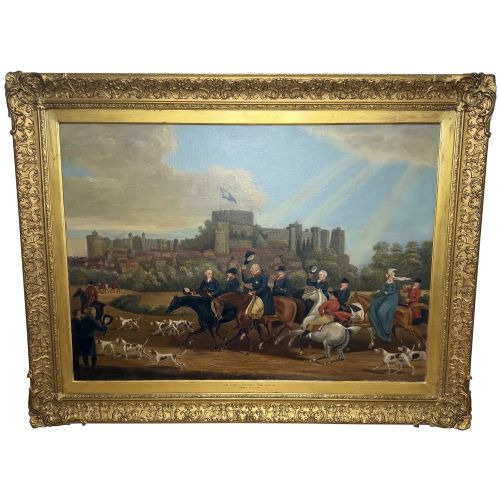
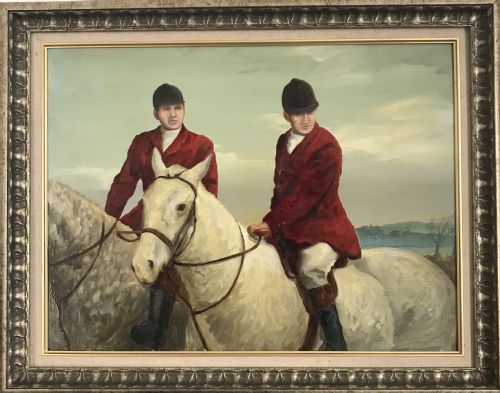
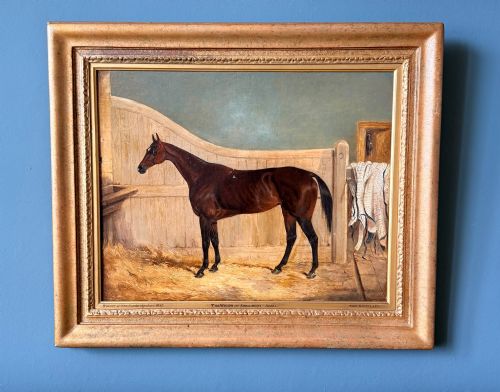
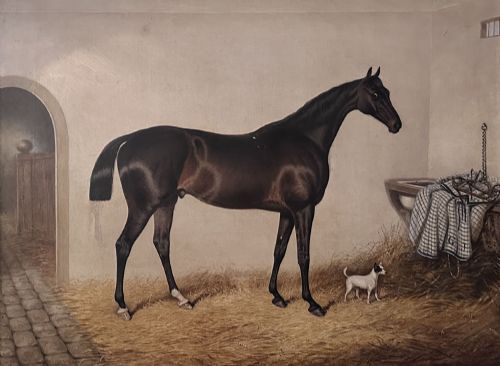
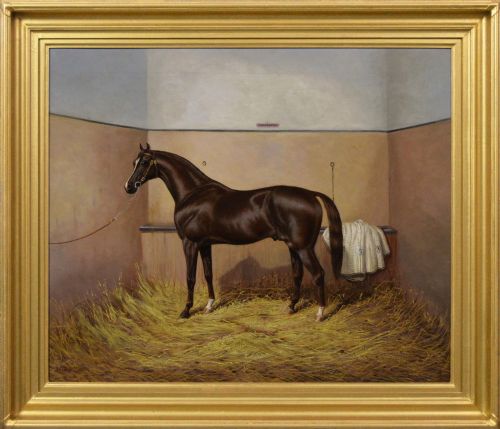
A traditional equestrian sporting painting depicts horses, hounds, hunts and coaching scenes rendered in oil paint on canvas or panel. Buyers seeking this phrase encounter detailed horse portraits, dynamic hunting scenes, and royal racehorses set against pastoral backdrops.
The works originate predominantly from the nineteenth century and the Edwardian era, spanning periods labelled Victorian, Georgian and mid-twentieth century. Many pieces focus on named hunters and famous racehorses recorded by specialist animal painters.
Framing varies from simple wooden moulding to ornate giltwood frames that reflect the high social standing of the original patrons. Collectors find both intimate head studies of bay hunters and large panoramic canvases showing the full sweep of the field.
How They Were Made
Artists painted primarily with oil paint on stretched canvas, though certain earlier examples utilise wood panels made from pine. The medium allowed painters to build rich layers of pigment that captured the glossy sheen of a horse's coat and the texture of autumn landscape.
Finished canvases were secured within wood frames, frequently finished in gilt or giltwood to enhance the visual impact of the composition. Detail work relied on fine-tipped brushes to delineate bridle leather, jockey silks and the distinct markings of individual hounds.
Several canvases record the likeness of champion showjumpers alongside their human partners, preserving equine celebrities of past decades.
What Varies in Quality
Anatomical accuracy separates superior horse portraits from generic depictions, as master painters understood the precise skeletal structure and musculature of the equine form in motion. The handling of light across the animal's flank and the integration of the horse into its surrounding landscape reveal the true skill of the hand.
The provenance and documentation associated with a named horse, owner or master painter elevate the standing of a canvas. Compositional complexity, such as grouping multiple hounds, horses and riders coherently across a wide field, distinguishes ambitious works from standard studio pieces.
Henry Barraud·Thomas Smythe·George Wright·Ernest Payne·Thomas Walker Bretland·John Frederick Herring Snr·John Arthur Lomax·Albert Clark·C W Tuck·John Sanderson Wells·Basil Nightingale·William Williams·Abraham Cooper·Philip Henry Rideout·Edward Lloyd of Ellesmere·George E Sharpe·Charles Faulkner·Fannie Moody·Edwin Frederic Holt·Clifton Tomson·Alfred Wheeler·John Frederick Herring Jnr·Alfred Grenfell Haigh·Samuel Henry Alken
The Traditional Equestrian Sporting Painting Glossary
- Giltwood
- Wood carved and coated with gold leaf or a gold-coloured metallic finish. These decorative frames often accompany Victorian and Edwardian canvases.
- Bay
- A horse colour characterised by a reddish-brown body with black points on the mane, tail and lower legs. This coat colour appears frequently in nineteenth-century portraits.
- Eglomise
- A technique where design and gilding are applied to the reverse side of glass. This process produces a reflective, finished surface seen in certain reproductions.
- Panel
- A flat piece of wood used as a rigid support for painting instead of stretched fabric. Pine panels are typical of older works before canvas became dominant.
- Grisette
- A term used in historical titles to denote a specific grey mare or working horse. It often appears in records alongside the geographical location of the subject.
Traditional Equestrian Sporting Painting: Frequently Asked Questions
What subjects appear in these paintings?
The works depict individual horse portraits, hunting hounds, coaching scenes and major racehorse winners in pastoral landscapes. Many canvases record named animals and specific historic hunts.
Subjects range from intimate head studies of bay hunters to large panoramic views of the field in motion.
How do I date a sporting painting?
Dating relies on costume details of the riders, framing styles, artist signatures and recorded exhibition dates. Victorian and Edwardian canvases often carry specific years or titles within the documentation.
Panel supports and older canvas weaves also provide clues to the century of creation.
Where should I hang these artworks?
These traditional paintings suit libraries, studies and reception rooms with classic architectural details. They pair well with wood panelling, leather furniture and traditional period interiors.
Direct sunlight should be avoided to protect the oil pigments and gilt frames from fading.
What is the difference between a hunter and a racehorse portrait?
Hunter portraits emphasise sturdy conformation, sensible temperament and utility across country, often shown in stables or quiet fields. Racehorse paintings typically feature the animal with a jockey in silks, commemorating a specific turf victory.
Both genres formed a major part of British sporting art through the nineteenth century.