

Antique Mirror Vanity
An antique mirror vanity brings daily function and period presence to a bedroom, uniting polished glass with fitted timber storage.
Identifying the antique mirror vanity
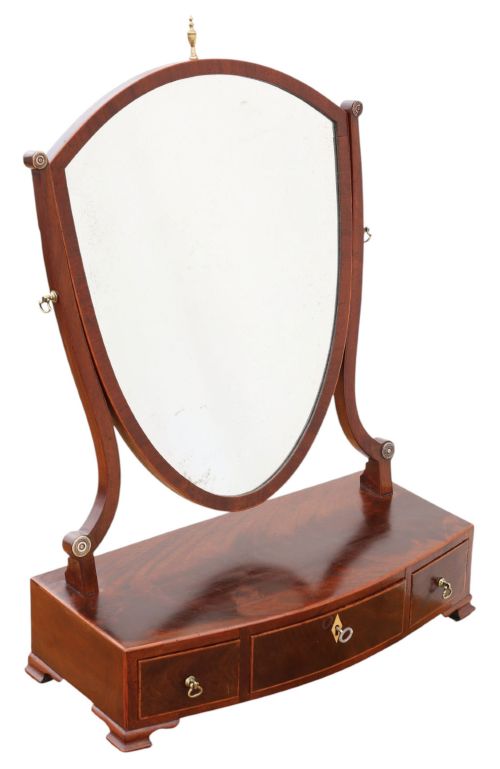
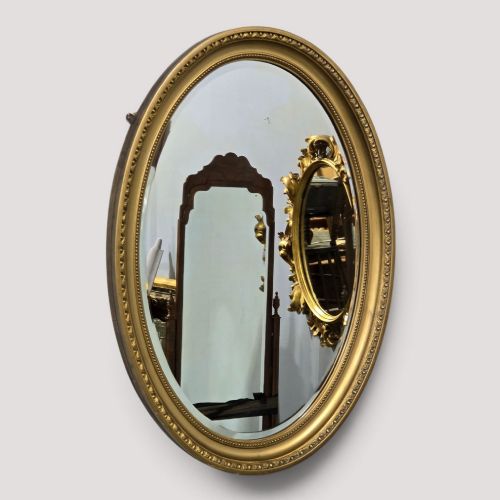
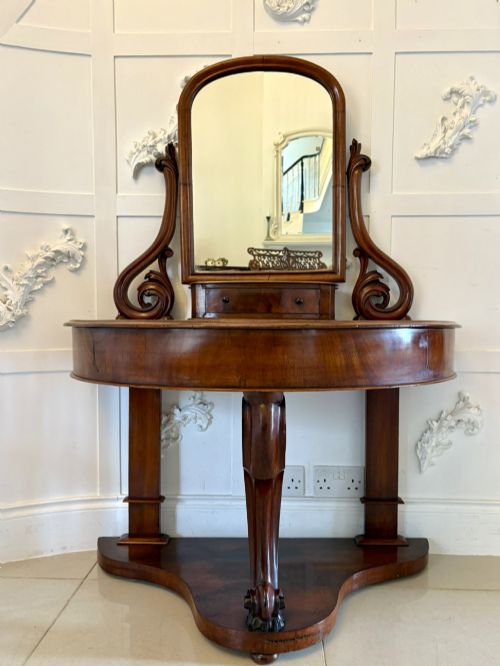
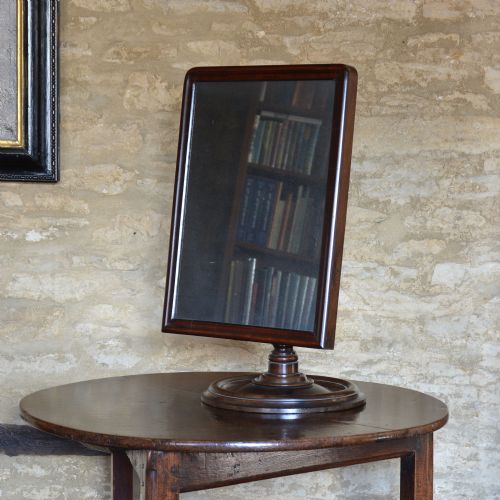
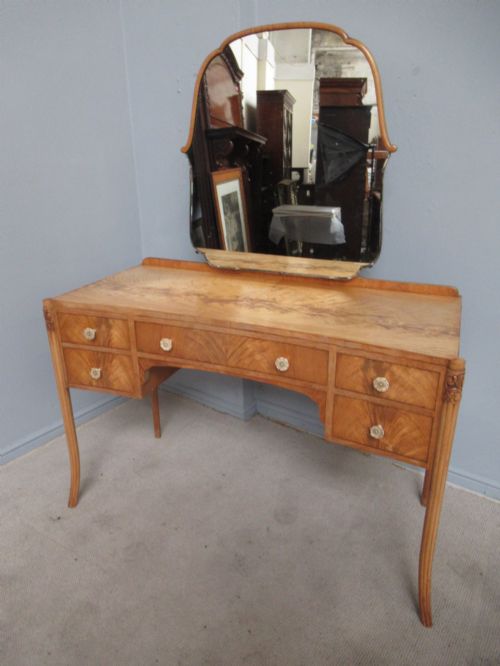
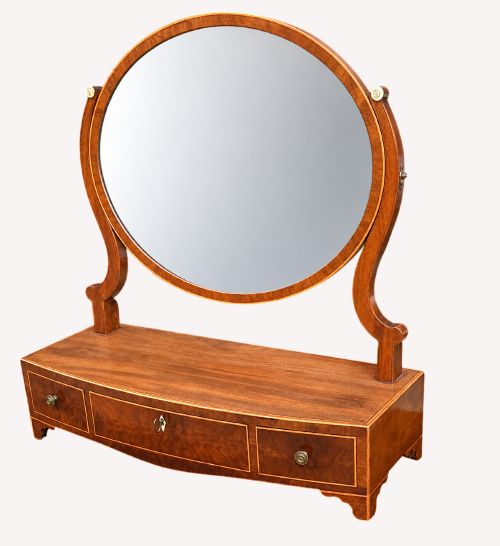
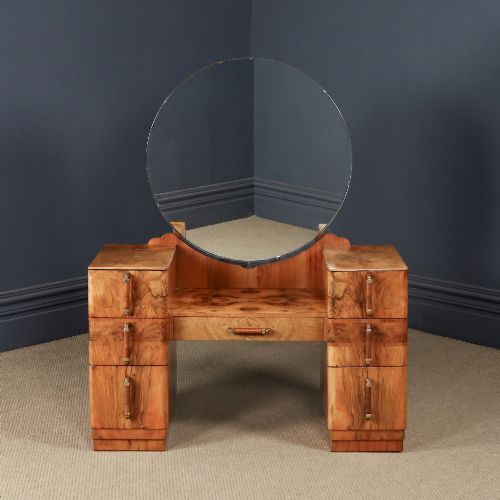
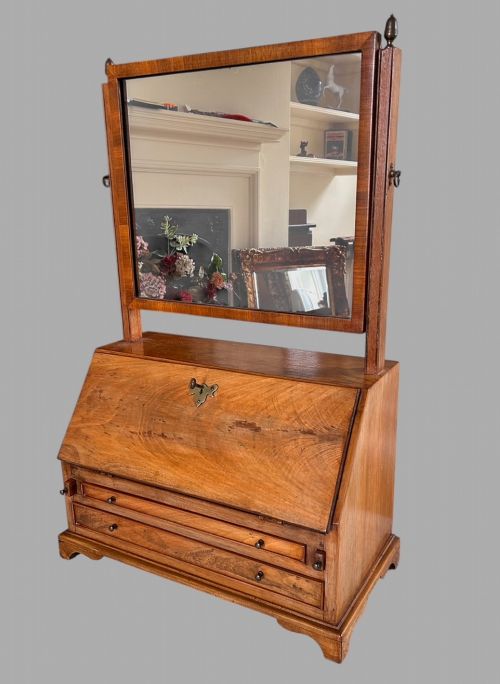
An antique mirror vanity encompasses both substantial dressing tables and smaller table-top swing mirrors designed for grooming and personal presentation. The pieces span Victorian, Edwardian, Georgian, and Regency periods, appearing in forms ranging from grand pedestal dressing units to compact shaving stands.
Standing dressing tables provide integrated drawer space alongside pivoting or fixed plates, while smaller vanity mirrors rest upon chests of drawers or tables. Scottish satinwood, Dutch mahogany, and oak examples demonstrate the variety of regional cabinet-making traditions found within these categories.
Materials and construction methods
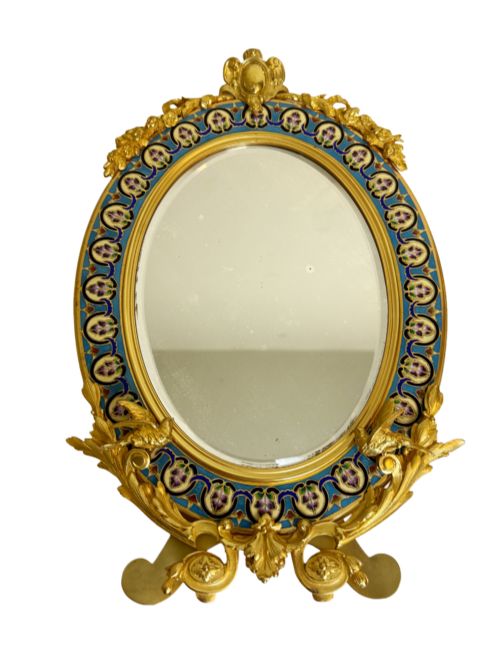
Cabinet makers utilised dense hardwoods including mahogany, walnut, oak, and satinwood, frequently accented with boxwood stringing or intricate marquetry. Brass fittings, copper elements, and silver accents provided functional hardware and decorative detail across frames and drawers.
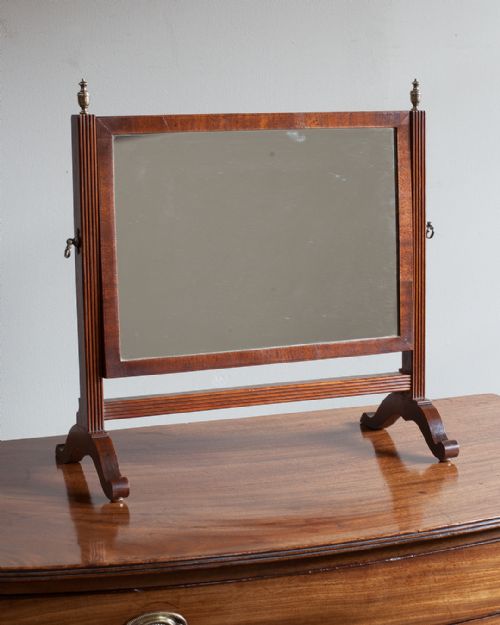
Glass plates were silvered and set into pivoting frames supported by upright standards, whilst larger dressing tables incorporated dovetailed drawer construction and turned columns to distribute weight and ensure stability.
Retail Price Guide 2026
Typical UK retail prices for mirror vanity, calculated from the Sellingantiques database of over a million retail prices indexed since 2003. This retail price guide relies exclusively on Sellingantiques data; no external sources or auction records are used, so the figures do not describe the wider market.
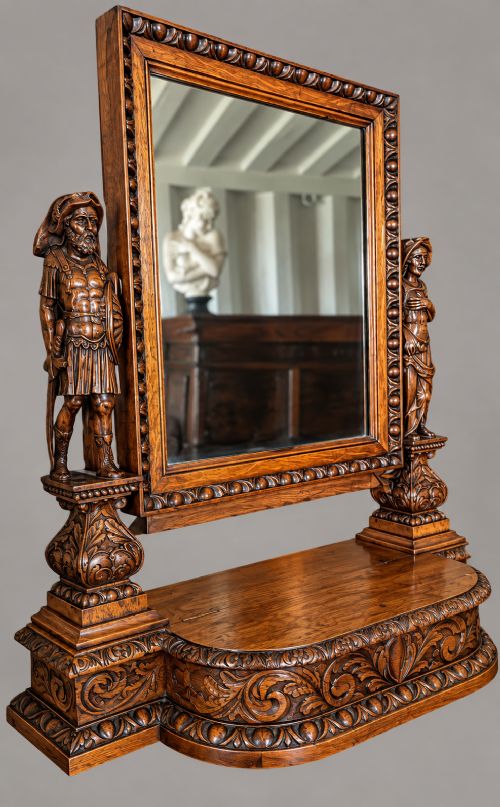
Black Forest carvers occasionally turned their attention to vanity mirrors, populating dressing spaces with intricately rendered woodland fauna.
Distinctions in craftsmanship
Quality rests upon the selection of timber veneers, such as flame mahogany or burr walnut, and the precision of the joinery in the underlying framework. Superior examples display thoughtful proportions, seamless movement in the swinging mirror brackets, and refined carving or inlay work.
The integration of the mirror housing into the main body of the dressing table, along with the clarity and original depth of the glass plate, separates standard utility pieces from high-workshop production.
Shapland and Petter·Maple and Co·Asprey
The Antique Mirror Vanity Glossary
- Swing mirror
- A glass plate mounted on vertical pivots within a frame, allowing the user to tilt the reflection to various angles.
- Pedestal dressing table
- A large vanity unit featuring banks of small drawers flanking a central kneehole space beneath a fixed mirror.
- Marquetry
- Decorative patterns formed by fitting together thin slices of various coloured woods into a timber surface.
- Gilt gesso
- A plaster-like material applied to carved wooden frames, smoothed and coated in gold leaf to create ornate decorative surfaces.
Frequently Asked Questions
How do I date an antique vanity?
Dating relies on identifying stylistic markers, timber types, and construction techniques typical of periods such as the Georgian, Victorian, and Edwardian eras.
Victorian and Edwardian examples often feature heavier proportions and dark hardwoods, while earlier Georgian pieces display simpler, refined lines and lighter framing.
Where should I place a vanity in a bedroom?
A vanity functions best near a natural light source to make optimal use of the mirror during morning routines.
Table-top versions require a sturdy chest of drawers or dressing surface, while standing pedestal units operate independently as focal points in the room.
Can the mirror angle be adjusted?
Most swing mirrors and dressing table mirrors utilise side screw pivots or brass brackets designed to tilt the glass plate.
These mechanisms allow the user to adjust the angle of reflection easily while seated for grooming tasks.