

Antique Miniature Chest Drawers
These antique miniature chest drawers offer exquisite small-scale craftsmanship, providing charming storage for trinkets and specimens.
What these pieces are
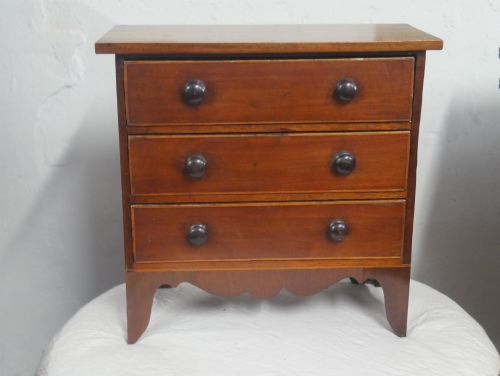
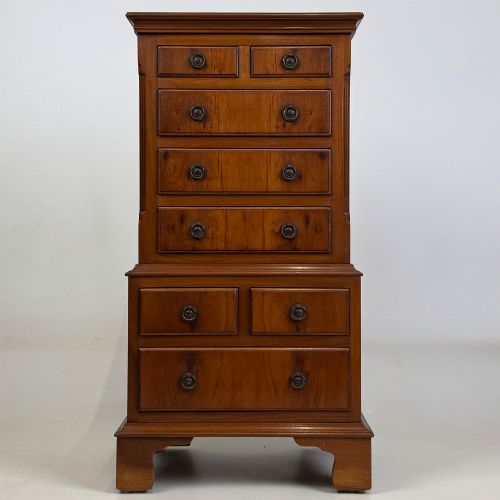
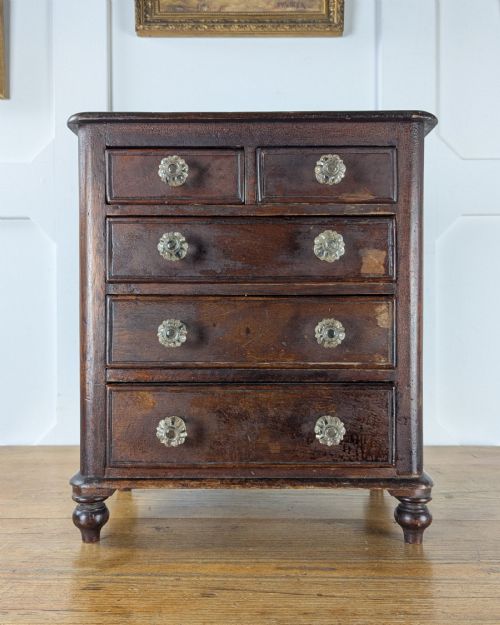
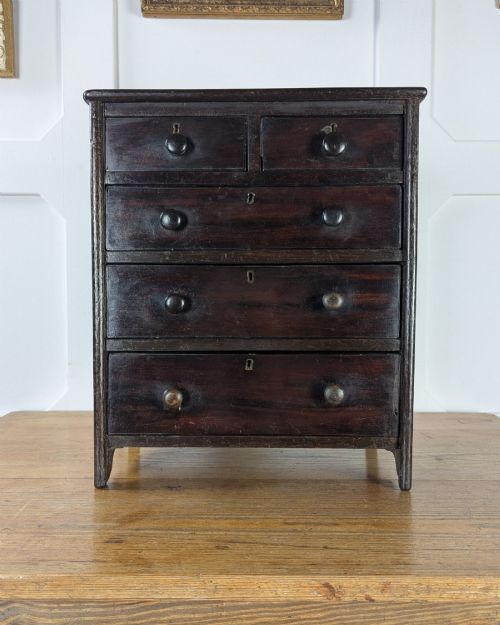
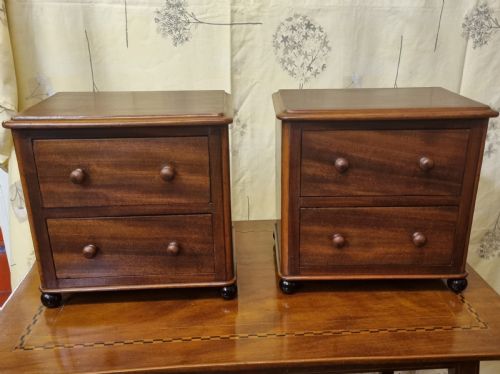
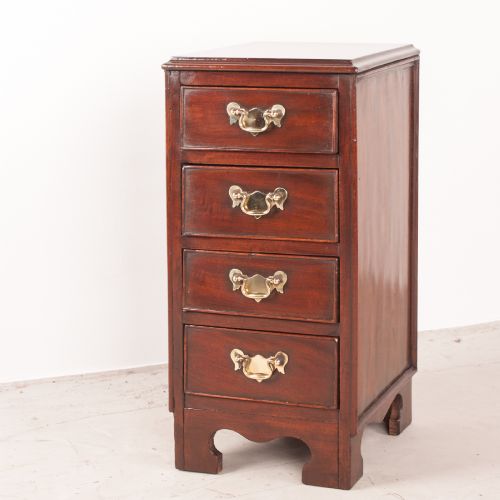
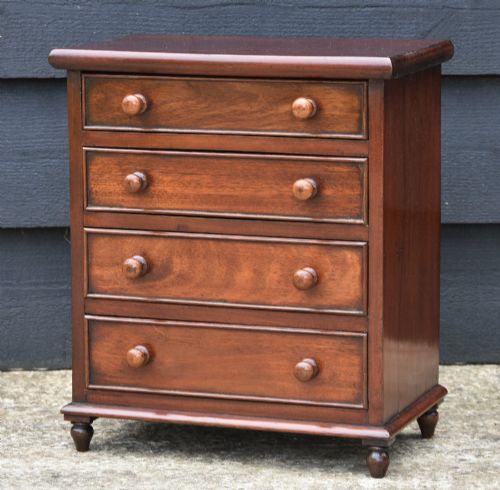
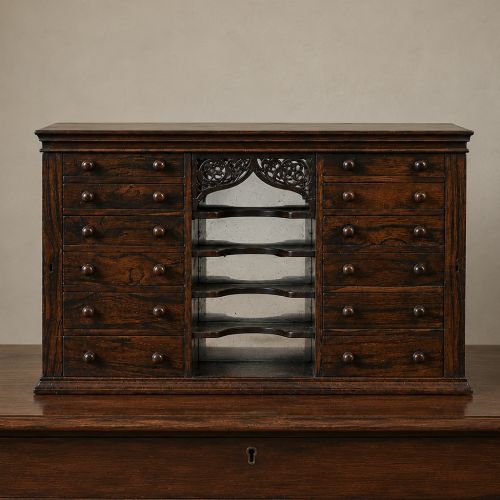
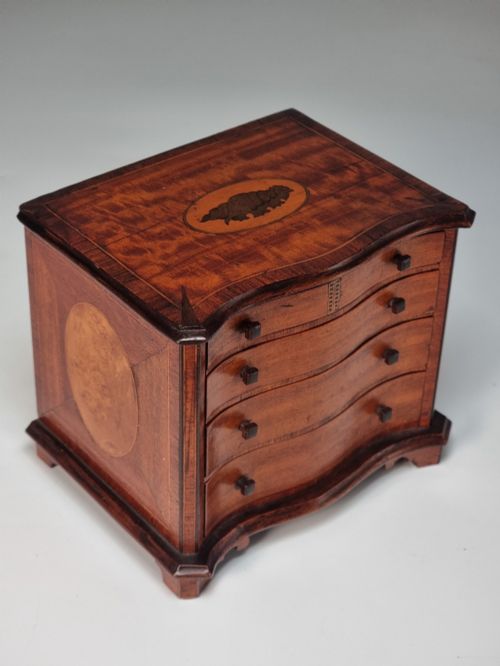
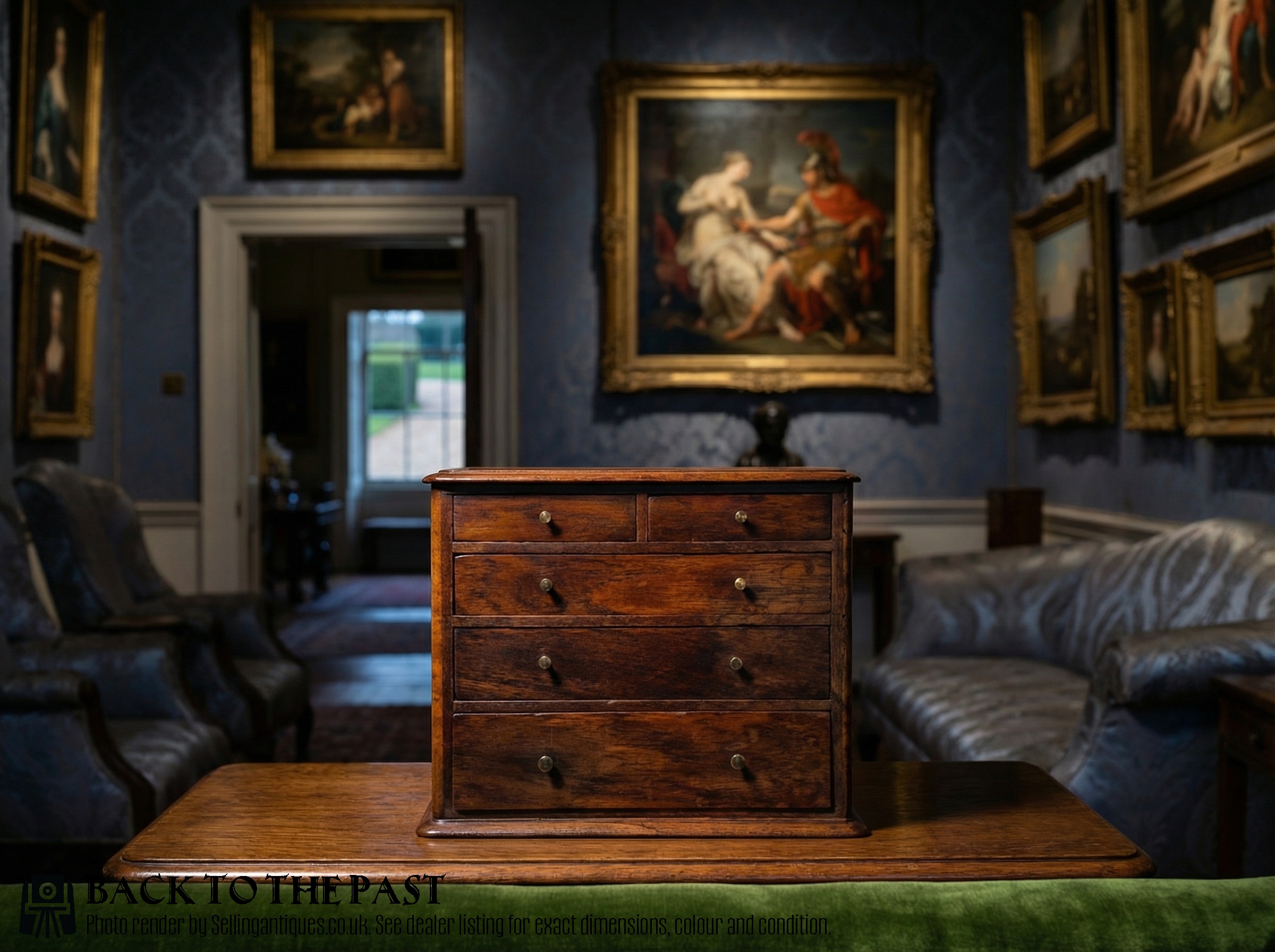
An antique miniature chest drawers represents a scale model or tabletop version of full-sized case furniture, often produced as apprentice pieces or cabinetmaker showcases. The pieces appearing here span the eighteenth, nineteenth, and Victorian periods, alongside Regency and early Georgian examples.
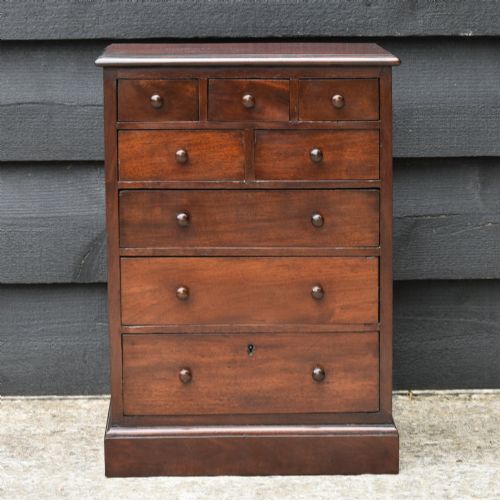
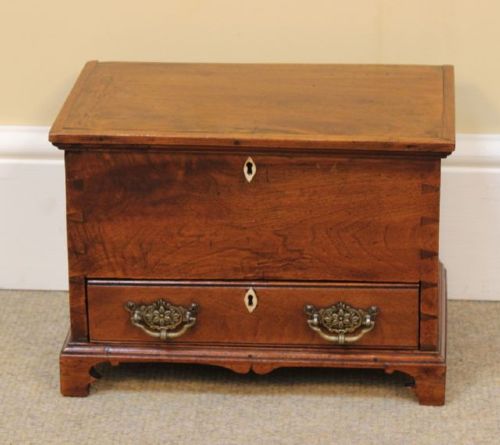
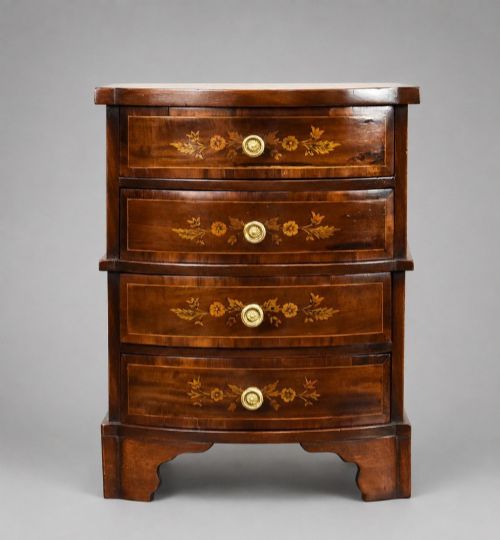
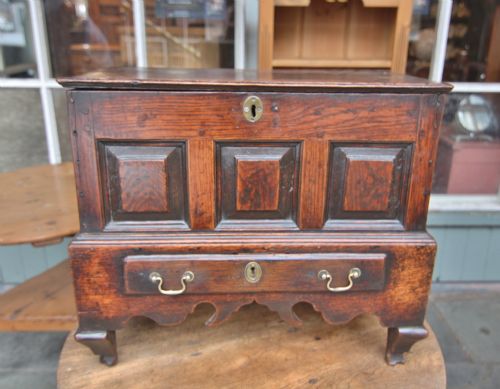
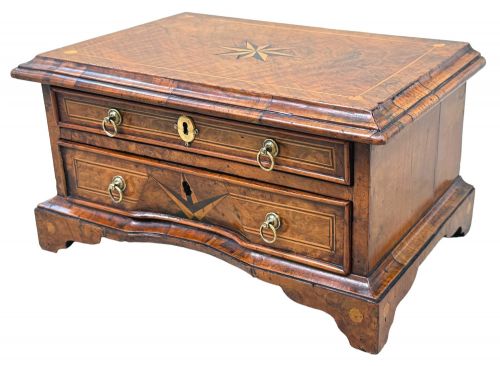
Most items seen on this page take the form of miniature chests of drawers, collectors cabinets, table cabinets, or specimen cases. These compact pieces serve as charming desktop storage or decorative focal points in traditional rooms.
How they were made
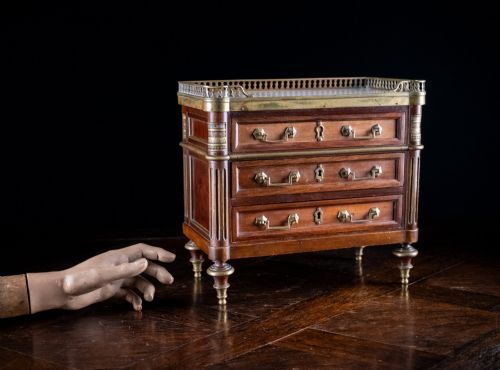
Cabinetmakers constructed these small chests using fine timbers such as mahogany, rosewood, palmwood, walnut, and pine, frequently enhanced with brass fittings and mirror glass. Surfaces appear in polished wood finishes, ebonised wood, or original painted finishes.
Joinery techniques mirror those of full-sized furniture, requiring precise woodworking skills to scale down drawers, mouldings, and carcasses. Burr wood veneers and figured mahogany also appear across the selection, showing careful selection of decorative grain.
Retail Price Guide 2026
Typical UK retail prices for miniature chest drawers, calculated from the Sellingantiques database of over a million retail prices indexed since 2003. This retail price guide relies exclusively on Sellingantiques data; no external sources or auction records are used, so the figures do not describe the wider market.
Some miniature chests hide tiny secret compartments behind the plinth drawers, built by cabinetmakers to amuse and puzzle their owners.
What varies in quality
Quality rests in the fidelity of the proportions and the precision of the miniature dovetails and drawer linings. Finer examples display high-grade timber selection, such as figured mahogany or burr walnut, matched across the drawer fronts.
The refinement of original brass hardware, working locks with keys, and untouched patination elevate certain pieces above standard workshop examples. Simpler pine versions offer domestic utility, whereas cabinetmaker samples demonstrate advanced joinery.
The Antique Miniature Chest Drawers Glossary
- Apprentice piece
- A fine example of furniture made by a trainee craftsman to demonstrate skill and secure master status. These items often replicate full-scale chests in miniature.
- Wellington chest
- A tall, slender chest featuring a hinged locking stile on one side that secures all the drawers simultaneously. This form appears in both Regency and Victorian variants.
- Specimen case
- A small cabinet or chest designed specifically for storing natural history collections, coins, or small artefacts. They frequently include shallow drawers fitted with dividers.
- Figured mahogany
- Timber exhibiting attractive, decorative grain patterns such as flame or curl, utilised on primary display surfaces. It was favoured by cabinetmakers for formal case pieces.
Frequently Asked Questions
What were miniature chests used for?
These small chests served various purposes, from holding precious trinkets and jewellery on dressing tables to storing botanical specimens, coins, or sewing accessories. Cabinetmakers also created them as showcase pieces to demonstrate skill to prospective clients.
Today, they function as decorative objects on desks, sideboards, or console tables, offering practical storage for small modern items while retaining period character.
How do I date a miniature chest?
Dating relies on identifying the timber species, construction methods, and prevailing style of the period. Regency and Victorian examples exhibit distinct mouldings, handle designs, and drawer linings that correspond to full-sized furniture of the same eras.
Examining the secondary woods inside the drawers and the type of fixings used provides further clues to establish the decade or century of manufacture.
Are apprentice pieces genuine antiques?
Genuine apprentice pieces date from the eighteenth and nineteenth centuries, created by trainees under the supervision of master craftsmen. Their small scale reflects the precise execution of traditional woodworking joints.
Careful inspection of the timber ageing, wear patterns, and internal construction helps distinguish authentic period examples from later decorative reproductions.
How should I care for a wood miniature?
Maintain these pieces by keeping them away from direct sunlight and sudden temperature fluctuations that can dry out old timber and veneers. Dust gently with a dry cloth and occasionally apply appropriate beeswax to nourish the wood surface.
Avoid placing damp items directly onto antique polished surfaces to preserve the original finish and patination.