






Antique Middle Eastern Painting
These antique middle eastern painting examples bring rich narratives and striking colour palettes straight from historical workshops.
Antique Middle Eastern Painting
An antique middle eastern painting brings together diverse regional traditions, European interpretations of the region, and distinct periods of artistic output. Pieces range from Victorian watercolours to Qajar dynasty works.
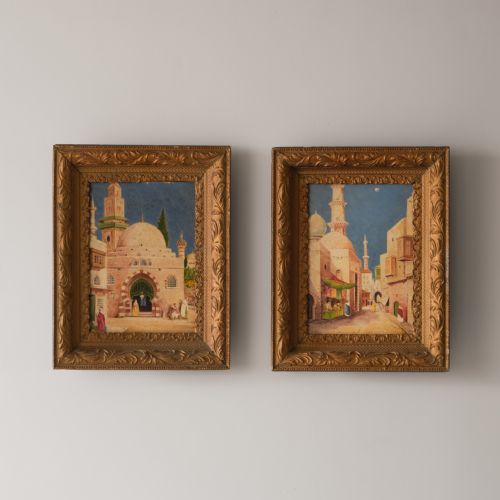
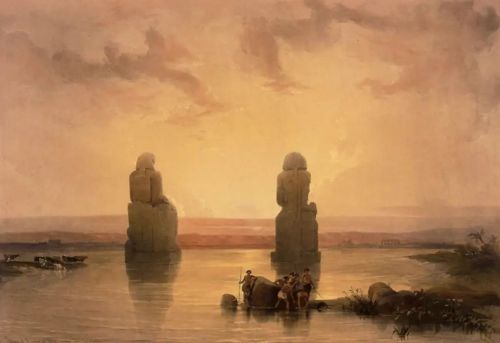
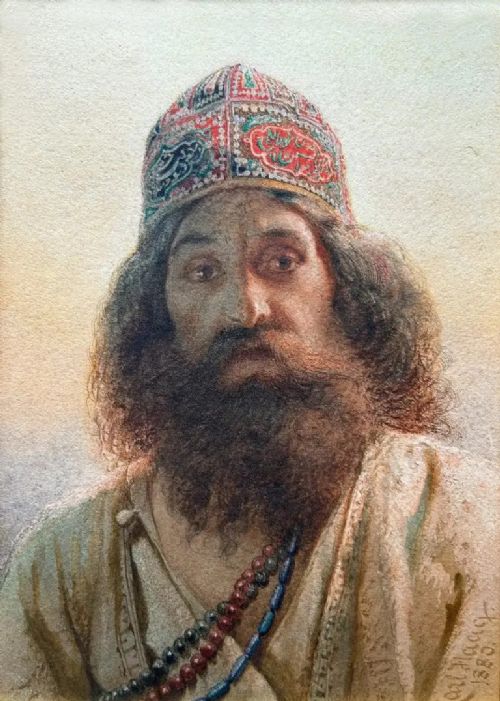
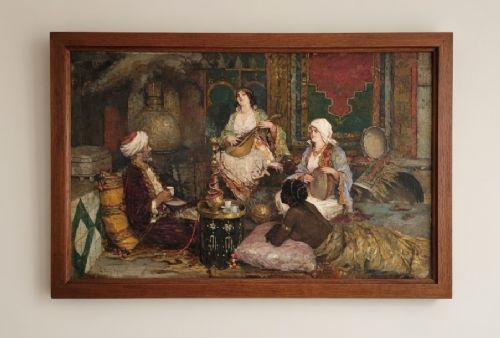
The selection includes framed paintings, wall art, and specific mediums such as oil and watercolour on paper, canvas, or board. Buyers often encounter works depicting landscapes, portraits, and traditional scenes.
Origin points span Persia, Egypt, and wider regions, capturing local daily life alongside romanticised views by visiting European artists. These diverse forms reflect both native production and external fascination.
How they were made
Makers utilised traditional supports such as canvas, wood boards, and paper, applying oil paint, watercolour, or gouache. Many framed paintings also incorporated gilt wood or ebonised frames.
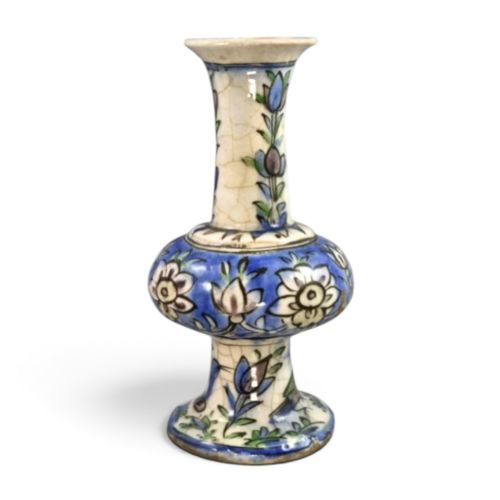
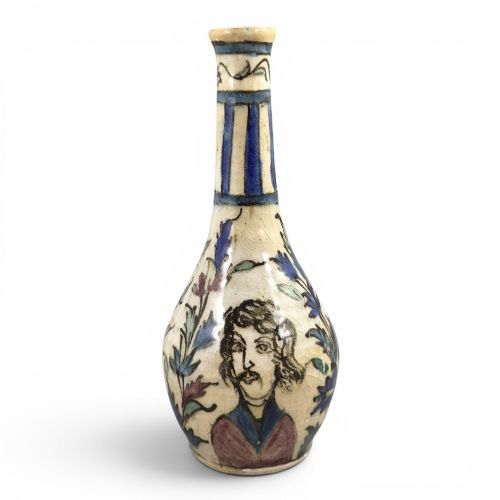
Ceramic vases and textiles demonstrate related craft techniques, employing polychrome glazes and block-printed decoration alongside direct painting methods.
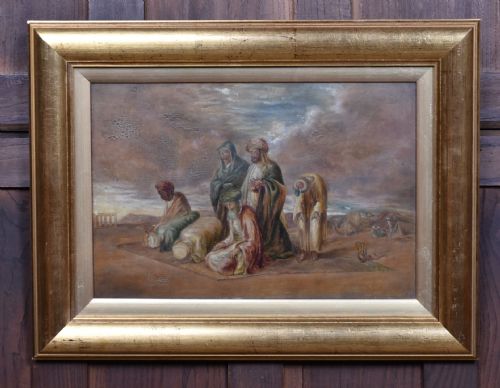
Camels and dervishes frequently make unexpected appearances across nineteenth-century desert vistas.
What varies in quality
Quality rests upon the confidence of the brushwork, the stability of the support, and the preservation of the pigment. Masterful handling of light and detail elevates certain works significantly.
Provenance and documentation also separate standard decorative pieces from those with recorded authorship, strengthening the historical significance of the object.
David Roberts·Carl Haag·Edwin Lord Weeks·Gabriel Puig Roda·William James Muller·V Zirakian·Hugo Vogel·Abdul Kadir Al Rassam·Richard Wilson·Edmund Aubrey Hunt·Frank Holme
The Antique Middle Eastern Painting Glossary
- Orientalism
- A nineteenth-century artistic movement depicting subjects from the Middle East and North Africa. Many European painters travelled extensively to capture these scenes.
- Gouache
- An opaque water-based medium often combined with watercolour. It provides flat areas of dense colour and sharp detail.
- Ebonised frame
- Wood treated to imitate ebony wood, commonly used for nineteenth and early twentieth-century framing. It creates a dark, contrasting border for works on paper.
Antique Middle Eastern Painting: Frequently Asked Questions
What subjects do these paintings feature?
Works typically depict landscapes, desert scenes, portraits, and traditional town views. Figures often include Bedouin tribesmen, farmers, and local citizens.
Other compositions focus on architectural landmarks, historical sites, and intimate domestic interiors.
How should I care for these paintings?
Keep works out of direct sunlight to prevent fading on watercolour, gouache, and paper supports. Maintain stable indoor humidity levels.
Display oil paintings away from extreme heat sources to protect the canvas and wooden boards from warping.
How are periods identified?
Dating relies on stylistic markers, artist signatures, framing materials, and medium types. Victorian pieces often show specific European watercolour techniques.
Qajar works display characteristic Persian portrait conventions and glaze formulas unique to the nineteenth century.
Are frames original to the pieces?
Some works retain period frames such as ebonised or gilt wood surrounds. These match the Victorian and early twentieth-century eras.
Other items have been reframed later to ensure proper preservation and display stability.