





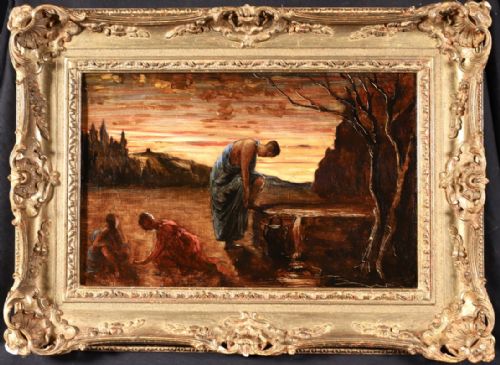
Orientalist Oil Painting
An orientalist oil painting brings dramatic light, foreign landscapes and character studies straight into a room.
Orientalist Oil Painting
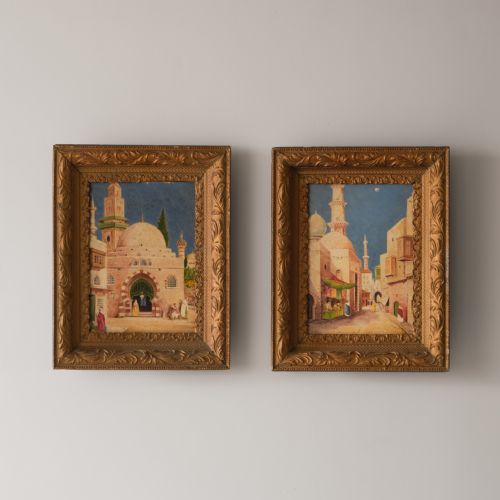
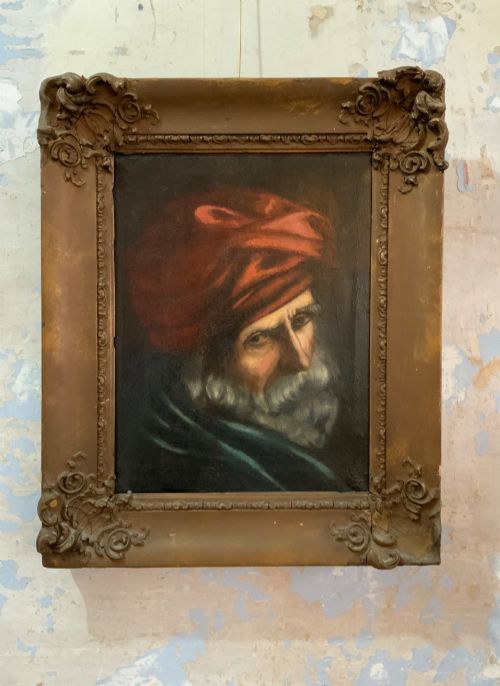
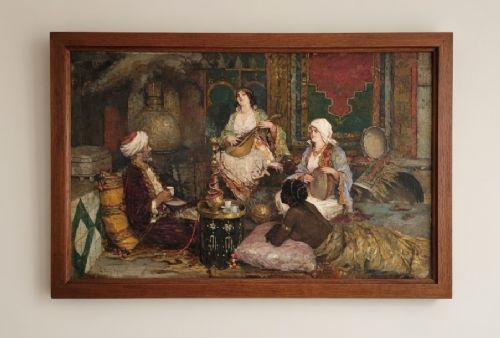
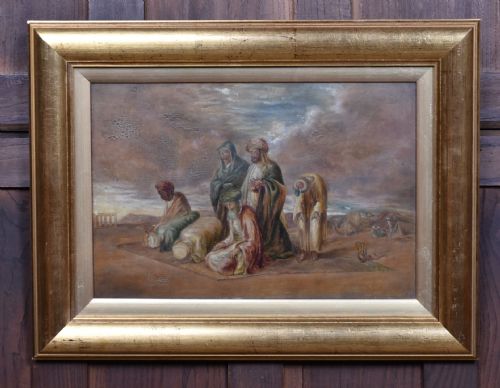
When you search for an orientalist oil painting, you encounter works depicting subjects from the Middle East, North Africa and Asia, typically dating from the nineteenth century onwards. The pieces on this page span naive art, Victorian fine art, Anglo-Indian works and avant-garde compositions. You meet portraits of gentlemen, desert landscapes with camels, and architectural views.
The most common formats on this page are canvases and boards bearing oil paint, often housed in giltwood frames. Works range from intimate portraits to imposing depictions of historical figures and scenic vistas. Artists from various European and international schools captured these scenes, reflecting diverse artistic interpretations of the East.
Materials and methods
These works rely primarily on oil paint applied to canvas or wood board, sometimes utilising panel supports or encaustic techniques. Painters built up rich surface textures using traditional brushes and pigments, capturing the bright light and dust of desert landscapes and the intricate details of traditional garments.
Frames play a significant role in the presentation of these paintings, with gilt wood and giltwood mouldings frequently enclosing the artworks. The combination of oil on canvas or board with ornate wooden framing defines the physical presence of these pieces.
Orientalist Oil Painting Retail Price Guide 2026
Typical asking prices for orientalist oil painting among the pieces listed under this phrase on Sellingantiques today, from the lower quarter to the upper quarter. They describe what is for sale here now, not the wider market.
Camels occasionally gaze out from desert sands.
Distinctions in quality
Quality in these works rests upon the confidence of the brushwork, the handling of light and shadow, and the psychological depth of the portraiture or the atmospheric weight of the landscape. Stronger paintings demonstrate a commanding grasp of anatomy, proportion and local colour, whereas lesser examples rely on formulaic compositions.
The provenance and attribution to documented artists or identifiable regional schools elevate certain pieces above anonymous decorative works. Furthermore, the condition of the original paint layer and the integrity of the period frame contribute substantially to the standing of any given piece.
Gabriel Puig Roda·Frederick Goodall RA·William James Muller·Hugo Vogel·Abdul Kadir Al Rassam
The Orientalist Oil Painting Glossary
- Orientalism
- An artistic movement depicting the cultures, people and landscapes of the Near East, Middle East and North Africa. This style flourished in European art during the nineteenth and early twentieth centuries.
- Oil on Canvas
- A traditional painting medium where pigments bound in drying oil are applied to stretched fabric. It remains the most prevalent support medium in this category.
- Giltwood
- Wood that has been coated with a thin layer of gold leaf or gilt finish. Frames utilising this material are common accompaniments to nineteenth-century paintings.
- Encaustic
- A technique involving heated beeswax mixed with coloured pigments. This method creates a distinct textured surface finish on the canvas.
- Naive Art
- Work produced by artists without formal academic training, often characterised by a childlike perspective and direct application of form.
Orientalist Oil Painting: Frequently Asked Questions
What defines an orientalist oil painting?
These works depict subjects, landscapes and people from the Middle East, North Africa and Asia, produced mostly by Western artists influenced by travel or historical interest.
They capture specific cultural scenes, architecture, portraits of dignitaries and desert vistas using traditional oil paints on canvas or board.
How do I care for an oil painting on canvas?
Keep the artwork away from direct sunlight, excessive moisture and rapid temperature fluctuations to protect both the canvas and the oil pigments.
Dust the surface gently with a soft, dry brush and avoid using chemical cleaners or water on the painted area or the frame.
How can I tell the age of these paintings?
Dating relies on stylistic clues, artist signatures, biographical records, and the physical characteristics of the canvas, stretcher frames and backing materials.
Nineteenth-century works often exhibit specific academic or romantic conventions, while later pieces from the twentieth century show shifts towards modernist or naive approaches.
Where should I hang these paintings at home?
Select a stable interior wall with moderate ambient light, away from heat sources like radiators or fireplaces that could dry out the wood and canvas.
Pairing these rich compositions with neutral wall colours allows the warm tones of the giltwood frames and the vibrant pigments of the scene to stand out.