


Antique Metal Apothecary
These heavy metal apothecary vessels and dispensary fittings bring centuries of practical science and kitchen chemistry straight into your room.
Antique Metal Apothecary
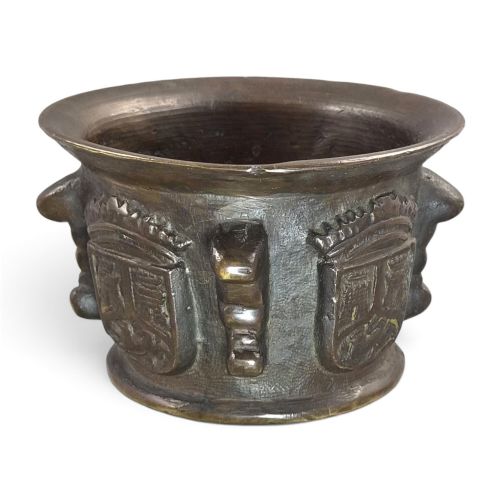
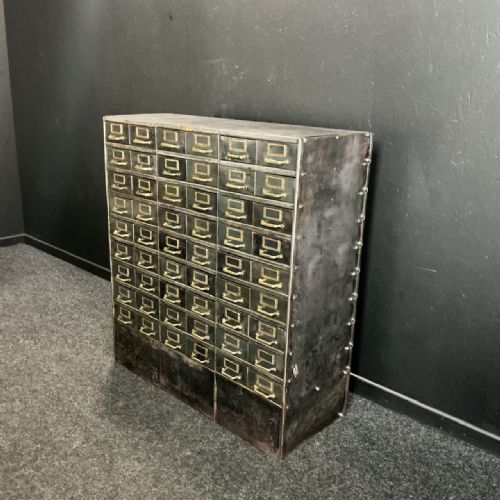
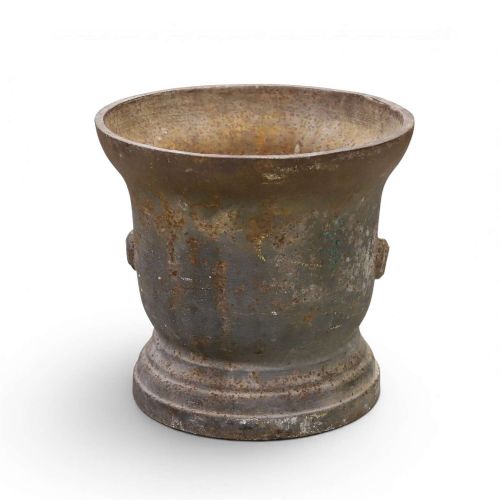
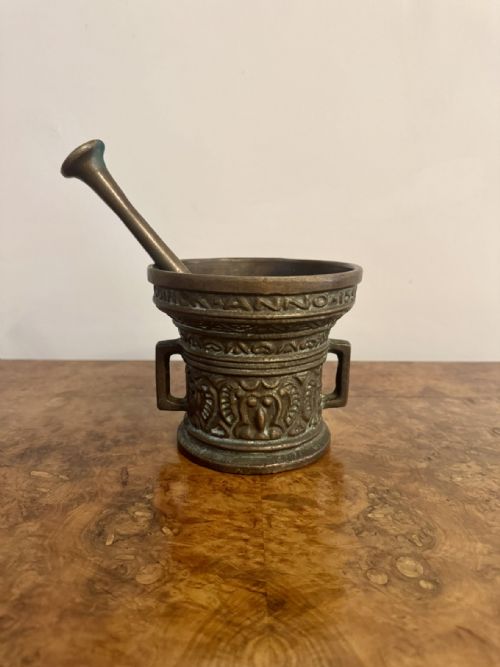
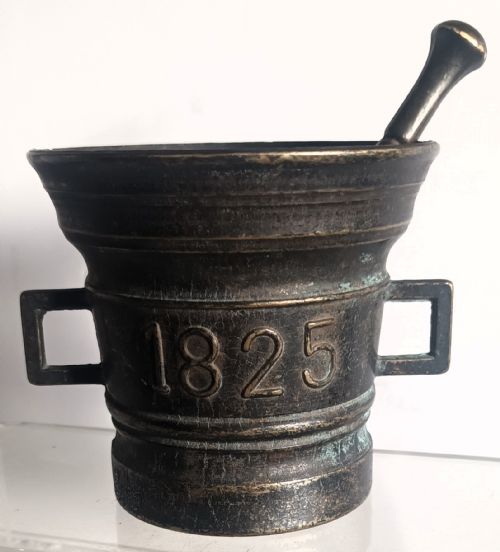
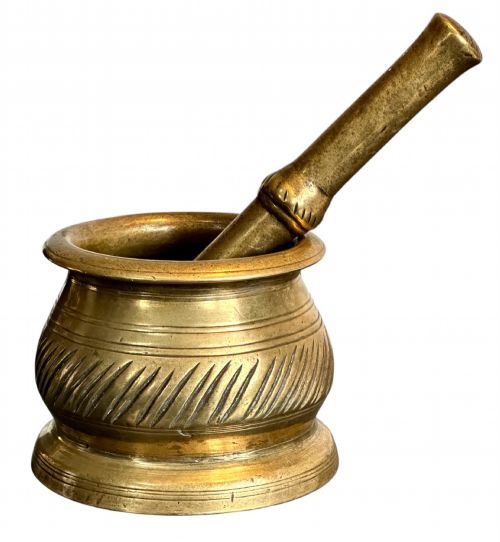
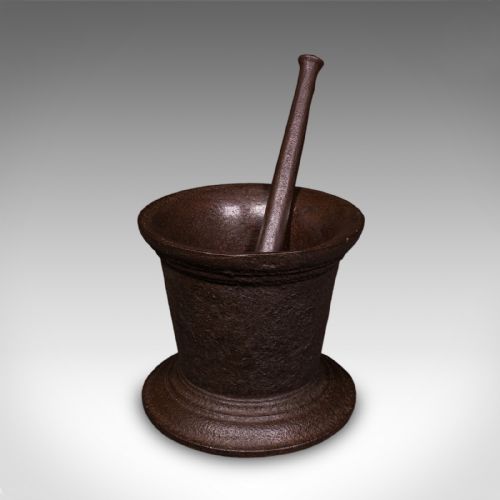
When you search for antique metal apothecary items, you are looking primarily at sturdy bronze and brass mortars and pestles alongside heavy iron scales and trade cabinets.
The objects on this page span from the seventeenth century through the Georgian and Victorian eras, taking the form of heavy mixing vessels, balance scales, and pharmaceutical storage.
English and French examples dominate the selection, often carrying the marks of traditional chemists, kitchen workrooms, and early dispensaries.
Materials and casting methods
The material dictates the character of the piece, with heavy cast bronze, brass, and iron forming the solid foundation for most apothecary grinding vessels.
Foundries utilised traditional sand casting or lost-wax methods to form thick-walled mortars, often finishing the exterior with moulded ribs, heraldic crests, or Tudor rose motifs.
Some seventeenth-century bronze mortars feature acoustic properties so resonant they were occasionally repurposed as small church bells.
Distinguishing quality in metal pharmacy wares
Quality rests in the weight of the metal and the crispness of the cast decoration, where deep armorial bearings or clean foundry marks separate utilitarian output from important pieces.
A matched period pestle that shares the exact wear patterns, alloy composition, and age patina of its mortar elevates the entire object considerably.
De Grave And Co·House of Enríquez
The Antique Metal Apothecary Glossary
- Mortar
- The heavy bowl used for grinding medicinal herbs, resins, and chemicals. It requires a matching pestle to complete the set.
- Pestle
- The handheld club-shaped tool used to crush and pound substances inside the mortar. Period examples display corresponding wear on the striking end.
- Beam balance
- A weighing device utilising a central fulcrum and suspended pans for precise measuring of dry ingredients. These were essential equipment in nineteenth-century dispensaries.
- Spelter
- A zinc alloy frequently employed for decorative metal objects and trade figures. It mimics bronze or brass but possesses a lighter weight and distinct grain.
- Patina
- The surface oxidation and dull sheen accumulated over centuries of handling and cleaning. This layer confirms the genuine age of the metalwork.
Antique Metal Apothecary: Frequently Asked Questions
What were antique metal mortars used for?
These vessels served chemists, apothecaries, and cooks for grinding herbs, minerals, and medical compounds into fine powders before the advent of modern pharmaceuticals.
Their substantial weight prevented movement during vigorous pestle work, ensuring effective reduction of stubborn ingredients.
How do I date a bronze mortar?
Stylistic clues such as flared rims, ribbing patterns, and cast motifs like Tudor roses help determine the period. Documentation or dated foundry marks provide the clearest timeline.
Early seventeenth-century examples typically display simpler, robust profiles compared to the more decorative Georgian interpretations.
Are brass and bronze mortars safe to clean?
Light dusting and occasional gentle wiping preserve the aged surface without stripping away the historic dark oxidation layer. Avoid abrasive metal polishes that remove the characteristic patination.
Leaving the natural metal finish intact maintains both the historical integrity and the visual depth of the object.
Can I use an old mortar for cooking?
While heavy bronze and iron vessels remain structurally sound, centuries of historic medicinal use mean residues may linger in the pores of the metal. Most collectors prefer to display them as decorative historical sculptures rather than functional kitchenware.