

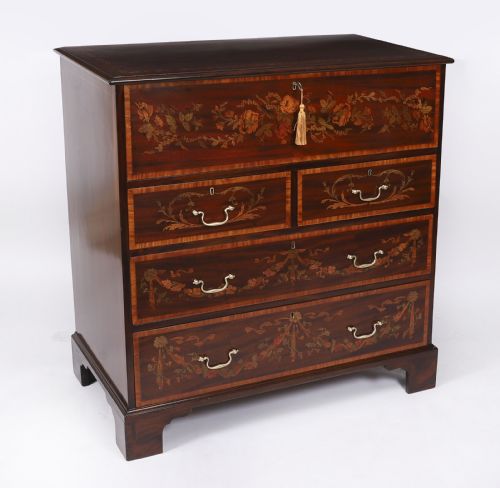
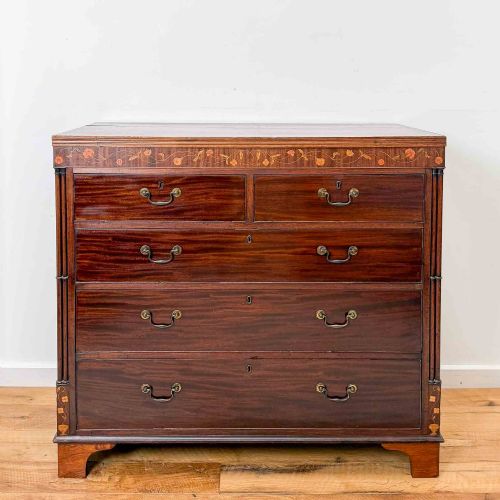
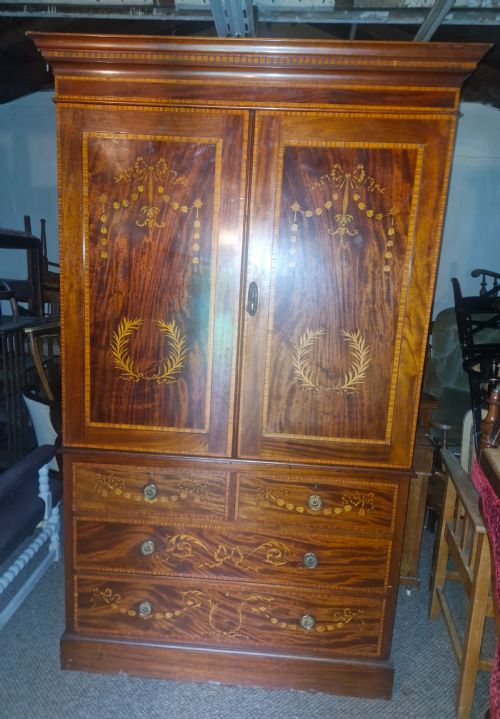
Antique Marquetry Tallboy
An antique marquetry tallboy brings together towering vertical storage and meticulous patterned wood inlay across periods from the seventeenth century onwards.
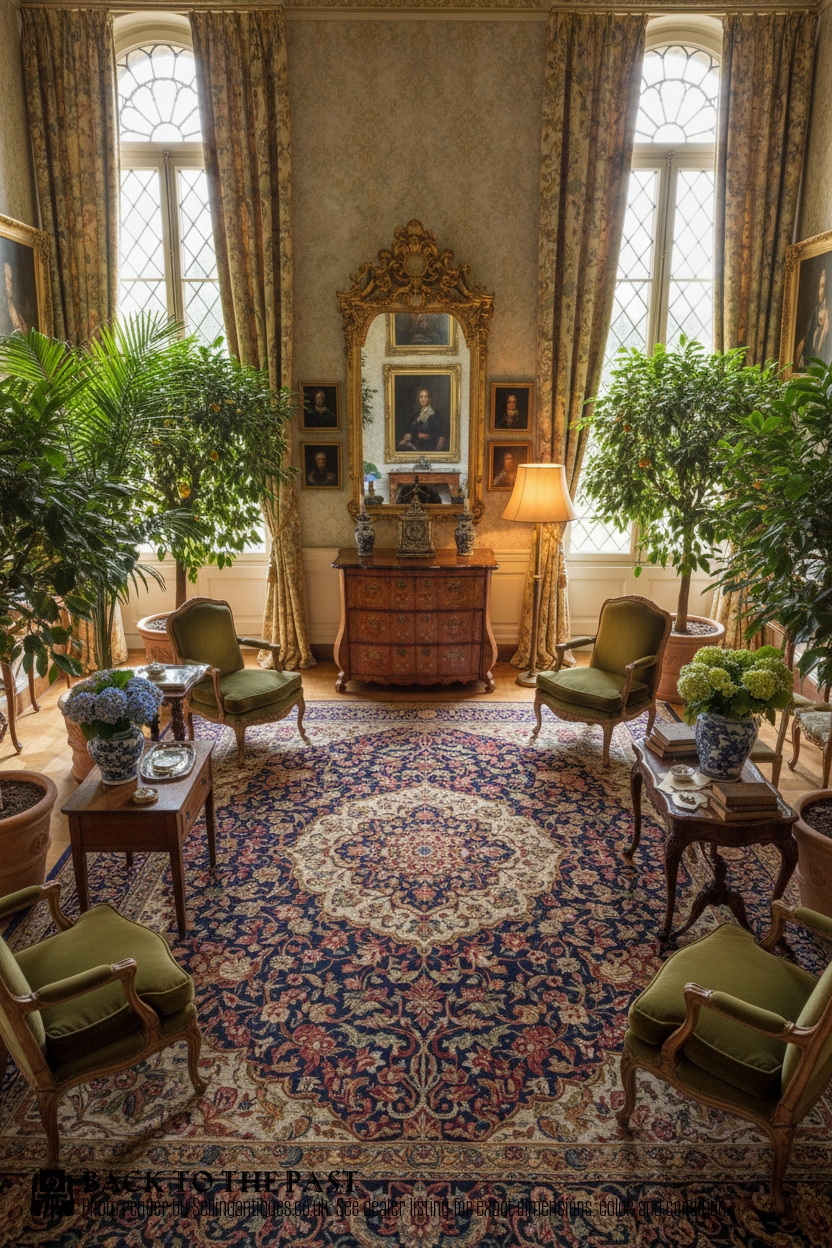
Antique Marquetry Tallboy
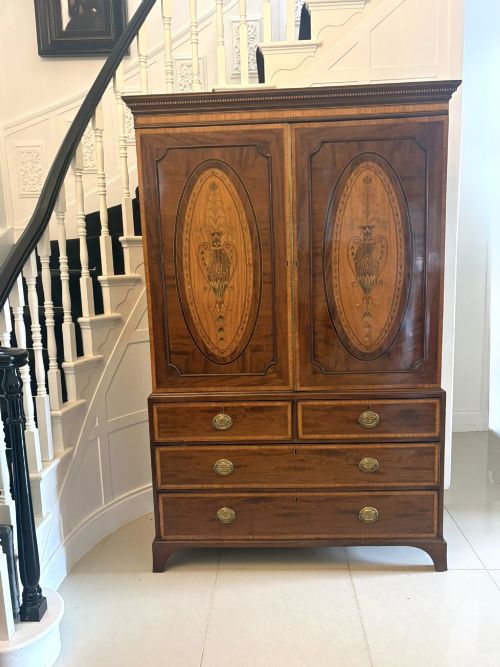
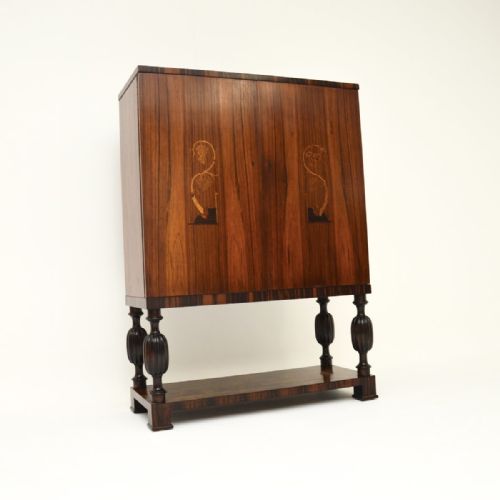
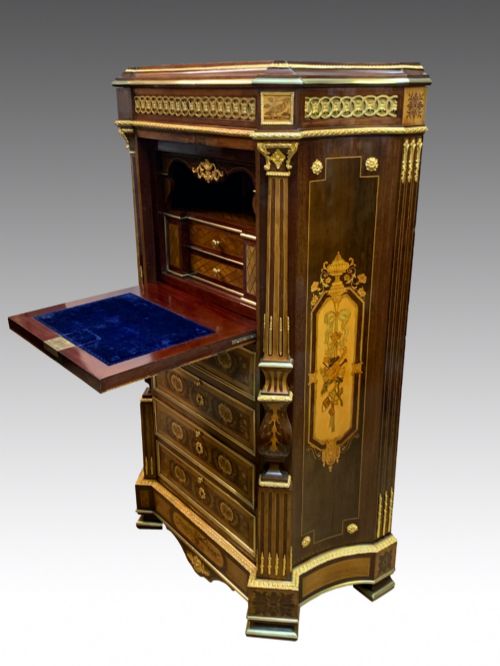
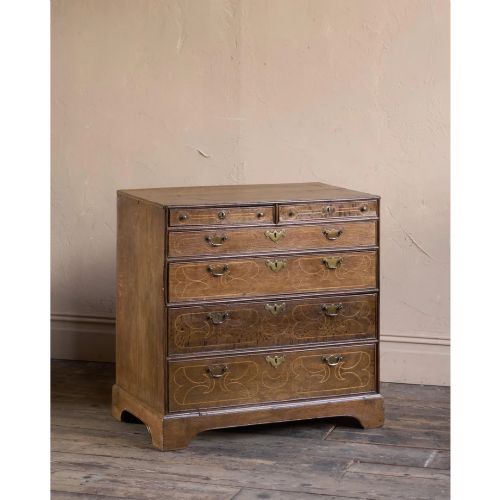
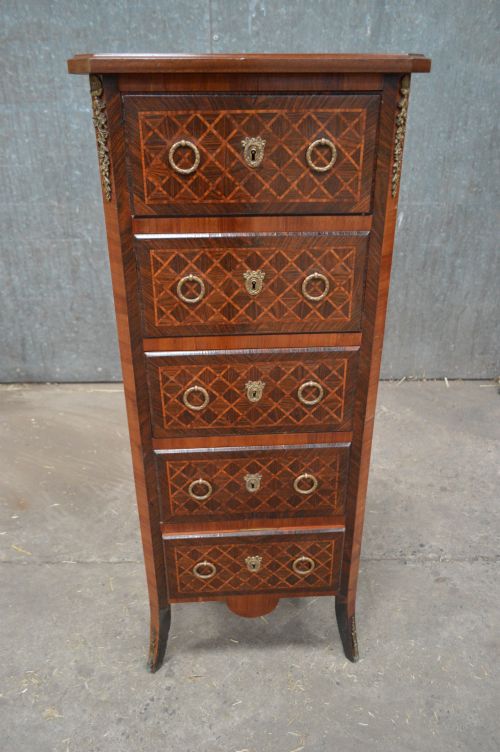
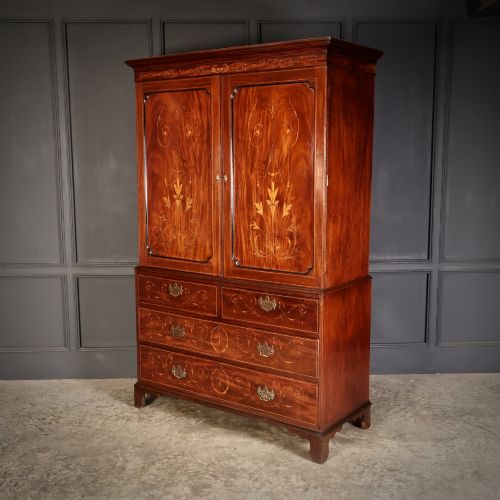
An antique marquetry tallboy combines elevated vertical storage with decorative wood veneers, spanning tall chests of drawers, linen presses, and secretaire semanier cabinets. These pieces serve primarily to store textiles and personal items while making a strong visual statement through height and pattern.
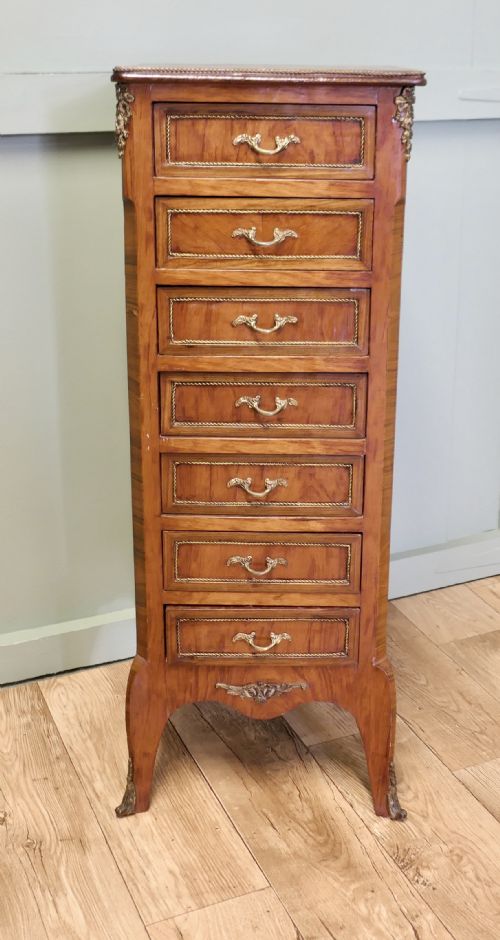
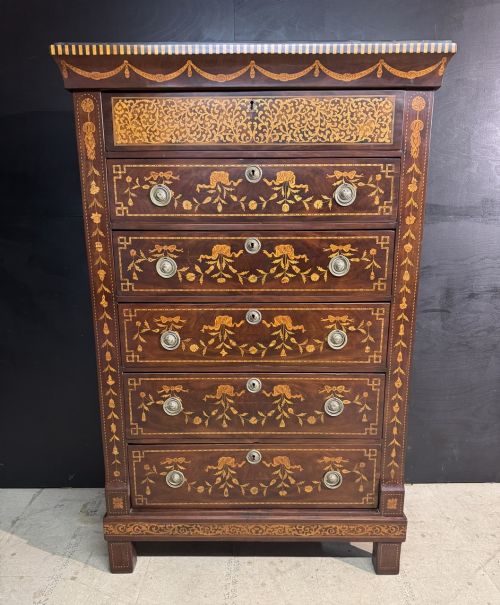
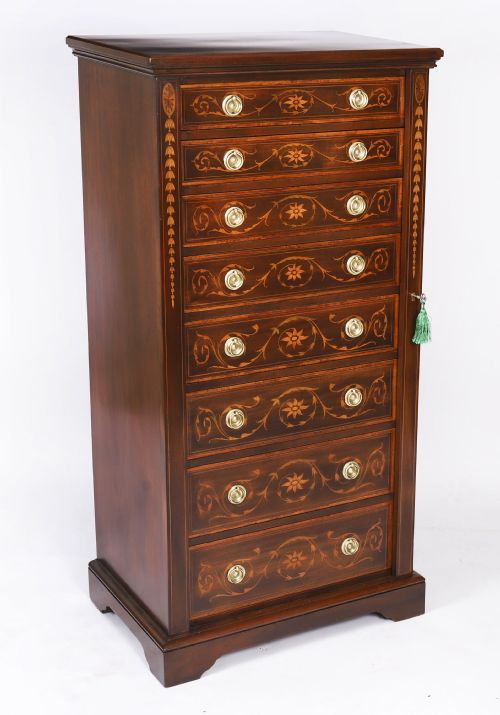
The selections on this page draw from multiple eras, featuring seventeenth-century walnut foundations, eighteenth-century Dutch floral compositions, and nineteenth-century French interpretations. Buyers encounter various tall formats, including narrow pedestal chests, Wellington styles, and cabinets on stands.
Makers and workshops from different European traditions adapted the tallboy format, employing dense arrangements of drawers or upper cupboard sections. Walnut, mahogany, and satinwood provide the structural timber for these tall forms, often accented by contrasting fruitwood inlays.
Materials and Construction
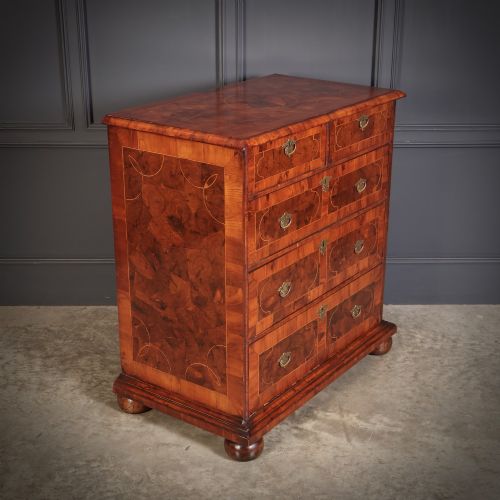
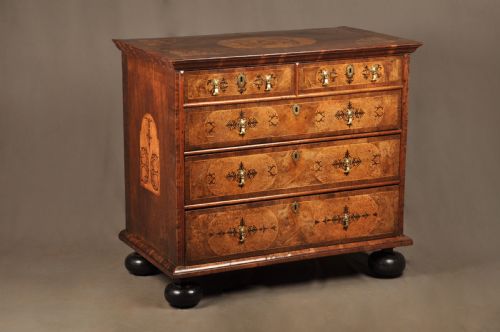
Craftsmen built these pieces using primary structural timbers like oak, walnut, and mahogany, upon which they applied delicate veneers and crossbanded borders. Oyster veneers cut across small branches create circular concentric patterns, while floral marquetry panels utilise various stained and natural fruitwoods.
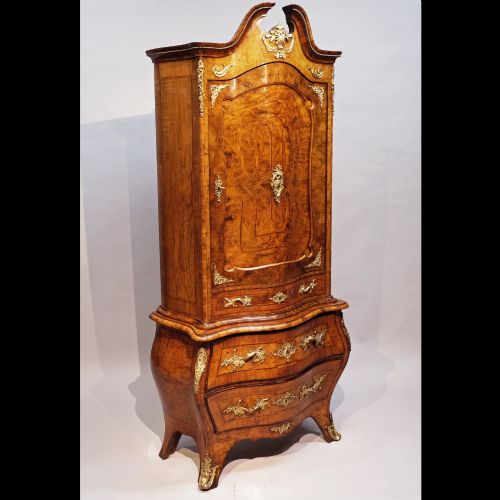
Inlayers embedded contrasting elements of satinwood, boxwood, and brass directly into the carcase or drawer fronts, securing them within hand-cut recesses. Ormolu mounts and gilt bronze details occasionally frame the corners and drawer edges on later continental examples.
Secret drawers hidden within the upper cornices required owners to locate secret release mechanisms before accessing their most private compartments.
Distinctions in Quality
The finesse of the floral or arabesque inlay work dictates much of the visual distinction, separating simple geometric bandings from complex pictorial compositions. Dense, varied botanical motifs requiring intricate cutting demonstrate superior workshop skill.
The choice and figuring of the underlying wood, such as burr walnut, amboyna, or oyster-cut olive, establish the baseline richness of the piece before inlay is applied. Cohesion between the timber selection and the precision of the cabinet joints defines the longevity of the tall chest.
Maison Krieger·J Shoolbred·Druce and Co·Holland and Sons·Galle
The Antique Marquetry Tallboy Glossary
- Marquetry
- Decorative veneer work forming pictures or patterns by assembling small pieces of wood, shell, or ivory. This technique covers entire drawer fronts or cabinet doors on high-status storage pieces.
- Tallboy
- A tall chest of drawers, often constructed in two sections with one smaller chest sitting atop a wider base. The term also encompasses tall single-carcase chests and linen presses.
- Oyster Veneer
- Cross-sections of branches sliced transversely to display circular growth rings resembling oyster shells. Cabinetmakers arranged these closely together to create undulating patterned surfaces.
- Secretaire
- A cabinet or chest incorporating a fitted writing drawer with a drop-down flap or internal compartments. These combine vertical storage with a dedicated writing surface.
- Ormolu
- Gilt bronze mounts applied as decorative ornaments to furniture corners, feet, and key escutcheons. This technique appears frequently on nineteenth-century French pieces.
Antique Marquetry Tallboy: Frequently Asked Questions
What is an antique marquetry tallboy?
An antique marquetry tallboy is a tall storage chest decorated with intricate wood veneer patterns, often featuring floral designs or geometric inlays across multiple drawers.
These pieces provide substantial vertical storage capacity while serving as decorative focal points within a room through their elaborate surface ornament.
How do I date a tall chest?
Dating relies on observing the primary timbers used, the construction methods of the drawer linings, and the style of the marquetry or veneer. Earlier pieces often employ oak carcases and oyster veneers, while later examples incorporate satinwood and machine-cut elements.
Secondary woods and hardware fittings also offer direct clues to the period of manufacture, aligning with shifts from seventeenth-century walnut to nineteenth-century mahogany and exotic woods.
Where were these cabinets placed?
These tall storage units historically stood in bedchambers, dressing rooms, and large hallways where their height could be accommodated without crowding the floor plan.
Their primary function remained the storage of linens, garments, and valuables, utilising the upper and lower drawers for systematic organisation.
How do I care for antique veneer?
Maintaining veneer requires stable indoor humidity levels and protection from direct sunlight to prevent the underlying animal glues from drying and the wood from warping. Gentle dusting with a dry cloth keeps the polished surface secure.
Avoid placing these items near direct heat sources or damp areas, as fluctuating environments cause the delicate inlaid elements to lift from their carcase.