


Antique Marquetry Furniture
Antique marquetry furniture brings together precise wood veneers and varied timbers to create patterned surfaces on tables, desks, and cabinets.
Antique Marquetry Furniture
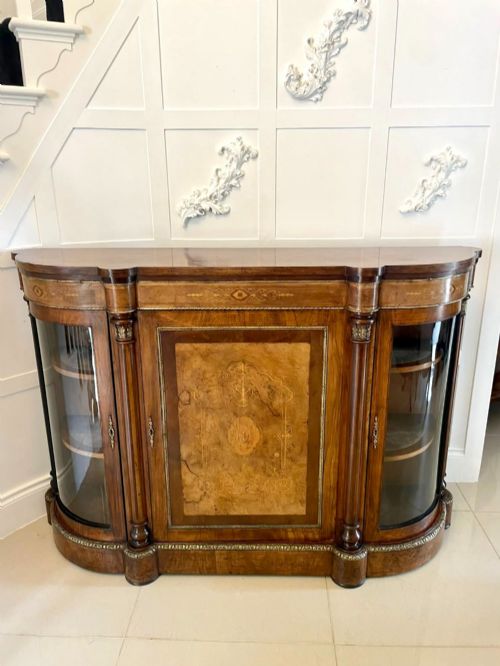
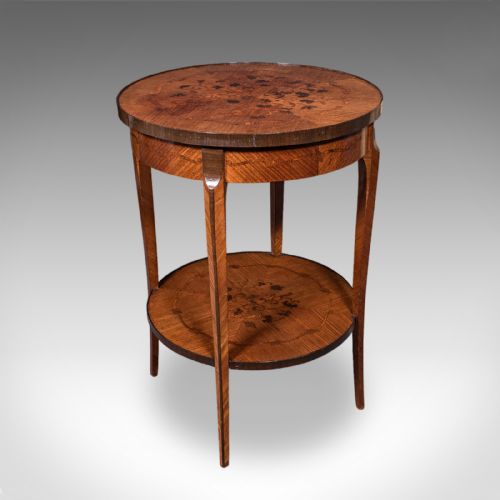
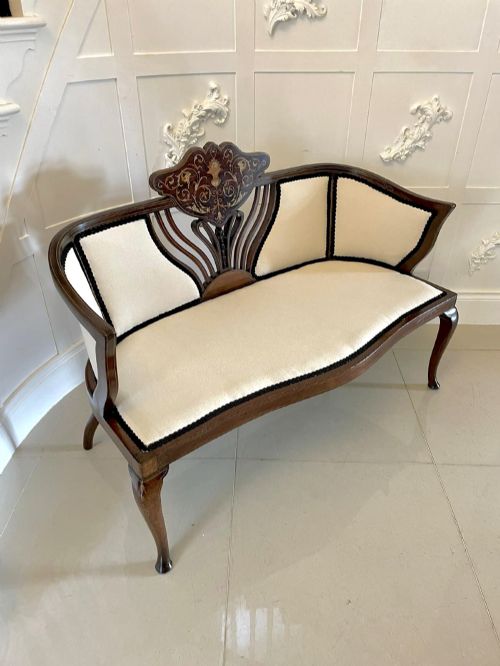
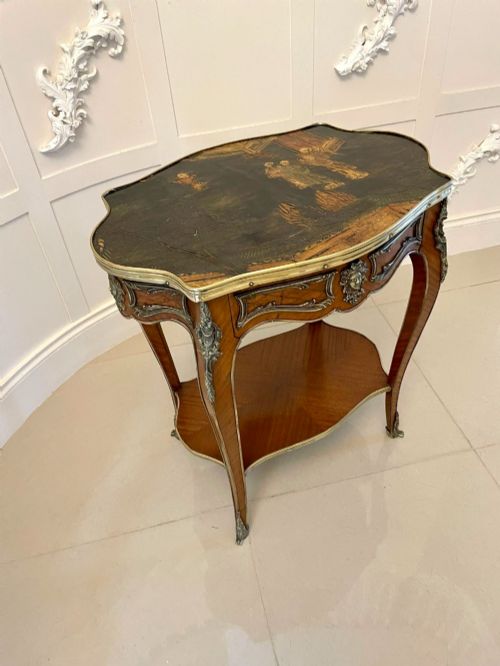
When buyers search for antique marquetry furniture, they look at pieces decorated with pictorial or geometric veneer patterns assembled from contrasting timbers. The selection spans centuries of cabinet-making, with examples originating from English, French, Dutch, and other European workshops.
The forms vary widely across the selection, ranging from occasional tables, centre tables, and card tables to chests of drawers, writing desks, and side cabinets. Pieces frequently employ styles such as Louis XV Revival, Dutch Baroque, Edwardian, and Victorian, reflecting the period taste of their makers.
Buyers are most likely to encounter 19th-century pieces alongside 18th-century Dutch floral items and Edwardian satinwood or rosewood designs. These items serve practical functions in modern rooms while displaying intricate patterned surfaces built from woods like walnut, kingwood, and mahogany.
Materials and construction methods
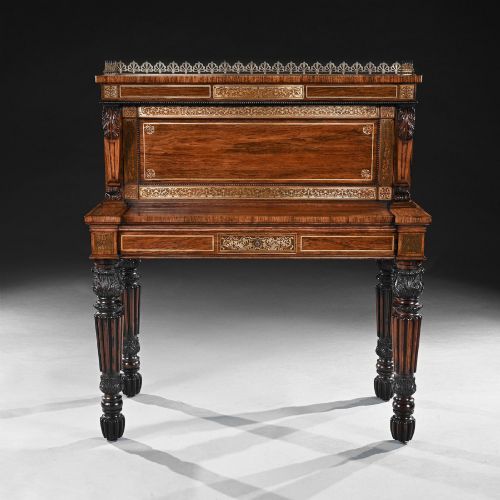
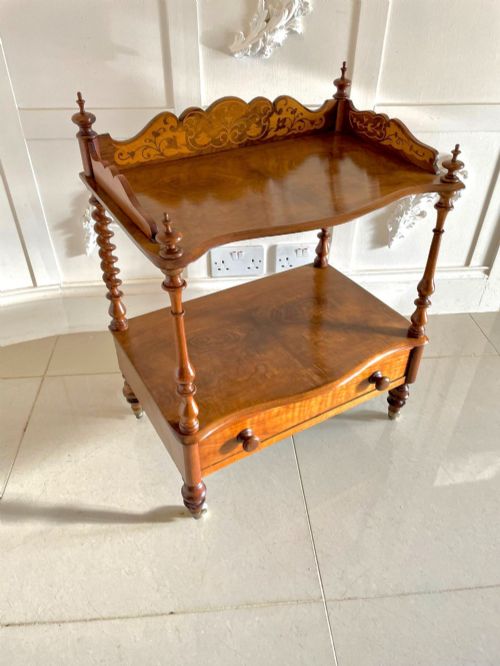
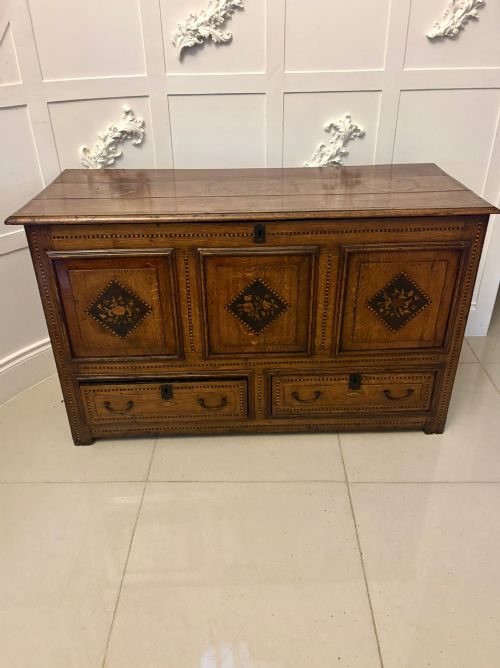
Cabinet-makers constructed these pieces using solid carcases of oak, mahogany, or pine, onto which they applied fine veneers of walnut, rosewood, kingwood, satinwood, and harewood. Craftsmen cut thin slices of timber and arranged them to form complex floral, pictorial, or geometric compositions.
Workshops often enhanced the timber designs with mounts of ormolu or gilt-bronze, alongside brass stringing and inlay. Techniques such as oyster veneering created distinctive circular grain patterns from branch wood, whilst specialised saws cut multiple veneer layers simultaneously for exact fitted joints.
Materials span walnut, mahogany, rosewood, satinwood, kingwood, and burr walnut, often accented with brass and ormolu.
Distinctions in construction and design
The standard of a piece depends heavily on the precision of the veneer cutting and the complexity of the timber selection. Finer items integrate varied natural grains and tonal shifts without gaps between the individual veneer segments.
The quality also rests on the secondary timbers used in the carcase interior and drawer linings, alongside the crispness of any cast ormolu mounts. Master workshops employed heavier gauge brass inlay and selected rarer woods such as kingwood and tulipwood to distinguish their output.
Gillows Oxford Street Workshop·Hewetsons London·George Bullock·Edwards And Robert s·Joseph Emmanuel Zwiener
The Antique Marquetry Furniture Glossary
- Marquetry
- The art of applying cut pieces of veneer to a structure to form decorative patterns or pictures. It differs from plain veneering through its use of multiple shaped timber segments.
- Ormolu
- Gilt-bronze mounts applied to furniture for decoration and edge protection. Makers cast and chased these metal elements to complement the wood tones.
- Veneer
- A thin layer of valuable or figured wood applied to a base timber carcase. This technique allowed workshops to display expensive grains economically.
- Stringing
- Thin lines of contrasting wood or metal inlaid into grooves on the furniture surface. It frames panels and outlines drawers or table tops.
- Oyster veneering
- A method of cutting branches transversely to produce circular or oval motifs with concentric growth rings. It was widely used during the 17th century.
Antique Marquetry Furniture: Frequently Asked Questions
How do I clean antique marquetry surfaces?
Dust surfaces regularly with a soft, dry cloth to prevent dirt accumulation within the veneer joints. Avoid water or modern chemical polishes, using traditional beeswax sparingly instead to nourish the timber.
Keep pieces away from direct sunlight and heat sources to prevent the veneers from drying out, shrinking, or lifting away from the carcase over time.
Are these pieces suitable for daily use?
Most items function well for everyday tasks such as writing, displaying lamps, or holding books. Tables and desks were built for active use, though delicate French polish and fine veneers require coasters and protective pads.
Place items in rooms with stable humidity levels to protect the older timber construction from expanding or contracting too rapidly.
How do I identify Dutch floral marquetry?
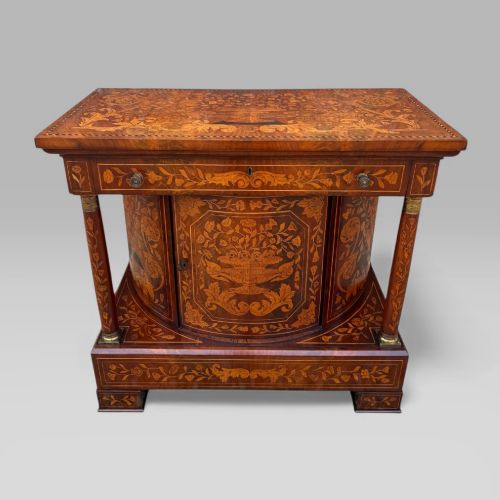
Dutch pieces from the 18th century often feature dense, naturalistic arrangements of flowers, birds, and urns executed in contrasting woods on walnut or mahogany grounds. The compositions cover large surface areas including bureau falls and cabinet doors.
These items frequently exhibit a distinct bulbous or serpentine form, characteristic of Dutch cabinet-making traditions from the period.
What is the difference between marquetry and inlay?
Marquetry involves assembling an entire picture or pattern from various veneers on a paper backing before gluing the complete sheet onto the carcase. Inlay refers to cutting recesses directly into solid wood and inserting matching pieces of material into those grooves.
Both techniques decorate wooden surfaces, but marquetry covers the entire plane with intricate timber mosaics.