


Antique Marine Watercolour
When you search for an antique marine watercolour, you are looking at works on paper capturing vessels, ports, and coastal life.
Antique Marine Watercolour
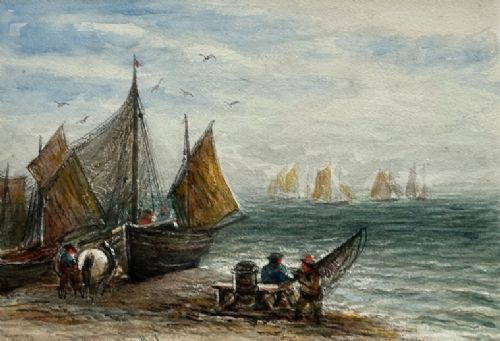
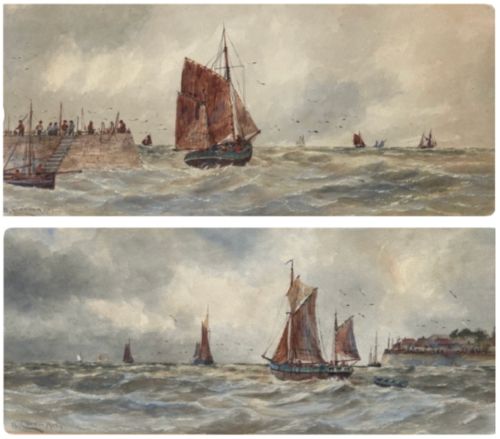
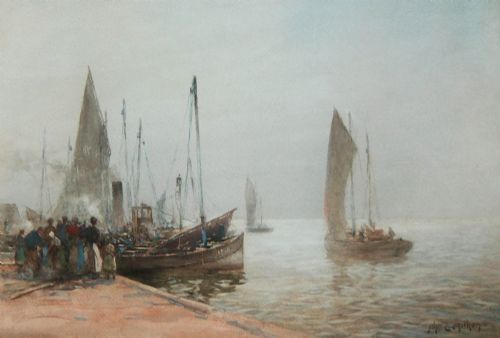
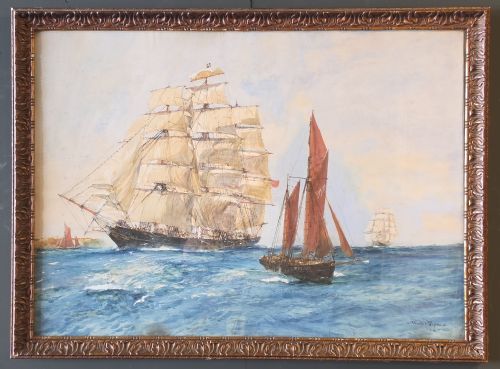
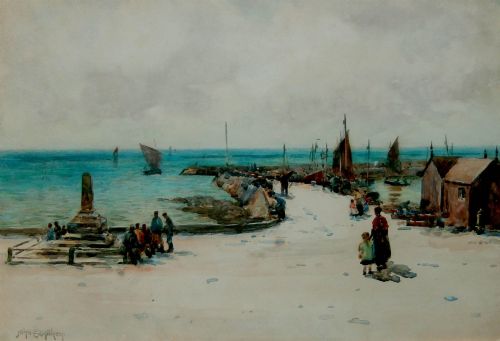
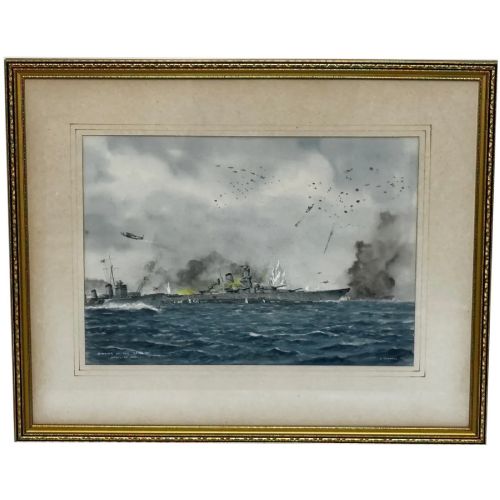
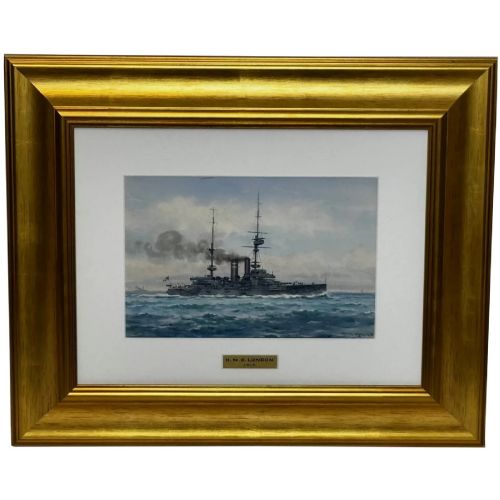
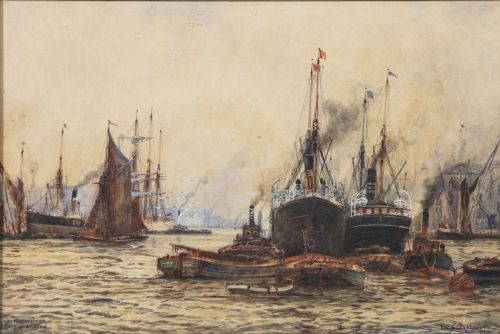
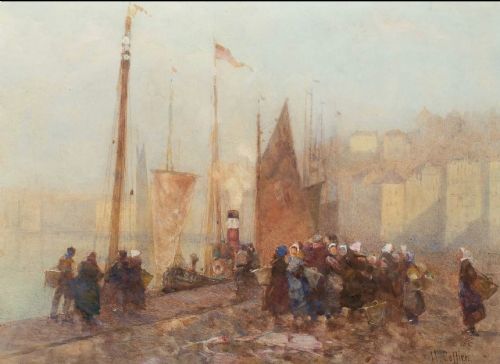
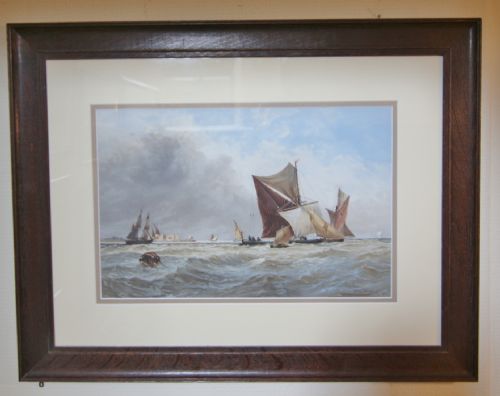
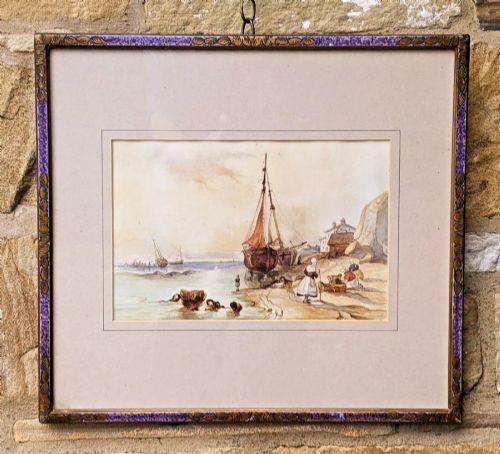
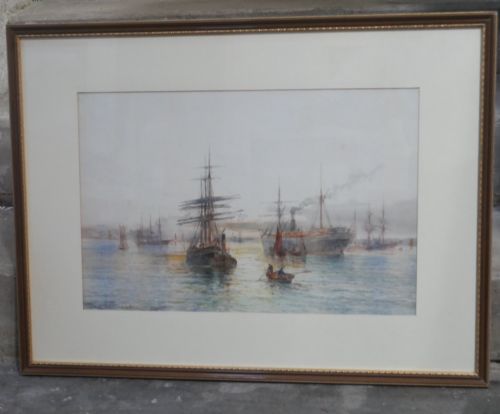
An antique marine watercolour portrays maritime subjects, ranging from bustling fishing harbours and coastal landscapes to specific naval vessels and racing yachts on the open sea. These works on paper capture maritime history through the observational eyes of artists recording the changing moods of the coast and sea.
The pieces available on this page stretch from the Victorian period through the Edwardian era into the mid-twentieth century. Most examples depict British and European ports, estuaries, and coastal shipping lanes, executed with varied degrees of finish from rapid on-the-spot sketches to detailed finished exhibition paintings.
Subjects frequently centre on traditional working craft such as fishing luggers, trawlers, and sailing ships alongside steam vessels and naval ironclads. Whether showing a calm estuary or a stormy North Sea haven, these paintings document the working relationship between coastal communities and the sea.
How They Were Made
These works utilise watercolour pigment and gouache applied to paper supports, often framed behind glass within wood or gilt wood mouldings. Artists laid down washes of transparent pigment to capture the atmospheric interplay of light, sky, and water, sometimes scraping back the paper surface to highlight breaking waves or rigging.
Paper selection governed the texture and absorption of the paint, allowing artists to build up luminous skies and translucent seas. Touches of bodycolour or gouache were frequently added to create opaque highlights on sails, foam, and ship hulls.
Antique Marine Watercolour Retail Price Guide 2026
Typical asking prices for marine watercolour among the pieces listed under this phrase on Sellingantiques today, from the lower quarter to the upper quarter. They describe what is for sale here now, not the wider market.
Subject matter spans coastal harbours and fishing boats across British, European, and American coastal waters.
What Varies in Quality
Quality rests upon the artist's command of maritime architecture, rigging, and perspective, combined with their ability to handle atmospheric light and water movement. Superior works demonstrate confident brushwork and an accurate understanding of nautical anatomy rather than generic vessel shapes.
Condition plays a vital role, as works on paper are susceptible to fading from light exposure and discolouration from acidic mounts. The survival of crisp pigment, strong paper integrity, and sympathetic period framing separate the finest survivals from more faded examples.
James Orrock·William Cannon·James Smetham·James E Aitken·Charles Edward Dixon·John E Aitken·William Banks Fortescue·Frank Watson Wood·Frank William Scarbrough·Hector Caffieri·Thomas Bush Hardy·Robert Leslie Howey·Alexander Harwood·George Stanfield Walters·Frank Kelsey·Henry Barlow Carter·F A Roylance·John Moxon·William Frederick Settle·Alfred George Morgan·John Bedloe Goddard·Charles William Adderton·Richard Harry Carter·Vincenzo D Esposito·William Lee Hankey
The Antique Marine Watercolour Glossary
- Gouache
- A water-based paint consisting of pigment, water, and a binding agent such as gum, rendered opaque through the addition of inert white pigment. It allows artists to introduce solid highlights into a transparent watercolour painting.
- Lugger
- A traditional two-masted fishing vessel rigged with standing lugsails. These boats were common around British and European coasts during the nineteenth and early twentieth centuries.
- Works on Paper
- A collective term encompassing watercolours, drawings, sketches, and gouaches executed on paper supports. They require specific preservation conditions involving acid-free mounting and protection from direct sunlight.
- Ironclad
- A steam-propelled warship protected by iron or steel armour plates, introduced in the mid-nineteenth century. They frequently appear in marine watercolours from the later Victorian and Edwardian periods.
Antique Marine Watercolour: Frequently Asked Questions
How do I care for antique watercolours?
Keep works on paper away from direct sunlight and high humidity to prevent the pigments from fading and the paper from degrading. Display them behind glass with acid-free mounts that prevent the paper from touching the glazing directly.
Ensure temperature fluctuations in the room are kept to a minimum. Professional framing using conservation-grade materials preserves the stability of these fragile works for decades.
Were these painted outdoors?
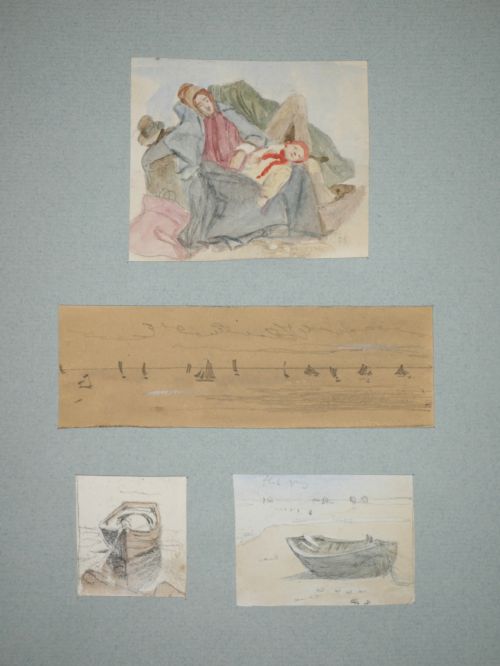
Many marine watercolours began as rapid pencil and wash sketches completed on location at the harbour side or aboard vessels. Artists captured fleeting atmospheric conditions quickly before returning to the studio to finish larger exhibition pieces.
Studio works combined direct observation from sketching trips with technical knowledge of shipping anatomy. This blend of outdoor observation and studio refinement characterises traditional marine art.
How do I identify the ship types?
Study the rigging, hull shape, and propulsion method, as nineteenth and twentieth-century vessels evolved rapidly from wooden sailing ships to iron steamers. Schooners, luggers, clippers, and ironclad battleships each possess distinct structural silhouettes.
Signatures, inscriptions, and named port locations in the titles often point directly to the specific vessel or coastal region depicted. Local maritime history archives can help verify the exact classes of working boats shown.
What is the difference between watercolour and gouache?
Traditional watercolour utilises transparent pigments that allow the white of the paper to shine through the washes. This creates luminous effects for skies and open water where light appears to emanate from the paper itself.
Gouache incorporates opaque white fillers, giving the paint a denser, body-like consistency similar to oil paint. Artists frequently combined both mediums on a single sheet to render sharp highlights on foam and sails.