
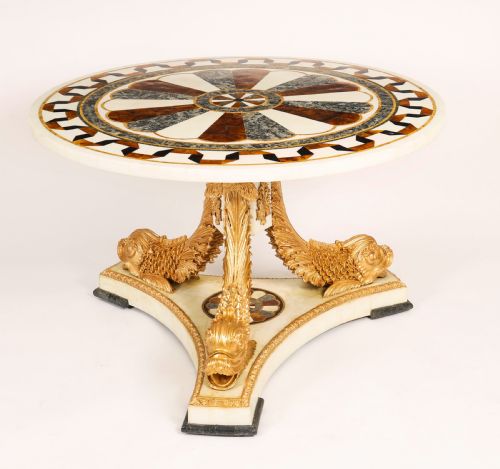
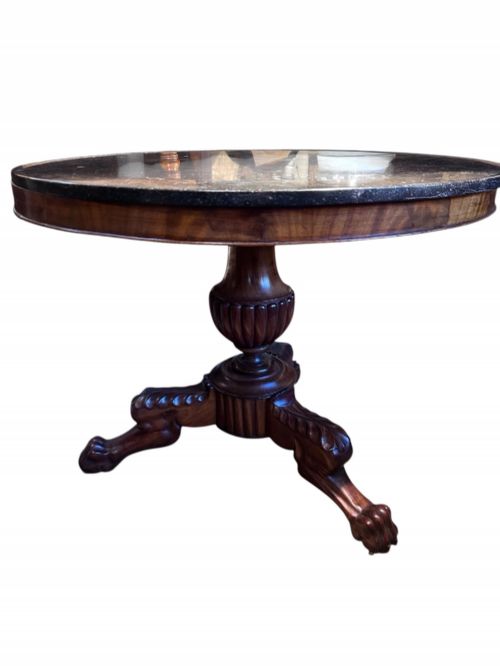


Antique Marble Top Base
These antique marble top base pieces combine solid timber supports with stone slabs, offering sturdy foundations for display.
Antique Marble Top Base
When searching for an antique marble top base, buyers encounter structural supports designed to carry heavy stone surfaces rather than complete tables. The listings on this page span the eighteenth, nineteenth, and early twentieth centuries, capturing diverse forms from French gueridon stands to console tables and pedestals.
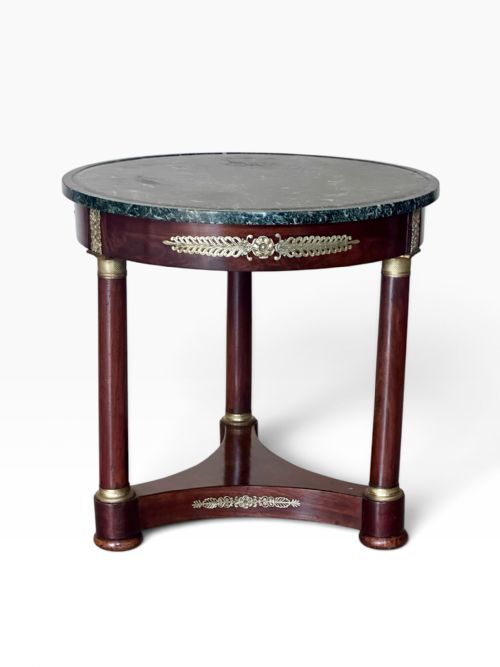
Mahogany, walnut, and rosewood form the wooden framework of these items, frequently paired with giltwood, ormolu, or brass mounts. Originating largely from French and English workshops, the objects reflect periods such as Regency, Victorian, and French Empire styles.
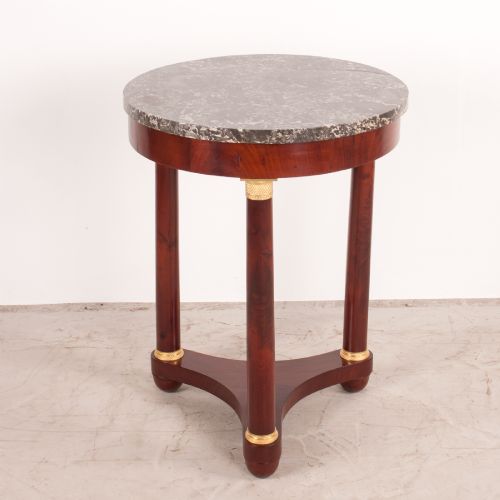
Circular gueridon tables and rectangular console bases dominate the selection, functioning as centre tables, occasional stands, or jardiniere supports. Each piece relies on a sturdy column, pedestal, or carved figural base to bear the weight of the inset marble slab.
Materials and Construction
Cabinetmakers utilised dense timbers including flame mahogany, burr walnut, and figured rosewood to construct the structural supports. These woods were chosen for their stability and rich grain patterns, which complement the cool, smooth surface of the inset stone.
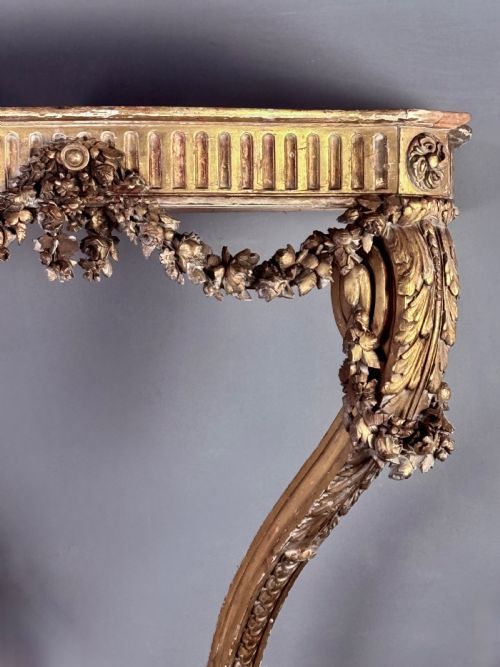
Giltwood carvings, brass mouldings, and cast ormolu details embellish many of the frames, adding decorative contrast to the timber and stone. Carved elements like swans, dolphins, and eagles appear as structural supports, demonstrating sculptural joinery skills.
The listings on this page span the 18th, 19th, and early 20th centuries, featuring walnut, mahogany, rosewood, and wrought iron frameworks.
Design and Execution
The distinction between standard examples and superior pieces rests on the depth of the carving and the selection of materials. High-tier bases feature intricate hand-carved giltwood or finely chased ormolu, whereas simpler items rely on plain turned mahogany columns.
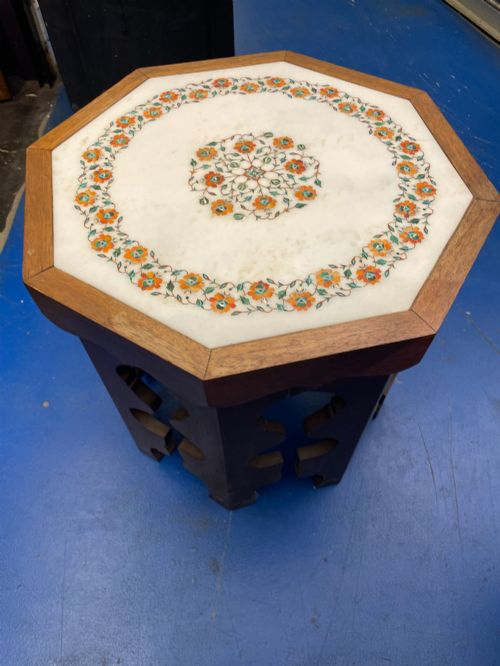
Specimen marble tops featuring multi-coloured geometric stone arrangements elevate the stature of a piece compared to uniform white or grey slabs. The integration between the timber base and the stone top demonstrates the joiner's precision in ensuring a stable, flush fit.
Felix-Alfred Ternisien
The Antique Marble Top Base Glossary
- Gueridon
- A small circular table on a single central pillar, popular in France from the seventeenth century onward. These stands frequently support heavy marble slabs for use as lamp or centre tables.
- Ormolu
- Gilt bronze mounts applied to furniture woodwork for decorative effect. This technique involves coating cast bronze with a mercury and gold amalgam before heating.
- Specimen Marble
- A top composed of various coloured marbles cut and fitted together in geometric patterns. This decorative technique showcases mineral variety across the table surface.
- Console Table
- A wall-mounted or freestanding table supported by sculptural brackets or legs. These items often feature ornate carved wood bases designed to carry stone tops.
Antique Marble Top Base: Frequently Asked Questions
What holds up a heavy marble top?
These bases rely on thick timber columns, carved wooden pedestals, or reinforced wrought iron frames to distribute the heavy weight of the stone evenly.
Joinery techniques such as mortise and tenon joints provide the necessary rigidity to prevent the wooden support from warping under the downward pressure.
How do I clean the marble?
Plain warm water and a soft cloth suffice for routine cleaning of the stone surface, avoiding acidic substances that etch the polish.
Dry the marble thoroughly after wiping to prevent water spots from forming on older, porous mineral slabs.
Where should I place a pedestal base?
These supports function well in entryways, hallways, or corners where a compact footprint allows for the display of plants, clocks, or sculptures.
Ensure the floor surface is entirely level to maintain the stability of the combined base and heavy stone top.
Can I separate the top from the base?
Most antique marble tops rest unattached on the wooden framework, held in place purely by gravity and their own substantial weight.
Lifting the stone slab off the support simplifies transport and allows for safer handling of both components during relocation.