





Antique Mantel Garniture Urns
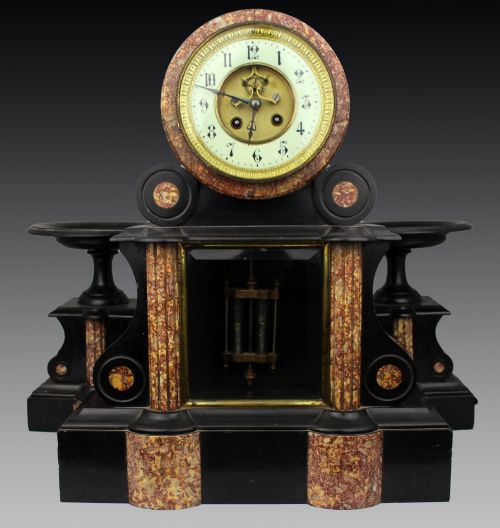
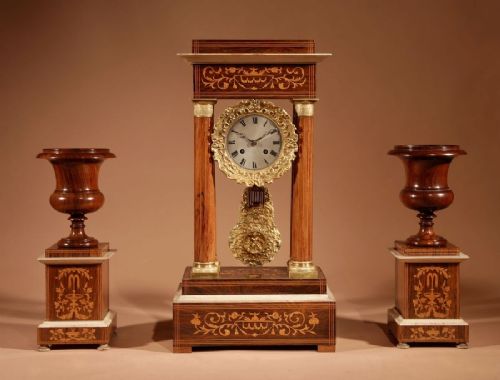
Antique mantel garniture urns are matched sets of decorative vessels designed to sit alongside a clock on a fireplace mantel, offering a balanced display of period craftsmanship.
Antique Mantel Garniture Urns
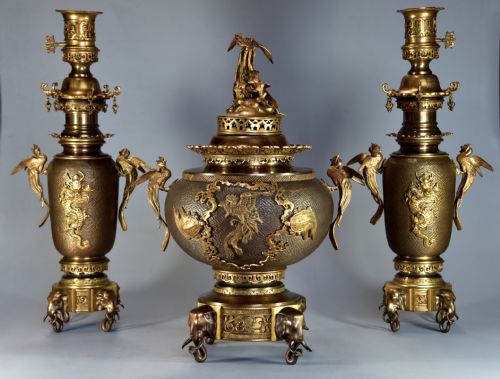
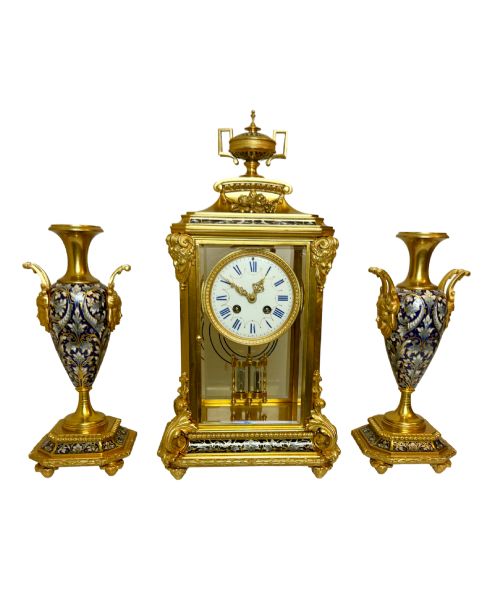
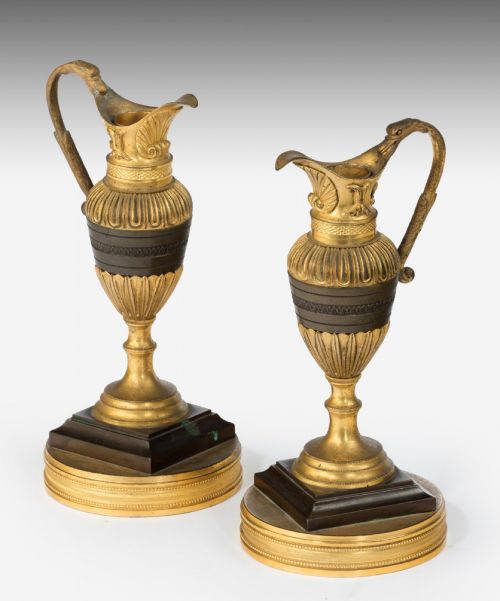
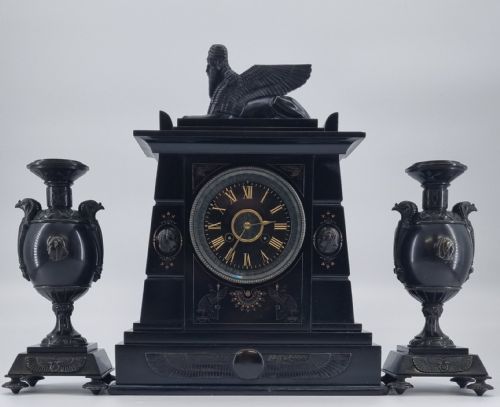
Antique mantel garniture urns comprise three-piece sets or larger groupings of vases, cassolettes, and ewers intended to occupy the centre of a domestic interior. These objects frequently align with periods from the nineteenth century, including Victorian, Regency, and various continental revivals.
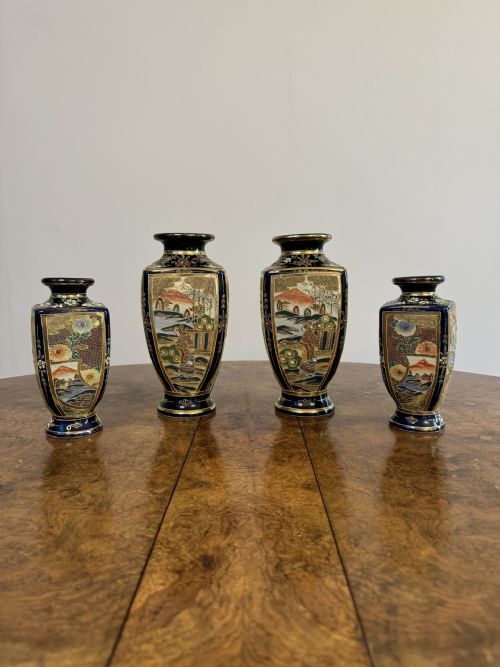
The buyer encounters items styled in French Rococo Revival, Neoclassical, and Louis XVI aesthetics, often taking the form of matching side vases accompanying a central mantel clock. Origins span French workshops, English manufactories, and Japanese export studios.
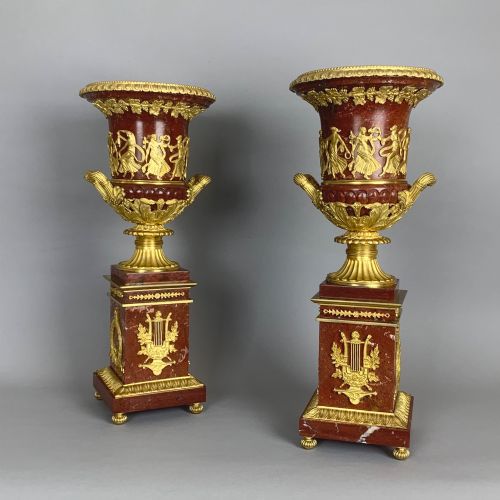
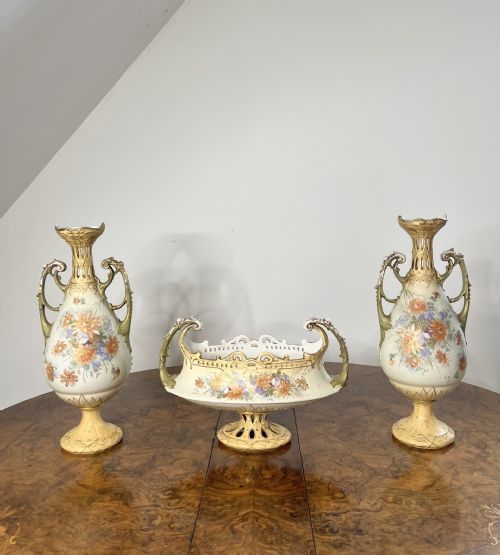
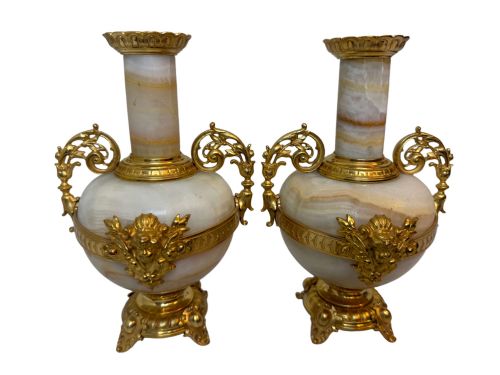
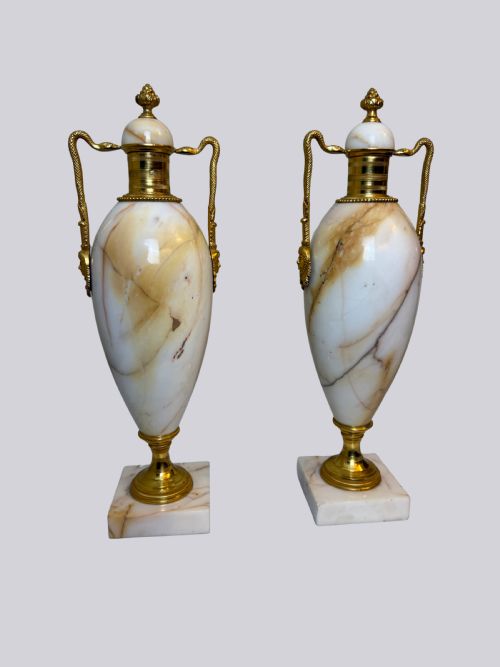
The typical meeting point on this page involves matching pairs of urns flanking a timepiece, manufactured from materials such as porcelain, marble, and gilt bronze.
How They Were Made
Makers utilised cast metals like ormolu, gilt bronze, and brass, often combining patinated surfaces with fire-gilded mounts to create contrasting visual textures. These metal elements were cast and chased before assembly on stone plinths.
Ceramic bodies employ hard-paste porcelain, ironstone, and earthenware, decorated with hand-painted motifs, enamel work, or champlevé detailing. Glass and carved stones such as black marble and white onyx provide further structural bodies.
Cassolettes incorporate reversible lids that transform an lidded urn into a vase, demonstrating the mechanical versatility applied during construction.
What Varies in Quality
Quality rests upon the crispness of the bronze chasing and the precision with which metal mounts fit the ceramic or stone bodies. Finer examples display deeply articulated foliage and figures without softness in the cast.
The hand-painted ceramic decoration dictates the upper tier of execution, where brushwork on porcelain or enamel shows individual artistry rather than stencilled uniformity. Weight and density of the underlying marble or onyx also distinguish superior garnitures from lighter commercial variants.
Japy Freres·Royal Vienna·Flight Barr and Barr·KPM Berlin·Minton·Vincenti of Paris·A.D Mougin·Sevres
The Antique Mantel Garniture Urns Glossary
- Garniture
- A set of three or more matching decorative objects designed to be displayed together on a mantelpiece or sideboard. They typically consist of a central clock or large vase flanked by two smaller matching vases or urns.
- Cassolette
- A decorative vessel with a reversible lid that functions either as a lidded urn or a perfume burner with an opening for a candle or insert. They frequently appear in French ormolu and marble pairings from the nineteenth century.
- Ormolu
- Gilded bronze, produced by applying a mixture of gold and mercury to a bronze base and heating it to vaporise the mercury. The technique yields a rich, durable golden surface seen on mounts and bases.
- Champlevé
- An enamelling technique where troughs or cells are hollowed out of a metal surface and filled with vitreous enamel paste before firing. This method creates coloured patterns flush with the surrounding metal lines.
- Ewer
- A large jug with a wide spout and a shaped handle, often produced purely for decorative display in pairs alongside matching urns.
Antique Mantel Garniture Urns: Frequently Asked Questions
What is a garniture set?
A garniture set is a coordinated group of three or more ornamental objects, usually comprising a central mantel clock or large vase accompanied by a matching pair of smaller urns.
Created to provide symmetrical decoration for a fireplace, these matching pieces share materials, motifs, and maker marks.
How were garniture urns used?
These sets served as the primary decorative arrangement upon a drawing room mantelpiece, framing the central clock and reflecting interior design tastes of the period.
While some cassolettes functioned as incense burners, most garnitures remained purely ornamental displays of wealth and refinement.
How do I identify French empire style?
French Empire style pieces rely on classical architectural elements, military motifs, and symmetry inspired by ancient Greece and Rome.
Expect to see Ormolu mounts, patinated bronze figures, and strict geometric forms on the marble or onyx bodies.
Can I separate a garniture set?
Separating the pieces of a matched garniture set diminishes both its historical integrity and its visual balance on a mantelpiece.
Collectors prefer to keep the central clock or main vase with its original flanking pairs to maintain the intended aesthetic.