
Antique Majolica Ceramic
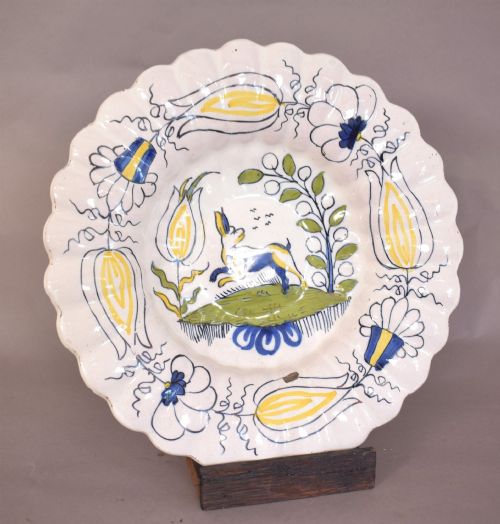
Antique majolica ceramic encompasses heavily glazed earthenware vessels and decorative figures shaped across the nineteenth and eighteenth centuries.
Antique Majolica Ceramic
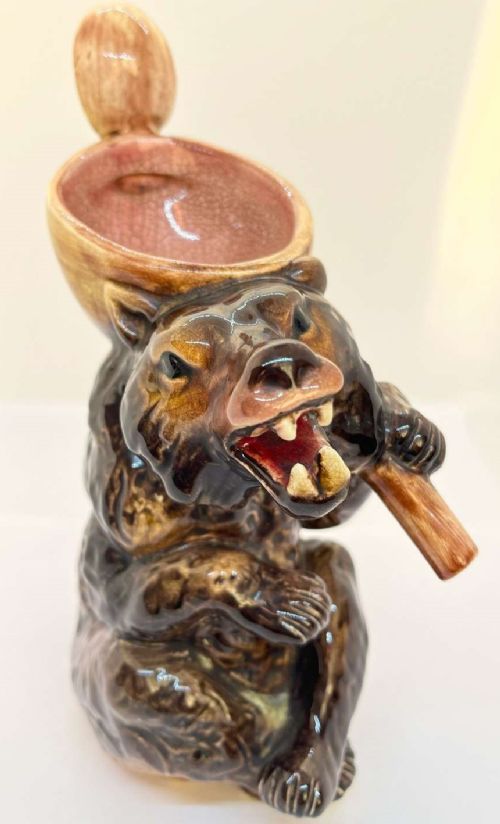
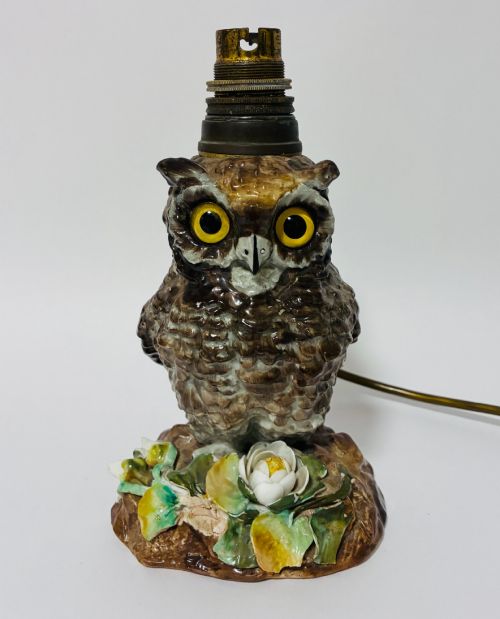
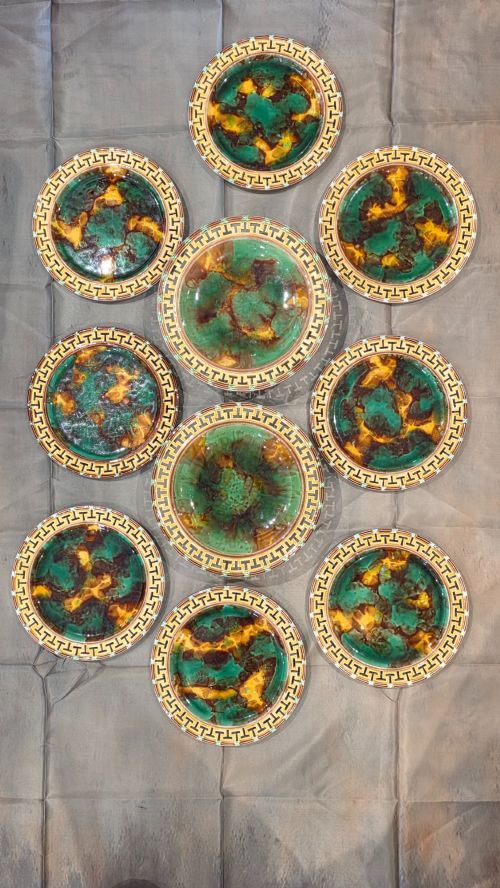
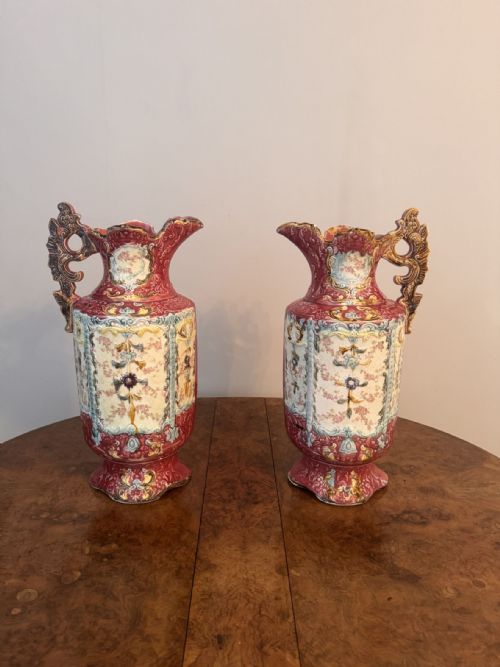
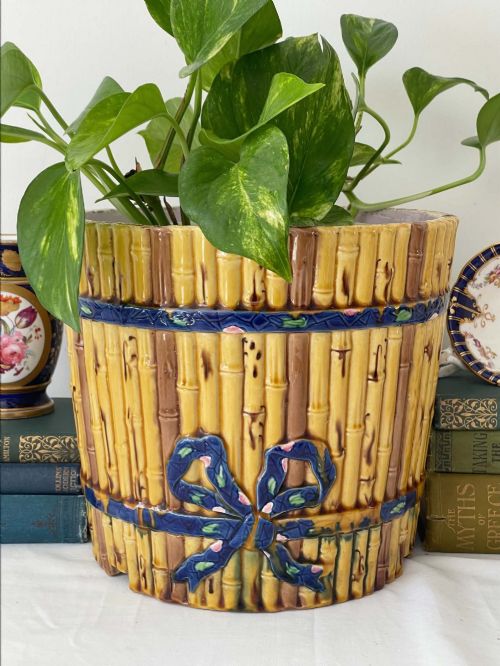
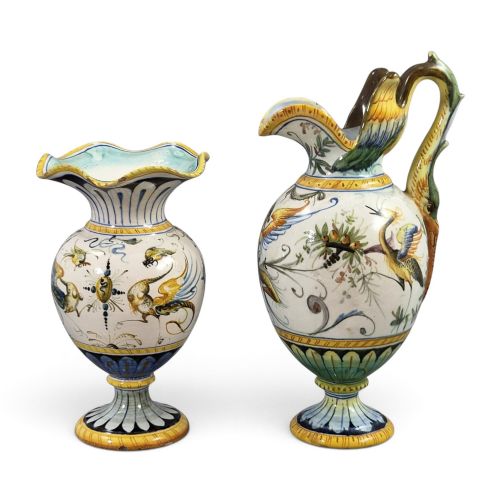
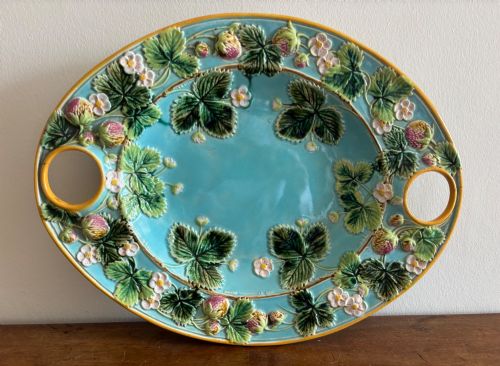
When searching for antique majolica ceramic, collectors encounter diverse earthenware objects including tablewares, garden planters, and apothecary jars. The most common examples on this page date from the Victorian period through to the late nineteenth century, reflecting robust industrial and domestic production. These pieces often take naturalistic or revivalist forms, ranging from leaf comports to figural lamp bases and ewers.
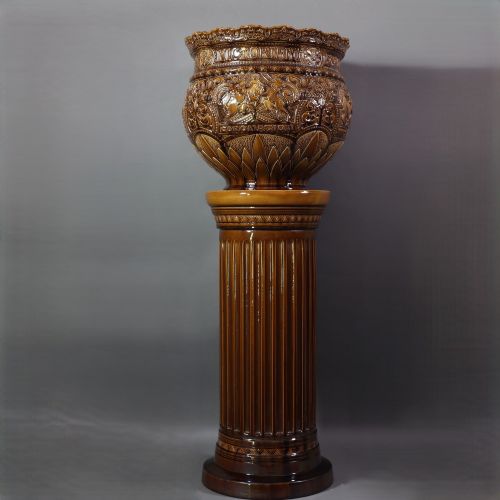
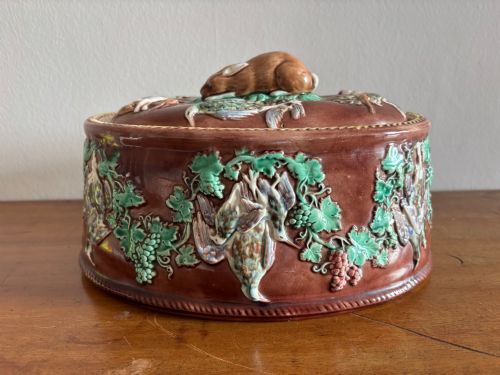
Many items originate from British potteries such as Minton, Wedgwood, and George Jones, alongside Continental workshops in Italy and France. Domestic forms lean towards functional dining wares like cheese domes, sardine boxes, and dessert services. Decorative items such as jardinieres on pedestals, chargers, and pharmacy jugs also populate the selection frequently.
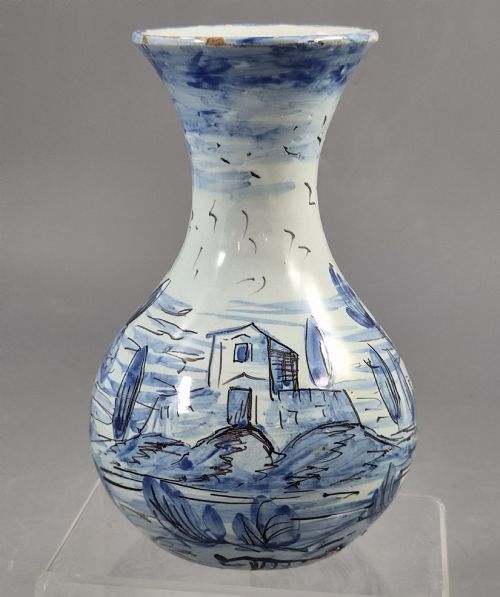
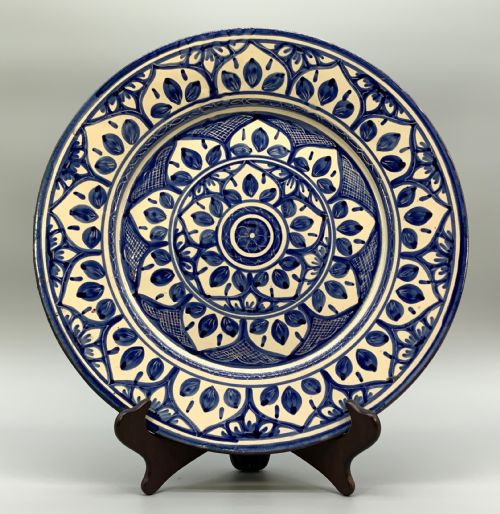
The aesthetic vocabulary draws heavily from Renaissance revival, Italian baroque, and Victorian naturalism. Surface decoration frequently incorporates motifs of fruit, animals, mythic figures, and floral patterns rendered in high relief. Buyers find both brightly coloured polychrome finishes and more restrained blue and white schemes.
Materials and methods of production
Potters built these bodies primarily using earthenware and ceramic clays, shaped either by throwing on a wheel or pressing into intricate moulds. This soft body required a secondary layer to accept colour effectively during firing.
Makers applied tin glazes, lead glazes, and specialised coloured glazes directly onto the biscuit fired clay. The interaction between metallic oxides and the heavy glaze during high temperature firing produced the signature glossy, vibrant surface sheen characteristic of the ware.
A pottery gnome sits quietly amongst the offerings, serving as a nineteenth century paperweight.
Distinctions in craftsmanship and finish
Quality separates objects through the precision of the moulding and the handling of the glaze application. Finer pieces maintain crisp relief detail without pooling or muddying in the recesses of the pattern.
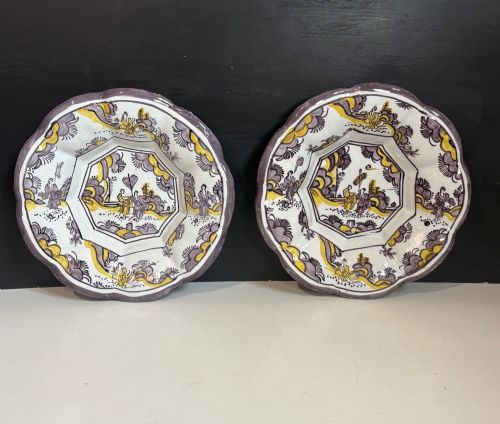
The richness and depth of the coloured glaze separation indicate superior kiln control and skilled hand painting. Well executed items display balanced colour palettes where manganese, yellow, and polychrome tones remain distinct and vivid.
Holdcroft·Wedgwood·Cantagalli·George Jones·Minton·Clement Messier·Burmantofts·George Kemper
The Antique Majolica Ceramic Glossary
- Earthenware
- Porous pottery fired at lower temperatures than stoneware or porcelain. It serves as the standard foundational body for tin-glazed and lead-glazed wares.
- Tin Glaze
- An opaque white glaze produced by adding tin oxide to a lead glaze base. It provides a smooth white background for painted decoration.
- Jardiniere
- A large ornamental pot or stand designed to hold growing plants or flowers. These items often feature figural or relief moulded decoration.
- Comport
- A raised dish or bowl used for serving fruit or dessert at the dining table. They frequently incorporate botanical motifs such as begonia leaves.
- Pilgrim Flask
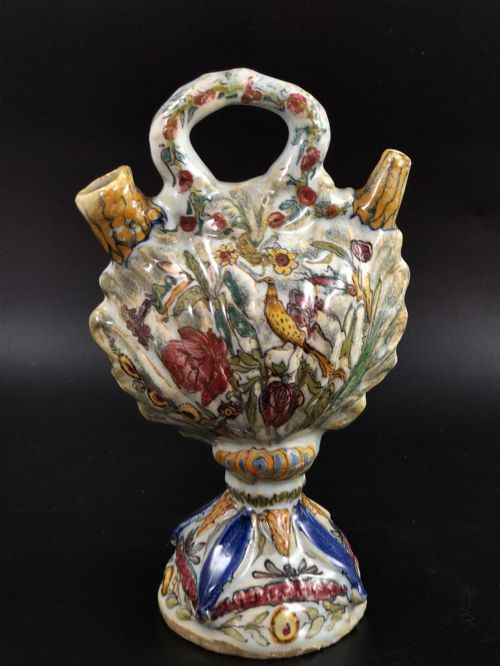
- A flattened globular vessel with side lugs for suspension straps, originating from travel containers. Antique examples often feature Renaissance revival ornamentation.
Antique Majolica Ceramic: Frequently Asked Questions
How are majolica cheese domes used?
These large covered vessels served to keep cheese fresh on the Victorian dining table while presenting an ornamental centrepiece. The underplate caught crumbs and provided a stable base for the decorated dome.
Today they function as display pieces or practical storage for dining. Owners handle them with care to protect the prominent relief moulded decorations.
What distinguishes tin glaze from lead glaze?
Tin glaze incorporates metallic tin oxide to create an opaque, milky white surface that hides the darker clay body underneath. This white ground historically accepted painted pigments effectively before a final firing.
Lead glaze remains transparent or translucent, allowing the natural colour of the earthenware or applied slip to show through directly. Both finishes produce the characteristic glossy sheen associated with these ceramics.
Where were apothecary jars placed?
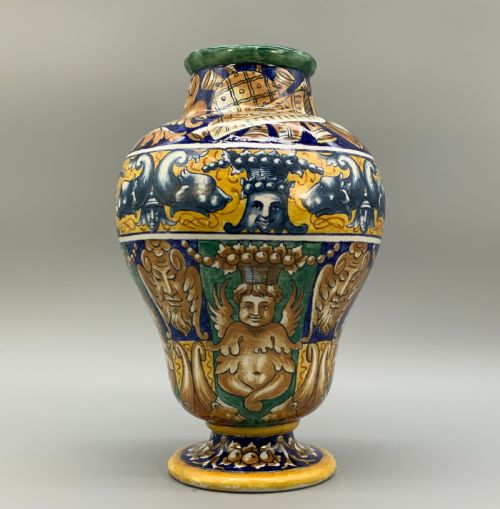
Apothecaries and pharmacies kept these wet and dry drug jars on wooden shelves to store medicinal herbs, syrups, and compounds. Their painted labels identified the specific contents clearly for practitioners.
Modern collectors display them on open shelving or mantels to highlight their hand painted Italian or European tin-glazed decoration. Their robust earthenware construction suits stable indoor placement.
How do you identify a Renaissance revival piece?
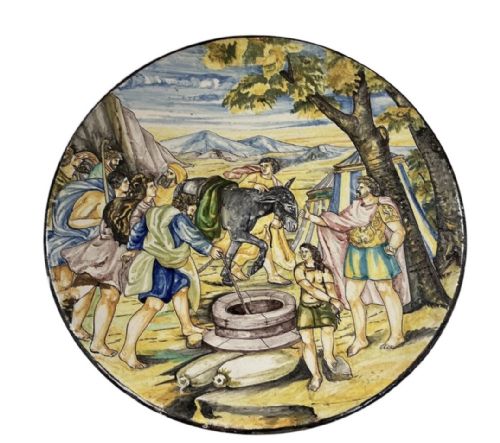
Renaissance revival ceramics borrow decorative motifs from sixteenth century Italian majolica, including grotesque figures, scrollwork, and mythological scenes. Makers in the nineteenth century revived these classical compositions with polychrome palettes.
These items often feature flat plates, chargers, or ewers decorated with historical or religious subjects like madonnas. The styling reflects Victorian antiquarian tastes rather than original sixteenth century production.