




French Majolica Pottery
French majolica pottery brings vibrant tin-glazed earthenware and brilliant coloured glazes to domestic display, offering striking nineteenth-century forms and earlier faience traditions.
French Majolica Pottery
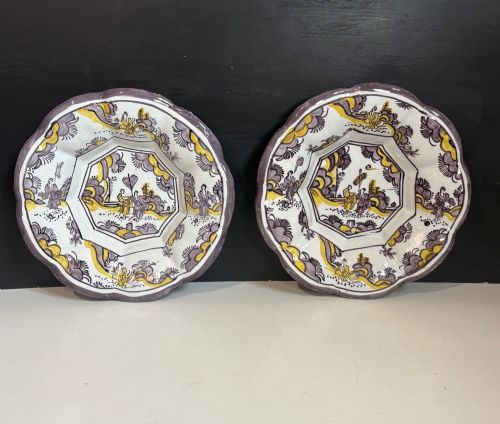
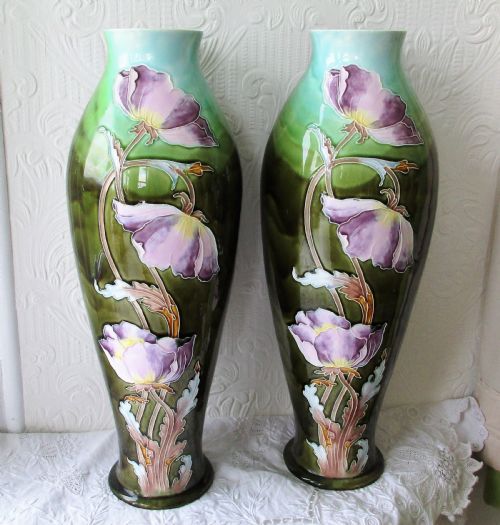
French majolica pottery encompasses tin-glazed earthenware, faience, and glazed ceramic vessels dating from the eighteenth century through to the early twentieth century. When exploring French majolica pottery, buyers encounter diverse functional and decorative forms including vases, decorative dishes, decorative pitchers, wall brackets, ceramic urns, jardiniere and stand sets, commemorative steins, and centrepiece bowls.
The pieces on this page span several distinct stylistic movements, notably Art Nouveau, Renaissance Revival, and Victorian Majolica. Earlier examples connect directly to eighteenth-century faience traditions, while later works showcase the distinct output of French provincial and imperial workshops.
Materials and production
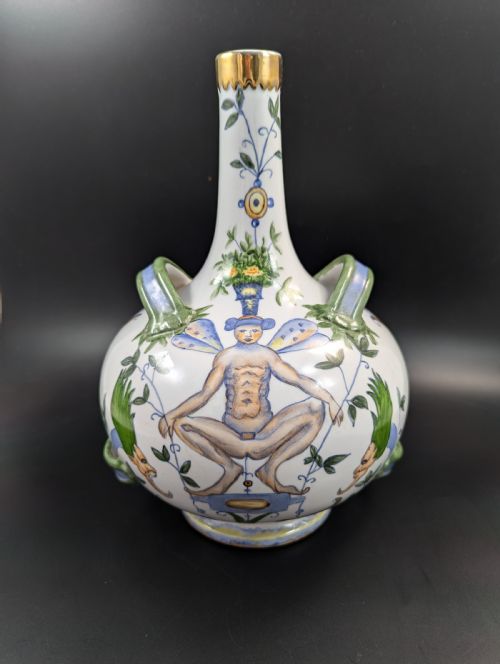
Makers utilised earthenware bodies coated in tin glazes or specialised majolica and lustre glazes to achieve vibrant coloured surfaces. These ceramic pieces were frequently hand painted, applying detailed mythological figures, cherub decoration, and armorial motifs directly onto the prepared glaze before firing.
Production techniques combined traditional throwing and moulding methods to create complex forms such as double-handled flasks, lidded urns, and figural ornaments. Workshops employed lustre glazes and specialised firing processes to produce the luminous metallic sheens seen on later nineteenth-century jardiniere and stand combinations.
Decorations across the site include hand-painted mythological figures, cherubs, armorial designs, and distinct Art Nouveau styling.
Assessing quality and execution
Quality in these ceramics rests upon the crispness of hand-painted detail and the controlled application of coloured tin and lustre glazes across complex forms. Superior examples demonstrate confident brushwork in figurative scenes, such as mythological figures and cherubs, alongside well-defined moulded relief work.
The sophistication of the underlying ceramic form heavily influences distinction, separating standard production wares from ambitious sculptural pieces like large urns, wall brackets, and jardiniere sets. Harmony between the glaze depth and the underlying earthenware body further distinguishes finer pieces in this tradition.
Gien Faience·Clement Massier·Sarreguemines·Minton
The French Majolica Pottery Glossary
- Faience
- Tin-glazed earthenware produced in France and other European countries, noted for its opaque white or coloured glaze. This tradition forms the direct technical foundation for much of the majolica found on this page.
- Majolica Glaze
- A colourful, opaque lead-and-tin glaze applied to earthenware bodies, allowing vivid pigments to fuse during firing. It provides the characteristic bright palette seen across nineteenth-century decorative wares.
- Tin-Glazed Earthenware
- Pottery fired with a glaze containing tin oxide, which creates a smooth, white, opaque surface suitable for hand-painted decoration. This material underpins both eighteenth-century dishes and later nineteenth-century vessels.
- Lustre Glaze
- A metallic overglaze technique that produces an iridescent, shimmering sheen when fired in a reduced oxygen atmosphere. Clement Massier notably utilised this finish to create distinctive surface effects.
- Centrepiece Bowl
- A large, decorative ceramic vessel designed as a focal point for a dining table or sideboard. These often feature elaborate hand-painted designs or sculptural handles.
French Majolica Pottery: Frequently Asked Questions
How do I date French majolica?
Dating relies on examining stylistic indicators such as eighteenth-century forms, nineteenth-century revival motifs, or later Art Nouveau curves. Glaze compositions and workshop marks further clarify the era of production.
Evidence on this page spans from eighteenth-century pieces to nineteenth-century creations and early twentieth-century Art Nouveau vases. Comparing decorative details helps establish the correct period.
What is the difference between faience and majolica?
Faience traditionally refers to European tin-glazed earthenware, particularly historic French wares, while majolica often describes nineteenth-century earthenware with brightly coloured lead glazes. Both categories overlap considerably in French ceramic history.
Makers frequently utilised tin-glaze and majolica glaze techniques interchangeably across decorative pitchers, bowls, and vases.
Where were these ceramics made?
These pieces originate from various French potteries and regional workshops, including notable production centres like Gien and Sarreguemines. Provincial makers alongside larger factories contributed to the wide variety of surviving wares.
Production methods varied by region, resulting in distinct local interpretations of tin-glazed earthenware and lustre glazes.
How should I clean my pottery?
Cleaning requires gentle dusting with a soft dry cloth to protect the delicate hand-painted surfaces and historic glazes. Avoid immersion in water or using chemical cleaning agents.
Preserving the original glaze integrity ensures the longevity of eighteenth and nineteenth-century ceramic items.