
Antique Mahogany Swing Mirror
An antique mahogany swing mirror offers a practical vanity glass that tilts within a stable frame.
Identifying an antique mahogany swing mirror
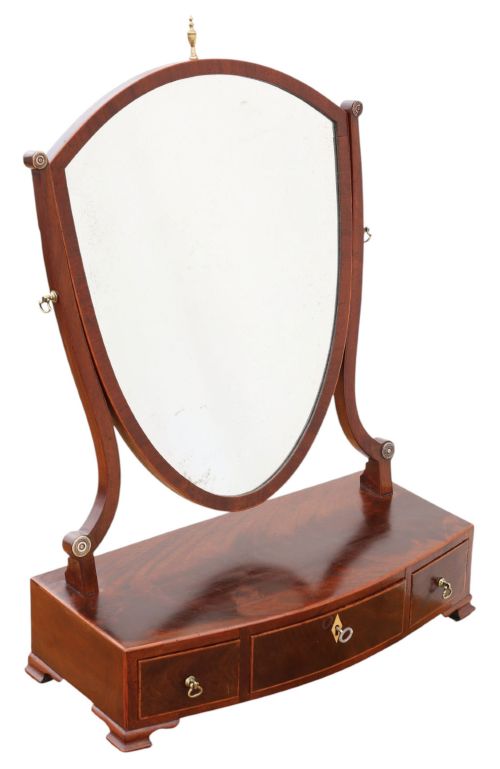
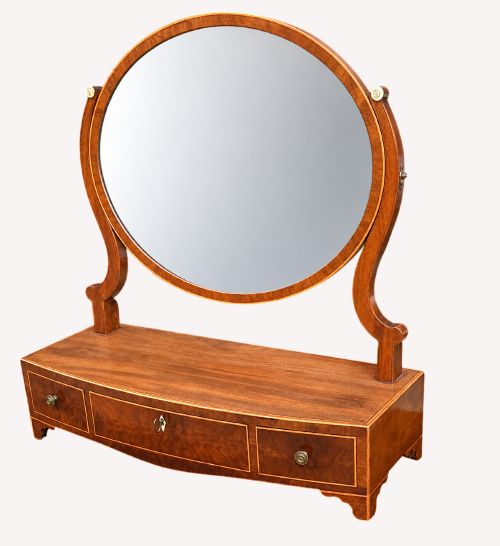
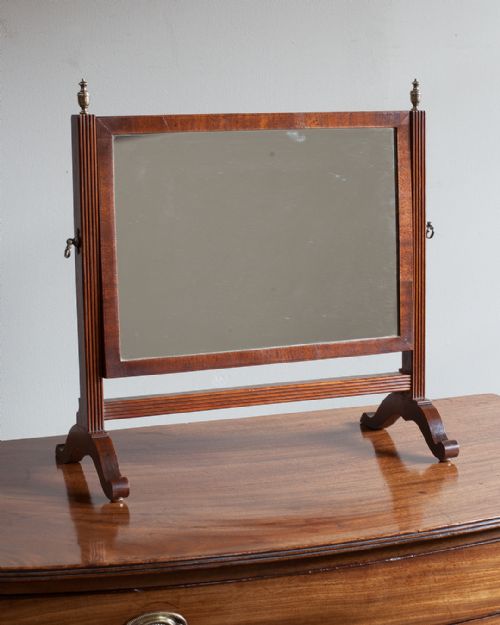
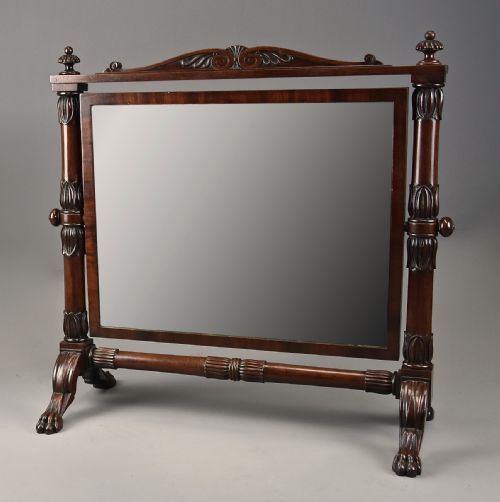
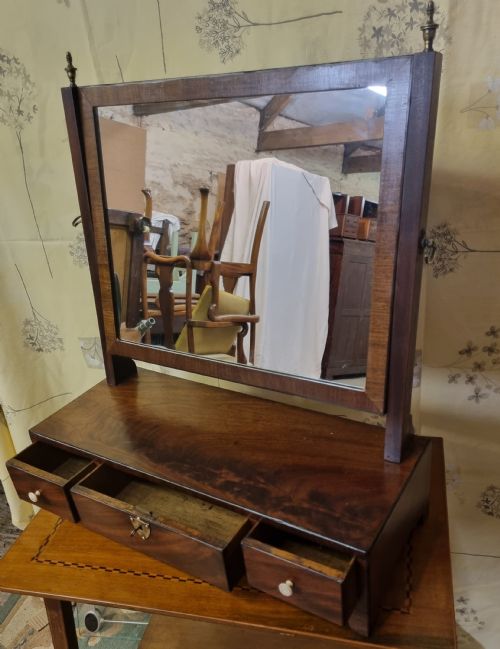
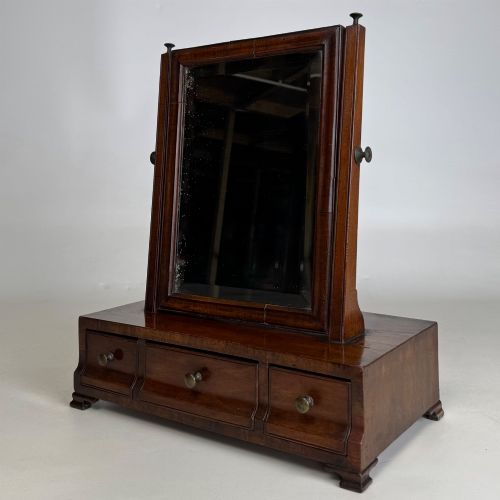
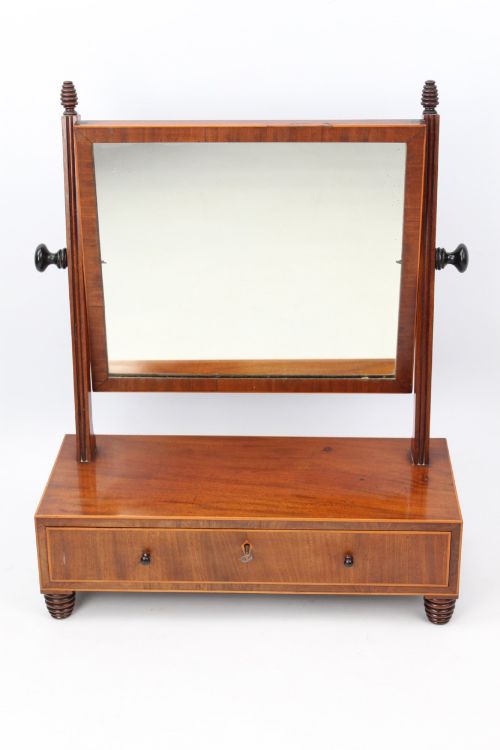
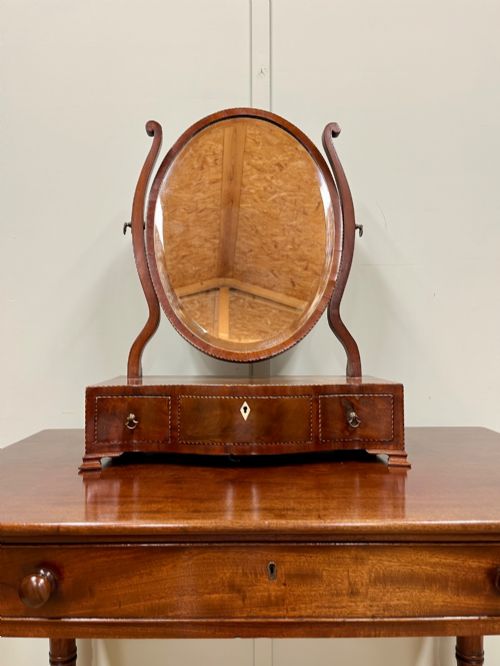
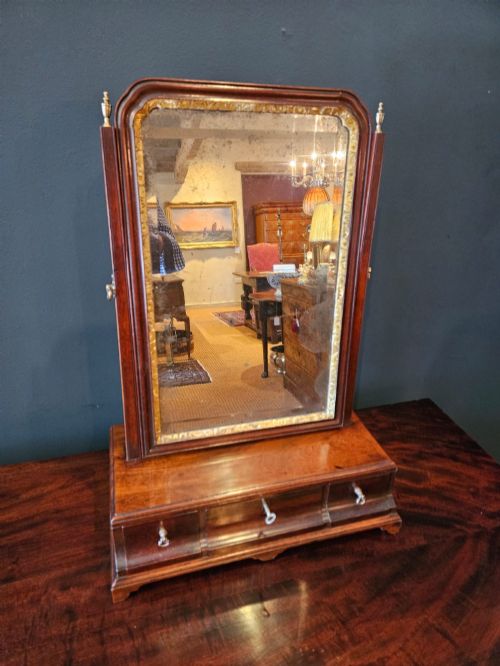
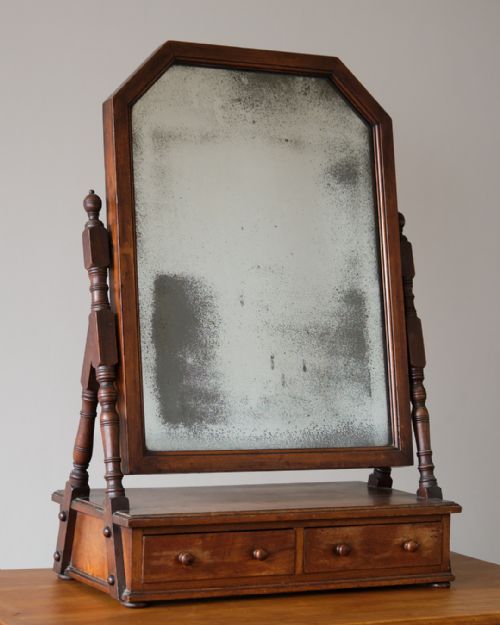
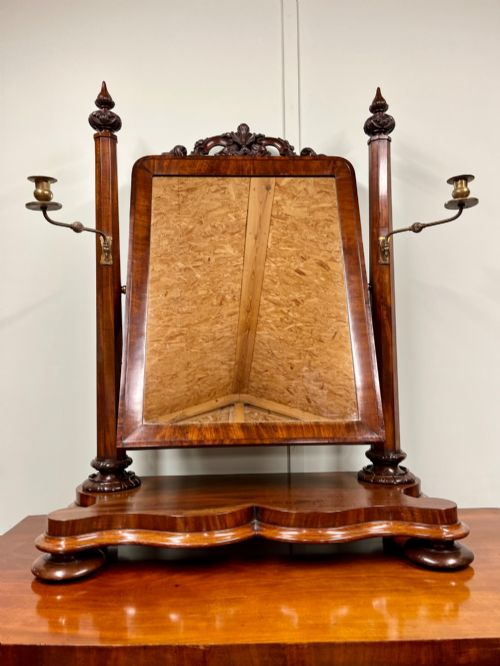
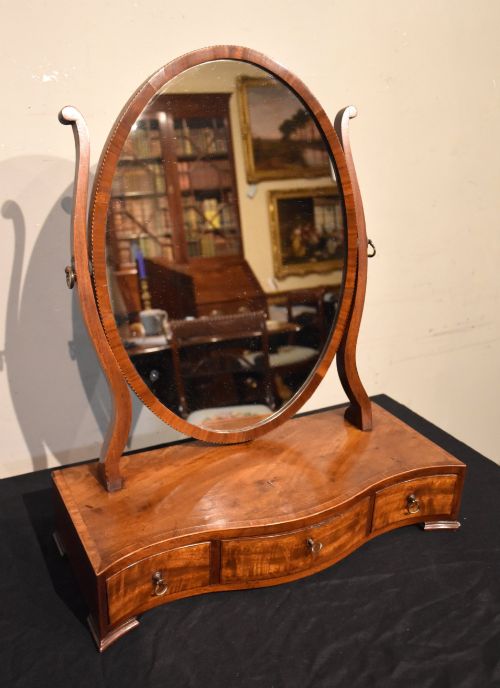
An antique mahogany swing mirror is a tabletop or dressing table glass mounted on pivots that allow it to tilt back and forth. Pieces range from simple Georgian and Regency forms to Victorian and Edwardian examples, appearing as oval, shield, or rectangular plates.
Buyers encounter variations spanning the eighteenth and nineteenth centuries, including serpentine bases, skeleton frames, and platform designs. These mirrors sit upon small chests or dedicated dressing tables, serving as functional grooming glasses.
The objects combine timber frames with adjustable glass plates, sometimes incorporating small drawers within the base. Dating spans from the Georgian era through the Regency and Victorian periods up to Edwardian times.
Materials and construction
Craftsmen built the frames primarily from mahogany, occasionally utilising walnut, with brass fixtures, bone escutcheons, and glass plates. Flame grain veneers and turned supports appear across the nineteenth-century examples.
Joinery involved traditional techniques to secure the uprights to the base platforms, while metal pins or screws formed the axis for the swing mechanism. Marble tops feature on select later vanity models.
Retail Price Guide 2026
Typical UK retail prices for mahogany swing mirror, calculated from the Sellingantiques database of over a million retail prices indexed since 2003. This retail price guide relies exclusively on Sellingantiques data; no external sources or auction records are used, so the figures do not describe the wider market.
Listings feature mahogany, brass, bone, and walnut across Georgian, Regency, and Victorian periods.
Judging quality in mahogany swing mirrors
Superior examples display well-figured mahogany veneers, balanced proportions, and refined details such as serpentine fronts or delicate inlay. Lesser pieces rely on plain timber and simpler rectilinear construction without decorative flourishes.
The integration of the hardware and the retention of original glass plates influence the integrity of the piece. Fine quality is evident where the timber selection and joinery remain crisp and undisturbed.
The Antique Mahogany Swing Mirror Glossary
- Serpentine
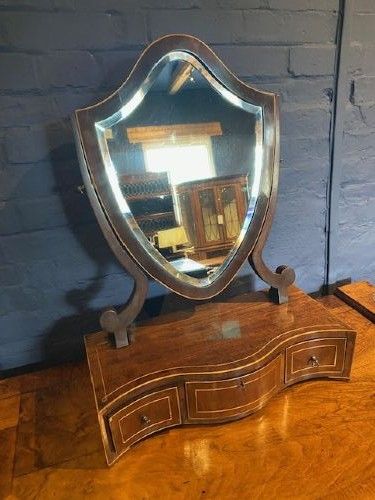
- A curved shape curving outward in the centre and inward at the sides, often seen on eighteenth-century mirror bases. This undulating profile demands precise woodworking skill.
- Skeleton mirror
- A minimalist frame design utilising slender uprights rather than a solid box base. This construction exposes more of the mahogany structure.
- Shield mirror
- A glass plate shaped like a heraldic shield, popular during the Georgian period. It offers a softer silhouette than standard rectangular plates.
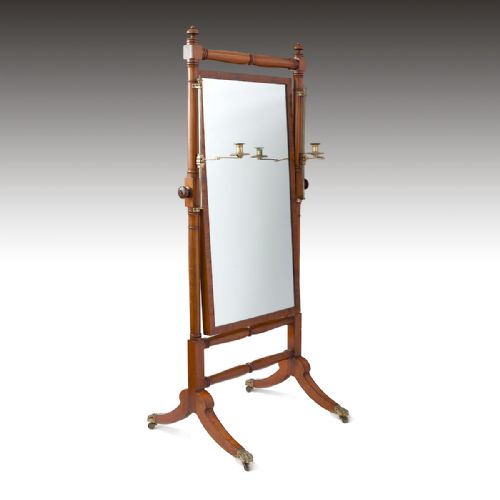
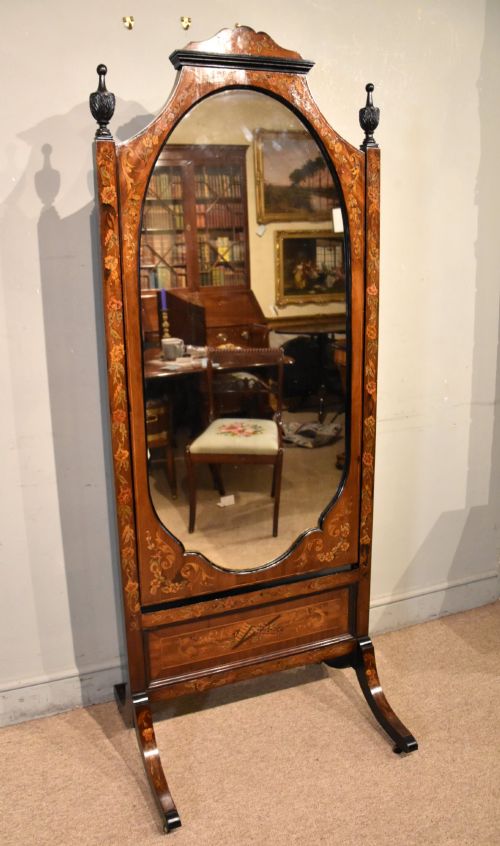
- Cheval mirror
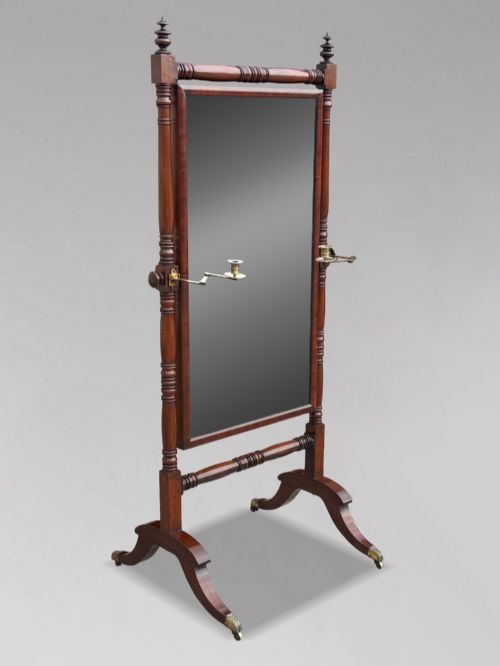
- A full-length freestanding swing mirror, though smaller table versions also adopt the pivoting principle. The term relates to the horse-like frame structure.
Frequently Asked Questions
How do I date a swing mirror?
Dating relies on stylistic clues such as shield plates, serpentine bases, and turned uprights. Georgian and Regency pieces show different joinery and proportions compared to Victorian or Edwardian variants.
Examining the secondary woods and the type of mirror plate provides further chronological context.
Were these always meant for dressing tables?
Most of these mirrors functioned as toilet or dressing glasses, sitting atop scratch tables or chests of drawers. Some incorporated small drawers in their platforms for holding trinkets.
They provided a movable reflection before fixed wall mirrors became standard in every bedchamber.
How do I care for mahogany and brass?
Maintenance involves dusting the mahogany with a soft cloth and avoiding abrasive cleaners on the brass pivots. Keeping the mirrors away from direct sunlight protects the timber finish.
Gentle handling of the swing mechanism prevents stress on the wooden pivots.