


Antique Mahogany Settee Suite
An antique mahogany settee suite delivers matched seating in rich timber, bringing period character and cohesive elegance to a principal room.
Antique Mahogany Settee Suite
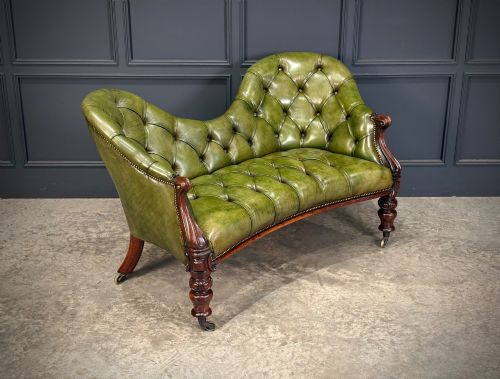
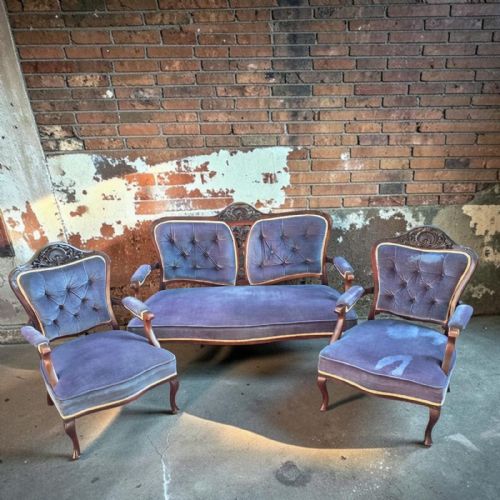
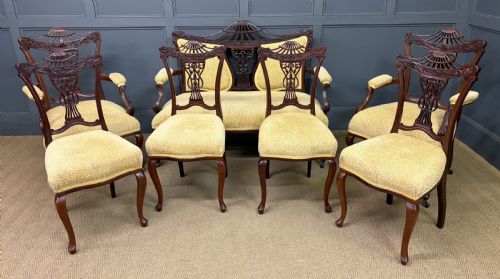
An antique mahogany settee suite comprises a larger sofa paired with matching armchairs or chairs, designed to furnish a parlour, salon or drawing room with uniform elegance. When you search for an antique mahogany settee suite, you encounter groupings that range from compact three-piece arrangements to expansive seven-piece drawing room sets spanning the Victorian and Edwardian eras.
The material foundation across these suites is solid mahogany or mahogany veneer, frequently shaped into carved frames, spoon-backs or inlaid surfaces. Workshops of the nineteenth and early twentieth centuries produced these groupings in styles including Victorian, Edwardian, Chippendale Revival and French Empire, often uniting a settee with matching tub chairs or boudoir seating.
Factors determining quality
The standard of a suite rests upon the crispness of the mahogany carving and the integrity of the timber frame. Suites retaining their original show-wood finish and cohesive upholstery scheme demonstrate superior preservation compared to those altered over time.
Completeness dictates distinction within this category, as matched sets comprising a settee and multiple chairs command greater interest than assembled groupings. The finesse of subsidiary decorative elements, such as satinwood inlay or cane work, separates standard production from exceptional parlour suites.
Current listings feature mahogany furniture spanning from early Victorian examples to Edwardian inlaid boudoir suites.
Howard and Sons·J. S. Kinsey
The Antique Mahogany Settee Suite Glossary
- Mahogany
- A durable tropical hardwood with a rich reddish-brown tone, used extensively for cabinet frames and decorative furniture throughout the nineteenth century.
- Salon Suite
- A matched set of seating comprising a settee and armchairs designed for formal entertaining in a Victorian or Edwardian drawing room.
- Bergère
- An enclosed upholstered armchair or settee featuring wooden frames and woven cane panels along the back and sides.
- Spoon-Back
- A padded chair or sofa back curved in the concave shape of a spoon, characteristic of mid-Victorian seating design.
- Marquetry
- Decorative veneer patterns formed by fitting together contrasting pieces of wood to create pictorial or geometric designs on furniture surfaces.
Antique Mahogany Settee Suite: Frequently Asked Questions
What pieces comprise a standard suite?
An antique mahogany settee suite typically includes a main sofa alongside a pair of matching armchairs or occasional chairs. Larger configurations can expand to include multiple chairs forming a complete parlour setting.
These groupings were intended to furnish reception rooms with uniform style, ensuring all seating shared identical wood tones, upholstery fabrics and decorative motifs.
How do I date an antique suite?
Dating relies upon stylistic markers, such as the curved frames of mid-Victorian pieces or the satinwood inlay characteristic of Edwardian furniture. Construction details and upholstery methods also assist in establishing the period of manufacture.
Earlier nineteenth-century examples often display heavier carved mahogany frames, whereas Edwardian suites tend toward lighter proportions and decorative marquetry.
Can I reupholster a period suite?
Many suites are acquired specifically for reupholstery, allowing owners to select fabrics that complement modern interiors while preserving the antique timber frame. Professional upholstery maintains the traditional webbing and padding methods appropriate to the period.
Original leather or fabric remains desirable if well preserved, but replacement allows damaged or worn textiles to be renewed.
Where were these suites used?
These seating groups were positioned in formal reception spaces such as parlours, drawing rooms and salons to accommodate guests during social calls. The matched design projected taste and standing within the home.
Today, these suites function similarly in principal living areas, providing coordinated seating arrangements with distinct historical character.