


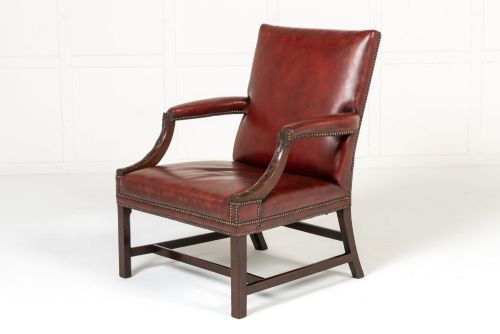
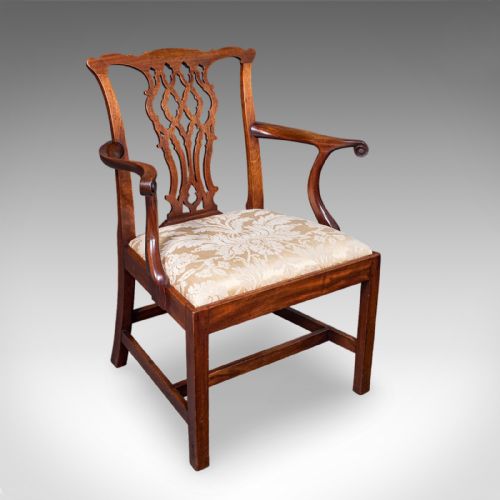
Antique Mahogany Desk Seat
An antique mahogany desk seat brings solid joinery and rich timber grain to a study, offering a sturdy seating option built for daily writing and reading.
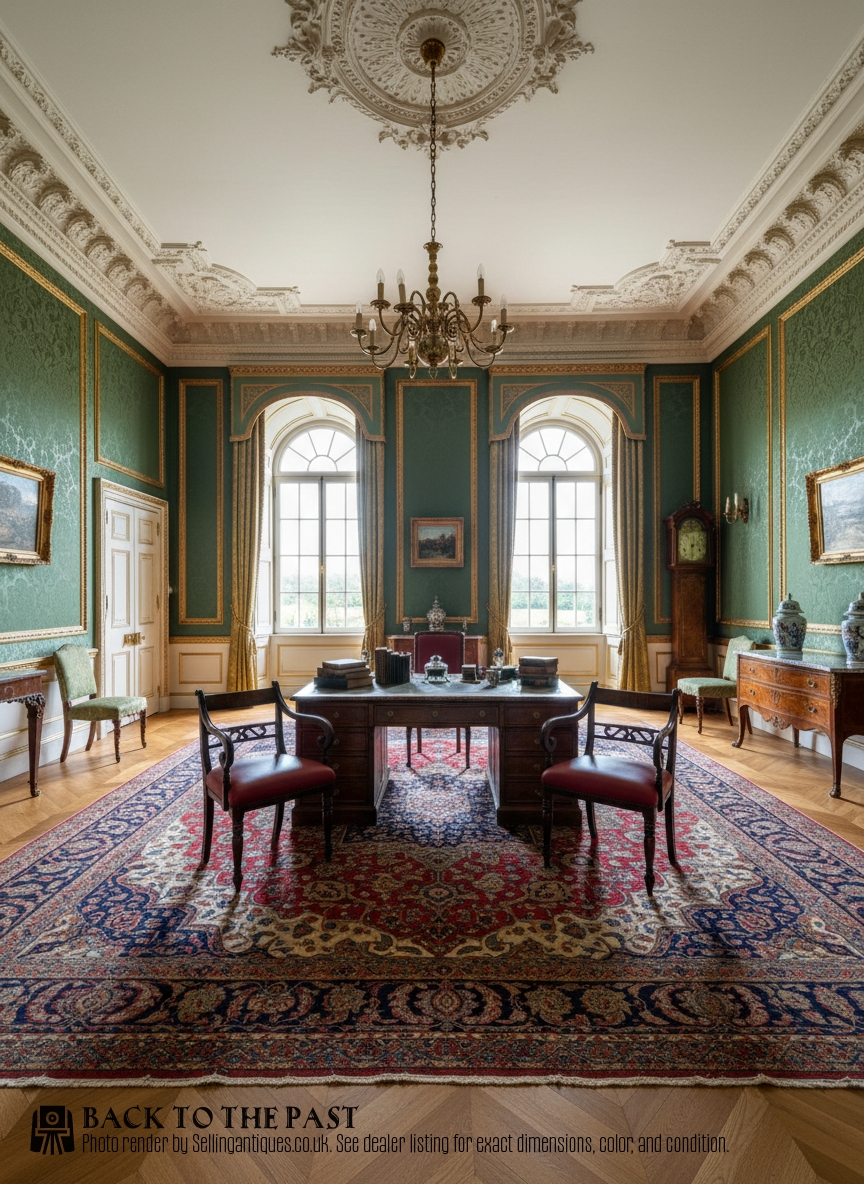
Materials and construction methods
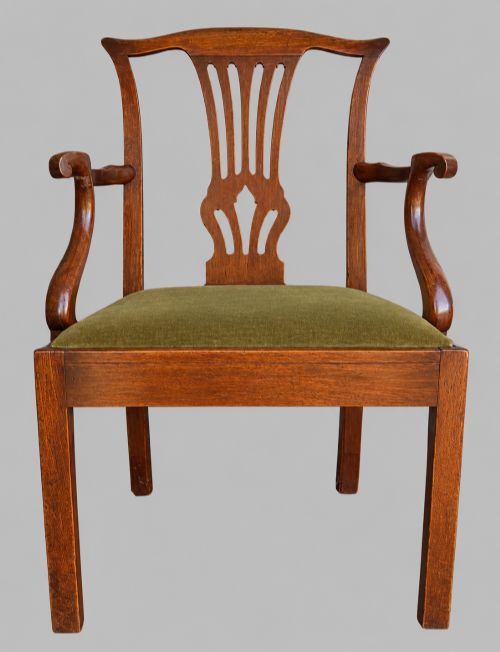
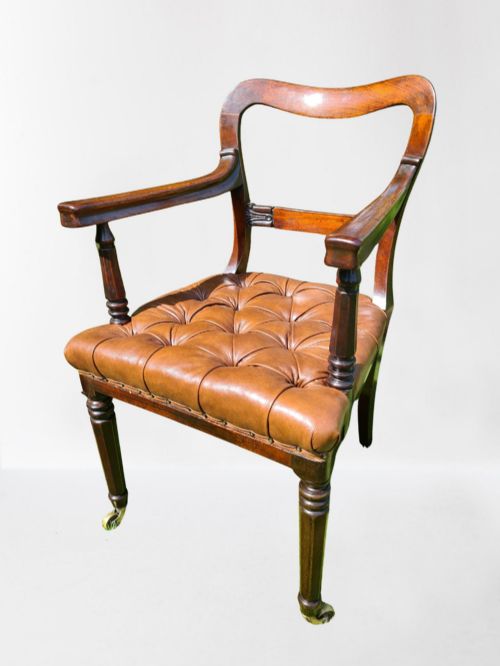
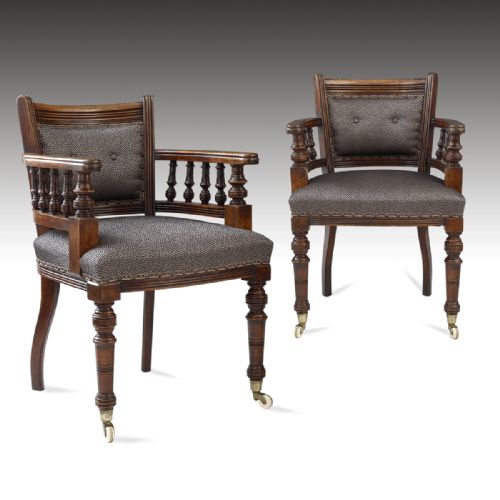
Cabinetmakers built these frames primarily using solid mahogany, often selecting Cuban mahogany for denser grain and deeper colour in eighteenth-century pieces. Secondary timbers appeared in concealed areas, while brass castors allowed smooth movement across carpets and floorboards.
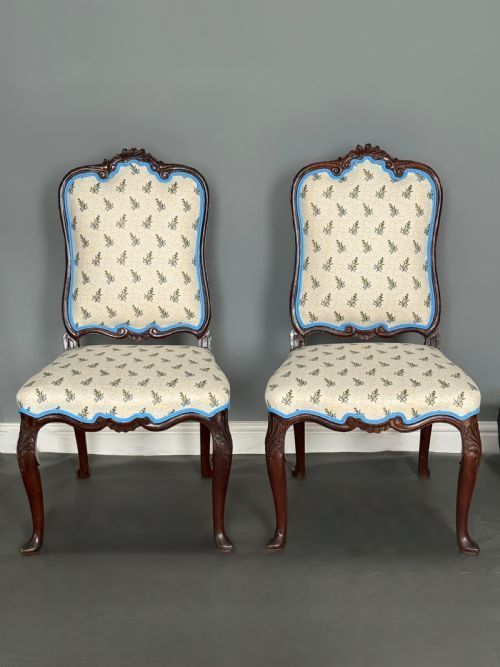
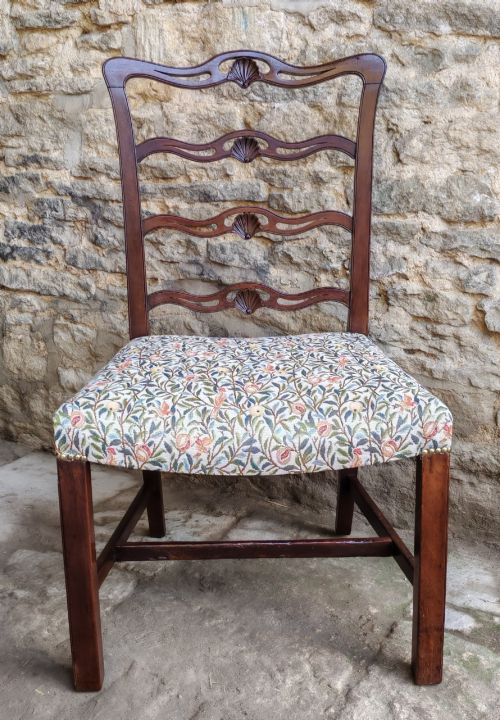
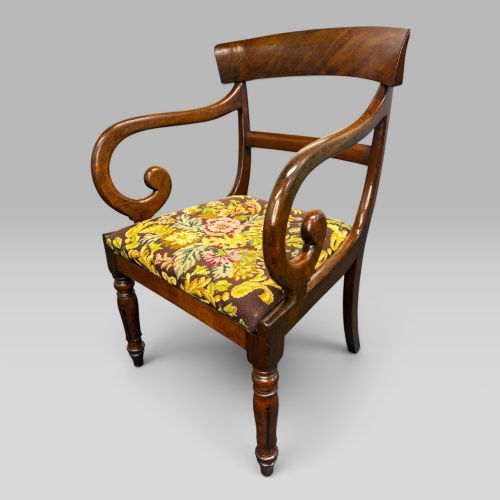
Support systems varied according to period and function, employing drop-in upholstered pads, woven cane panels, and full webbing beneath leather, velvet, or fabric upholstery. Hand-dyed English hide leather and floral textiles fastened with brass tacks completed the seating surfaces.
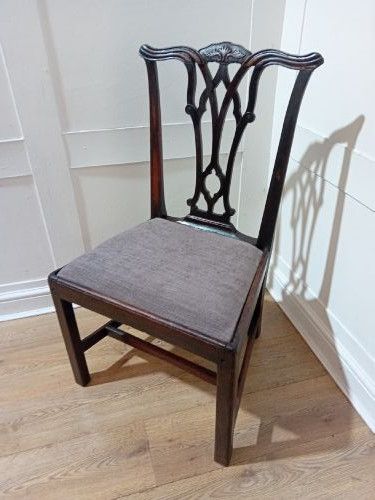
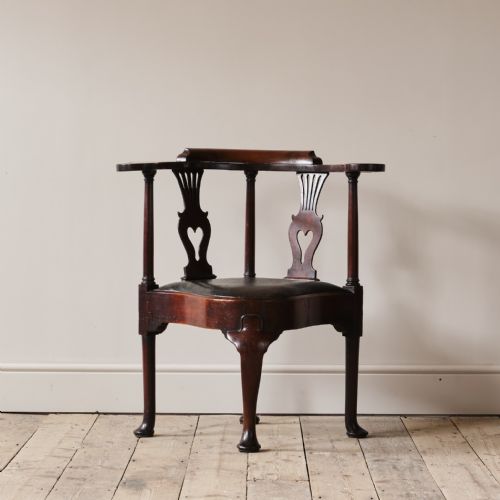
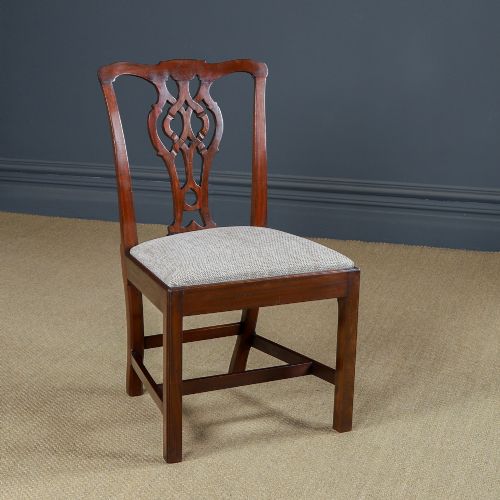
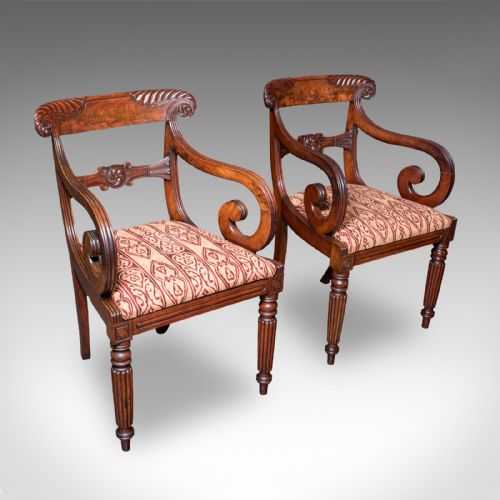
Joinery relied on mortise and tenon joints secured with pegs, supplemented by carved details such as ladderbacks, scroll arms, and Chinese Chippendale blind fretwork. Turning lathes shaped upright pillars and legs, particularly on Regency and William IV examples.
Distinguishing quality in construction and finish
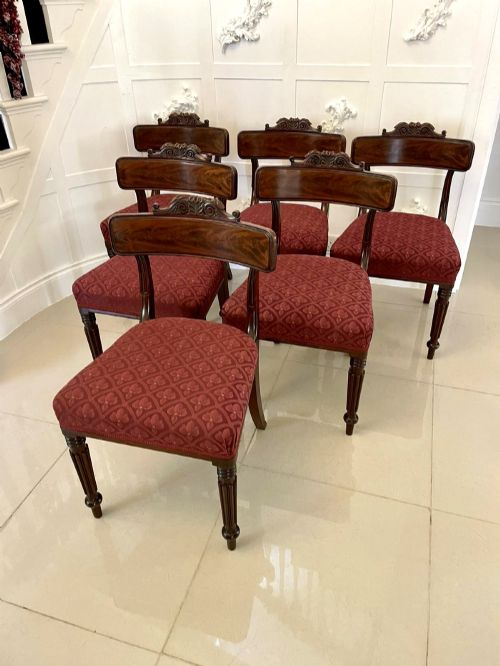
Quality rests in the weight and selection of the timber, where denser mahogany grain and crisp hand-carving indicate superior craftsmanship over flat, mechanical moulding. Frames that remain rigid at the joints show better original joinery.
The sophistication of the mechanism and internal support dictates the grade of a working seat, distinguishing standard dining adaptations from purpose-built library and revolving desk chairs. Original brass hardware and undisturbed upholstery foundations elevate the standing of a piece.
Several library seats arrive with stubborn ink stains trapped inside the carved crevices, left behind by hurried nineteenth-century letter writers.
Gillows
The Antique Mahogany Desk Seat Glossary
- Gainsborough chair
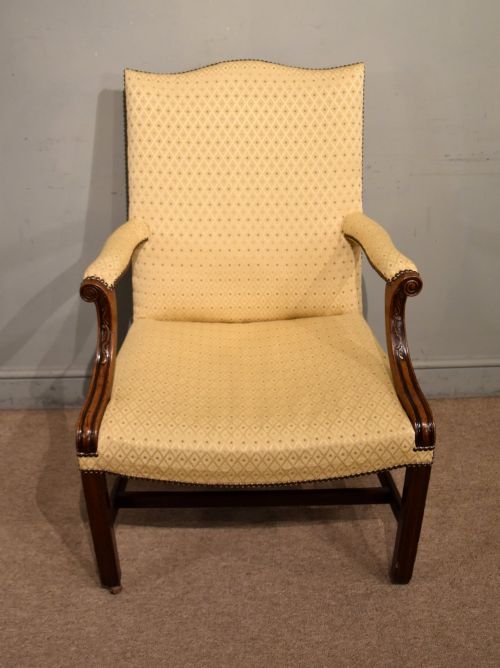
- A wide, upholstered armchair with open padded arms, short legs, and a square back, designed for reading and writing in eighteenth-century libraries.
- Bergère
- An enclosed upholstered armchair with a wooden frame where the sides and back often incorporate woven cane panels.
- Elbow chair
- An armchair featuring open sides, providing clearance for voluminous historical clothing while offering arm support at a desk.
- Blind fretwork
- Low-relief geometric or interlaced carved decoration applied to chair legs and rails, characteristic of Chinese Chippendale design.
- Reeded
- A decorative moulding formed of parallel convex strips carved directly into the timber leg or upright, common in Regency pieces.
Antique Mahogany Desk Seat: Frequently Asked Questions
How do I spot a true desk chair?
Authentic period desk seats usually feature wider arm clearances, robust swivel mechanisms, or adjustable heights that separate them from standard dining furniture. Many retain traces of heavy library use through polished armrests and sturdy H-stretchers.
Look for evidence of purpose-built reading or writing configurations, such as deeper seats and supportive upright backs designed for prolonged sitting.
What is a Gainsborough chair?
A Gainsborough chair is a spacious, upholstered armchair with open padded arms and short legs created during the mid-eighteenth century. These seats served aristocratic libraries and studies where comfort during correspondence was paramount.
They stand apart from standard armchairs through their generous proportions and fully upholstered frames framed in dark mahogany.
Are cane seats comfortable?
Cane seating offers a resilient, springy surface that adapts to the sitter while allowing ventilation during warmer months. Many period examples accommodated loose cushions or squabs upholstered in leather or velvet for added comfort.
The tightly woven cane work provides surprising durability when maintained with proper moisture levels to prevent snapping.
How do I date a mahogany chair?
Dating relies on observing structural clues like joinery techniques, timber weight, and stylistic indicators such as reeding or Chinese Chippendale fretwork. Eighteenth-century pieces typically display heavier Cuban mahogany and hand-cut joints, while Victorian and Edwardian examples incorporate machine-turned components.
Comparing the stretcher arrangement and leg shape against documented period designs helps narrow the manufacturing decade.