






Mahogany Tub Desk Chair
A mahogany tub desk chair brings supportive comfort and rich timber warmth to a study.
Mahogany Tub Desk Chair
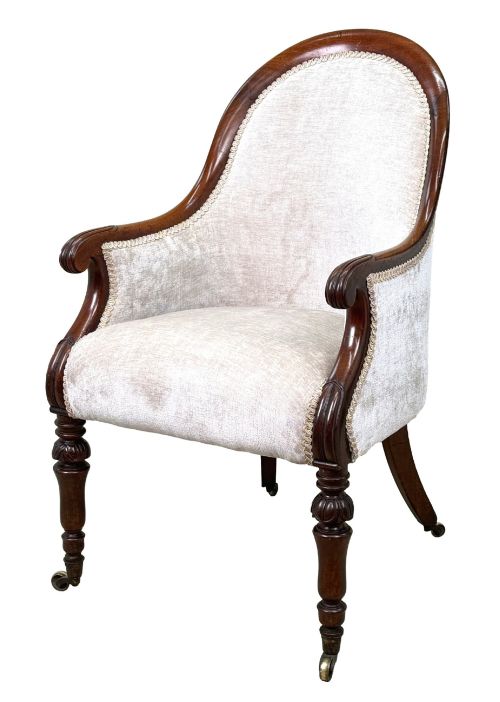
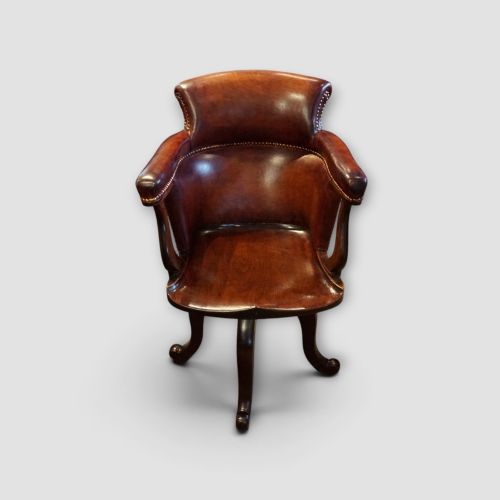
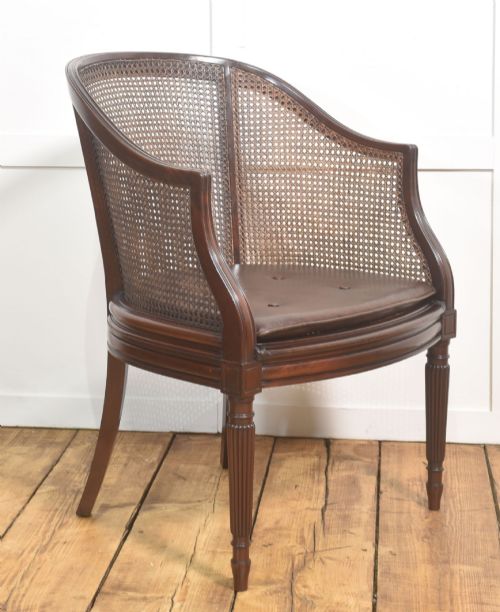
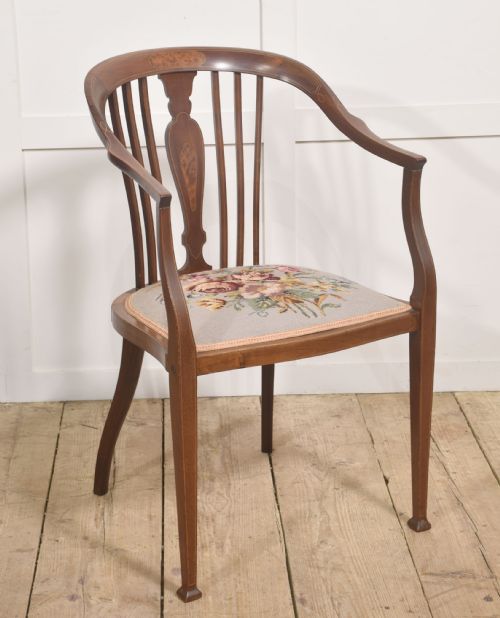
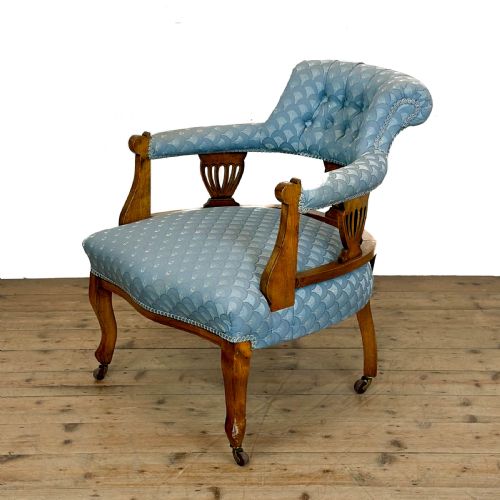
A mahogany tub desk chair provides a supportive, enclosed seating experience designed for long hours at a writing surface. The defining feature is the curved, continuous backrest that sweeps around to form the armrests, creating a protective tub shape.
Most examples encountered here date from the Victorian and Edwardian periods, alongside earlier Regency designs and later early twentieth-century pieces. These chairs function equally well as library armchairs, office seating, or occasional desk chairs.
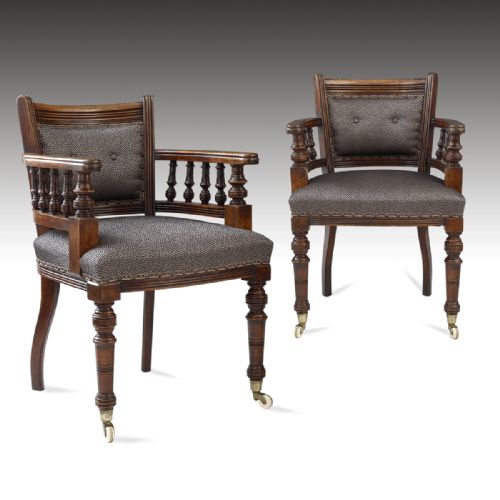
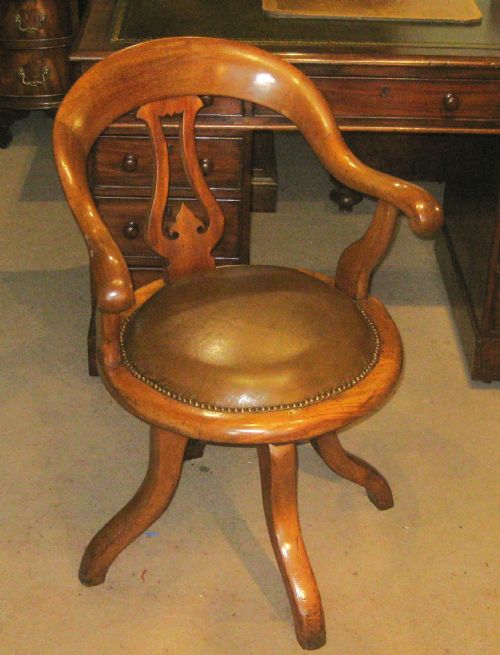
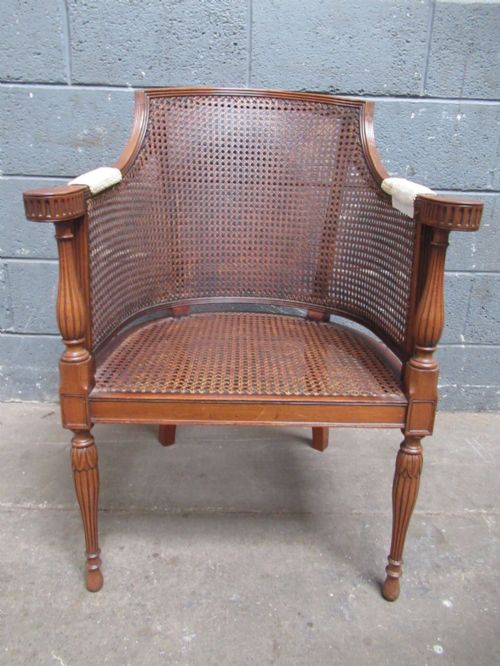
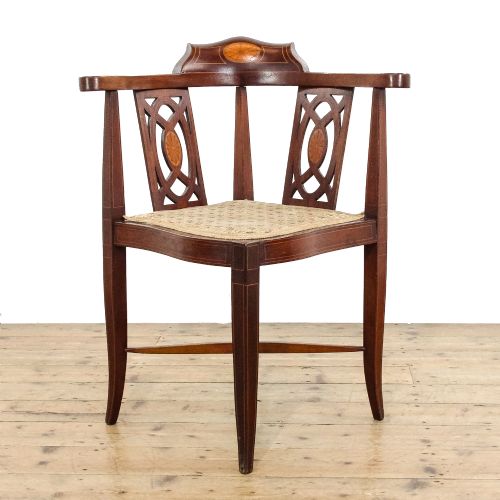
Variations in the form include revolving mechanisms, upholstered bucket seats, caned panels, and corner chair configurations. The curved profile remains constant, offering an ergonomic embrace that separates these pieces from standard straight-backed desk chairs.
Materials and Construction
The primary structural timber is mahogany, selected for its strength, deep grain, and capacity to hold fine carved details or polished finishes. Cabinetmakers frequently paired this with supple leather inserts for writing seats, or woven cane for lighter, breathable back panels.
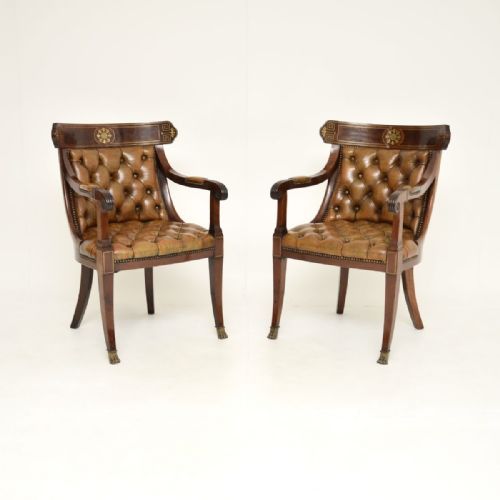
Joinery techniques relied on traditional mortise and tenon frames to withstand the rotational stress of swivel mechanisms and daily sitting. Metal components such as brass castors, swivel spindles, and occasional ormolu mounts added mobility and decorative contrast to the dark wood.
Inlaid details incorporated contrasting satinwood or marquetry, while upholstery methods utilised horsehair stuffing beneath fabric or leather coverings. These construction elements combined durability with refined aesthetics suitable for professional and domestic libraries.
Musicians occasionally claimed the low-slung revolving chairs to swivel freely between sheet music stands without standing up.
Assessing Quality
Quality in a mahogany tub desk chair rests on the fluidity of the curved timber joinery forming the continuous back rail. Superior pieces display seamless, steam-bent or hand-carved curves without visible structural weakness at the stress points where the arms meet the back.
The choice and execution of secondary materials dictate the upper tier of the range, from finely grained golden mahogany and heavy brass inlay to neatly hand-caned panels. Lesser examples rely on simpler turned spindles and standard upholstery without the refined cabinetwork found in exhibition or bespoke pieces.
The Mahogany Tub Desk Chair Glossary
- Tub chair
- An armchair featuring a continuous curved back and armrest rail that encloses the sitter. This shape provides side support and a cosy seating posture.
- Bergère
- A French-style upholstered armchair with enclosed sides, often featuring exposed wooden framing and cane panelling. It offers a lighter aesthetic than fully upholstered club chairs.
- Ormolu
- Gilt bronze applied as decorative mounts to furniture frames. It provides metallic contrast against dark mahogany surfaces.
- Caned
- Woven rattan or split cane material used for chair seats and backs. This technique introduces lighter textures and flexible support.
- Marquetry
- Decorative veneer patterns assembled from various tinted woods to form pictorial or geometric designs. It adorns the flat surfaces of the chair rails and splats.
Mahogany Tub Desk Chair: Frequently Asked Questions
What is a tub desk chair?
A tub desk chair is a seating option featuring a curved, enclosing backrest designed to offer side support during reading or writing. The continuous wooden rail wraps around the sitter to form integrated armrests.
These chairs often incorporate revolving mechanisms, leather upholstery, or caned panels for added comfort and utility in studies or libraries.
How do I date a mahogany chair?
Dating relies on observing stylistic markers, construction methods, and material combinations recorded across different eras. Regency pieces display classical restraint with brass inlay, while Victorian and Edwardian versions often feature button-backed leather or marquetry.
Hardware such as castors and the depth of the mahogany patina also provide clues to the approximate decade of manufacture.
Can I use a antique chair daily?
Antique mahogany seating was built for rigorous daily use in studies, offices, and libraries using durable hardwoods and sturdy joinery. Modern users can comfortably sit in them for routine desk work, provided the frame and joints remain solid.
Checking the stability of the revolving spindle or wooden base ensures the chair safely supports everyday movement.