



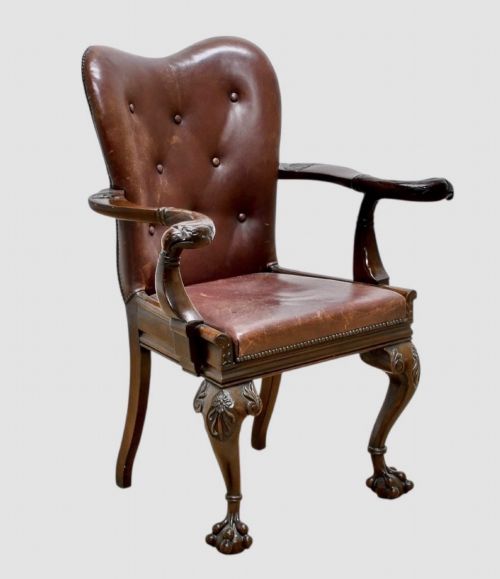
Victorian Study Armchair
A victorian study armchair brings serious nineteenth-century character to a working room, combining solid timber frames with supportive upholstered seating.
Victorian Study Armchair
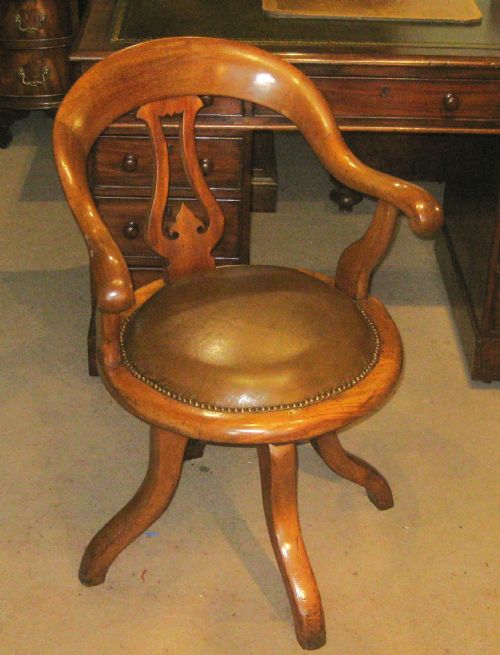
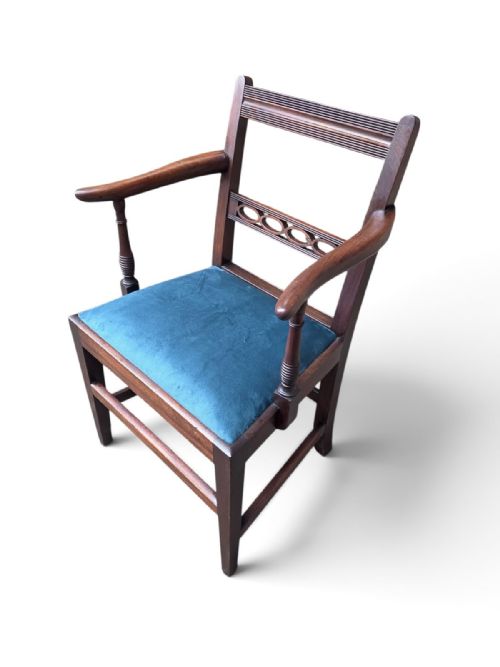
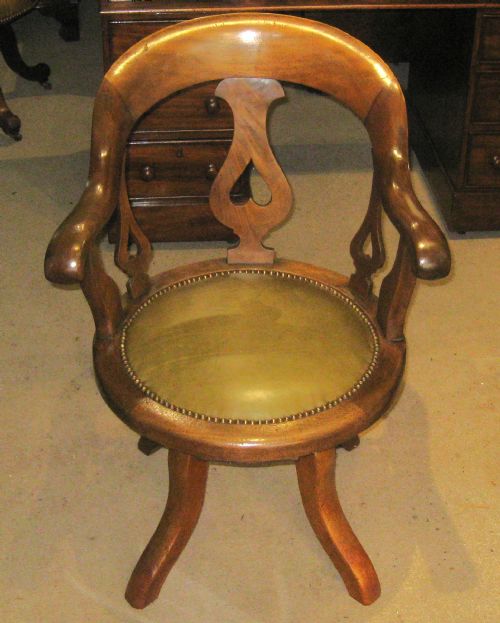
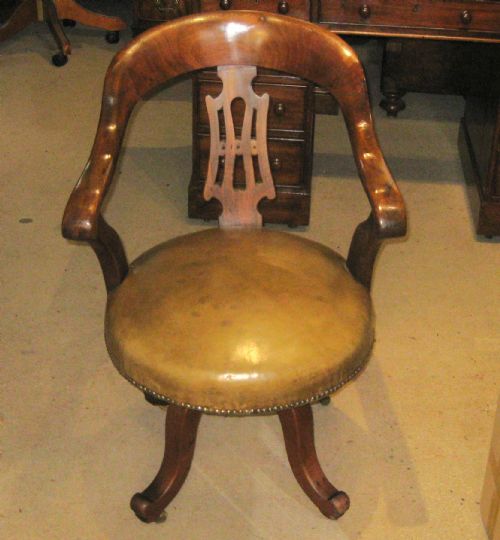
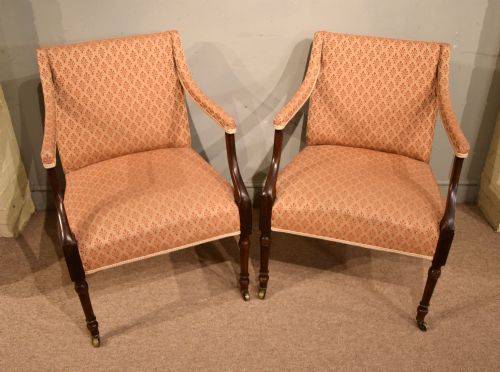
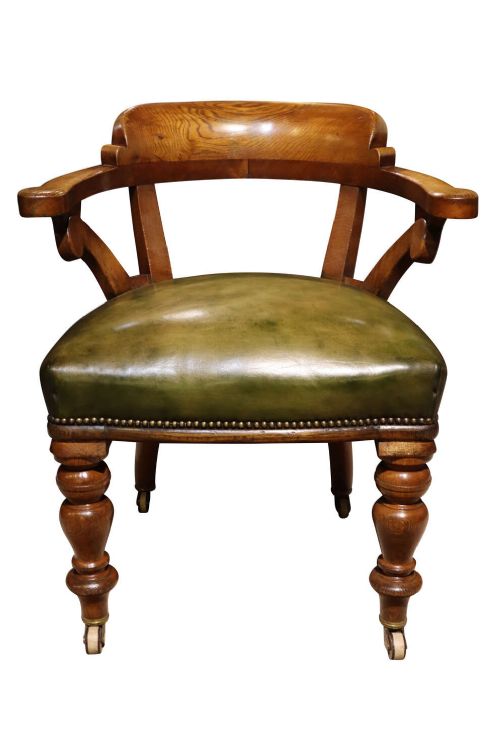
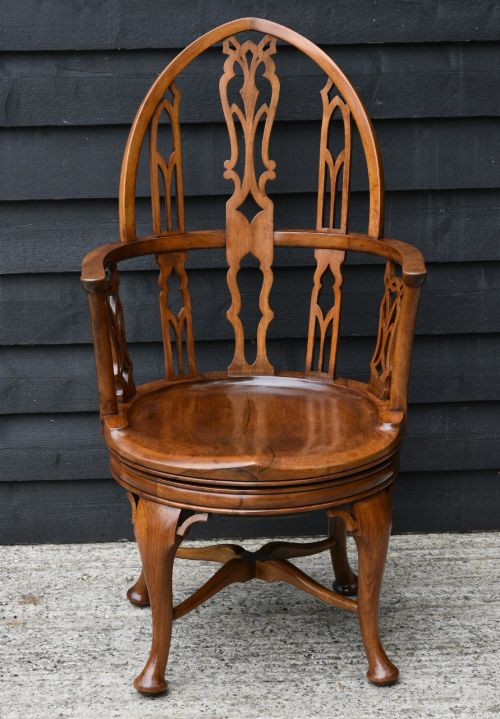
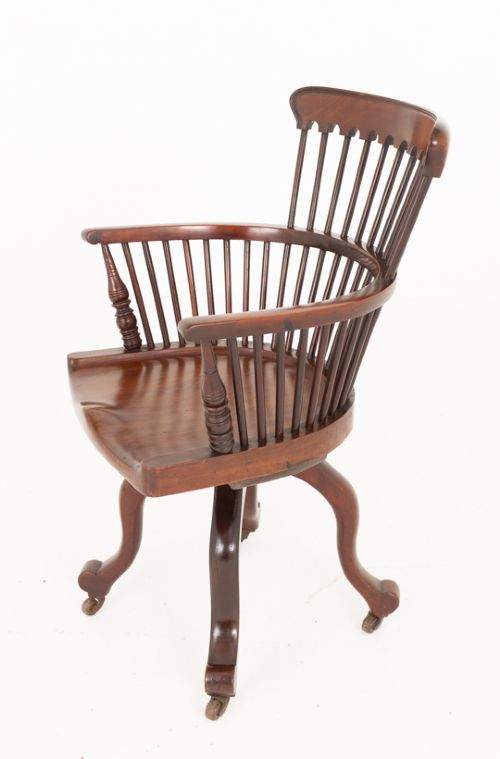
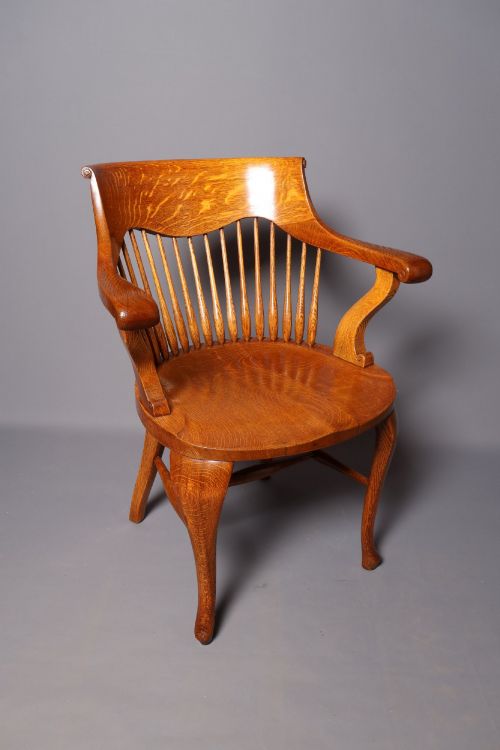
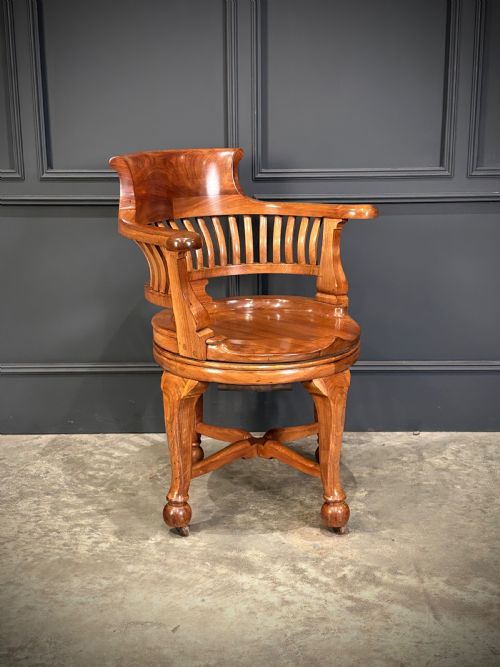
A victorian study armchair is typically encountered as a mahogany, oak, or walnut desk chair, often featuring a revolving or swivel mechanism designed for a library or office. These pieces range from open armchairs to fully upholstered club and library models created during the nineteenth century.
The selection includes specific regional variants and revival styles such as Gothic Revival and William IV designs. Makers adapted these forms for long hours at a desk, incorporating sturdy wooden frames with leather or fabric seats.
Materials and Construction
Frames rely heavily on dense hardwoods such as mahogany, oak, walnut, and rosewood, joined to withstand frequent movement and weight. Metal components like brass castors and swivel mechanisms provide mobility on heavy library floors.
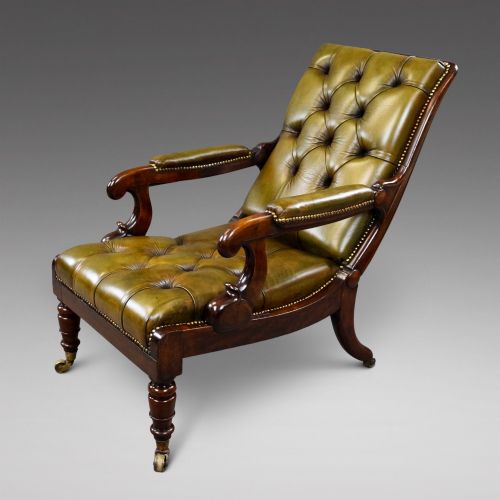
Upholstery uses durable leather or textured fabric stretched over sprung or padded seats, sometimes finished with buttoning and brass tacks. Wood surfaces receive hand-polished finishes that highlight the natural grain of the timber.
Several heavy nineteenth-century desk chairs hide complex iron swivel screws beneath their seats, built to endure decades of restless scholars.
Judging Quality
Superior examples distinguish themselves through the selection of finely figured timbers, such as golden mahogany or burr elm, paired with robust mechanical swivel actions that operate smoothly. Finer chairs show meticulous hand-carving on the arm supports and back rails rather than plain machine-cut detailing.
The integrity of the original timber frame and the quality of the leather upholstery dictate the overall standard. Pieces retaining their original brass castors and uncompromised internal joinery sit at the upper end of the range.
Gillows·Bruce James Talbert
The Victorian Study Armchair Glossary
- Revolving desk chair
- A seat mounted on a central swivel axis allowing the user to turn without moving the entire heavy timber base.
- Library armchair
- A sturdy upholstered seat designed for prolonged reading, usually featuring supportive padded arms and a high back.
- Gothic Revival
- A nineteenth-century design movement drawing inspiration from medieval architecture, noted for pointed arches and quatrefoil motifs.
- Bergere
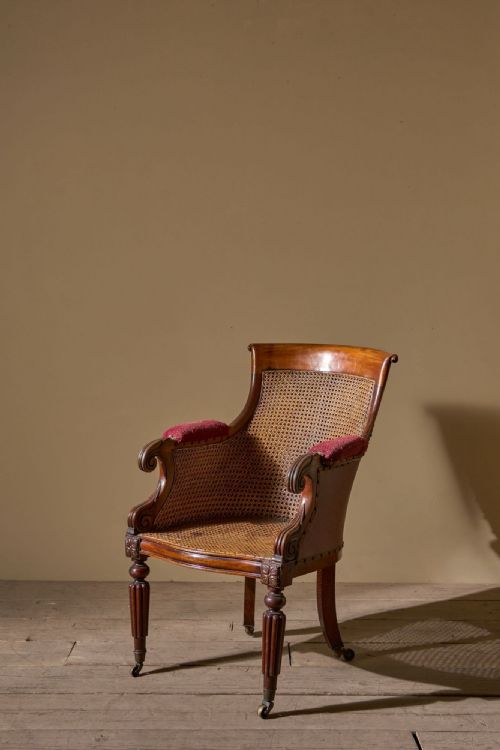
- An enclosed armchair with exposed wooden framing and woven cane panels along the sides and back.
Victorian Study Armchair: Frequently Asked Questions
Are all these chairs suitable for modern desks?
Many nineteenth-century desk chairs were built lower than modern standard office furniture. Check the seat height and clearance beneath your desk before purchasing.
Revolving and swivel models offer better adaptability for contemporary workspaces, though stationary library chairs remain ideal for reading areas.
How do I care for nineteenth-century leather upholstery?
Keep leather conditioned with appropriate balms to prevent drying and cracking over time. Avoid placing antique seating in direct sunlight or near heat sources.
Gentle dusting with a dry cloth maintains the surface without stripping historical patination.
Did these chairs always swivel?
Swivel mechanisms were common in office and partner desk chairs to allow easy movement between ledgers. Many library and club armchairs remained static on fixed legs or castors.
The presence of a central iron or brass spindle distinguishes revolving variants from standard armchairs.
How can I tell a Victorian chair from an Edwardian one?
Victorian seating generally employs heavier timbers and deeper, richer grain patterns like rosewood and golden mahogany. Gothic and William IV influences also point firmly to the earlier nineteenth century.
Edwardian pieces often display lighter framing and simpler lines, though stylistic overlap makes exact dating dependent on construction details.