

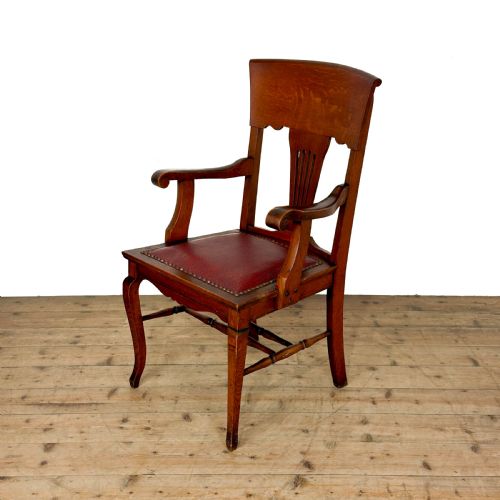


Edwardian Leather Office Chair
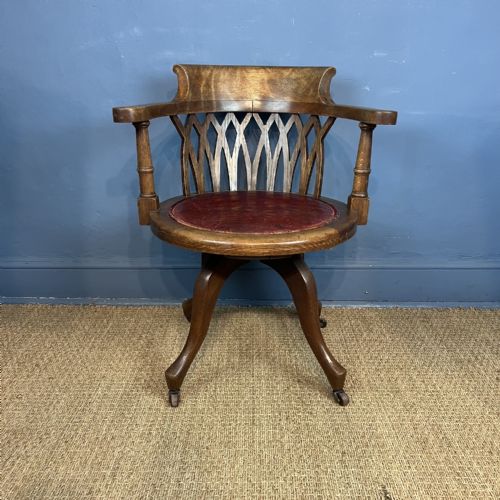
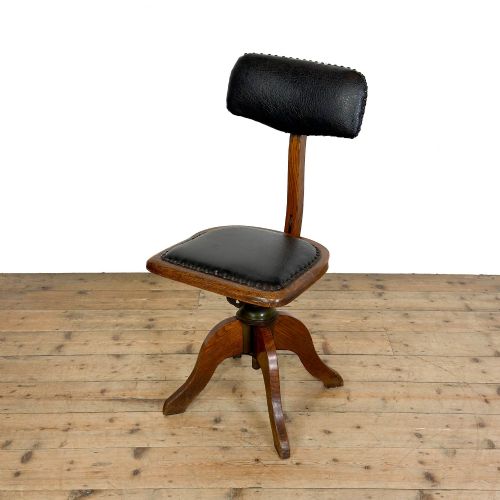
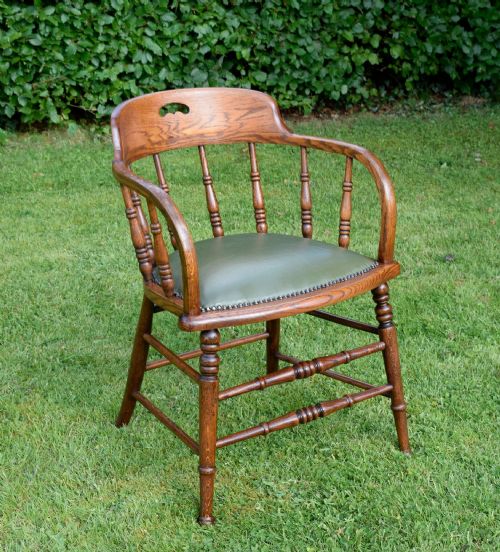
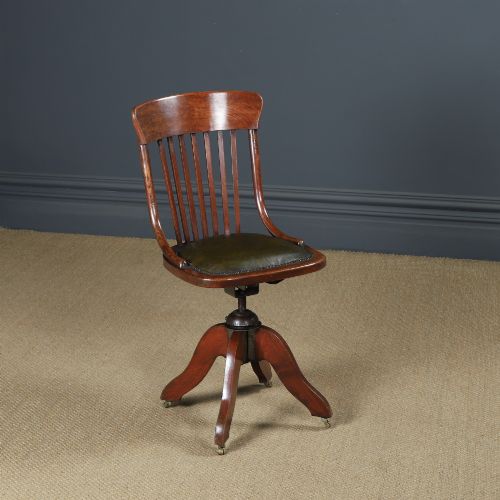
An edwardian leather office chair brings substance to a study, offering sturdy timber frames and patinated hide built for daily work.
Edwardian Leather Office Chair
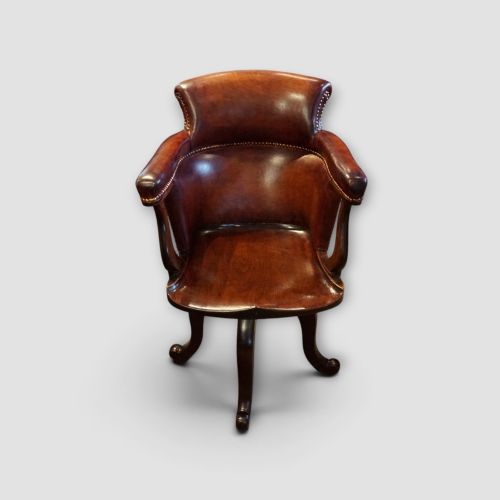
An edwardian leather office chair sits at the intersection of practical workspace furnishing and traditional domestic carpentry. The examples gathered here span desk chairs, armchairs, and revolving office tub chairs designed for administrative tasks in domestic studies and commercial offices.
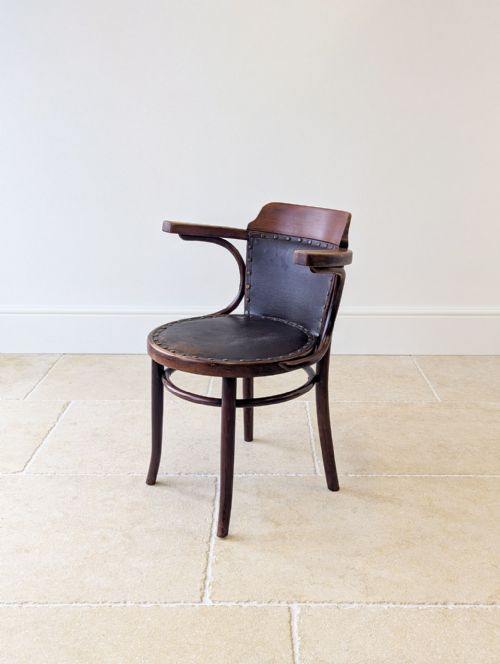
Most pieces date from the early twentieth century and the Edwardian period, though related Victorian and later designs appear frequently. Frames utilise robust timbers such as oak, mahogany, and beech, frequently paired with swivel and tilt mechanisms to support movement.
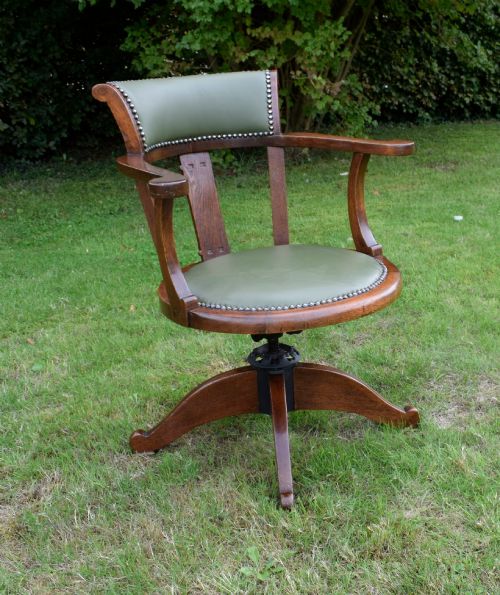
The buyer encounters various forms, from straightforward elbow desk chairs to revolving models with upholstered green or red leather seats. These pieces were built for utility, combining supportive backrests with durable hide surfaces that age distinctively.
How they were made
Makers constructed the timber frameworks of these chairs using solid hardwoods like oak, mahogany, beech, and walnut, often shaped into curved steam-bent elements or traditional bow backs. Joinery relied on secure dowels and mortise-and-tenon techniques to withstand the twisting forces of daily swivelling and leaning.
Seats and backrests were upholstered in genuine leather, secured to the timber frames with rows of brass studs. Mechanical functions relied on iron and cast iron swivel mechanisms, sometimes incorporating adjustable height screws and tilt actions.
Listings feature woods including oak, mahogany, walnut, beech, and ash paired with iron hardware.
What varies in quality
The standard of a piece is determined by the integrity of its wooden frame and the original mechanical hardware beneath the seat. Smooth operation of the swivel and tilt mechanisms separates ordinary utility seating from superior examples engineered for heavy administrative use.
The grade of the timber and the depth of the carved details also define the tier of the chair. Solid oak and figured mahogany frames with well-preserved leather upholstery represent the more refined end of the selection.
Kendrick & Jefferson·William Birchcraft·A. H. Parker Ltd.
The Edwardian Leather Office Chair Glossary
- Swivel
- A mechanism allowing the upper portion of the chair to rotate fully on a central iron spindle. This feature became standard for office seating in the late nineteenth and early twentieth centuries.
- Smokers Bow
- A sturdy low-backed armchair with a rounded wooden rail, frequently adapted for desk use. It shares design traits with Windsor chairs.
- Captain's Chair
- A low-backed wooden armchair featuring a rounded top rail supported by spindles above the seat. They are commonly found paired with partners desks.
- Tub Chair
- An upholstered seating form where the arms curve continuously into a rounded backrest. This style offers enclosed support for the user.
- Bentwood
- Timber shaped by steaming until pliable, then bent into curved forms. This technique created durable, lightweight frames for chairs.
Edwardian Leather Office Chair: Frequently Asked Questions
Are these chairs comfortable for daily work?
These office seats were engineered for administrative tasks, featuring supportive curved backrests and padded leather pads.
Many incorporate swivel and tilt actions that allow the user to adjust their posture throughout the working day.
How do I identify an Edwardian piece?
Edwardian seating typically dates from the early twentieth century, showing lighter timber tones and simpler lines than heavy Victorian furniture.
They frequently combine oak or beech frames with green or red leather upholstery and iron swivel mechanisms.
Can I adjust the height?
Many of the revolving models feature central iron screw mechanisms that permit height adjustment. Turning the seat raises or lowers the wooden column on its base.
Fixed-height elbow chairs and side chairs do not possess this mechanical capability.
What is a revolving desk chair?
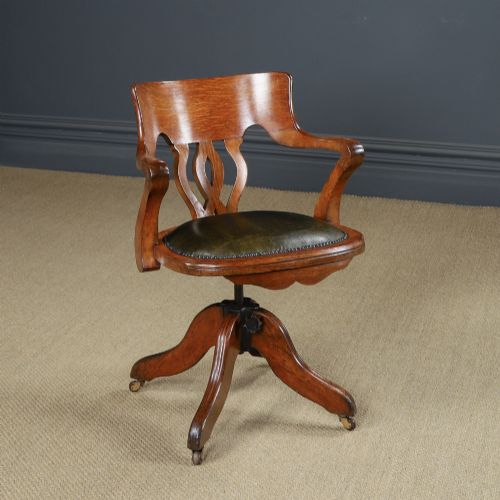
A revolving desk chair mounts a wooden seat and frame onto a central iron spider base with four or more legs. This enables the occupant to turn easily between different parts of a desk.
They often include castors on the feet for mobility across office floors.