

Antique Leather Library Seat
An antique leather library seat brings tactile warmth to a room, offering deep comfort alongside structural timber frames built to endure.
Antique Leather Library Seat
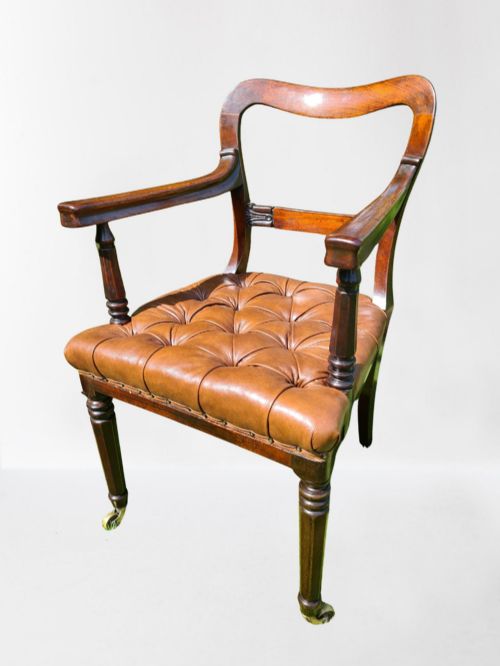
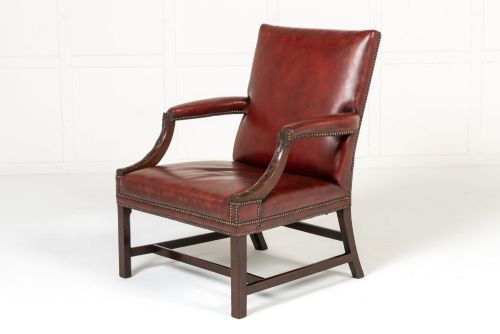
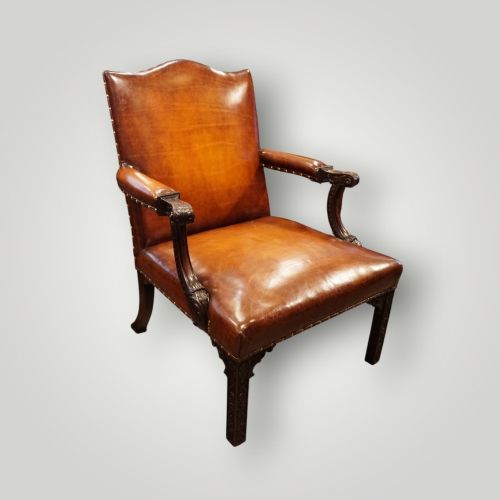
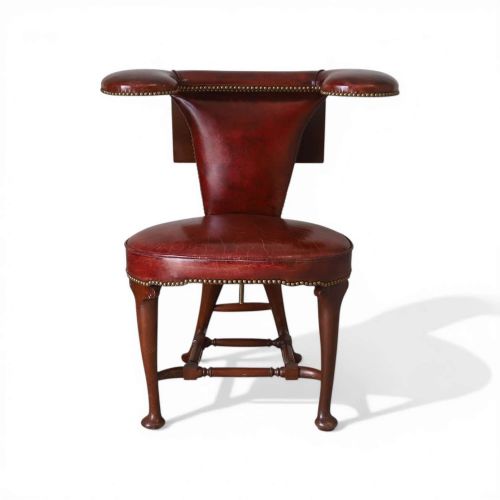
An antique leather library seat encompasses heavy armchairs, partner desk chairs, reading seats, and low stools designed for study or private rooms. These pieces originate across the eighteenth, nineteenth, and early twentieth centuries, spanning Georgian, Regency, Victorian, and later periods.
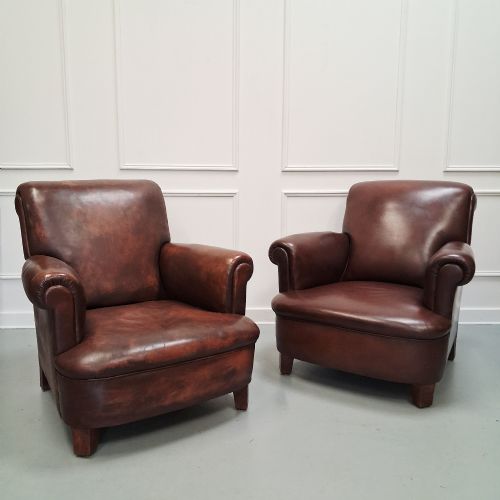
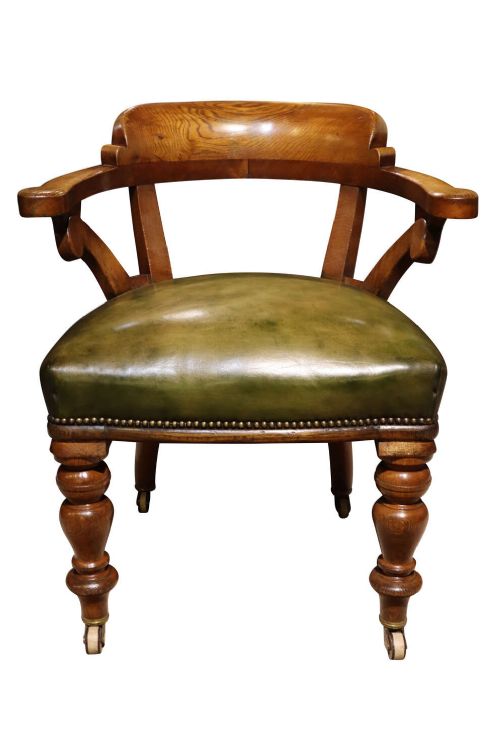
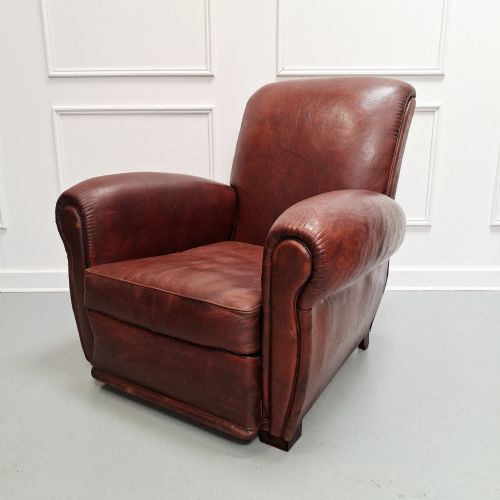
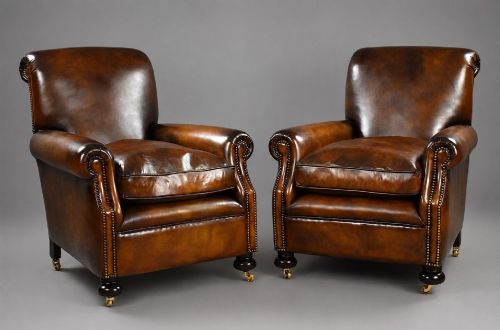
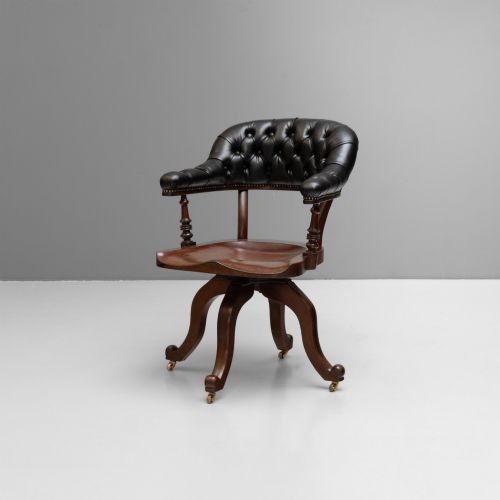
The version most commonly encountered on this page is the nineteenth-century Victorian armchair or desk chair, frequently framed in mahogany or oak with buttoned or embossed hide upholstery. French club chairs from the twentieth century also appear regularly alongside earlier English forms.
Makers and designers worked within distinct regional traditions, producing everything from Scottish School fireside chairs to Anglo-Indian rosewood seating. Buyers encounter both generous Gainsborough models and compact swivel desk chairs intended for domestic or institutional libraries.
Materials and construction
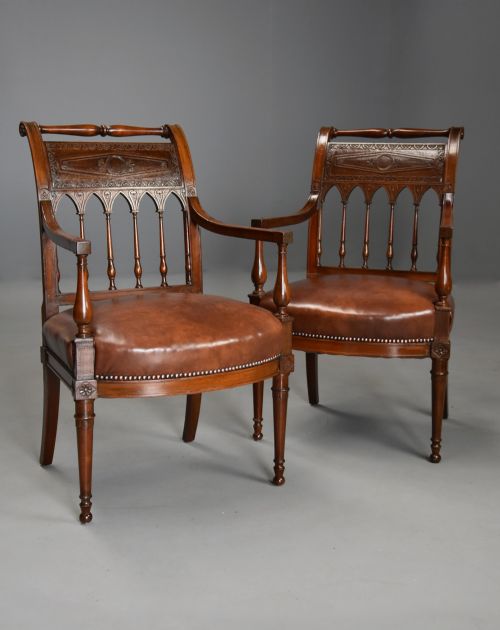
Timber frames provide the structural core, utilising hardwoods such as mahogany, oak, walnut, and rosewood. Joinery relies on traditional methods like mortise and tenon, often supported by hand-carved details or brass inlay.
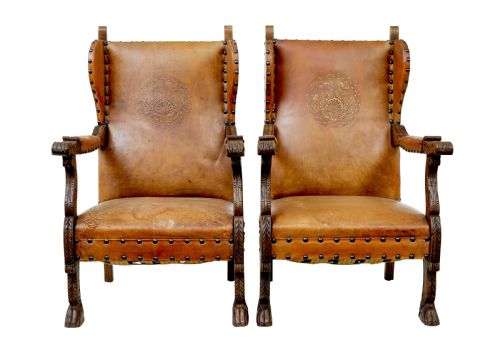
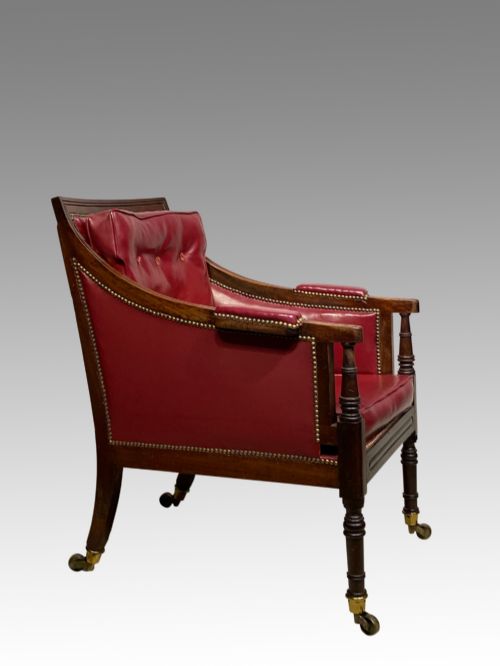
Upholstery combines hand-dyed or embossed leather hides fastened with brass tacks over supportive internal stuffing. Caning and turned wooden spindles appear on specific reading and bergère designs.
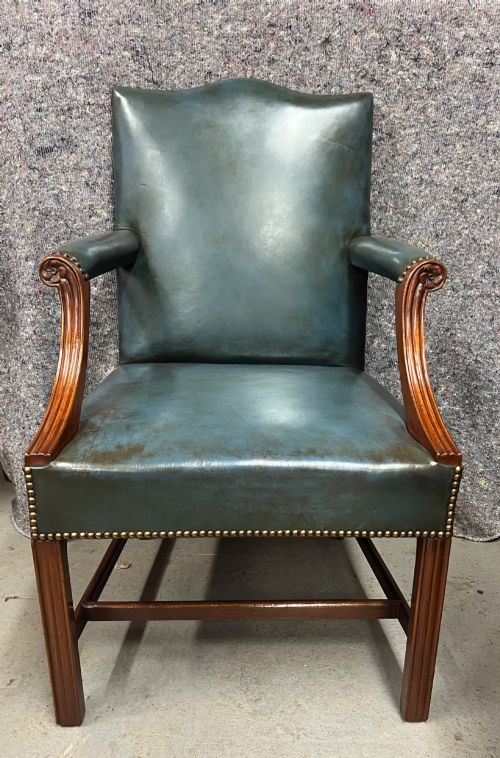
His and hers matching green leather armchairs offer a synchronized spot for a pair of studious readers.
Distinctions in quality
Quality rests in the harmony between timber selection and leather conditioning, where dense mahogany or golden oak frames match supple, patinated hide. The crispness of hand-carved blind fretwork or brass inlay distinguishes standard commercial output from exceptional commissions.
Proportion and structural integrity dictate the upper tier, seen in generous upholstery that supports the user correctly without sagging internal webbing. Original surface patination on both wood and leather separates pieces that retain their character from those compromised by heavy restoration.
Gillows·Bruce James Talbert
The Antique Leather Library Seat Glossary
- Gainsborough chair
- A wide, open-armed armchair with a padded seat and back, typically set on four legs and dating from the eighteenth century onwards.
- Bergère
- An enclosed armchair with stuffed upholstery and cane or solid sides, popular during the Regency and Georgian periods.
- Chesterfield
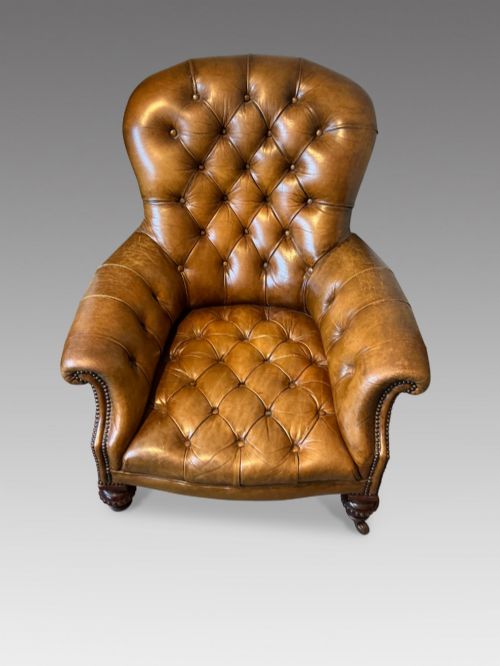
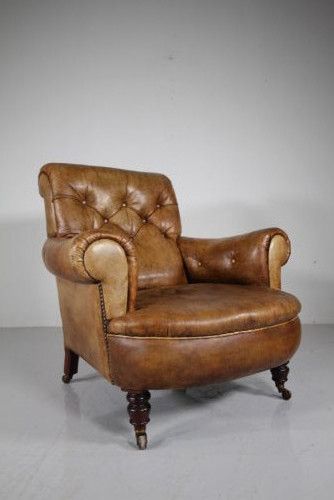
- A large sofa or armchair characterised by deep button-tufting and rolled arms of equal height to the back.
- Campaign chair
- A portable, often folding seat designed for military officers during the nineteenth century, featuring adjustable mechanisms.
- Blind carving
- Carved decoration executed within a recessed panel or along a flat surface, frequently seen on eighteenth-century mahogany furniture.
Antique Leather Library Seat: Frequently Asked Questions
How do I care for antique leather?
Maintain leather seats by keeping them away from direct sunlight and heat sources that dry the hide. Apply appropriate conservation waxes or leather dressings sparingly to preserve suppleness.
Avoid commercial cleaning sprays or harsh detergents, which strip natural oils and damage the antique finish. Gentle dusting with a dry cloth keeps the surface secure.
Can I use a library chair at a modern desk?
Many Victorian and Edwardian desk chairs fit standard modern working heights, though eighteenth-century models can sit lower. Check the seat height and clearance beneath your desk before purchase.
Swivel mechanisms on period desk chairs function reliably when serviced, but fixed-leg library models suit reading and occasional seating best.
How do I identify a Victorian piece?
Victorian seating often employs heavier mahogany or golden oak frames, deep buttoning, and machine-assisted joinery alongside hand-carving. Stylistic revivals such as Gothic or Jacobean elements frequently appear in this era.
Inspect the undersides and internal webbing for period materials and construction methods consistent with nineteenth-century workshops.
What is the difference between a library chair and a club chair?
Library chairs typically feature exposed wooden frames in mahogany or oak, often with open arms designed for formal study environments. Club chairs prioritise deep, fully upholstered comfort with low profiles and enclosed leather arms.
Both serve as relaxing seating, but library chairs align with architectural desk spaces while club chairs suit informal lounging.