
Brass Stud Leather Chair
A brass stud leather chair brings substantial hide and exposed metalwork to a library, study or desk.
Brass Stud Leather Chair
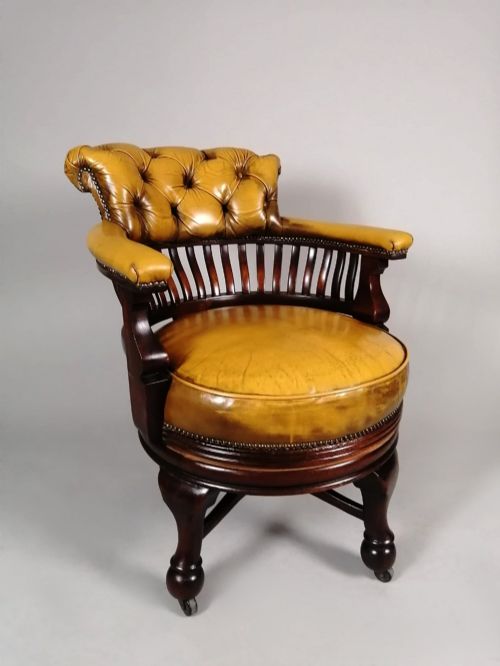
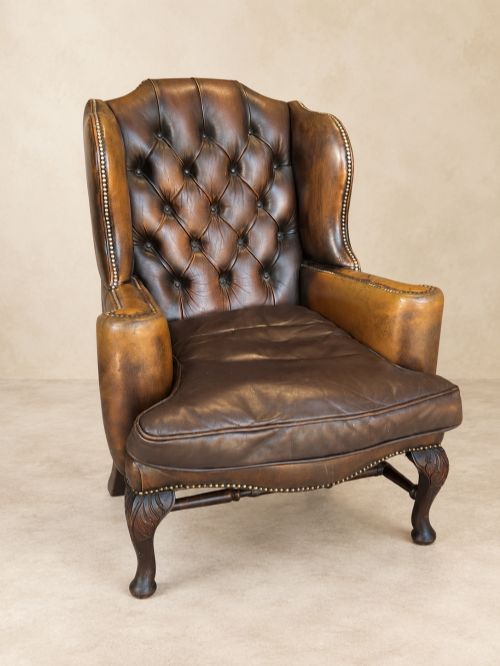
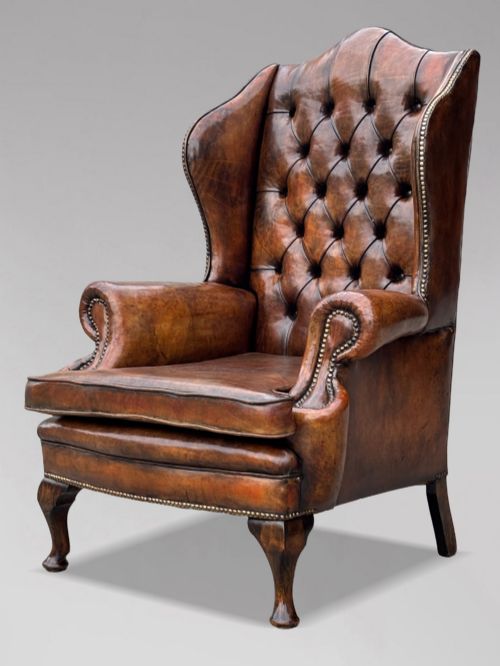
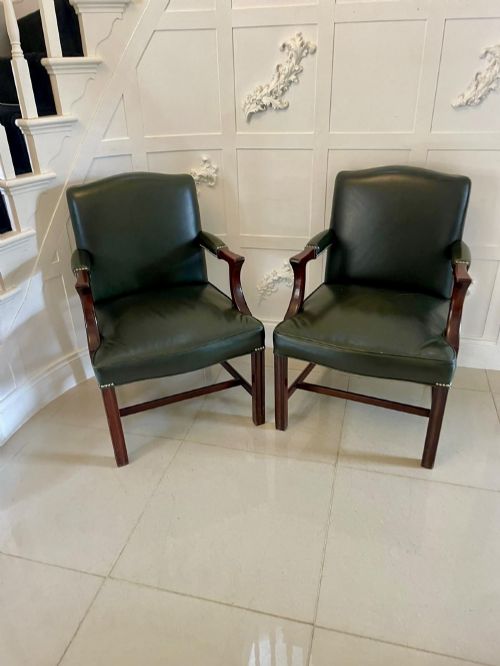
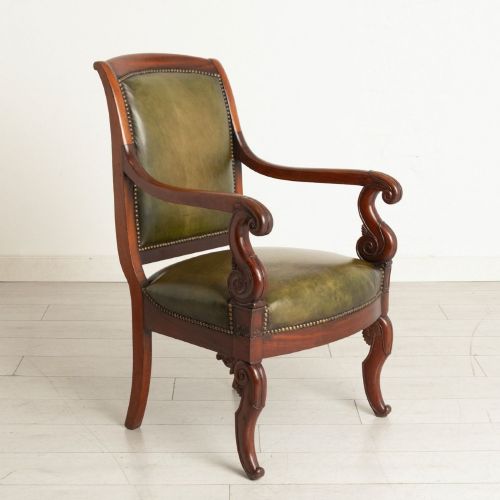
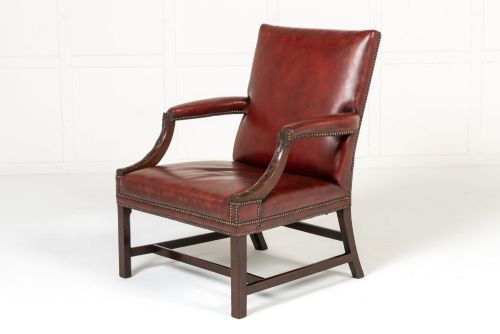
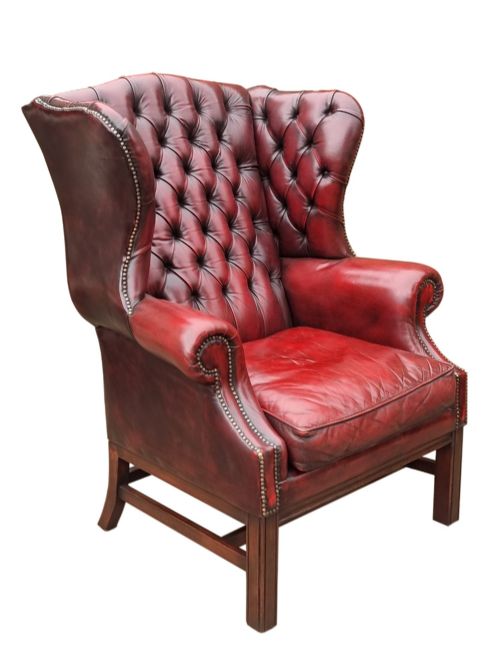
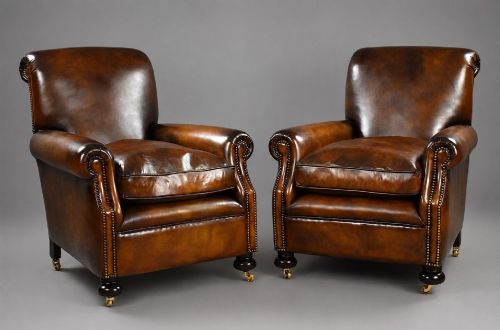
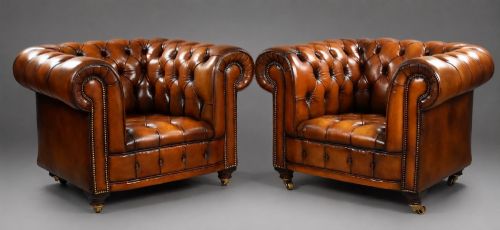
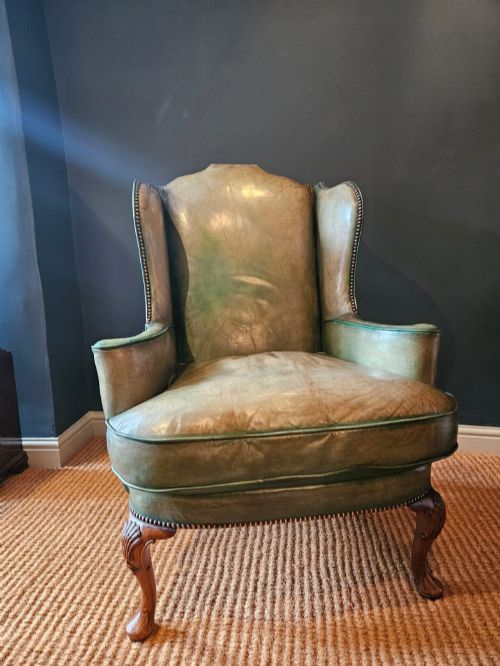
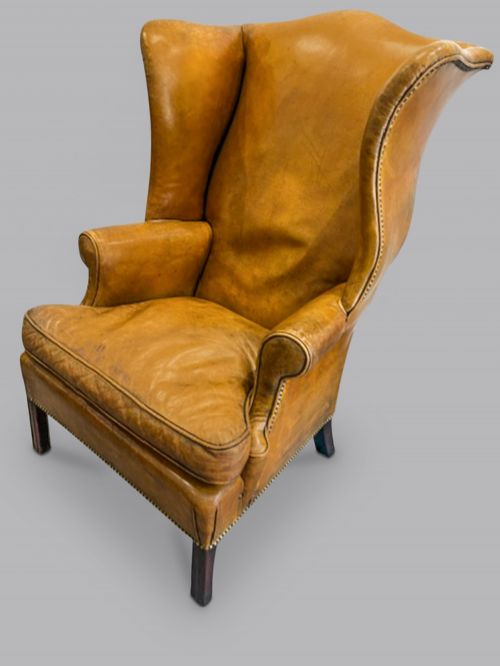
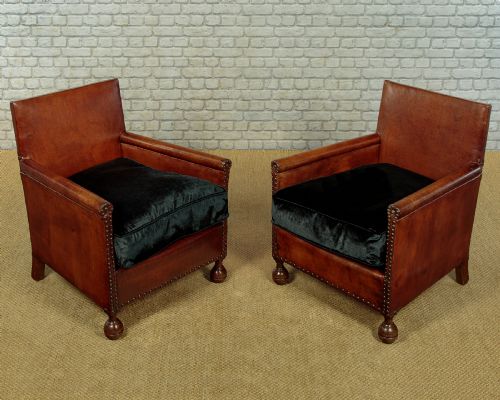
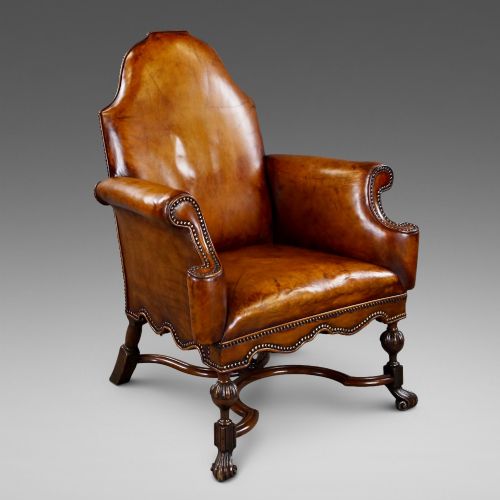
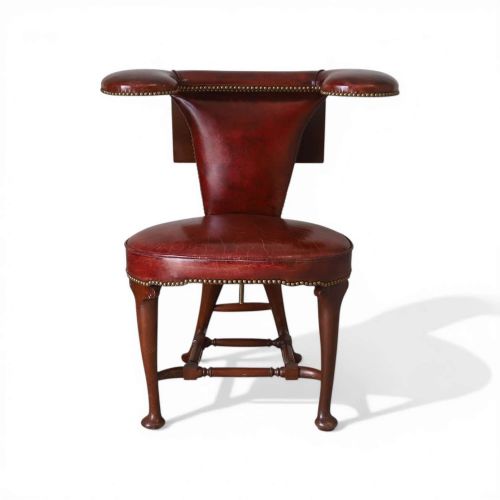
A brass stud leather chair combines heavy upholstery hide with individual metal tacks securing the edges of the leather to the frame. The examples you encounter span utilitarian desk seats and deep club armchairs, alongside formal wingbacks.
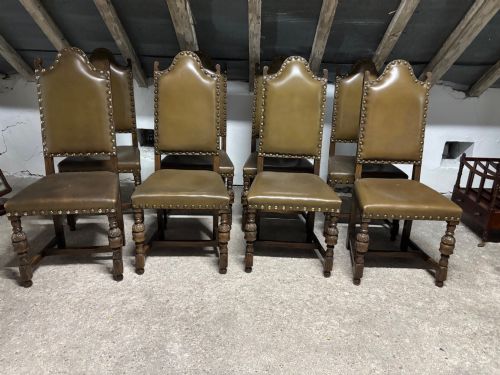
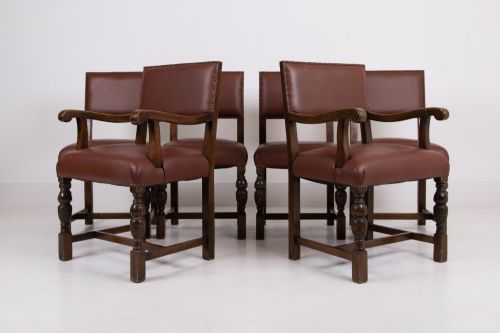
The selections here range from nineteenth-century library armchairs and revolving desk seats to Edwardian reading chairs and oak dining sets. You will also find twentieth-century club chairs and compact bothy seating.
Framing timbers vary from mahogany and walnut to sturdy oak and mixed hardwoods, while the leather upholstery appears in shades of brown, tan, green and red.
Materials and construction
Frames are constructed from solid timber such as mahogany, walnut or oak, utilising traditional joinery to support the weight of the user and the dense internal padding.
Hides are stretched over the frame and fastened using individual brass studs driven in by hand, which anchor the leather while providing a decorative border along the seams.
Many a nineteenth-century desk chair bears the quiet scars of ink splatters and polished armrests from decades of earnest letter writing.
Assessing quality and craftsmanship
Quality rests upon the density of the timber frame and the condition of the hide, where naturally aged leather with a rich patina differs markedly from dry or heavily restored surfaces.
The regularity and tightness of the brass studding along the trim indicate the care taken by the upholsterer, alongside the structural integrity of the underlying woodwork.
The Brass Stud Leather Chair Glossary
- Wingback
- An armchair featuring protective side panels designed to deflect draughts from open fires. These panels extend upward from the arms and merge into the backrest.
- Carver chair
- An armchair designed with open sides, historically placed at the head of a dining table or used as a desk seat. They often match a larger set of simpler dining chairs.
- Library chair
- A heavy, comfortable armchair intended for prolonged reading in private studies or institutional reading rooms. They frequently incorporate upholstered buttoning.
- Cabriole leg
- A furniture leg that curves outward in a convex arc at the top and inward in a concave arc near the foot, resembling animal limbs.
Brass Stud Leather Chair: Frequently Asked Questions
How do I care for antique leather?
Antique leather requires regular dusting with a dry cloth and occasional treatment with appropriate conditioning balms to maintain flexibility. Avoid placing the seating in direct sunlight or near heat sources to prevent the hide from drying and cracking.
Keep the brass studs polished with a soft cloth while avoiding harsh chemical cleaners that might stain the surrounding leather. Proper environmental humidity helps preserve both the wooden frame and the hide upholstery.
Where were these chairs used historically?
These chairs were primarily utilised in formal domestic spaces such as libraries, studies, and drawing rooms where comfort and durability were prioritized. Desk chairs and revolving models found their place in offices and administrative rooms.
Dining chairs and carvers populated large dining halls in country houses and town residences. Library and club models were also common in gentlemen's clubs and private reading institutions.
How do I distinguish Victorian from Georgian styles?
Georgian furniture typically emphasises classical proportions and restrained ornamentation, often featuring mahogany frames with cabriole or straight legs. Victorian pieces tend to be heavier, incorporating deeper buttoning, scroll arms, and more robust timber dimensions.
Revival pieces from later periods often borrow decorative elements from both eras, making timber analysis and construction methods essential for accurate dating.
Are brass studs purely decorative?
Brass studs serve a structural purpose by securely fastening the leather upholstery edges directly to the wooden frame beneath. They hold the tension of the stretched hide and conceal the raw edges of the material.
Over time, the visual rhythm of the metal tacks became an important decorative feature, defining the silhouette of the chair and highlighting the upholstery lines.