


Green Chesterfield Sofa
A green chesterfield sofa brings deep colour and classic buttoned comfort into a room, offering both traditional character and enduring style.
Green Chesterfield Sofa
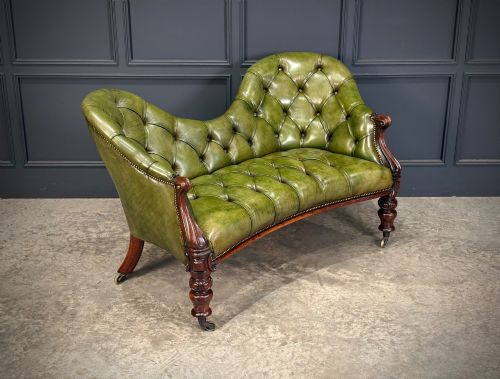
A green chesterfield sofa is a classic upholstered seating form defined by deep buttoning and traditional lines, appearing across multiple historic periods. Buyers hunting for a green chesterfield sofa will encounter pieces spanning the nineteenth century, the Edwardian era, and the nineteen-thirties.
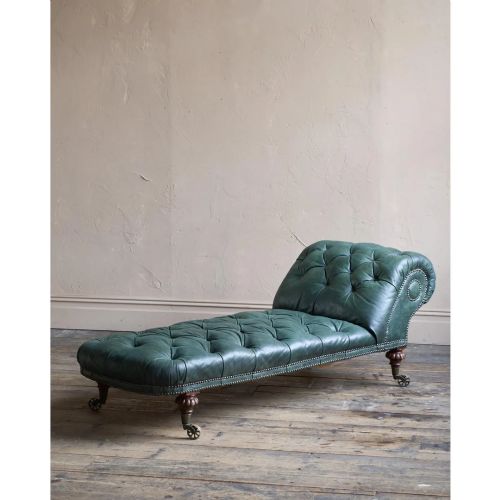
The selection on this page includes traditional sofas, settees, chaise longues, and conversational seating arrangements. These pieces originate from various historical eras, displaying both leather and velvet upholsteries in shades of green.
Victorian examples dominate the available styles, often featuring robust timber frames and characteristic buttoned upholstery. Alongside standard two-seat forms, the evidence shows larger country house proportions and drop-arm variants.
How they were made
Makers constructed the foundational frames of a green chesterfield sofa using hardwoods such as mahogany, walnut, and general timber. These sturdy internal structures support the heavy upholstery and deep buttoning characteristic of the form.
Upholstery methods combine traditional springs and stuffing with outer coverings of leather or velvet. Details such as brass castors and hand-applied buttons complete the construction of these antique and vintage seats.
One exceptional Victorian survival includes a swivel function for conversational seating.
What varies in quality
Quality in a green chesterfield sofa rests on the integrity of the timber frame and the depth of the traditional upholstery work. Superior examples exhibit finer wood carving in the frame and more precise execution of the buttoning.
The choice and condition of the covering material also define the hierarchy of pieces, from hand-dyed leathers to rich pile velvets. Maker attribution, seen in workshop stamps on nineteenth-century pieces, elevates the standing of an individual sofa.
Howard And Sons·C Hindley And Sons
The Green Chesterfield Sofa Glossary
- Chesterfield
- A traditional upholstered sofa style characterised by arms and back of the same height and deep button tufting. This form remains a staple of British interior design.
- Button-back
- An upholstery technique where buttons are pulled deep into the padding to create a quilted, diamond pattern across the backrest. This method secures the internal filling and provides firm support.
- Chaise longue
- An elongated upholstered chair designed for reclining, featuring a backrest at one end. Examples in this category date back to the nineteenth century.
- Drop-arm sofa
- A seating form equipped with a hinged armrest that can be lowered to convert the sofa into a daybed. This mechanism adds functional versatility to the traditional frame.
- Spoon-back
- A padded chair or sofa back shaped like the bowl of a spoon, popular during the Victorian period. The wooden frame follows the curved outline of the upholstery.
Green Chesterfield Sofa: Frequently Asked Questions
What defines a green chesterfield sofa?
A green chesterfield sofa is characterised by its low back, rolled arms of equal height to the back, and deep button-tufted upholstery. The green colouration typically comes from dyed leather or velvet applied during original manufacture or later restoration.
Such pieces range from nineteenth-century country house models to nineteen-thirties variations, reflecting changing tastes in domestic seating while retaining the core silhouette.
Are these sofas upholstered in leather or velvet?
The evidence shows both materials used extensively across different periods. Nineteenth-century examples frequently feature deep green velvet or hand-dyed leather.
Later pieces from the Edwardian period and nineteen-thirties lean predominantly toward leather upholstery, sometimes incorporating original covers or sympathetic modern replacements.
How do I date a Victorian chesterfield?
Victorian pieces are identified by their dense hardwood frames, traditional coil springing, and specific details like walnut or mahogany show-wood. Maker stamps and structural construction methods also help confirm the nineteenth-century origin.
Comparing the turned wooden legs and brass castors to documented workshop styles provides further chronological context for the piece.