
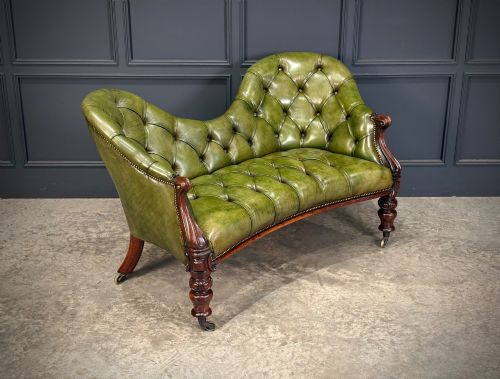
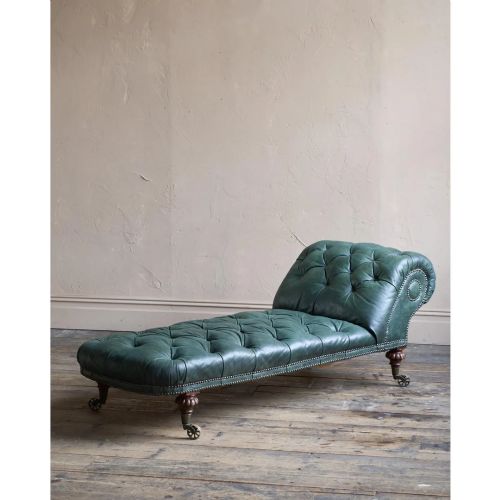


Leather Button Back Sofa
A leather button back sofa brings deep cushioning and rich hide to a room, drawing on Victorian and Edwardian forms designed for comfort.
How They Were Made
Frames rely on timbers such as mahogany, walnut, rosewood, and general hardwood, often hidden beneath upholstered hide. Brass tacks and detailed wood carving accent the structure of show frames.
Upholsterers secure leather over deep padding using buttoning techniques, creating the characteristic tufted surface that defines the backrest and arm design.
What Varies in Quality
The integrity of the internal wooden frame and the depth of the carving determine structural merit, particularly on exposed show frames made from walnut or mahogany. Howard & Sons pieces demonstrate superior framing and joinery.
The condition and treatment of the hide set examples apart, ranging from untouched original patinated leather to hand-dyed finishes on raw material.
Conversational sofas allowed two people to sit face-to-face while maintaining Victorian decorum.
Howard & Sons·Hampton & Sons of Pall Mall·John Taylor·George Smith
The Leather Button Back Sofa Glossary
- Chesterfield
- A upholstered sofa with arms and back of the same height, traditionally featuring deep buttoning. This form forms the majority of nineteenth-century examples.
- Buttoning
- An upholstery technique where indentations are pulled tight with tufting threads or buttons. This secures the internal stuffing and creates a diamond pattern.
- Show frame
- A wooden structural support left visible around the upholstered portions. Walnut and mahogany frames frequently display carved details.
- Chaise longue
- An elongated chair intended for reclining, combining a sofa seat with a single raised backrest. Some incorporate buttoned leather upholstery.
- Spoon-back
- A chair or sofa back shaped like the bowl of a spoon, often associated with Victorian parlor seating.
Leather Button Back Sofa: Frequently Asked Questions
What is a leather button back sofa?
A leather button back sofa is a traditional seating option featuring a padded leather surface secured with deep tufted buttons across the backrest. These pieces date principally from the Victorian and Edwardian eras.
Craftsmen built them using robust hardwood frames, mahogany, or walnut, combining deep springs with durable animal hide for everyday use in studies, libraries, and parlours.
How do I care for antique leather?
Antique leather requires gentle cleaning and regular conditioning to maintain the suppleness of the hide. Avoid placing these sofas near direct heat sources or strong sunlight.
Un-restored surfaces retain patination that benefits from specialist wax balms rather than modern chemical treatments.
Are these sofas comfortable for daily use?
Victorian and Edwardian Chesterfields utilise deep springing and generous padding designed for long periods of sitting. The supportive buttoned backrests offer firm lumbar contact.
Seat depths and heights vary by maker and period, so reviewing dimensions helps match a piece to specific seating preferences.
How can I tell a Victorian sofa from a later one?
Nineteenth-century pieces often display hand-turned mahogany or walnut frames, traditional horsehair stuffing, and heavy timber undercarriages. Construction details reveal hand-forged fixings and dense frame construction.
Later twentieth-century reproductions use different internal webbing and standardised timber mills distinct from Victorian workshop output.