


Buttoned Leather Sofa
When you search for a buttoned leather sofa, you look for the heavy traditional chesterfield or carved framework that anchors a room with deep seating.
Buttoned Leather Sofa
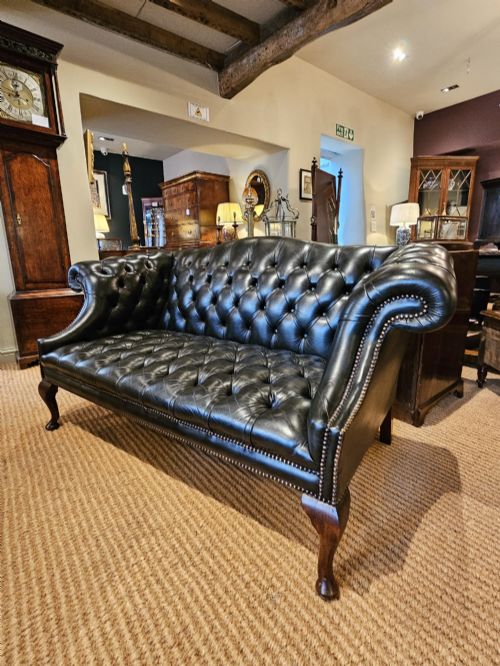
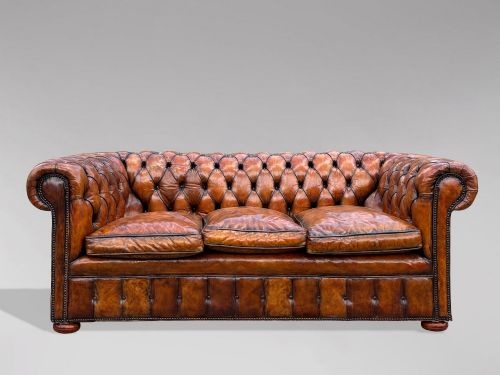
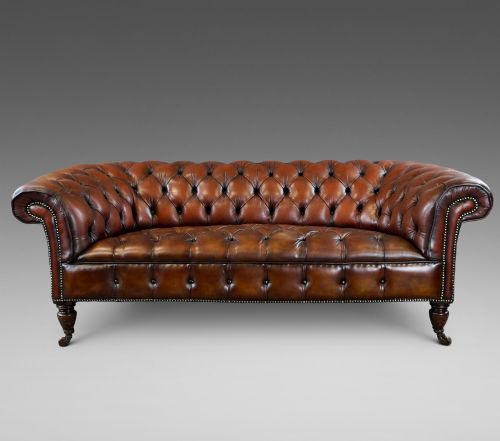
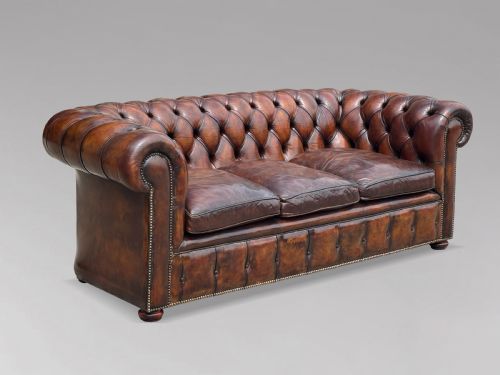
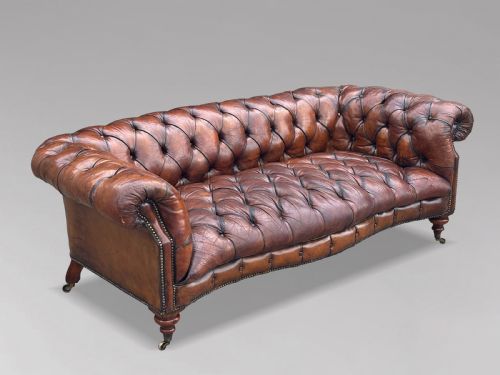
A buttoned leather sofa combines generous upholstery with recessed tufting, creating a distinctively dimpled surface across the backrest and sometimes the arms. The listings show these pieces appearing predominantly as Victorian chesterfields, alongside Edwardian, Regency, and 1930s variations.
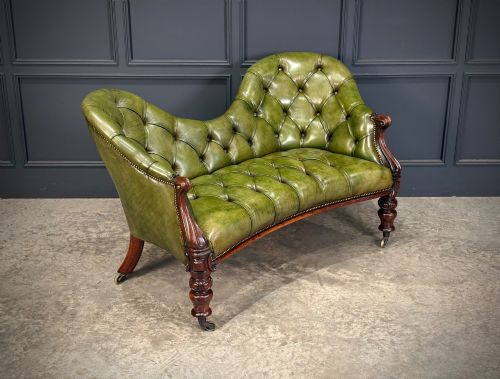
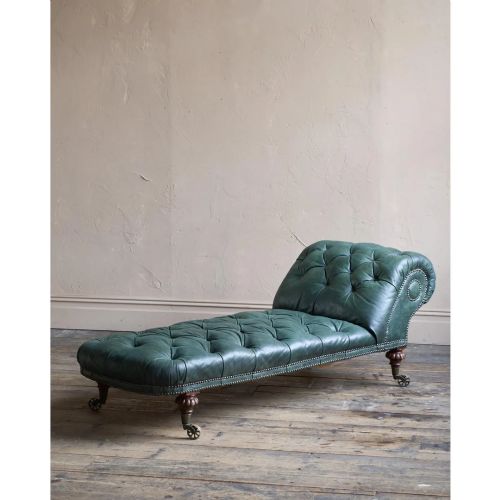
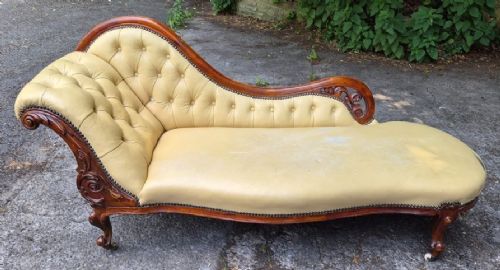
Forms extend beyond the standard three-seater chesterfield to include spoon-back settees, chaise longues, corner configurations, and open-arm benches. Frames incorporate mahogany, walnut, and hardwood timbers, often displaying carved details or scroll ends.
Originating largely from the nineteenth and early twentieth centuries, these seating options range from compact bottle-green reading pieces to large pub and snooker hall benches finished in hand-dyed whiskey brown or aubergine leathers.
How they were made
Construction relies on sturdy internal woodwork paired with natural stuffing materials like horsehair to build the characteristic rounded profiles. Brass tacks frequently secure the leather edges along the arms and base, adding metallic definition to the hides.
Frames utilise native timbers such as mahogany and walnut, shaped through traditional joinery and occasional hand-carving on show frames. Hides are applied in deep buttoned patterns, requiring skilled tension to pull the leather tightly into the interior padding.
Several vintage chesterfields trace their working lives back to nineteenth-century snooker halls and public houses before retiring to domestic living rooms.
What varies in quality
The integrity of the internal stuffing and the depth of the buttoning dictate the resilience of the seating over decades of use. Pieces retaining original un-restored leather differ fundamentally from those that have undergone modern re-dyeing or total re-upholstery.
Cabinetwork precision on the exposed wooden frames, from simple mahogany rails to intricate lion carvings, marks the distinction between standard utilitarian seating and high-workshop production.
Howard And Sons·Hampton And Sons·John Taylor·George Smith
The Buttoned Leather Sofa Glossary
- Chesterfield
- A traditional deep-buttoned sofa design characterised by arms and back of the same height. This form dominates historical seating selections.
- Tufted
- Upholstery secured at regular intervals by deep buttons that pull the fabric inward. This technique creates the characteristic dimpled pattern.
- Chaise Longue
- An upholstered long chair designed for reclining, featuring a single raised backrest at one end. Examples frequently incorporate carved mahogany frames.
- Show Frame
- An exposed wooden structural skeleton left visible around the upholstered elements. These frames often display carved walnut or mahogany details.
- Scroll End
- A sweeping, curved wooden arm or terminal resembling a scroll. This profile appears on Regency and nineteenth-century settees.
Buttoned Leather Sofa: Frequently Asked Questions
How do I style a buttoned leather sofa?
Pair the substantial wooden frame and deep buttoning with simple surrounding furniture to let the rich hide remain the visual anchor of the space. Position the piece away from direct heat sources to keep the leather supple.
Allow ample clearance around longer chesterfields or scroll-end settees so the carved timber details and brass tack work are fully visible from every angle in the room.
Are these sofas comfortable for daily use?
Traditional interior stuffing like horsehair provides a firm, supportive seat that softens gradually over decades of regular sitting. The deep buttoning holds the internal padding securely in place.
Model variations range from compact two-seat reading benches to wide three-seater chesterfields, allowing you to match the seating scale to your living space.
How do I identify a Victorian chesterfield?
Look for dense hardwood frames, hand-applied brass tacking, and deep tufted leatherwork dating from the nineteenth century. Many pieces feature traditional low backs and robust scroll arms.
Examine the underside and exposed timber for signs of age, such as mahogany grain and traditional joinery methods typical of nineteenth-century workshops.
What is hand-dyed leather?
Hand-dyed leather involves applying colour manually to the hide, creating subtle tonal variations across the surface of the sofa. This finish is common on both restored antiques and newly upholstered frames.
Over time, hand-dyed hides develop a natural patina that highlights the grain and responds to everyday handling.