
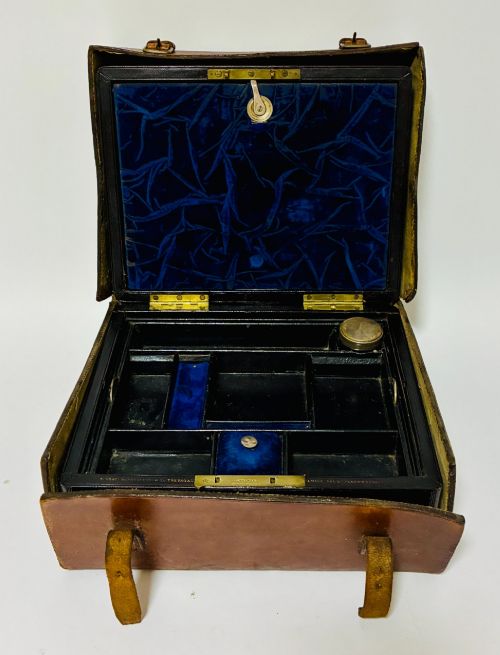


Antique Leather Jewellery Box
An antique leather jewellery box is a practical container designed to hold precious trinkets, combining fitted compartments with durable hide exteriors.
What They Are
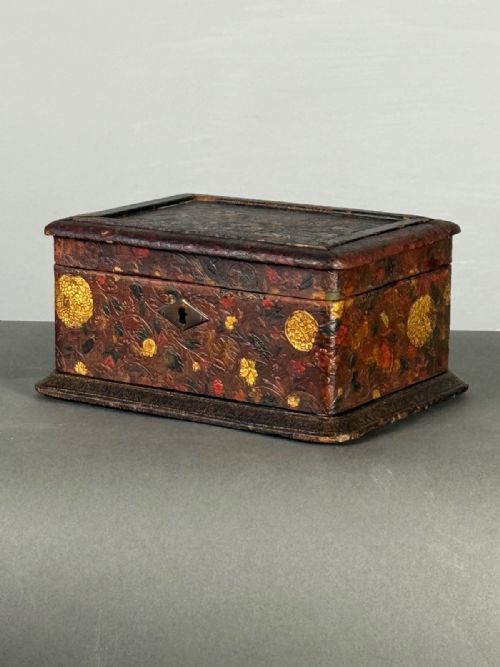
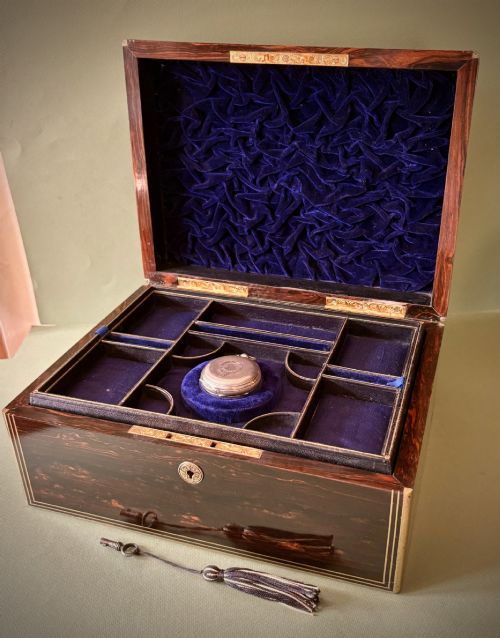
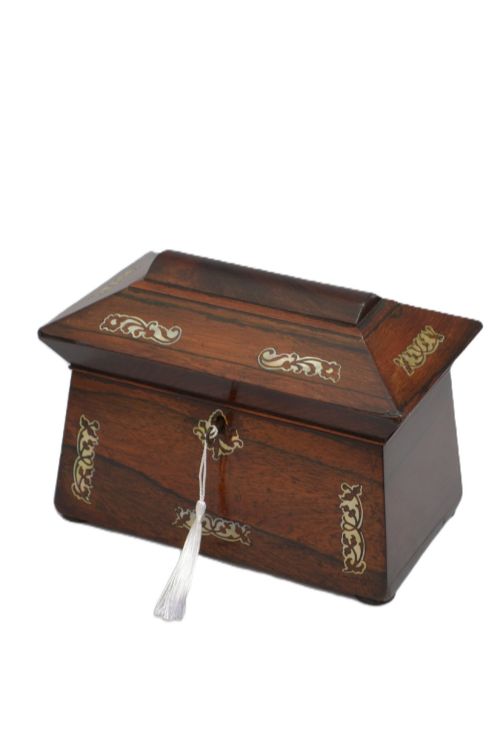
The antique leather jewellery box spans Victorian and Edwardian periods, appearing in forms ranging from simple caskets to complex dressing cases. These pieces were constructed to protect valuables at home or during travel, often featuring specialised internal trays and compartments lined in velvet.
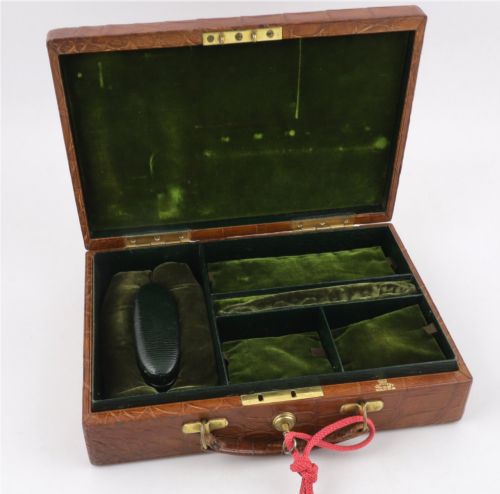
Victorian examples dominate the selection, frequently utilising wood foundations covered in leather or crocodile skin. Some pieces incorporate metal mounts and locks, such as Bramah mechanisms, whilst others take the form of larger chests or Japanese Meiji period imports.
How They Were Made
Constructed primarily over wood foundations, these boxes employ exterior coverings of standard leather, purple leather, or exotic crocodile hide. Brass hardware, bronze mounts, and silver elements provide structural reinforcement and decorative detail.
Interiors utilise velvet linings and fitted trays to organise contents securely. Finishing techniques include gilt tooling applied to the leather surfaces and proprietary locks by makers such as Bramah.
Listings feature Victorian and 1900 periods, utilising brass, leather, velvet, crocodile leather, and wood materials.
What Varies in Quality
Quality rests on the choice of exterior hide and the sophistication of the internal fittings, with exotic crocodile skin and fully fitted velvet trays representing finer production standards. The presence of signed maker details, such as M.G Paris or Waring & Gillow, elevates the standing of an individual piece.
Hardware complexity further distinguishes the range, moving from standard brass clasps to secure Bramah locks and cast bronze mounts. The preservation of the original leather outer box and pristine interior condition marks the distinction at the upper end.
F. West·Parkins & Gotto·Waring & Gillow
The Antique Leather Jewellery Box Glossary
- Bramah lock
- A secure lock mechanism invented by Joseph Bramah, frequently found on high-end Victorian security boxes and dressing cases. It offers superior pick resistance compared to standard lever locks.
- Gilt tooling
- The application of gold leaf pressed into leather using heated metal tools to create decorative borders and patterns. This technique adds both texture and visual depth to the exterior hide.
- Dressing case
- A large fitted box containing compartments for cosmetics, brushes, and jewellery alongside writing implements. These versatile cases were essential for affluent Victorian travellers.
- Casket
- A box-form container with a hinged lid, often featuring decorative mounts and heavy hardware. In this context, it describes a more ornate style of jewellery storage.
Frequently Asked Questions
What periods do these boxes come from?
The available selection primarily spans the Victorian era and around 1900, reflecting nineteenth and early twentieth-century manufacturing styles. Makers from this timeframe produced various forms from standard caskets to larger dressing cases.
Specific dates within titles point to decades like the 1870s, 1880s, and 1890s. French and English origins predominate alongside occasional Japanese Meiji period examples.
What materials are used on the outside?
Exteriors feature leather, crocodile leather, and purple leather stretched over underlying wooden structures. Metal additions such as brass, bronze mounts, and silver details appear frequently.
Gold tooling often decorates the leather surfaces, while interior compartments rely on velvet linings to cushion contents.
How were dressing cases different from jewellery boxes?
Dressing cases generally provided space for a wider array of personal grooming items alongside compartments for jewellery. They functioned as comprehensive travel kits for affluent owners.
Standard jewellery boxes focused more exclusively on rings, necklaces, and smaller trinkets with fitted trays and velvet interiors.
How do I identify a quality piece?
Higher quality items often feature exotic materials like crocodile leather, robust bronze mounts, and advanced security such as Bramah locks. Fitted velvet interiors and maker signatures indicate superior production standards.
Examples complete with their original outer leather protection boxes also represent more substantial craftsmanship.