




Brown Leather Dressing Case
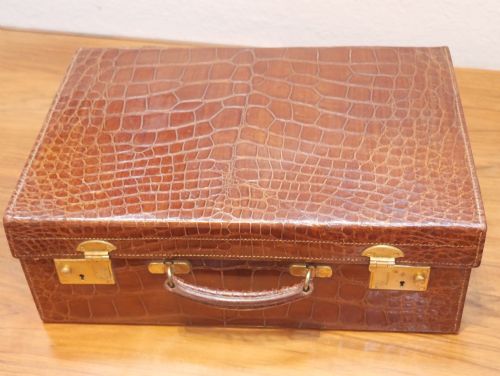
A brown leather dressing case brings utilitarian luxury to travel, housing personal effects in fitted compartments.
Brown Leather Dressing Case
When you search for a brown leather dressing case, you encounter fitted travel containers and valet luggage designed for personal grooming gear and accessories. The selection spans the Victorian and Edwardian eras through the Art Deco period and mid-century decades, reflecting changing habits of travel and grooming.
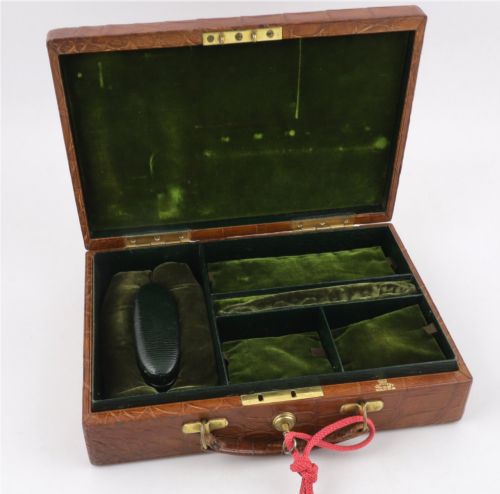
Originating predominantly from English workshops, these items combine robust exterior hides with velvet-lined interiors designed to protect delicate instruments and personal treasures. Their survival demonstrates the durability of traditional hide work and fitted interior joinery.
Materials and construction methods
Makers utilised cattle hide and crocodile or alligator skin for the exterior shells, bonded or stitched over rigid wooden or metal carcases. This outer layer provides resistance to the rigours of transit while offering a tactile finish.
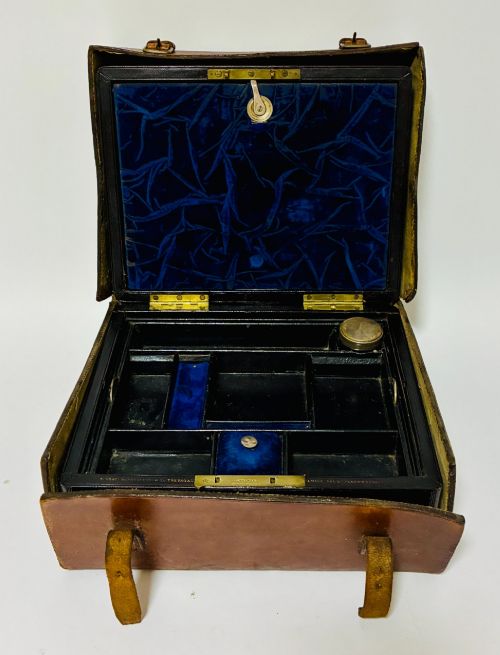
Interiors feature fitted compartments lined in velvet, holding glass bottles, brass fixtures, and stainless steel implements. The precision required to house each individual tool securely marks the standard of construction.
Some travel cases include secret compartments designed to hide small valuables from inquisitive eyes.
Distinctions in quality
The distinction between standard examples and superior pieces rests on the integrity of the fitted interior and the preservation of the original hide. Finer items retain their complete set of matching glass and metal components within the velvet lining.
The quality of the stitching and the grade of the leather, particularly where exotic skins like crocodile are employed, determine the enduring value of the piece. Well-preserved brass hardware and working closures further separate workshop output.
J C Vickery·F West
The Brown Leather Dressing Case Glossary
- Dressing Case
- A portable fitted box or suitcase designed to hold grooming implements, bottles, and personal items for travel. These cases often include specialised compartments for brushes, mirrors, and razors.
- Valet Suitcase
- A piece of luggage arranged specifically for a gentleman's wardrobe and accessories. They typically feature trays and straps to secure suits and smaller items.
- Crocodile Skin
- An exotic hide prized for its distinctive scale pattern and natural durability. It appears on luxury travel goods from the Victorian period through the mid-twentieth century.
- Fitted Interior
- An internal arrangement of partitions, loops, and recesses built to hold specific items securely in place. This design prevents movement and damage during transit.
Brown Leather Dressing Case: Frequently Asked Questions
What goes inside a dressing case?
These cases traditionally hold grooming tools, glass jars for unguents, and small personal accessories. Each item rests in a designated slot within the fitted velvet interior.
Over time, owners stored razors, brushes, and jewellery inside them during travel, keeping personal effects organised and secure on long journeys.
How do I date a leather case?
Dating relies on the style of the hardware, the construction methods, and the materials used in the interior fittings. Victorian and Edwardian examples often display heavier brass locks and traditional leather handles.
Later pieces from the Art Deco period and mid-century incorporate streamlined clasps and different synthetic or metal lining materials that reflect the design trends of those decades.
Are these cases waterproof?
The exterior leather or crocodile skin offers a degree of natural resistance to light moisture and handling during transit. However, they were built primarily for dust protection and organisation rather than submersion.
The unsealed joints and fitted interiors mean that prolonged exposure to water can damage the velvet linings and the wooden carcase beneath the hide.
How should I clean the leather?
Maintenance requires gentle dusting and the occasional application of a suitable leather conditioner to keep the hide supple. Avoid using excessive moisture or harsh chemical cleaners on antique surfaces.
Preserving the original patina involves letting the natural oils in the leather age gracefully without stripping away the historical character built up over generations.