




Victorian Leather Vanity Case
A victorian leather vanity case offers a sturdy yet elegant travelling companion, built to protect personal treasures on the move.
Victorian Leather Vanity Case
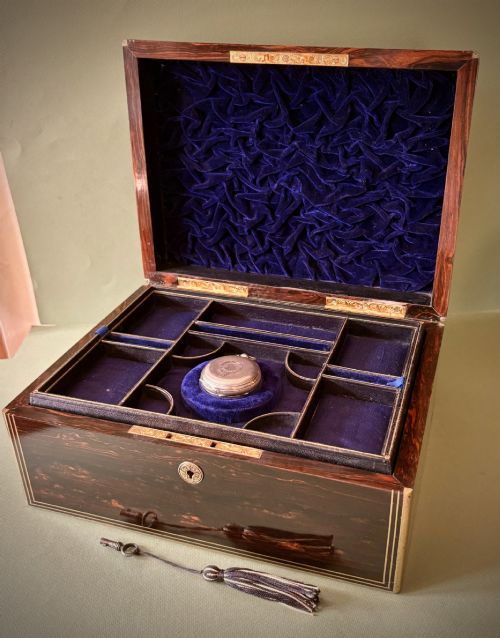
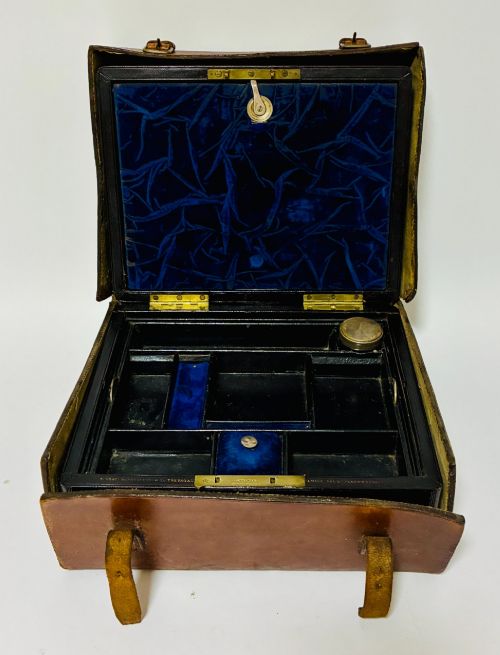
A victorian leather vanity case encompasses fully fitted dressing cases, travel trunks and scent bottle caskets designed for the rigorous journeys of the nineteenth century. These portable containers provide secure storage for personal grooming items, jewellery and glass bottles during transit.
Buyers are most likely to encounter robust leather cases originating from the Victorian and Edwardian periods, often lined with velvet and containing original internal compartments. The forms range from embossed dome-topped caskets to gentleman's travelling sets equipped with sterling silver gilt and cut glass.
Materials and construction
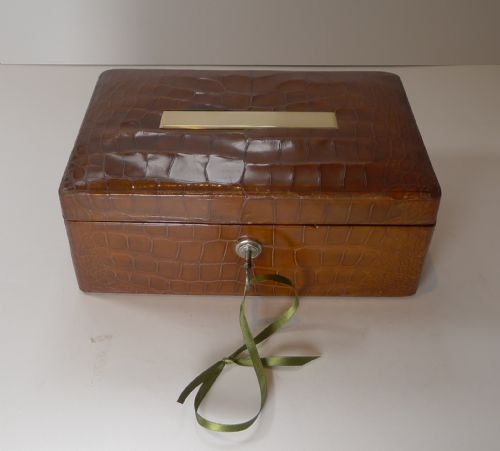
The exterior construction relies heavily on durable leather, crocodile or alligator skin, reinforced with brass hardware and secure locks to withstand travel. Interiors are typically lined with rich velvet, housing custom compartments tailored for individual accessories.
Fittings incorporate cut glass scent bottles, sterling silver gilt, and occasionally celluloid or silver plate. Metal components are often hallmarked, reflecting the high standard of period metalwork.
Object forms span from simple jewellery boxes to elaborate officer's travel trunks and embossed scent bottle caskets.
Assessing quality
The distinction between standard examples and superior pieces rests upon the completeness and originality of the internal fittings. Cases that retain their full complement of matching cut glass bottles, silver gilt instruments and original protective outer boxes command greater attention.
The refinement of the leatherwork and the complexity of the internal configuration also determine the grade of the piece. Special materials such as crocodile skin and sophisticated locking mechanisms elevate an ordinary travelling box into a remarkable survival.
F. West·Drew and Sons
The Victorian Leather Vanity Case Glossary
- Sterling Silver Gilt
- Silver that has been coated with a thin layer of gold on its surface. This treatment provides a rich decorative finish while protecting the underlying silver from tarnishing.
- Cut Glass
- Glass shaped and patterned by abrasive wheels, creating deep geometric facets. It is frequently utilised for heavy scent bottles within travelling sets.
- Celluloid
- An early thermoplastic material used as an alternative to ivory or tortoise-shell in nineteenth-century vanity sets. It offers a smooth, pale finish for grooming implements.
- Dressing Case
- A portable box fitted with compartments and containers for personal grooming and cosmetics. These items were essential accessories for wealthy travellers in the Victorian era.
Victorian Leather Vanity Case: Frequently Asked Questions
What fits inside these cases?
These boxes typically house cut glass scent bottles, grooming tools, manicure sets and jewellery compartments. Many retain specialised slots designed specifically for gentleman's or lady's daily essentials.
Some examples include matching silver-gilt items and delicate glass containers, all secured within tailored velvet linings to prevent movement during transit.
How do I care for the leather?
Leather surfaces benefit from gentle cleaning and occasional conditioning to maintain their suppleness and prevent drying. Avoid exposing antique skins to direct sunlight or excessive moisture.
Internal velvet and silk components should be kept dry and dusted lightly with a soft brush to preserve the fabric.
Were these made for men or women?
Victorian travellers of both sexes utilised these protective cases for their personal belongings. Gentleman's sets often concentrated on shaving gear, grooming tools and heavy bottles, while lady's boxes frequently focused on jewellery and cosmetics.
Many surviving examples clearly indicate their intended user through the specific shape and layout of the internal compartments.
How do I date a vanity case?
Dating relies on examining the style of the leatherwork, the materials used for internal fittings, and any stamped maker marks or silver hallmarks. Hallmarks on silver-gilt components provide precise years of manufacture.
Structural details such as brass locks, dome tops, and the choice of lining materials also help assign a piece to the Victorian or Edwardian period.