


Antique Valet Box
An antique valet box is a compact repository for daily personal accessories, combining practical compartments with period craftsmanship.
Antique Valet Box
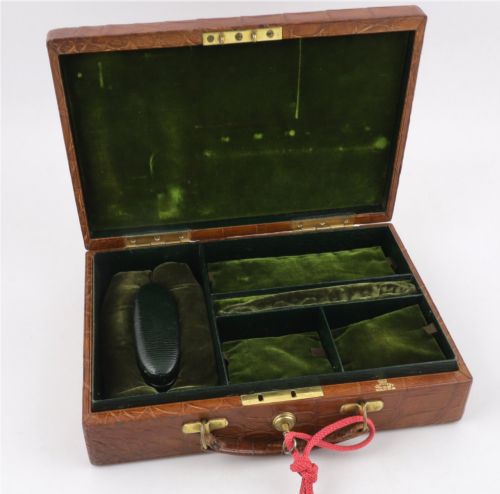
An antique valet box encompasses a variety of fitted containers, dressing cases, and butler's trays designed to hold personal effects like jewellery, watches, and cufflinks. These pieces appear frequently in mahogany, leather, and crocodile skin, originating from periods spanning the Georgian era through to the 1930s. Buyers navigating this selection will encounter both portable travel cases and stationary desk boxes tailored for gentlemanly or general use.
The assortment on offer extends beyond simple containers to include vanity tables, specialised stands, and wall mirrors equipped with glove boxes or storage trays. Pieces bearing signatures from makers such as J C Vickery or F. West demonstrate the high standard of fitted interiors typical of the early twentieth century. Whether formed as a Georgian cutlery tray adapted for domestic storage or an interwar pig's skin case, each object serves an organisational purpose.
Materials and construction
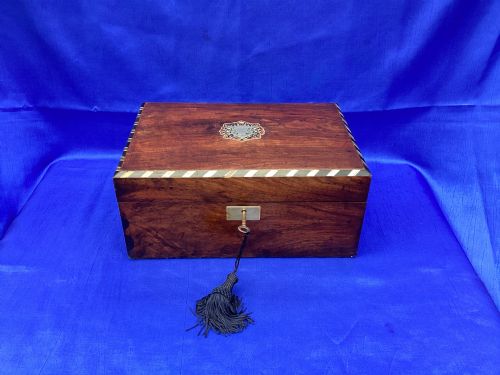
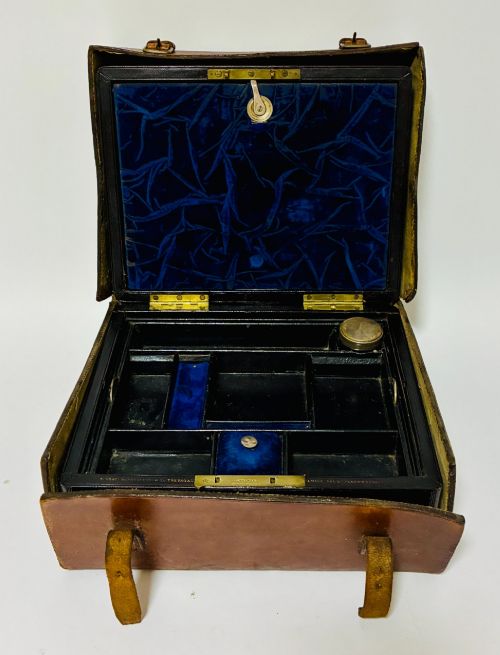
Makers constructed these boxes using sturdy timbers such as mahogany, walnut, and ebonised wood, frequently applying intricate brass inlays or boxwood stringing. Exterior surfaces often featured durable leathers, including crocodile and pig's skin, which provided resilience for daily handling or travel. Internal compartments were typically lined with velvet or fitted with precision glass and mother-of-pearl accessories.
Cabinetmakers and specialist luxury retailers engineered fitted interiors with dedicated slots for watches, cufflinks, and grooming tools. Construction methods relied on robust joinery suited to items subjected to regular opening, latching, and transit. The integration of brass hardware, from hinges to lock plates, ensured structural longevity alongside refined visual contrast.
The archive shows that valet forms extend beyond simple boxes to include wall mirrors, butler's work boxes, and wash stands.
Distinctions in quality
The calibre of a piece rests upon the integrity of its materials, the complexity of its fitted interior, and the presence of original maker signatures. Superior examples exhibit finely grained hardwoods, flawless leather coverings, and fully intact velvet linings without replacement elements. Maker attribution to established firms like F. West or J C Vickery elevates a piece above anonymous utilitarian items.
Execution of detail defines the upper tier of these objects, visible in precise brass inlay, well-fitted compartments, and original locks with functioning keys. Lesser pieces display simpler construction, generic hardware replacements, or compromised interior linings. The retention of original outer protective leather cases further distinguishes collector-grade examples from standard domestic furnishings.
J C Vickery·F. West
The Antique Valet Box Glossary
- Valet box
- A specialised container or case designed to organise daily personal effects such as cufflinks, watches, and collar studs. These items often feature compartmentalised trays for ease of access.
- Dressing case
- A portable fitted box containing receptacles for grooming bottles, brushes, and personal accessories. They were essential travel gear for well-to-do Victorians and Edwardians.
- Butler's tray
- A shallow wooden tray with handles, historically used for carrying silver or tableware. In domestic settings, these were frequently adapted for general storage and organisation.
- Ebonised
- Wood finished to resemble ebony through a staining and polishing process. This dark treatment was popular for achieving a formal aesthetic on boxes and small furniture.
- Stringing
- A narrow strip of contrasting wood inlay used to outline panels or edges on fine furniture and boxes. It demonstrates the precision of the cabinetmaker's hand.
Antique Valet Box: Frequently Asked Questions
What is an antique valet box used for?
These boxes served to store and organise daily personal accessories such as pocket watches, cufflinks, rings, and grooming tools. Gentlemen and ladies relied on them to keep small valuables secure and accessible on a dressing table or desk.
Today, they function well on modern surfaces to hold contemporary accessories like keys, watches, and small jewellery items, maintaining their original domestic purpose.
How do I identify a Victorian valet box?
Victorian examples generally feature solid mahogany or walnut construction, often complemented by brass inlays, robust lock mechanisms, and fitted velvet interiors. Stylistic cues align with the heavier, ornate tastes of the nineteenth century.
Examining the construction methods, such as hand-cut dovetails and period hardware, helps confirm the nineteenth-century origin of the piece.
Were these boxes meant for travel?
Many dressing cases and valet suitcases were explicitly engineered for travel, featuring durable leather exteriors like crocodile or pig's skin and secure catches. Other variations, such as stationary desk boxes and wall-mounted valet mirrors, were designed for fixed domestic locations.
Portable versions usually include robust carrying handles and compact, secure internal layouts to protect contents during transit.
What materials are common in these pieces?
The primary structural materials include hardwoods such as mahogany and walnut, alongside ebonised finishes and decorative boxwood stringing. Outer coverings frequently utilise leathers, including exotic crocodile and pig's skin.
Interiors are commonly lined with velvet and fitted with compartments made from glass, brass, and mother-of-pearl for holding specific accessories.