


Antique Writing Slope Case
These antique writing slope case examples bring portable desktop organisation from Regency, Victorian, and Edwardian periods straight into daily use.
Antique Writing Slope Case
An antique writing slope case provides a portable desktop container designed to hold correspondence materials, stationery, and small personal items. The selection on this page centres on boxes and cases from the Regency, Victorian, and Edwardian eras, spanning portable desks to specialised desk accessories.
Buyers encounter forms ranging from simple leather bound writing boxes to elaborate travelling cases fitted with sewing or dressing compartments. Materials shift from traditional English hardwoods to exotic timbers like rosewood and ebony, reflecting the diverse origins of the pieces.
Specialised variants include naval architect desk tidies, cleric swing out cases, and technical drawing sets. These items served officers, clerics, and travellers who required an organised workspace away from a permanent study.
How they were made
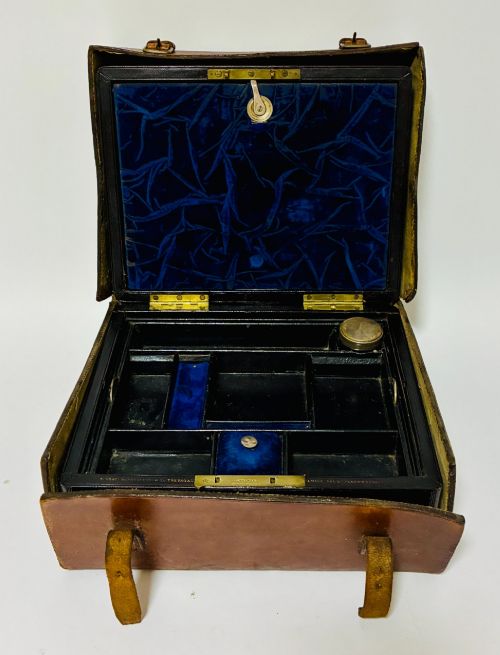
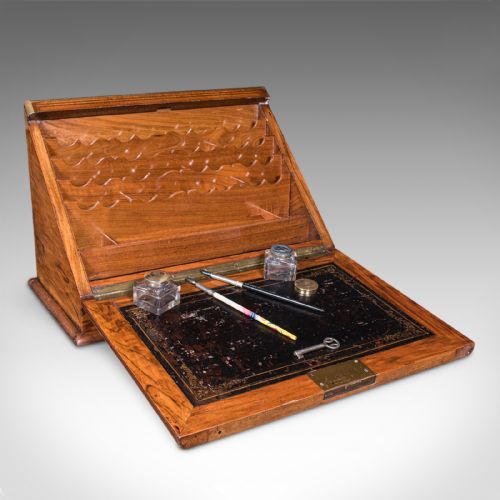
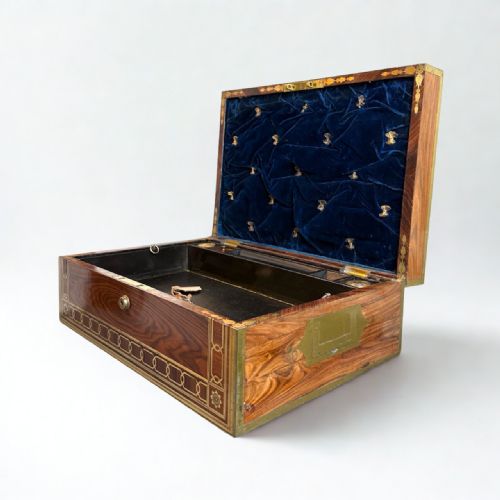
Cabinet makers constructed these cases using durable timbers such as mahogany, walnut, rosewood, and ebony, frequently reinforced with brass mounts and hinges to withstand travel. Surfaces often feature reeded decoration or fitted interiors lined with leather and velvet.
Detailing extends to specialised storage components, including silver sealing wax holders and tailored compartments for correspondence. Workmanship incorporates fine joinery suited to items subjected to frequent transport and handling.
Listings feature woods including rosewood, walnut, mahogany, and ebony, paired with brass and leather.
What varies in quality
Quality rests in the complexity of the interior fittings, the grade of timber employed, and the preservation of original elements like leather linings and brass hardware. Elaborate Anglo-Indian or Chinese export examples demonstrate distinct regional carving and joinery techniques.
The integrity of the internal mechanisms, such as swing out compartments or secret drawers, marks the distinction between standard utilitarian boxes and higher tier bespoke commissions.
F. West·P&F Shafer
The Antique Writing Slope Case Glossary
- Writing Slope
- A portable desk featuring an angled writing surface that opens to reveal storage for paper and ink.
- Campaign
- A style of portable furniture designed for military officers on the move, typically featuring recessed brass handles and corner brackets.
- Rosewood
- A dense, richly figured timber utilised for high quality decorative boxes and furniture.
- Sealing Wax Holder
- A small desk accessory designed to hold sticks of wax used for sealing letters prior to the widespread adoption of envelopes.
- Reeded
- A decorative moulding consisting of parallel convex strips resembling bundled reeds.
Antique Writing Slope Case: Frequently Asked Questions
What is an antique writing slope case used for?
These pieces served as portable desks and storage containers for paper, ink, and personal correspondence during travel. Owners utilised the slanted surface to write letters before the availability of fitted stationary rooms.
Today, they function as decorative desktop organisers or secure storage boxes for modern stationery and keepsakes.
How do I identify a Victorian writing box?
Victorian examples often feature robust timbers like walnut or mahogany combined with brass mounts, leather inserts, and internal compartments tailored for inkwells and pens. Many incorporate maker plates or stamps from London retailers active during the nineteenth century.
Dating relies on construction methods, hardware styles, and the specific types of internal fittings included for correspondence.
What materials are common in these cases?
Construction relies heavily on hardwoods such as mahogany, walnut, rosewood, and ebony. Interiors frequently incorporate leather, velvet, and brass.
Specialist examples may include crocodile skin or silver components for writing accessories.
How do Regency pieces differ from Edwardian ones?
Regency items tend to feature elegant, restrained lines in timbers like walnut and mahogany, often associated with naval or gentleman's travel gear. Edwardian pieces often reflect lighter woods and specialised sets like technical drawing boxes.
Construction details and hardware design shifted over the century to reflect changing manufacturing methods.