



Antique Leather Document Case
An antique leather document case brings sturdy utility and rich texture to a desk, holding papers with quiet authority.
Antique Leather Document Case
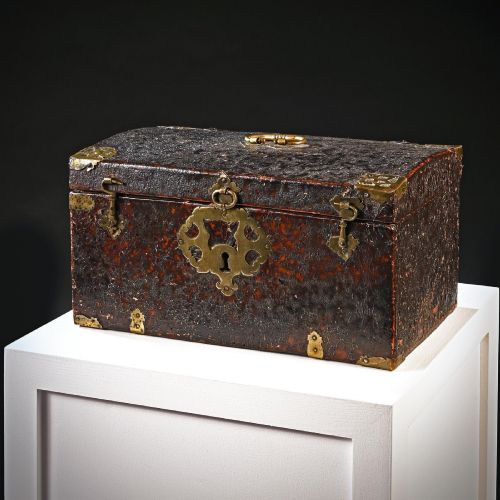
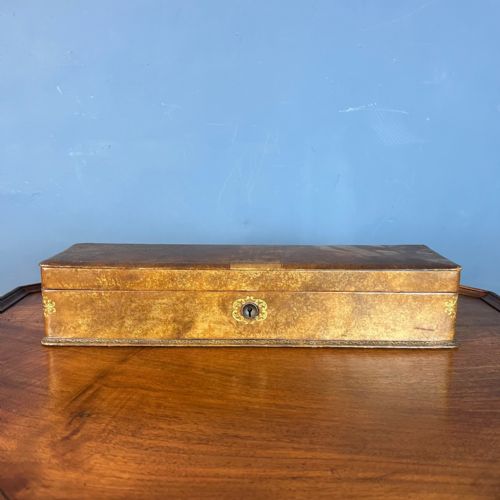
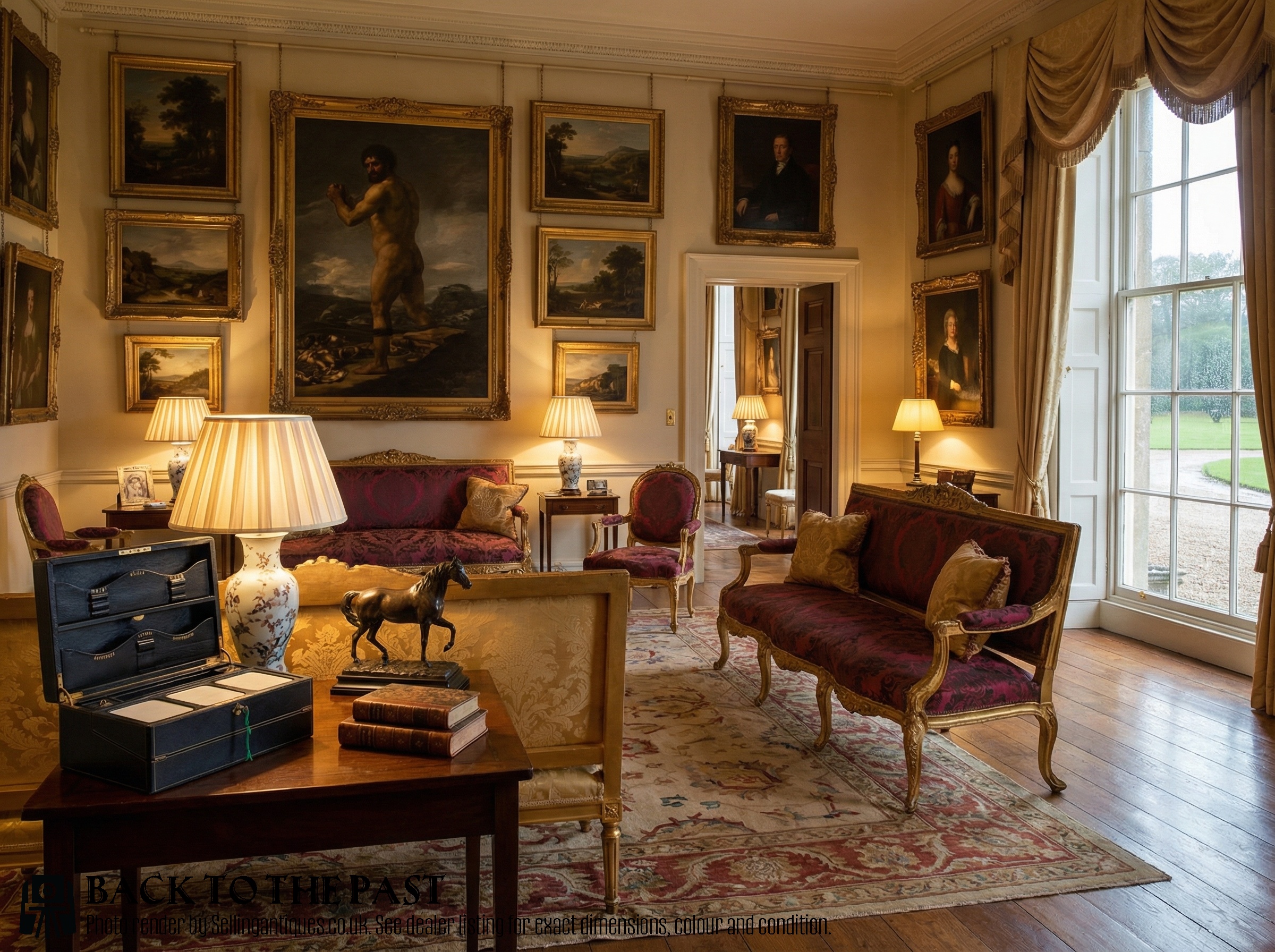
An antique leather document case serves as a portable repository for letters, deeds, and everyday correspondence, designed to protect important papers while travelling or sitting upon a desk. These pieces take many forms in the evidence, appearing as writing boxes, correspondence cases, campaign trunks, and attaché cases.
The versions most frequently met on this page span the Victorian era, the Regency period, and the early twentieth century, alongside earlier seventeenth-century travelling boxes. Makers constructed these items primarily for functional storage, utilising robust hides and fitted interiors to keep stationery and documents secure.
Object types stretch from simple clerk's suitcases to elaborate tooled writing boxes and faux book document boxes originating from notable locations such as Lambeth Palace. Buyers will find both plain utility pieces and luxurious specimens finished with precious metals and fine skins.
Materials and construction
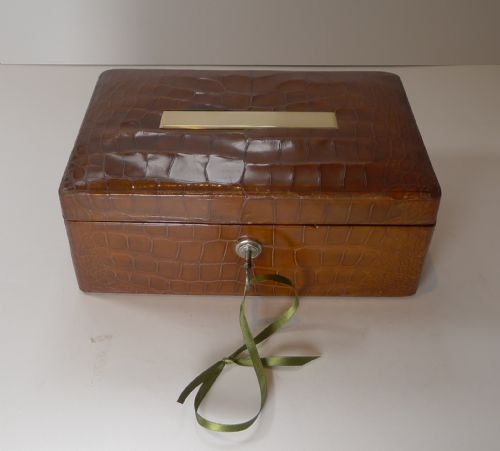
Craftsmen built these cases using sturdy leathers, frequently bolstered with brass hardware, wooden foundations, and iron studs for added durability during travel. Finer examples incorporate gold leaf tooling to decorate the exterior surfaces, while exotic hides such as crocodile and alligator skin appear on luxury items.
Internal fittings often combine wood with bone elements and velvet or leather linings to cushion contents. Metal locks and hinges secure the lids, and specialised campaign designs utilise robust construction to withstand the rigours of military movement.
One remarkably large document box masquerades cleverly as a stack of faux books straight out of Lambeth Palace.
Variations in quality
Quality rests upon the selection of materials, from standard cattle hide up to exotic crocodile skin, and the precision of the brass work and locks. Finer boxes display crisp gold leaf tooling and carefully fitted internal compartments rather than plain, unadorned linings.
The integration of maker details, such as named hardware or stamped signatures from firms like Chapple & Sons, W & J Milne, or P&F Shafer, elevates a piece. Structural integrity in the hinges, framing, and leather joints also separates everyday utility luggage from superior presentation boxes.
Chapple & Sons·W & J Milne·P&F Shafer
The Antique Leather Document Case Glossary
- Campaign case
- A portable chest or box constructed for military officers on the move, typically featuring recessed brass handles and reinforced corners. These items are designed for rugged travel.
- Correspondence case
- A specialised container fitted specifically for holding writing paper, envelopes, and ink. They often include internal partitions and blotters.
- Gold leaf
- Extremely thin gold beaten into sheets, used to apply decorative tooling onto leather surfaces. This technique adds metallic brilliance to the exterior bindings.
- Regency
- An architectural and design period spanning the early nineteenth century, known for classical elegance. Pieces from this era often feature restrained, refined proportions.
Antique Leather Document Case: Frequently Asked Questions
What fits inside an antique leather document case?
These cases hold letters, writing paper, deeds, and similar flat paper items within their fitted compartments and interior partitions. Many also accommodate pens, inkwells, and small personal valuables.
Larger trunk-style boxes provide deeper storage for bulkier collections of paperwork, while slim attaché variants suit modern daily use for letters and documents.
How do I care for antique leather?
Keep the leather away from direct sunlight and excessive heat to prevent the hide from drying out and cracking over time. Gentle dusting with a dry cloth maintains the surface.
Avoid heavy modern chemical cleaners that might strip the original finish or damage any delicate gold leaf tooling applied to the exterior.
Are these cases waterproof?
While leather naturally offers some resistance to light moisture, these historical boxes were not designed to be waterproof. The natural hides and fitted wooden joints can warp or suffer water damage if exposed to heavy rain.
Metal locks and brass hardware can also tarnish or rust if moisture remains trapped against the surface for too long.
How do I date an antique document case?
Dating relies on observing construction methods, material choices, lock designs, and style markers typical of periods like the Victorian era or the Regency period. Stamped maker marks or engraved initials offer further historical clues.
Interior linings and the style of brass hardware often shift noticeably between the seventeenth century and the early twentieth century.