
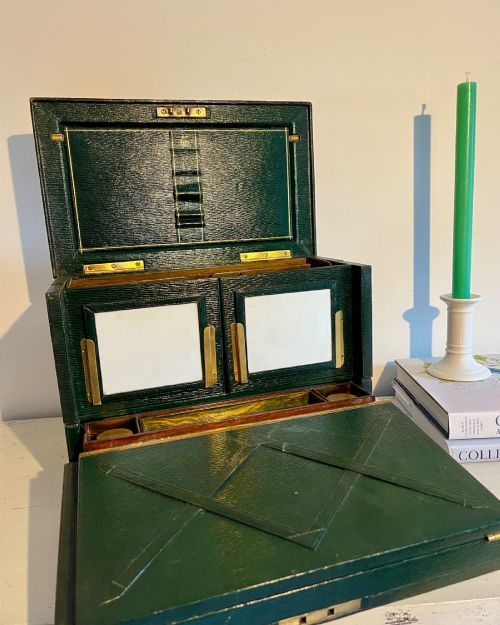
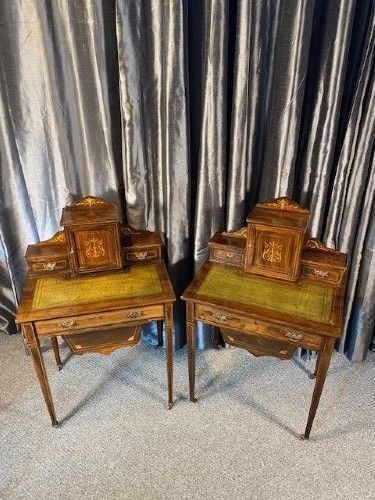
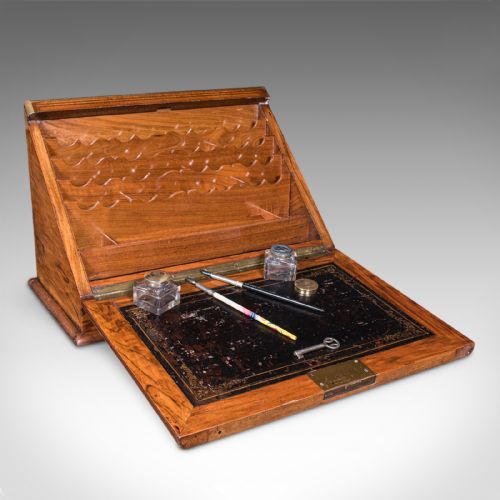


Leather Stationery Cabinet
A leather stationery cabinet organises papers with style, combining fitted compartments with fine exterior hides.
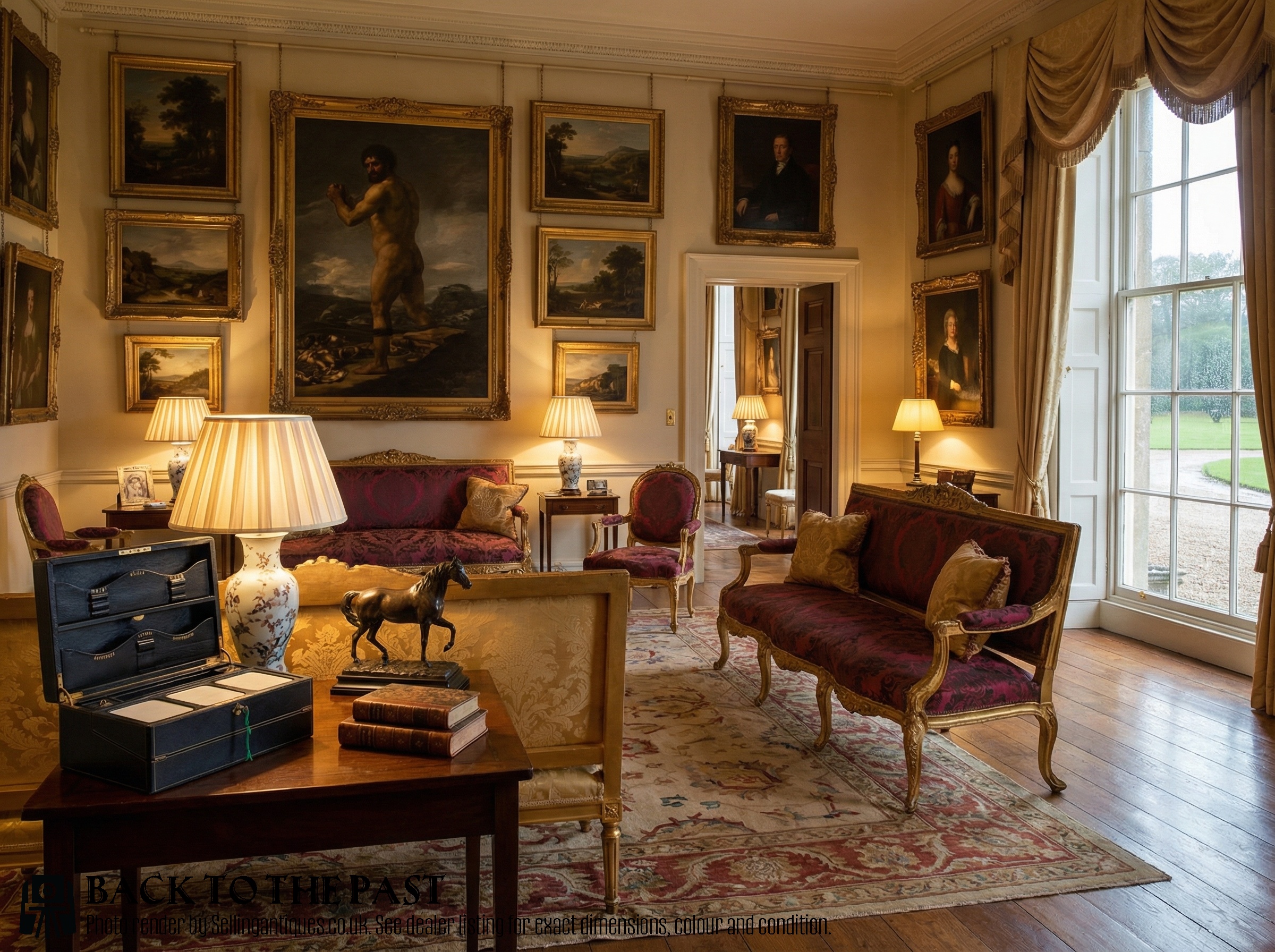
Leather Stationery Cabinet
A leather stationery cabinet provides a dedicated repository for correspondence and writing materials, often taking the form of a portable box or a tabletop desk accessory. These pieces emerge primarily from the Victorian and Regency periods, reflecting an era when written communication demanded proper storage.
The selection here ranges from compact desktop boxes to larger writing furniture like the Davenport, incorporating leather surfaces alongside wood bodies. Buyers frequently encounter variants featuring tooled leather panels, drop fronts, and fitted pigeonholes designed for daily correspondence.
Originating mostly from nineteenth-century English workshops, these cabinets serve both practical desktop utility and decorative purposes. They represent the craftsmanship of a period when stationery management was an essential daily ritual.
How they were made
Cabinet makers built the primary carcass from timber substrates such as mahogany, walnut, rosewood, and oak, frequently applying decorative veneers like burr walnut or satinwood inlay. These woods provide the structural rigidity necessary to house internal compartments and heavy writing slopes.
Outer surfaces are often accented with leather, applied as writing surfaces or exterior panels, and complemented by cast brass mounts, handles, and locks. Tooling and gilding frequently finish the leather elements, adding geometric or floral borders to the hide.
Some Victorian ladies kept secret compartments hidden behind spring-loaded drawers for love letters.
What varies in quality
The standard of a piece depends heavily on the selection of primary timbers and veneers, with richly figured burr walnut or fine rosewood denoting superior workshops. Cabinet work is further elevated by precise dovetailing in the interior drawers and the crispness of any applied wood inlay.
Hardware and interior appointments also distinguish finer examples, such as heavy brass carrying handles, working locks with original keys, and well-executed gold tooling on the leather panels. The integration of mechanical pop-up actions or sliding tops demonstrates advanced carpentry.
J.C Vickery of London·Houghton & Gunn·Thornhill
The Leather Stationery Cabinet Glossary
- Davenport
- A compact writing desk featuring a sloped top above a pedestal of drawers. This form became popular during the Regency and Victorian eras for personal correspondence.
- Cartonnier
- A freestanding or desktop cabinet fitted with vertical compartments or drawers for storing papers and documents. French examples often incorporate leather accents.
- Campaign desk
- Portable military furniture designed for easy transport by officers on campaign. These pieces typically feature recessed brass handles and leather-lined writing surfaces.
- Bonheur du jour
- A light ladies writing desk featuring a small cabinet or set of pigeonholes upon the upper surface. The style emerged in France before becoming popular in English Victorian homes.
- Correspondence box
- A portable desk accessory or tabletop cabinet designed to hold writing paper and envelopes. They frequently feature fitted velvet or leather interiors with brass hardware.
Leather Stationery Cabinet: Frequently Asked Questions
What is a leather stationery cabinet?
A leather stationery cabinet is a desktop or portable container designed to store writing paper, envelopes, and correspondence. They range from simple folding boxes to elaborate tabletop cabinets.
Most feature fitted internal compartments and leather-topped writing slopes or panels, reflecting nineteenth-century writing habits.
How were Davenport desks used?
Davenport desks served as compact writing stations for personal correspondence and household record keeping. Their sloped tops provided a comfortable writing surface while sitting.
Internal drawers and pigeonholes kept inkwells, pens, and paper organised within a small footprint.
How do I identify a Victorian cabinet?
Victorian cabinets often display dense timber grains like burr walnut or mahogany, frequently paired with brass hardware and tooled leather. Construction details like hand-cut dovetails indicate this nineteenth-century origin.
Stylistic markers range from Arts and Crafts simplicity to heavier carved oak or rosewood designs.
Where should I place my cabinet?
These cabinets suit tabletops, desks, or specialised writing furniture where they can function as both storage and display. Keep them away from direct sunlight and excessive heat to protect the leather and wood veneers.
Using proper leather conditioner maintains the suppleness of the hide over time.