



Victorian Leather Stationery Box
A Victorian leather stationery box keeps your desk in order with the quiet dignity of the nineteenth century.
Victorian Leather Stationery Box
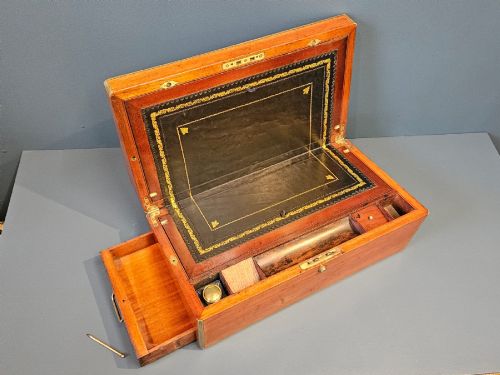
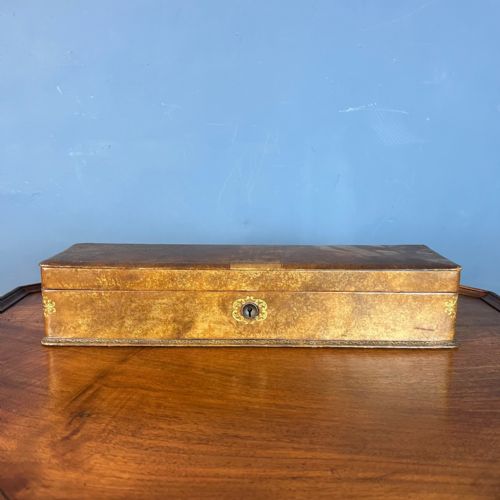
A Victorian leather stationery box is a portable or desktop cabinet designed to hold writing paper, envelopes, and correspondence. These pieces serve as the practical centrepieces of a period desk, offering dedicated compartments for pens, ink, and letters.
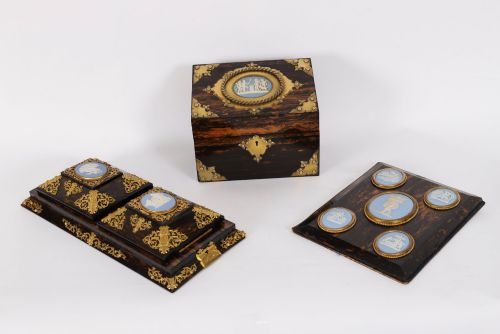
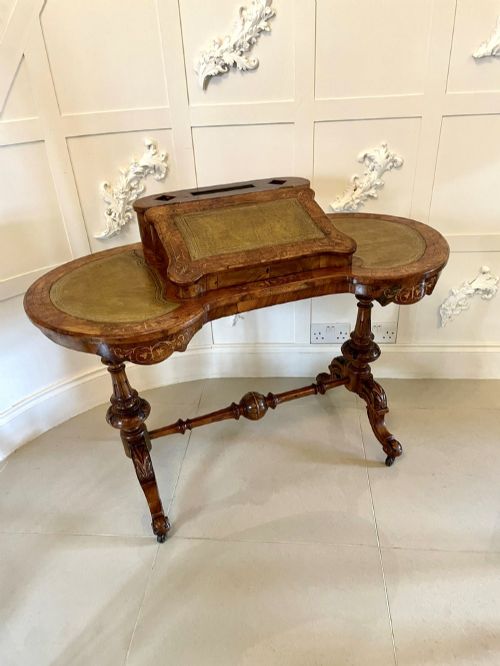
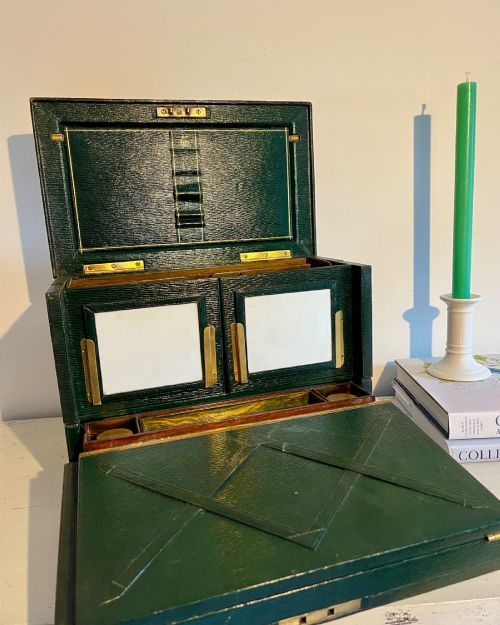
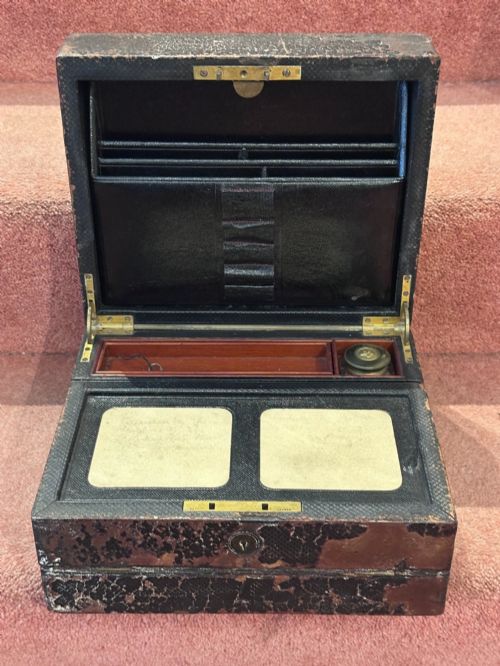
The versions most frequently found on this page are Victorian designs formed from wood carcases bound in leather. They range from compact desktop correspondence cases to large writing slopes with double openings and integrated letter racks.
Makers housed these accessories in mahogany, oak, and walnut, frequently applying tooled leather surfaces. Some examples reflect the Arts and Crafts movement or military camp utility, while others display the structured elegance of cabinet-style stationery boxes.
Materials and Construction
Makers constructed the carcase of each piece from timber such as mahogany, oak, or walnut, providing a sturdy foundation for the exterior skin. They then bound or covered these wooden frames in leather, frequently finishing the surface with blind or gilt tooling.
Internal compartments incorporate secondary woods alongside fitted components in bone and porcelain. Brass mounts, handles, and locks secure the structure, while gold leaf highlights the decorative tooling on the leather exteriors.
Victorian Leather Stationery Box Retail Price Guide 2026
Typical asking prices for victorian leather stationery box among the pieces listed under this phrase on Sellingantiques today, from the lower quarter to the upper quarter. They describe what is for sale here now, not the wider market.
Listings on this site feature Victorian pieces spanning from eighteen fifty to nineteen hundred, utilising mahogany, oak, walnut, and leather.
What Separates the Fine from the Ordinary
Quality in a Victorian leather stationery box rests upon the crispness of the leather tooling and the integration of internal fittings. Superior examples exhibit precise embossing, well-fitted letter racks, and robust brass hardware that operates smoothly.
The ambition of the form dictates distinction, moving from basic fold-down writing slopes to elaborate drop-front cabinets with multiple internal sections. Exhibition quality pieces display superior cabinetwork and refined materials that mark them out from standard desk accessories.
W & J Milne·P&F Shafer·Houghton & Gunn
The Victorian Leather Stationery Box Glossary
- Stationery box
- A desktop cabinet designed specifically to hold writing paper, envelopes, and correspondence neatly in upright tiers or compartments.
- Writing slope
- A portable box with a slanted lid that opens to form a writing surface, housing storage space for pens and paper underneath.
- Correspondence case
- A portable or desktop container intended for holding letters and writing materials, often fitted with pockets and partitions.
- Tooled leather
- Leather decorated by pressing heated metal tools into the surface, frequently enhanced with gold leaf.
- Arts and Crafts
- A design style emphasising handcraftsmanship, simple forms, and natural materials, visible in certain late Victorian pieces.
Victorian Leather Stationery Box: Frequently Asked Questions
What fits inside a stationery box?
These boxes accommodate standard nineteenth century writing paper, envelopes, and small writing implements within dedicated vertical compartments and partitions.
Larger models also incorporate slots for blotting pads and inkwells alongside the main stationery sections.
How do I care for period leather?
Keep the leather away from direct sunlight and heat sources to prevent the material from drying out or cracking over time.
Apply a microcrystalline wax sparingly if the surface requires nourishment, avoiding modern synthetic dressings.
Were these boxes meant to travel?
Many examples, particularly campaign and officer variants, were built with sturdy leather bindings and secure brass locks for travel.
Cabinet stationery boxes were generally intended to remain stationary upon a desk or library table.
How do I date a box?
Dating relies upon stylistic cues, materials, and construction methods associated with the Victorian period between eighteen fifty and nineteen hundred.
Maker marks, registration stamps, and lock signatures offer further precision when identifying the year of manufacture.