





19th Century Leather Box
A 19th century leather box is a durable container built for travel or desktop storage, prized for its tactile hide finish and robust construction.
19th Century Leather Box
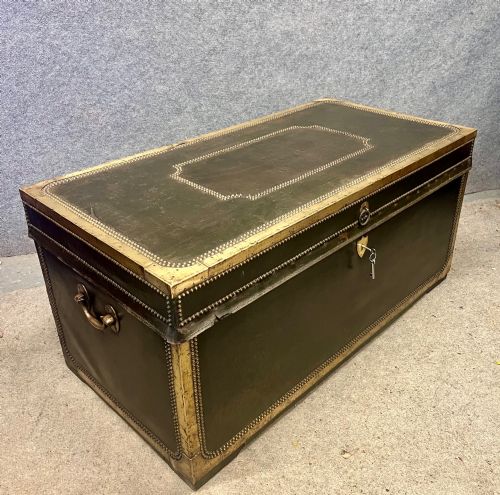
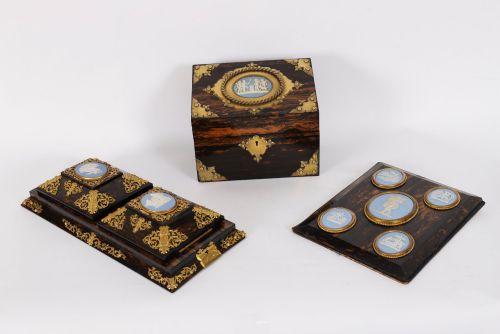
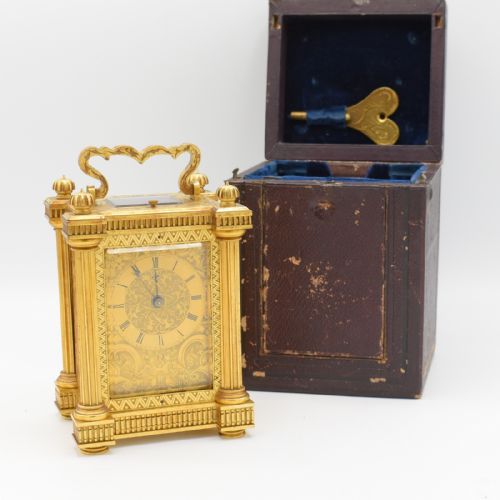
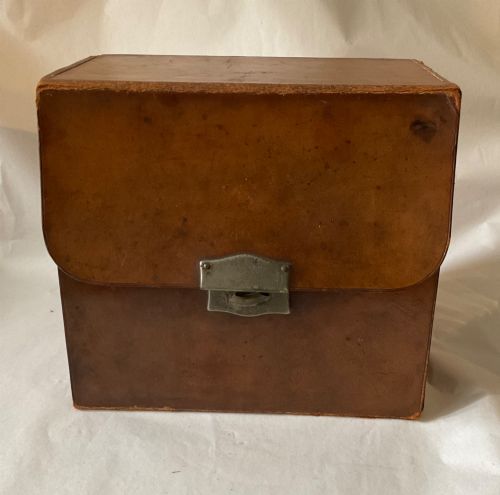
A 19th century leather box encompasses a wide range of functional containers, from small velvet-lined jewellery caskets to large metal-bound travel trunks and folding writing slopes. Pieces span the Regency, William IV, and Victorian periods, reflecting the shifting demands of travellers, officers, and domestic households.
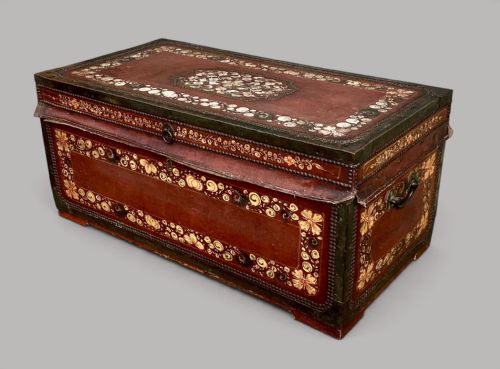
The selections on this page are dominated by campaign trunks, writing boxes, and fitted dressing cases designed for portability. Many exhibit utilitarian origins tied to the military or maritime trade, while others served aristocratic dressing rooms and studies.
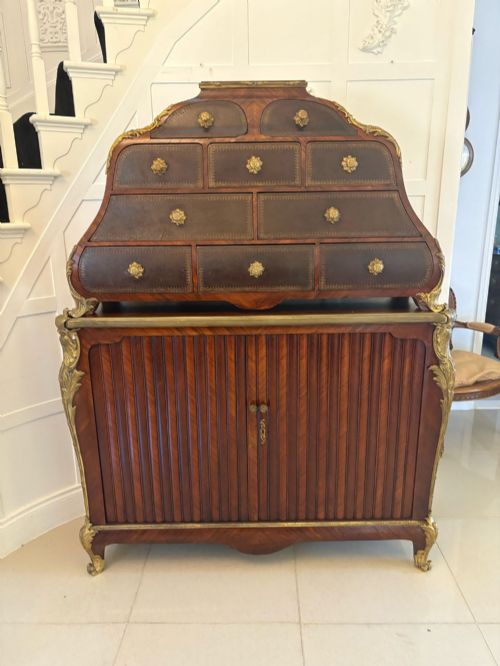
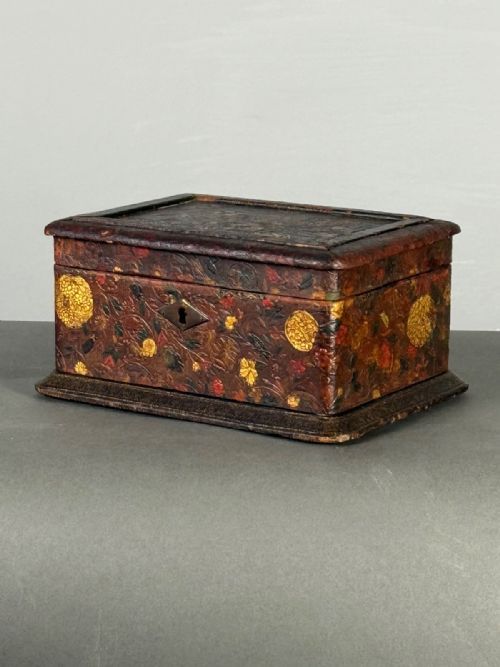
Origins vary from English workshops to French makers and China Trade camphor-wood suppliers. Buyers encounter both plain, practical hide coverings and highly decorative polychrome or embossed finishes intended for display.
Materials and construction methods
Makers built the foundational carcases of these boxes using sturdy woods such as mahogany, oak, camphor, and pine, before wrapping them in leather, hide, or skin. Brass mounts, corner pieces, and studding added structural reinforcement to items meant for rigorous travel.
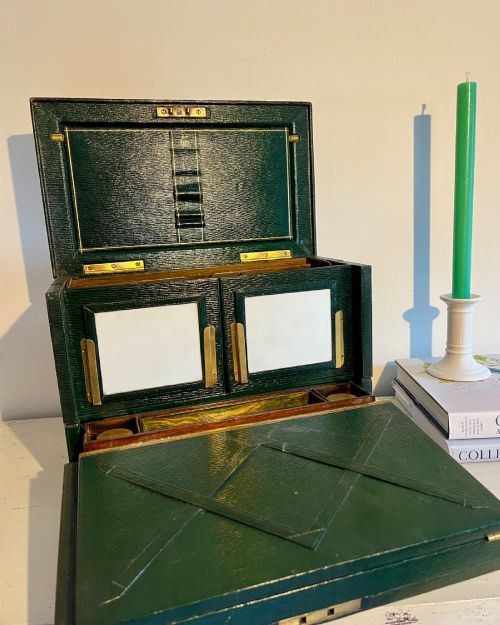
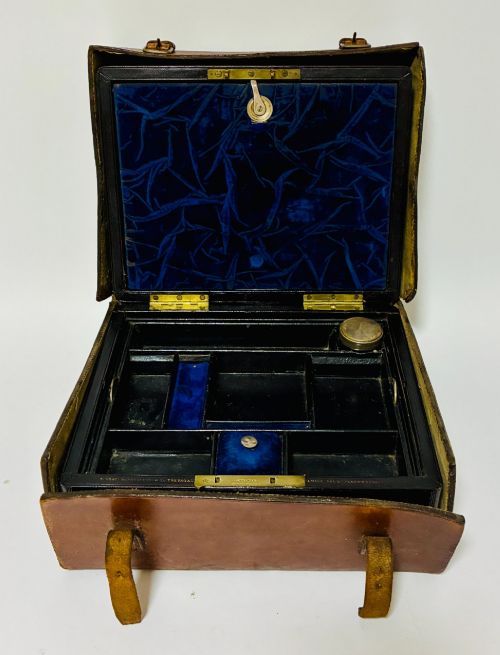
Interiors often featured velvet linings, gold leaf tooling, glass containers, and complex compartments for stationery or vanity items. Specialised hardware such as Bramah locks provided security for valuables during transit.
19th Century Leather Box Retail Price Guide 2026
Typical asking prices for 19th century leather box among the pieces listed under this phrase on Sellingantiques today, from the lower quarter to the upper quarter. They describe what is for sale here now, not the wider market.
Surviving forms range from miniature snuff boxes and etui sewing cases to large country house ottomans.
What distinguishes finer examples
Quality rests in the integrity of the structural carcass and the preservation of the original leather skin. Superior pieces retain their fitted internal compartments, original locks, and working keys without major replacement parts.
The finesse of the brass detailing, the precision of the stitching, and the crispness of any gold leaf tooling or embossing separate standard utility boxes from high-status commissions.
Susse Freres Paris·Samuel Pratt·Howell & James London·James Purdey & Sons·Seabrook of St Pauls London·Drew & Sons·Finnegans of Bond Street London·W & J Milne Makers Edinburgh
The 19th Century Leather Box Glossary
- Writing slope
- A portable desk with an angled, hinged lid that folds down to provide a writing surface. These often conceal inkwell recesses and secret compartments.
- Campaign trunk
- A robust box or chest reinforced with brass banding and corner brackets, designed for military officers on the move. They frequently utilise durable woods like camphor.
- Dressing case
- A fitted box containing glass bottles, jars, and grooming tools for personal hygiene. They are typically lined with velvet or silk.
- China Trade
- Goods manufactured in China during the 19th century specifically for export to Western markets. These items often combine Asian wood framing with European-influenced forms.
- Bramah lock
- A high-security lock patented by Joseph Bramah in the late 18th century. They are commonly found on better-quality boxes of this era.
19th Century Leather Box: Frequently Asked Questions
How were these boxes used?
These boxes served multiple domestic and travel functions, acting as secure receptacles for jewellery, stationery, and personal documents. Many were tailored for specific professions, holding everything from apothecary supplies to military maps.
Larger versions functioned as trunks for clothing and boots during long journeys by coach or ship. Inside the home, smaller boxes sat on desks or dressing tables to organise daily essentials.
How do I care for antique leather?
Antique leather requires a stable environment away from direct sunlight and extreme humidity to prevent the hide from drying out or cracking. Gentle dusting with a dry cloth is usually sufficient for daily maintenance.
Avoid using modern chemical cleaners or excessive moisture on historical leather surfaces. Specialist leather conservation waxes can be applied sparingly if the material shows signs of excessive dryness.
How can I tell Regency pieces from Victorian ones?
Regency boxes, produced during the early part of the century, often feature restrained classical lines, brass inlay, and light wood veneers. They lean towards neoclassical symmetry and understated elegance.
Victorian pieces, made from the 1830s onwards, frequently display heavier proportions, bolder brass mounts, and more elaborate internal fittings. The later decades of the century also introduced darker, pebble-grained leathers and utilitarian finishes.
What is a campaign trunk?
A campaign trunk is a sturdy travel chest constructed for military officers and officials on active service. They feature reinforced brass corners and flush handles to withstand rough handling during transit.
These trunks are typically made from durable, insect-resistant timbers like camphor or oak, wrapped in leather or left as exposed polished wood. Their modular design allowed them to be easily stacked and loaded onto pack animals or carriages.