



Antique Lead Decanter
These heavy lead decanter pieces bring Georgian, Regency, and Victorian cut glassware directly to the table for holding spirits and wine.
Antique Lead Decanter
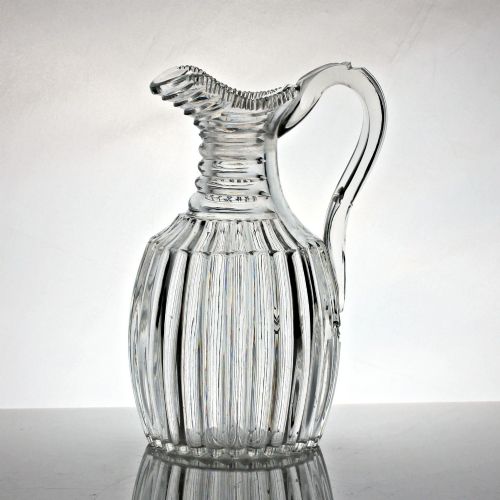
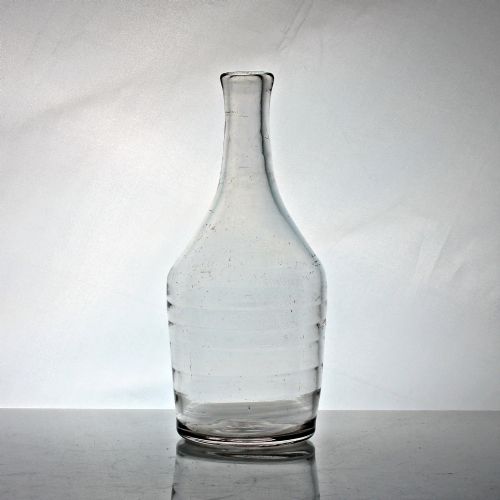
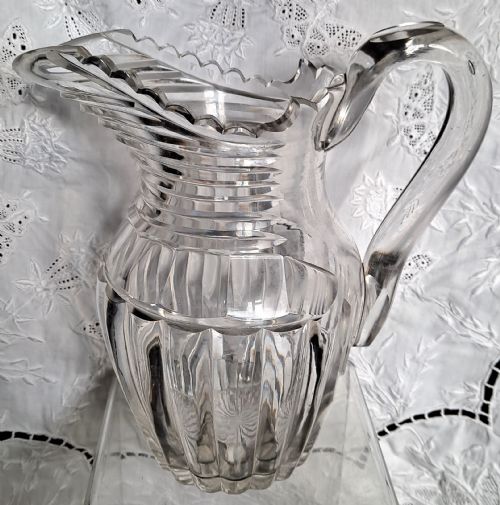
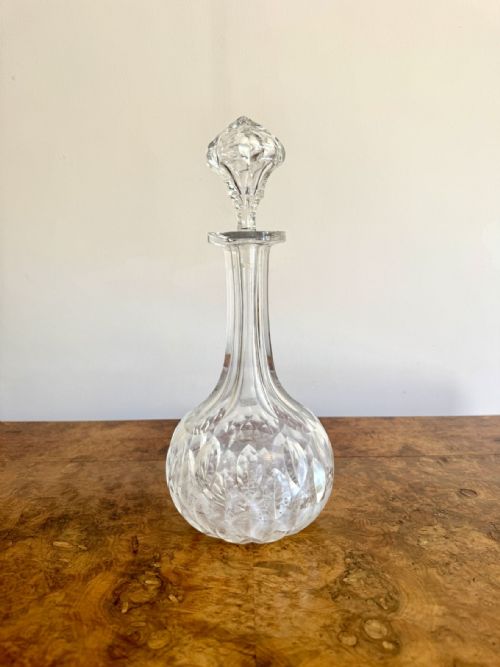
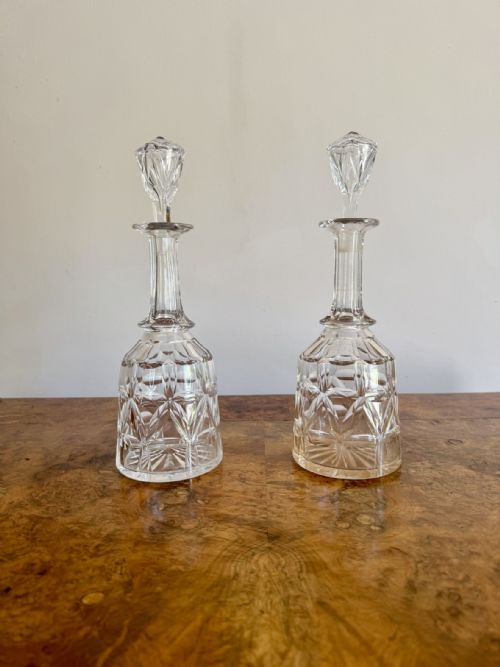
When you search for an antique lead decanter, you find vessels designed to store and serve wine, whiskey, brandy, and water. The forms span Georgian shoulder carafes, Regency three-ring Prussian vessels, Victorian spirit decanters, and Edwardian table jugs.
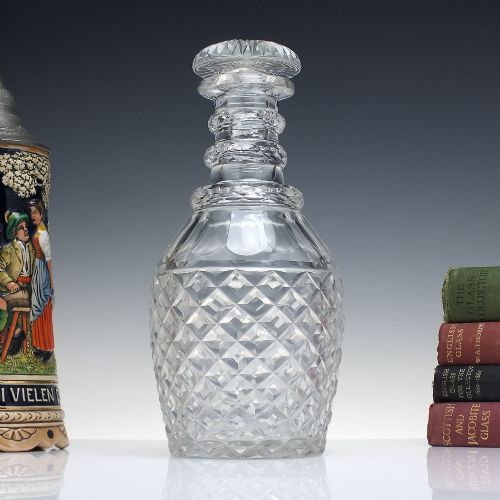
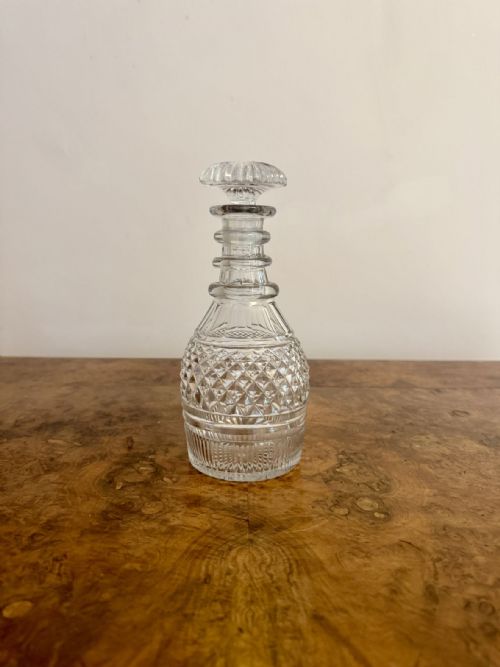
The most common examples on this page are Edwardian and Victorian cut glass vessels alongside Georgian pieces featuring Lynn rings or pillar and prism cutting. Makers used lead crystal and heavy glass to create stable barware that catches the light.
How they were made
Makers utilised lead glass and heavy crystal to achieve greater brilliance and weight than standard soda glass. Workshops shaped the bodies through blowing, sometimes using optical moulds, before finishing the surfaces with deep wheel cutting and engraving.
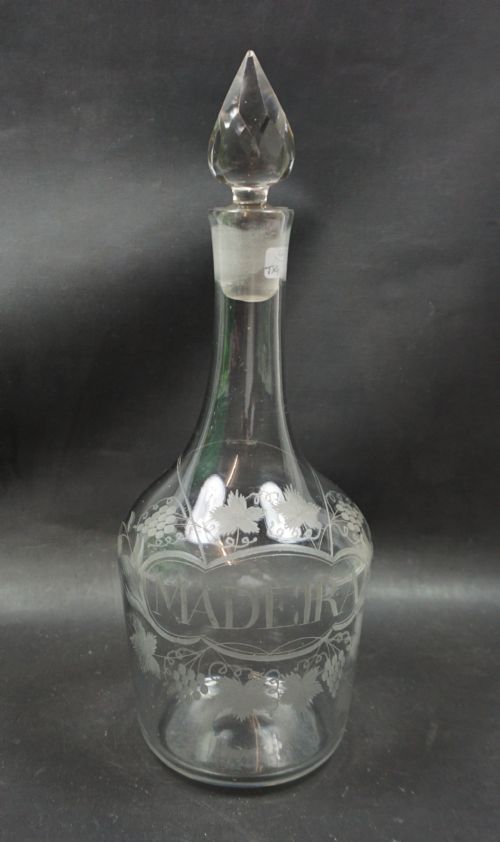
Necks frequently incorporate applied rings, such as Prussian rings or Lynn rings, designed to provide a secure grip during pouring. Engraved labels identify specific contents like Madeira, brandy, or whisky directly upon the body.
Some nineteenth-century spirit decanters feature cheeky engraved labels for Madeira and whiskey to prevent any confusion during late-night gatherings.
What varies in quality
Quality rests in the depth and crispness of the glass cutting, the weight of the crystal, and the symmetry of the form. Early examples show hand-polished facets with soft optical distortion, whereas later mass production yields sharper, shallower cuts.
The presence of matching stoppers, original neck rings, and clear engraving significantly elevates a piece. Heavy lead content provides a resonant ring when tapped and a substantial heft in the hand.
James Powell London
The Antique Lead Decanter Glossary
- Lead crystal
- Glass containing a high percentage of lead oxide, which increases weight, brilliance, and softness for cutting. This material gives vintage decanters their characteristic heft.
- Prussian neck
- A series of horizontal parallel rings encircling the neck of a decanter. These rings developed during the Georgian period to prevent slipping during pouring.
- Pillar cut
- A geometric style of heavy vertical faceting applied to the body of a vessel. This technique creates strong light refraction through thick lead glass.
- Mell decanter
- A form with a rounded body and tapering neck resembling a mallet. These heavy vessels date primarily to the eighteenth and early nineteenth centuries.
- Ship's decanter
- A vessel featuring a wide flat base and conical body designed to prevent tipping at sea. The broad footprint provides stability on rolling surfaces.
Antique Lead Decanter: Frequently Asked Questions
How do I clean an old decanter?
Wash the interior carefully using warm water and non-abrasive cleaning beads rather than harsh detergents. Avoid sudden temperature changes to prevent cracking the heavy lead crystal.
Dry the vessel thoroughly upside down on a linen cloth and store the stopper separately to allow air circulation inside.
Can I store alcohol in them permanently?
Spirits and wine can be kept in these vessels for moderate periods, though very long storage may cause evaporation or lead leaching.
Empty and rinse the container periodically if contents remain unconsumed for many months to preserve the glass.
How do I date a glass decanter?
Examine the base for pontil marks, neck ring styles, and the sharpness of the wheel cutting. Georgian pieces often display kick-up bases and applied rings, while Victorian and Edwardian examples show machine-polished facets.
Engraved labels and stylistic cues like Sheraton or Arts and Crafts motifs further narrow down the decade of production.
Are original stoppers important?
Original stoppers that match the cut and colour of the body maintain the integrity and visual harmony of the piece. Replacements are common due to breakage over centuries of domestic use.
Inspect the ground glass peg and interior neck for matching factory numbers to confirm the stopper belongs to the vessel.