
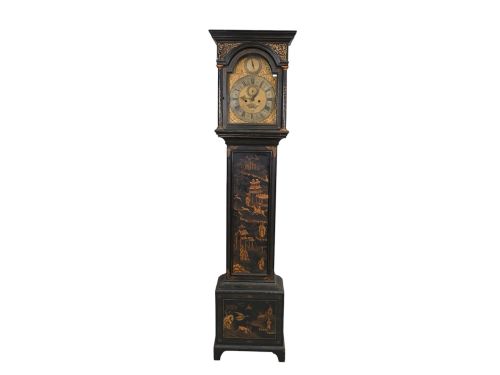


Antique Lacquer Clock Case
An antique lacquer clock case brings centuries of craftsmanship into a room, offering tall, decorated timber housing built to shelter precision clockwork.
Antique Lacquer Clock Case
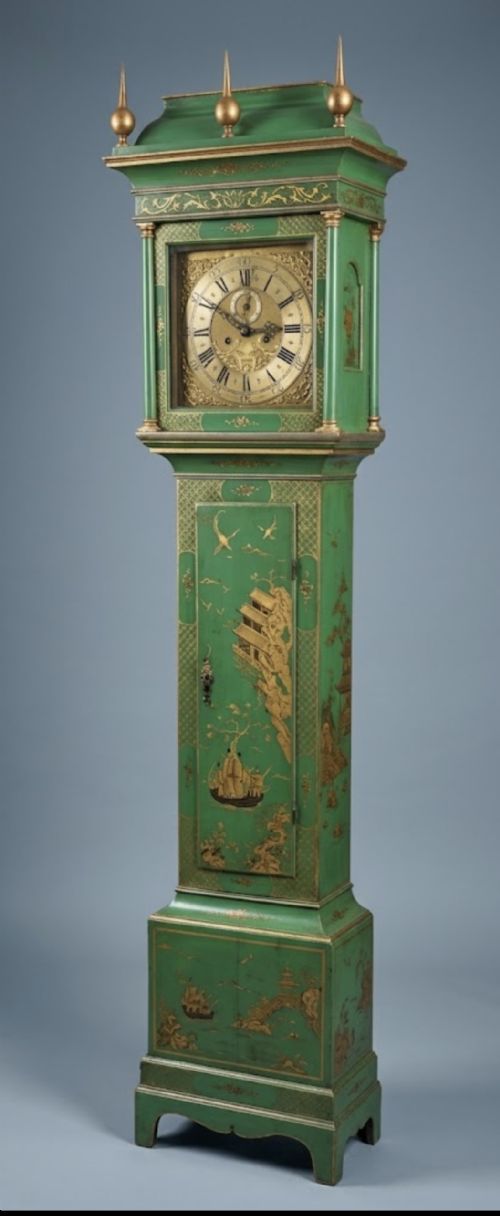
When you search for an antique lacquer clock case, you are looking at substantial tall timber housings designed to enclose longcase, grandfather, or grandmother clock movements. These pieces range from Georgian periods down to the twentieth century, taking the form of upright floor-standing cases.
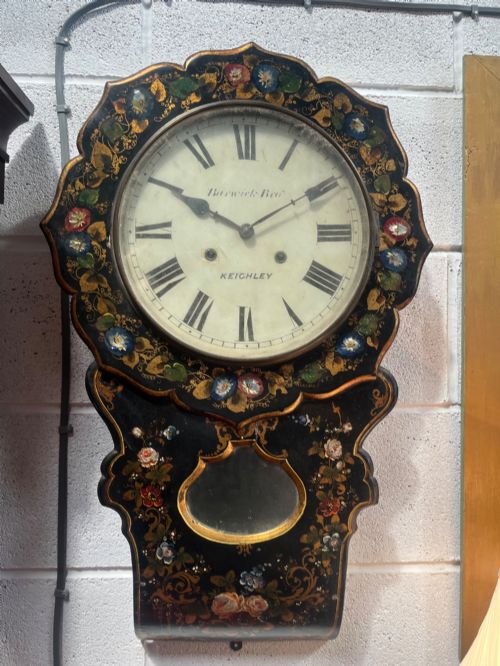
The most common examples you will meet on this page date from the eighteenth century, featuring tall proportions and decorated surfaces. They appear primarily in longcase formats, though wall hanging and smaller grandmother variations also occur in the selection.
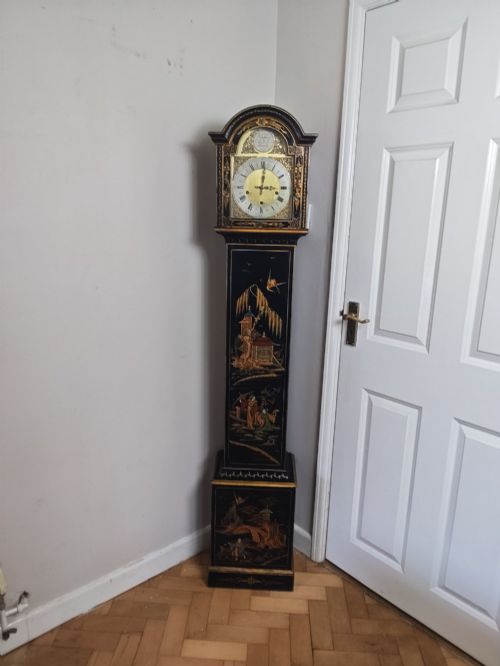
Originating across Britain, these cases span styles from early Georgian and George III to later Victorian interpretations. Many exhibit Chinoiserie motifs or japanned finishes, reflecting centuries of decorative taste applied to functional timepieces.
What varies in quality
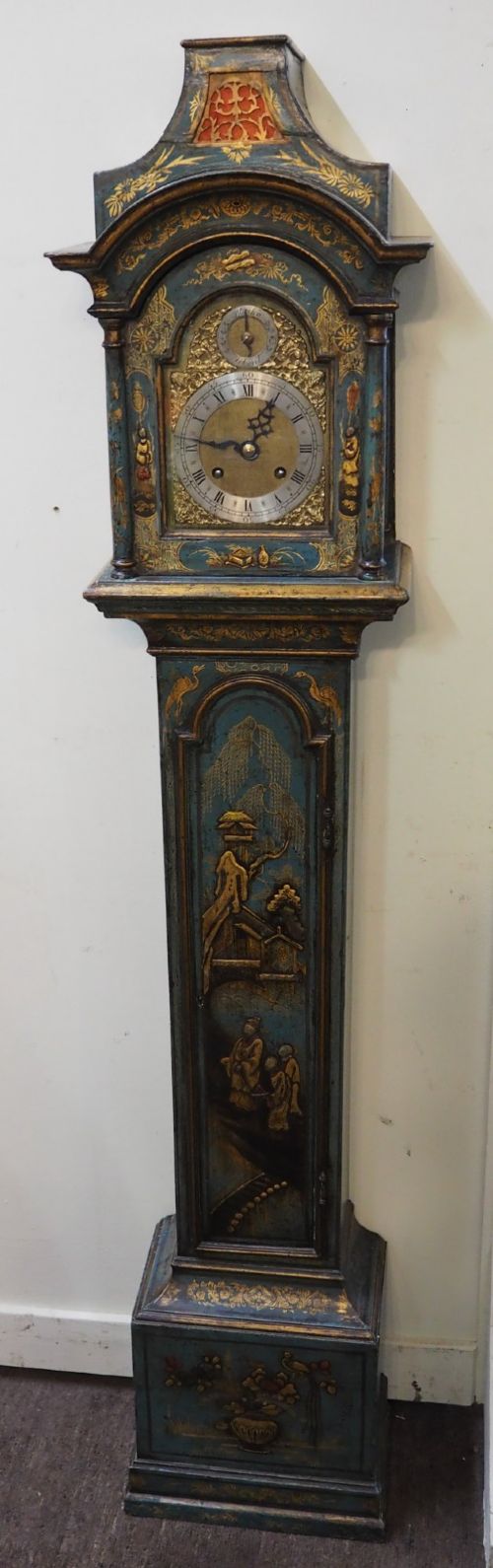
The standard of the pictorial decoration separates the finer examples from simpler workshops, with intricate Chinoiserie scenes and gold leaf application demanding higher skill. The depth and preservation of the lacquered finish dictate the visual impact of the case.
Proportions and the integration of the hood, trunk, and base also differentiate the pieces. Superior examples maintain balanced architectural lines that complement the complexity of the painted or japanned surfaces.
Listings span Georgian, 18th Century, 19th Century, and 1930 periods, utilising wood, lacquer, brass, glass, and gold leaf.
John fielder of Alton·William Kipling London·Thomas Utting of Yarmouth
The Antique Lacquer Clock Case Glossary
- Japanned wood
- European replication of East Asian lacquerwork, created using layered varnishes and metallic dust. This technique produced the dark, glossy surfaces adorned with raised figures and landscapes found on eighteenth-century cases.
- Chinoiserie
- European interpretation of Chinese and East Asian artistic motifs, popular in furniture decoration during the Georgian period. It appears on clock cases as pagodas, figures, and botanical scenes rendered in gold and colour.
- Longcase clock
- A tall, floor-standing pendulum clock enclosed in a protective wooden housing, commonly known as a grandfather clock. These tall cases provided the necessary drop for driving weights.
- Grandmother clock
- A scaled-down version of the traditional longcase clock, typically produced in later periods such as the twentieth century. They offer similar proportions in a shorter height suitable for lower ceilings.
Antique Lacquer Clock Case: Frequently Asked Questions
What is an antique lacquer clock case?
An antique lacquer clock case is a tall wooden housing built to protect pendulum clock movements, finished with decorative varnish and painted motifs. They serve as both architectural furniture and functional timekeepers.
These housings range from Georgian longcase examples to later twentieth-century grandmother variations, showcasing traditional woodworking and decorative arts.
How do I identify a Georgian lacquer case?
Georgian lacquer cases typically feature eighteenth-century proportions, traditional timber construction, and hand-applied japanned or Chinoiserie decoration. Look for structural cues like distinct hood designs and older wooden frames.
Makers from this era often signed the movements housed within, linking the decorated timber case directly to known clockmakers of the period.
Where were these clock cases made?
These clock cases originated in workshops across Britain, constructed by regional cabinetmakers and specialised decorators. Many bear the marks of makers working in London and various English towns.
The styles reflect prevailing British tastes in furniture and interior decoration, particularly the eighteenth-century enthusiasm for Chinoiserie design.
How do I care for a lacquer case?
Protect the lacquered timber by placing the case away from direct sunlight and maintaining stable room humidity. Gentle dusting with a dry cloth preserves the delicate gilt and painted surface layers.
Avoid using modern chemical polishes, as these can damage the historic varnish and the underlying decorative work.