



Antique Kurdish Runner Carpet
An antique kurdish runner carpet brings tribal geometry and resilient hand-spun wool directly to a long hallway or gallery floor.
Antique Kurdish Runner Carpet
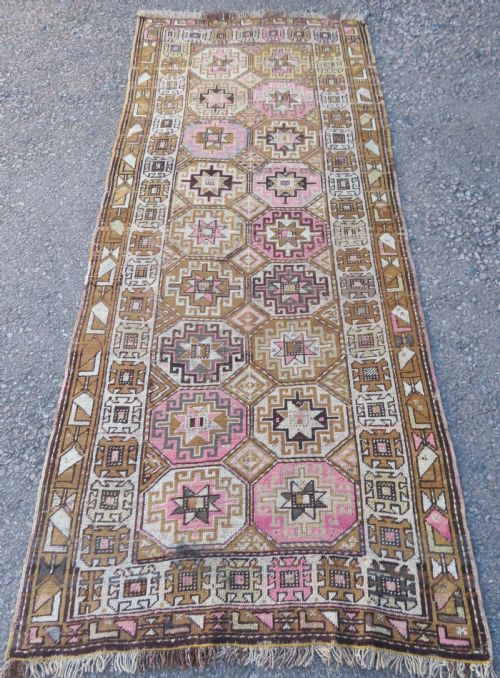
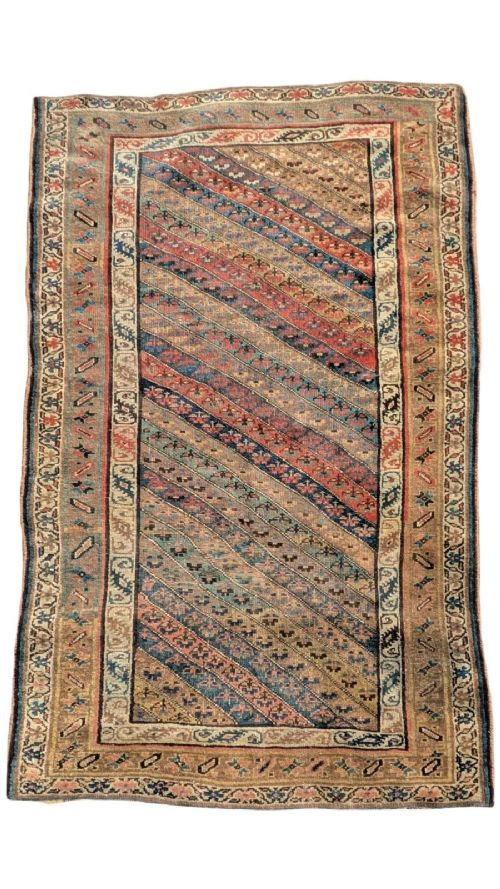
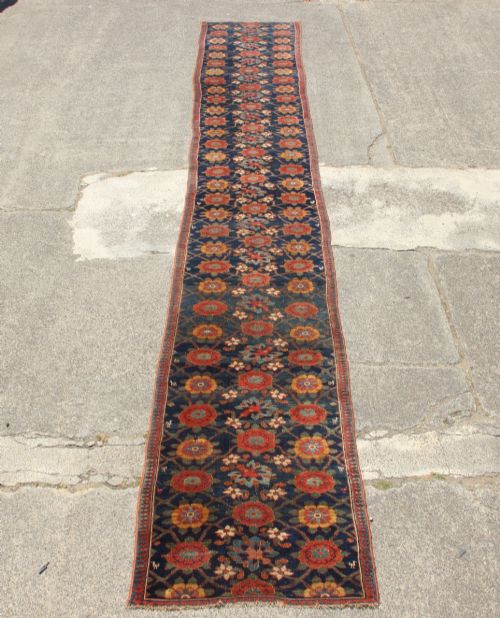
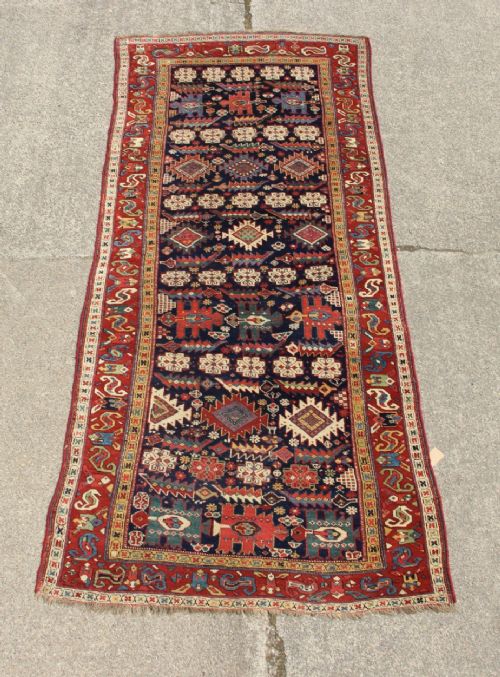
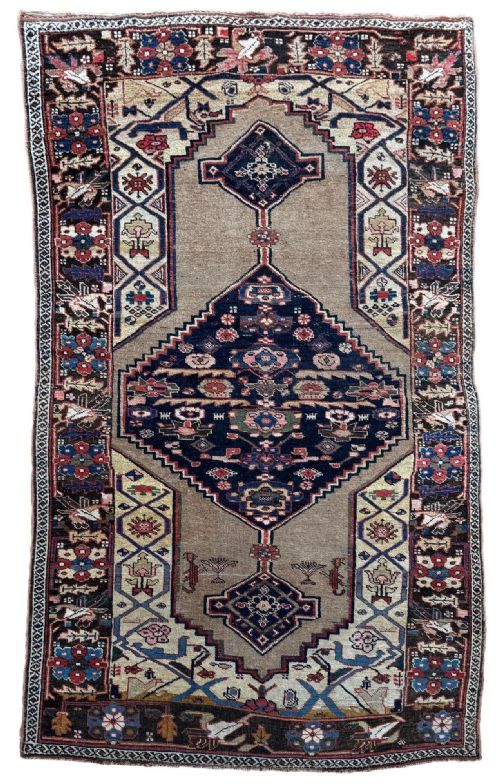
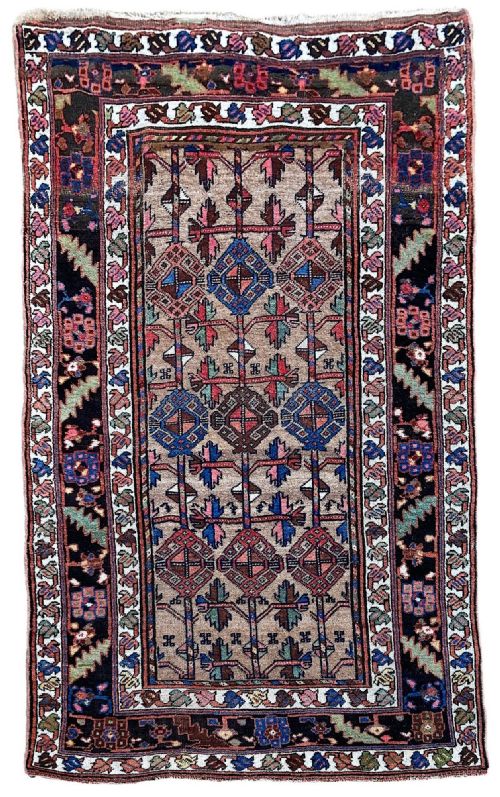
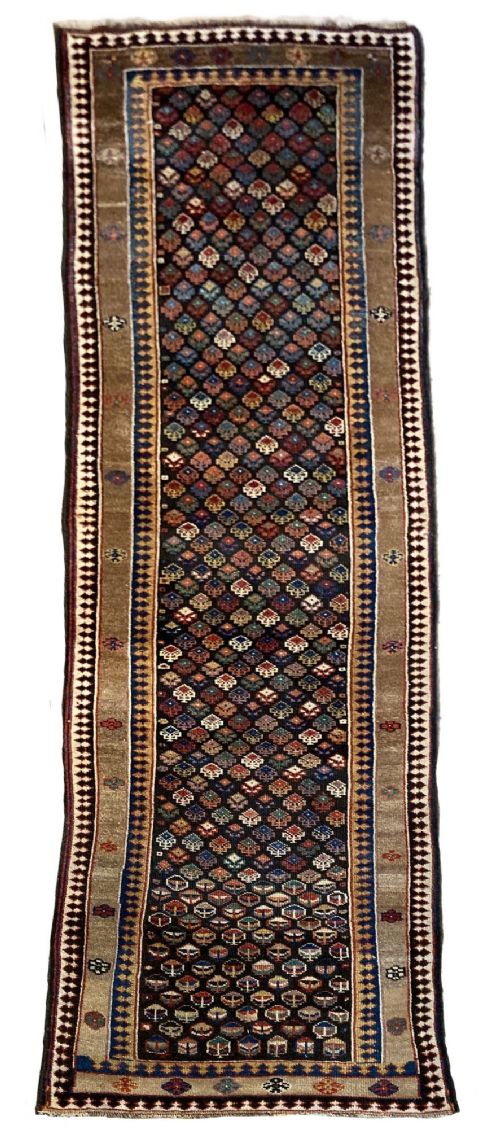
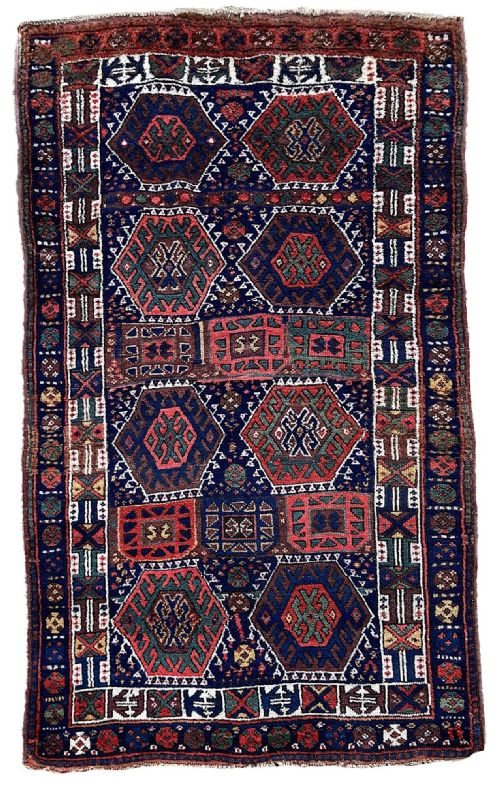
An antique kurdish runner carpet is a narrow, elongated floor covering woven by tribal weavers in regions spanning Persia, Anatolia, and the Caucasus during the nineteenth and early twentieth centuries. These pieces typically display geometric motifs, repeating medallions, and tribal symbols that reflect the cultural heritage of Kurdish weaving groups.
On this page, buyers most frequently encounter examples originating from Persian districts such as Bidjar, Seneh, and Hamadan, alongside broader tribal designations. These runners vary significantly in proportion, ranging from compact hallway formats to substantial long carpets exceeding six metres in length.
The aesthetic bridges domestic utility and artistic expression, utilising saturated grounds of red, blue, or yellow to anchor complex field designs. Such textiles served functional roles in nomadic or village settings before transitioning into decorative elements for period and contemporary interiors alike.
Materials and construction methods
Weavers constructed these carpets using hand-spun wool for the pile, yielding a dense and tactile surface that absorbs dye with rich variation. Cotton frequently forms the foundation warps and wefts, providing structural stability and maintaining the straight alignment essential for long runner formats.
Natural dyes sourced from plants and minerals supplied the characteristic colour palette, creating subtle shifts in tone known as abrash across the wool pile. Artisans knotted the wool by hand onto the vertical foundations, producing sturdy structures designed to withstand generations of heavy foot traffic.
Listings span production dates from the 1850s through the 1930s, featuring wool pile construction on cotton or wool foundations.
Distinctions in quality and execution
Knot density and structural tightness set finer examples apart from coarser village productions, directly influencing the crispness of geometric outlines and pattern definition. Higher-tier pieces often exhibit tighter packing of the weft threads, resulting in a heavier, firmer handle that lies flat on the floor.
The depth and clarity of the natural dyes contribute heavily to overall visual merit, with harmonious colour palettes maintaining their vibrancy across the entire span of the runner. Preserved pile height and intact original borders further elevate the standing of an individual textile within the broader spectrum.
The Antique Kurdish Runner Carpet Glossary
- Kelleh
- A large format rectangular carpet, typically longer than a standard room-size rug but broader than a runner.
- Runner
- A long, narrow carpet format specifically proportioned for hallways, corridors, and staircases.
- Gul
- A medallion or repeating octagonal motif commonly found in tribal and nomadic rug designs.
- Abrash
- Variations in colour tone within a single field of wool, caused by differences in dye batches or hand-spun yarn lots.
- Warp
- The stationary vertical threads stretched across a loom that form the foundational skeleton of the carpet.
Antique Kurdish Runner Carpet: Frequently Asked Questions
Where were these carpets made?
Production centred in the mountainous regions of western Persia, eastern Anatolia, and parts of the Caucasus inhabited by Kurdish communities.
Specific weaving centres such as Bidjar, Seneh, and Hamadan developed distinct local variations in design vocabulary and structural tightness.
How do I care for an antique runner?
Routine maintenance requires gentle vacuuming without a rotating brush roll to protect the historic wool pile from undue friction.
Professional cleaning by specialists experienced in antique vegetable-dyed textiles ensures safe removal of embedded grit without altering the dyes.
What is a Mina Khani design?
The Mina Khani pattern is an all-over repeating textile motif consisting of stylized flowers linked by delicate lattice vines.
This classical Persian design appears frequently in regional village and tribal carpets, arranged in balanced geometric grids.
How can I tell the age of a runner?
Dating relies on an analysis of material characteristics, such as the presence of hand-spun wool and early synthetic or vegetable dye palettes.
Structural traits, design complexity, and regional attribution markers recorded across nineteenth and early twentieth-century examples help narrow the period.